
What Is Ethically Sourced Sea Salt, Really?
Written By Santa Prisca & Co Staff Last updated on
The journey to finding a truly ethically sourced sea salt starts with curiosity. It invites you to look beyond the shaker and learn the story behind each crystal. When you know where your salt comes from—the pristine lagoons it was born in, the ancient methods used to gather it, and the communities it supports—you can feel the difference in every pinch. It’s a simple shift that brings a deeper sense of gratitude and connection to your cooking, turning a simple meal into a mindful ritual. This is about more than seasoning; it’s about honoring the earth, the hands that harvested it, and the traditions passed down through generations.
Key Takeaways
- It's more than just salt: Choosing an ethically sourced salt means you're supporting a system that respects the earth, honors the artisans who harvest it, and preserves traditional wisdom.
- Let the story be your guide: To avoid misleading claims, look for brands that are transparent about their entire process—from the specific location of their salt flats to the people who gather the crystals.
- Choose flavor that supports wellness: Switching from refined table salt to unrefined sea salt gives you a more complex taste and a full spectrum of essential minerals that aid in hydration and digestion.
What Does "Ethically Sourced" Sea Salt Really Mean?
When we reach into our pantry, we’re holding more than just an ingredient. We’re holding a story. The term “ethically sourced” gets used a lot, but what does it truly mean when it comes to something as fundamental as salt? It’s a promise that goes far beyond the crystal itself. It speaks to a deep connection between the earth, the hands that gather its gifts, and the traditions that have honored this process for centuries.
Choosing an ethically sourced sea salt is an intentional act. It’s a recognition that our food comes from a place, is tended by people, and has an impact that ripples outward. It’s about ensuring that the journey from the pristine salt flat to your kitchen is one of respect and balance. This means caring for the environment where the salt is born, supporting the communities who live there, preserving the wisdom of ancient harvesting methods, and being transparent about every step of the process. It’s a holistic approach that transforms a simple seasoning into a meaningful connection.
Protecting the Environment
Not all salt is gathered in the same way. Large-scale, industrial salt mining can disrupt delicate ecosystems and leave a heavy footprint on the land. Ethical sourcing, however, is about working in harmony with nature. It means choosing methods that honor the natural cycles of the sun and sea.
Imagine pristine lagoons where saltwater is drawn in and left to rest under the warm sun. As the water evaporates, beautiful salt crystals form naturally, without the need for harsh chemicals or disruptive machinery. This gentle, patient process of sustainable salt production protects the local environment, ensuring the salt flats remain a vibrant, living landscape for generations to come. It’s a quiet partnership with the earth.
Supporting Local Communities
Behind every pinch of truly ethical sea salt are the salineros—the salt farmers and artisans whose livelihoods depend on this ancient craft. Ethical sourcing ensures that these individuals and their families are treated with dignity and paid fairly for their incredible skill and hard work. It’s about creating a direct, positive impact on the local economy.
When you choose a salt that supports a family-run co-op, you’re helping to keep a small community thriving. Your purchase becomes part of a system of fair trade that empowers artisans, fosters economic stability, and honors the human element of food production. It’s a beautiful exchange that values people just as much as the product itself.
Honoring Traditional Methods
Some methods are timeless for a reason. For hundreds, even thousands of years, salineros have been hand-harvesting sea salt using techniques passed down from their ancestors. This is a craft rooted in deep knowledge—knowing the precise moment to skim the delicate crystals from the water’s surface, understanding the subtle shifts in the weather, and using simple, handmade tools with expert care.
These traditional methods are not just about nostalgia; they are essential to the quality and character of the salt. This patient, hands-on approach preserves the salt’s complex mineral structure and delicate flake. By choosing salt gathered this way, we become custodians of a rich cultural heritage, ensuring this beautiful tradition continues to flourish.
The Importance of Transparency
In a world full of claims, how can you be sure a salt is truly sourced with integrity? The answer lies in transparency. An ethical brand isn’t afraid to tell its story. It will proudly share where its salt comes from, introduce you to the people who harvest it, and explain the methods they use.
Look for brands that offer a clear line of sight from the source to your shelf. This might be through detailed information on their website or packaging. Sometimes, certifications can also serve as a helpful guide, offering third-party assurance of a brand’s commitment to sustainability. True transparency builds trust and allows you to feel genuinely good about the food you bring into your home.
Why Choose Ethical Sea Salt Over Table Salt?
The choice between the salt in your kitchen might seem small, but it’s a meaningful one. Moving from common, highly refined table salt to an unrefined, ethical sea salt is an invitation to connect more deeply with your food, your body, and the planet. It’s about choosing flavor that tells a story and nourishment that comes directly from the earth. When you understand the journey from sea to shaker, you begin to appreciate how this simple crystal can transform a meal and support a more intentional way of living. This shift is less about replacing an ingredient and more about embracing a philosophy of quality, tradition, and care in every pinch.
A Richer Mineral Profile
Think of table salt as a stripped-down version of what salt is meant to be. It’s heavily processed to be almost pure sodium chloride, with its natural minerals removed and anti-caking agents often added. In contrast, an unrefined sea salt like ours retains a beautiful spectrum of trace minerals from the ocean. These natural minerals, including magnesium, potassium, and calcium, are not only beneficial for health—aiding in hydration and electrolyte balance—but they also contribute to a richer, more complete flavor. It’s the difference between a single, loud note and a gentle, harmonious chord that brings your food to life.
A More Complex Flavor
Once you experience the taste of true sea salt, the harsh, chemical bite of table salt becomes unmistakable. The complex flavor of hand-harvested sea salt comes from its unique mineral composition, a direct reflection of the pristine waters it came from. It doesn’t just make food salty; it enhances its inherent flavors. You’ll notice a subtle sweetness, a clean finish, and a delicate texture that melts on the tongue. Different salts are suited for different culinary uses, from the crisp flake of a finishing salt to the fine grain of one used for baking, each adding its own character to a dish.
How It's Made: Sun-Dried vs. Highly Processed
The journey of salt from its source to your table matters immensely. Table salt is often produced through industrial mining and harsh chemical processing, including bleaching. Ethical sea salt, however, is a testament to patience and tradition. It is hand-harvested in Mexico using traditional methods that are hundreds of years old. The salt is gathered by hand from shallow lagoons, or salinas, where it is naturally evaporated by the sun and wind. This gentle, unhurried process preserves the salt’s mineral integrity and honors the ancient wisdom of the artisans who harvest it.
The Impact of Your Choice
Every purchase we make sends a ripple out into the world. Choosing ethically sourced salt is a simple way to ensure that ripple is a positive one. Your choice supports communities and the livelihoods of the salt farmers, or salineros, who are stewards of the land. Unlike large-scale production that can harm local ecosystems, these artisanal practices work in harmony with nature. By opting for a salt that is harvested with respect for the environment and its people, you are investing in a more sustainable and equitable food system, one crystal at a time.
How to Spot a Truly Ethical Sea Salt
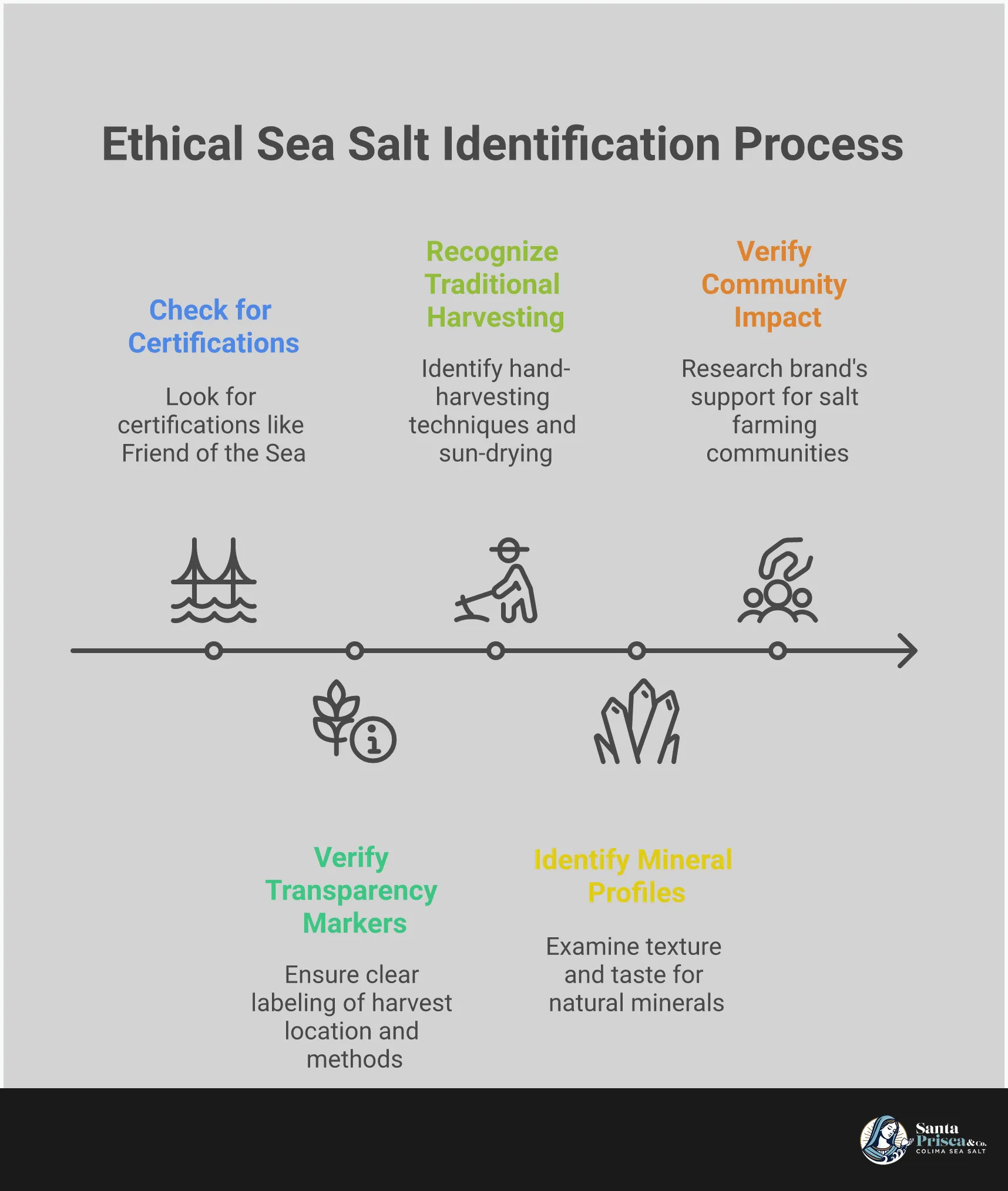
When you stand in the aisle, faced with a dozen different salts, how do you choose the one that truly aligns with your values? It’s about looking past the pretty packaging and learning to read the subtle clues. A truly ethical salt tells a story of place, people, and process. It’s a story of respect for the earth and for the hands that gather its gifts. Learning to spot these signs empowers you to bring food into your kitchen that not only tastes better but feels better, nourishing you on a deeper level. It’s a small act of intention that ripples outward, supporting sustainable practices and honoring ancient traditions with every pinch.
What to Look for on the Label
A label can be your first window into a company’s practices. While words like “natural” can be vague, certain certifications offer a clearer picture. Look for eco-labels like Friend of the Sea, which indicates that the salt was harvested with respect for marine ecosystems. You might also see food safety certifications, which speak to the quality and purity of the product.
However, many small, artisanal producers may not have these official seals. In that case, look for transparency. Does the label tell you where the salt is from and how it was harvested? A brand that is proud of its process will share it openly.
Reading Between the Lines: Sourcing Stories
The most beautiful salts carry the story of their origin. This is where you move beyond the label and connect with the heart of the brand. Ask yourself: Where does this salt come from? Is it mined with heavy machinery, or is it hand-harvested from a pristine environment? A truly ethical company will share its sourcing story with pride.
They’ll tell you about the community that harvests the salt and the traditional methods they use. For example, the story of our Colima Sea Salt is one of sun, ancient salt flats, and generations of salineros. When a brand is transparent about its people and its process, you can feel confident in the integrity of what’s inside the bag.
Common Myths About "Ethical" Salt
One common myth is that all specialty salts are the same. The truth is, the most important distinction is not the color or origin, but the processing. Many commercial salts are stripped of their natural minerals and treated with anti-caking agents.
A truly ethical, unrefined sea salt is a whole food. It’s not about being “fancy”—it’s about being complete. The complex flavor and rich mineral profile come from the fact that it’s left just as nature intended. So, when you hear someone dismiss it as a trend, remember that the real value lies in its purity and the minimal processing it undergoes from harvest to your kitchen.
How to Avoid Greenwashing
Greenwashing is the practice of making a product seem more sustainable than it really is. A company might use earthy colors and vague terms like “eco-friendly” without any real substance to back it up. Large-scale salt production can be incredibly disruptive, polluting water sources and damaging delicate ecosystems.
To avoid being misled, look for specifics. Instead of vague promises, a trustworthy brand will provide details about its environmental impact and community relationships. Are they protecting the local ecosystem? Are they paying their harvesters fairly? Transparency is the antidote to greenwashing. Seek out brands that answer these questions without hesitation, inviting you into their story with honesty.
A Few of Our Favorite Ethical Sea Salts
When you begin to explore the world of unrefined salt, you discover a community of producers who are deeply connected to the earth and its traditions. While we pour our hearts into our own Colima Sea Salt, we also want to celebrate other brands that share a commitment to quality and mindful sourcing. Finding the right salt for your kitchen is a personal journey, and these are a few that we respect for their dedication to bringing pure, mineral-rich salt to the table with integrity.
Santa Prisca & Co. Colima Sea Salt
Of course, we begin with the salt that is our life’s work. Our Colima Sea Salt is born from the Cuyutlán Lagoon, where ancient traditions guide the harvest. Salineros use generational techniques to gently gather the delicate crystals that form under the sun. This salt is more than a seasoning; it’s a story of place, filtered naturally through volcanic earth and left unrefined to preserve its mineral depth. We believe ethical sourcing means honoring both the land and the people, ensuring every crisp flake is a true reflection of its pure origin.
Celtic Sea Salt
A name many recognize, and for good reason. Celtic Sea Salt® has been a trusted source for natural, unrefined salt since the 1970s. Harvested by hand from clean coastal waters, their salt is known for its moist texture and distinct grey hue, which comes from the pure clay lining of the salt beds. This brand has long been a favorite among chefs and health-conscious cooks who appreciate its commitment to quality and sustainability. Their dedication to preserving the salt's natural mineral balance makes it a wonderful and reliable choice for any kitchen.
Himalayan Pink Salt
With its beautiful rosy color, Himalayan pink salt is harvested from ancient sea beds deep within the mountains. While popular, it’s especially important to choose a source that prioritizes ethical mining practices. Look for brands that are transparent about their supplier relationships to ensure the salt is authentic and carefully sourced. Organizations like Friend of the Sea are now establishing sustainable standards, a positive step toward greater accountability. When sourced responsibly, this mineral-rich salt offers a mild flavor and a connection to the ancient world.
Other Mindfully Sourced Brands
The movement toward mindful sourcing is growing, and it’s exciting to see so many small-batch and local producers sharing their stories. From the coast of Vancouver Island to the shores of France, artisans are harvesting salt with deep respect for their local ecosystems. These brands often work directly with their communities, creating a positive impact that goes beyond the salt itself. When exploring, look for producers who are open about their methods. A great example is how some brands share their partnerships with local farms, showing a true commitment to community.
How Ethical Sea Salt Supports Your Well-Being
Choosing your ingredients with intention is an act of self-care. When we select foods that are not only pure but also sourced with respect for the earth and its people, we nourish ourselves on a deeper level. This is especially true for an ingredient as fundamental as salt. Unlike highly processed table salt, which is stripped of its natural character, unrefined sea salt carries the story of its origin within every crystal.
When you use a salt that has been hand-harvested from pristine waters and dried by the sun, you’re inviting a piece of that natural vitality into your kitchen. This mindful choice supports your body’s wellness from the inside out. The benefits go far beyond flavor; they touch on the very building blocks of our health, connecting us to the simple, powerful nourishment that nature provides. It’s a small daily ritual that honors your body and the planet.
Nourishing Your Body with Essential Minerals
Think of unrefined sea salt as a snapshot of the ocean. Each crystal contains a complex array of trace minerals that are often lost during industrial processing. Our Colima Sea Salt, for example, is naturally filtered through volcanic earth, which infuses it with essential elements like magnesium, potassium, and calcium.
These aren’t just names on a list; they are vital nutrients your body recognizes and uses. Magnesium supports calm, potassium helps with fluid balance, and calcium is crucial for bone health. This mineral-rich profile is what gives authentic sea salt its subtle, complex flavor and its ability to truly enhance food, rather than just making it salty. It’s a return to the way salt was always meant to be experienced.
Finding Your Natural Balance with Electrolytes
Those same beautiful minerals also function as electrolytes, which are essential for keeping your body in harmony. Electrolytes help manage hydration, support nerve function, and contribute to muscle health. When you sweat or exert yourself, you lose these important minerals, and replenishing them is key to feeling your best.
Adding a pinch of unrefined sea salt to your water or meals is a simple, natural way to support your body’s electrolyte balance. It helps your cells absorb water more effectively, leading to better hydration and sustained energy. This isn’t about a quick fix, but about a gentle, consistent practice of giving your body the pure elements it needs to thrive and find its own equilibrium.
Aiding Gentle Digestion
Proper digestion begins with the right building blocks, and pure salt plays a foundational role. Salt is necessary for producing hydrochloric acid, the stomach acid that helps us break down food and absorb nutrients efficiently. When you use a clean, unrefined sea salt, you’re giving your body a pure source of sodium chloride without the unwanted additives.
Many commercial table salts contain anti-caking agents and other chemicals to ensure a long shelf life and easy pouring. Ethically sourced sea salt, however, is free from these additions. By choosing a salt that is simply salt, you support your digestive system with a clean, natural ingredient. This simple swap is a meaningful step toward more intentional eating and wellness.
Where to Find Ethically Sourced Sea Salt
When you begin to cook with intention, every ingredient choice becomes an opportunity to connect with the food on your plate. Choosing a sea salt is no different. It’s about more than just flavor; it’s about honoring the earth, the hands that harvested it, and the traditions that have been passed down through generations. Finding a salt that aligns with these values can feel like a search, but there are beautiful options available for every kitchen, from the home cook to the professional chef.
The journey to finding a truly ethical sea salt starts with curiosity. It invites you to look beyond the shaker and learn the story behind each crystal. When you know where your salt comes from, you can feel the difference in every pinch. It’s a simple shift that brings a deeper sense of gratitude and connection to your cooking, turning a simple meal into a mindful ritual.
For Your Home Kitchen
Bringing consciously sourced salt into your home is a beautiful way to elevate your daily meals. Our own Colima Sea Salt is hand-harvested from ancient salt flats in Mexico, offering a crisp, mineral-rich flavor that honors centuries of tradition. Each crystal is a testament to the sun, the earth, and the artisans who gather it.
Other brands also share this commitment to quality and care. Celtic Sea Salt® offers a range of salts for different culinary moments, from their Light Grey Celtic® for daily nutrition to their Fine Ground salt for baking. You might also explore Spicewell, whose sea salt is harvested in Mexico using traditional methods and comes in fully compostable, plastic-free packaging, making it a thoughtful choice for an eco-conscious kitchen.
For Chefs and Restaurants
In a professional kitchen, ingredients tell a story. Chefs who prioritize quality and sustainability are increasingly seeking out salts with a distinct origin and ethical background. For restaurants looking to source with intention, we welcome wholesale inquiries to bring the unique character of Colima Sea Salt to your menu. It’s a way to share a piece of Mexican heritage with your guests.
Another notable brand in the culinary world is Saltverk, which produces flaky sea salt from the Westfjords of Iceland. They use clean, geothermal energy for their process, a practice that has earned them the trust of renowned chefs. Choosing a salt like this is about more than seasoning—it’s about aligning your kitchen with a commitment to nature and tradition.
Understanding the Value in Every Crystal
What truly gives a salt its value is the story of how it came to be. Ethically sourced sea salt is harvested with deep respect for the environment, ensuring a minimal ecological footprint. This means protecting the natural landscape and the delicate ecosystems that produce such a pure, life-giving mineral. It’s a practice rooted in stewardship, not just extraction.
This commitment extends to the people involved. Fair labor practices and support for local communities are at the heart of ethical sourcing. Organizations like Friend of the Sea have even developed sustainable sea salt standards to help guide consumers. When you choose a salt from a transparent, mindful producer, you’re investing in a system that honors both people and the planet.
Related Articles
- How to Buy Fair Trade Sea Salt: 4 Brands to Trust
- 5 Best Sustainable Sea Salt Brands of 2025
- The 5 Best Handcrafted Small Batch Sea Salts
- 5 Best Organic Sea Salts for a Healthy Kitchen
- How to Choose a Wholesale Gourmet Salt Supplier
Frequently Asked Questions
Is there a real difference between 'ethical sea salt' and other sea salts at the grocery store? Yes, there’s a significant difference that goes beyond the label. Many commercial sea salts are still highly processed, meaning they are washed and stripped of their natural trace minerals. An ethically sourced, unrefined sea salt is a whole food, left just as nature intended. The real distinction lies in the process—it’s hand-harvested in a way that protects the environment and supports the local community of artisans.
Why does ethically sourced sea salt sometimes cost more? The price reflects a deep commitment to quality and fairness. Instead of being produced in massive industrial operations, this salt is often gathered by hand using traditional, time-honored methods. The cost supports fair wages for the salineros (salt farmers), protects the delicate ecosystems where the salt is harvested, and preserves a cultural heritage. You are investing in a more sustainable and equitable food system with every pinch.
What does 'unrefined' mean when it comes to salt? Unrefined simply means the salt is pure and unprocessed. After being harvested, it’s naturally dried by the sun and wind without being subjected to chemical cleaning, bleaching, or the addition of anti-caking agents. This gentle approach ensures the salt retains its full spectrum of naturally occurring trace minerals, which contribute to its complex flavor and nourishing properties.
Can I use this type of salt for all my cooking and baking? Absolutely. An unrefined sea salt is incredibly versatile. A fine-grain version dissolves beautifully in sauces, soups, and baked goods, while a flakier finishing salt is perfect for sprinkling over a finished dish to add a final burst of flavor and a delicate crunch. Once you start cooking with it, you’ll notice how it enhances the food's natural taste rather than just making it salty.
Besides certifications, what's the best way to know if a salt is truly ethical? Transparency is the clearest sign. A brand that is proud of its practices will openly share its story. Look for information on their website about where the salt comes from, who harvests it, and what methods are used. When a company introduces you to the people and the place behind their product, it shows a level of integrity that goes far beyond a simple logo on the package.