
8 Types of Gourmet Salt and Their Kitchen Uses
Written By Santa Prisca & Co Staff Last updated on
The world of salt is a visual feast, a stunning palette of pinks, greys, reds, and even jet-black. These colors aren’t just for beauty; they are a direct reflection of the salt’s journey and the minerals it gathered along the way. Each hue tells a story of ancient sea beds, volcanic earth, or clay-lined ponds. This natural artistry translates directly to flavor, giving each salt a unique character that can enhance your food in surprising ways.
Gourmet salt comes in many forms, each with distinct characteristics. This overview introduces the main types of gourmet salt and how they differ in origin, texture, and use.
Key Takeaways
- Embrace salt as an ingredient, not just a seasoning: The value of artisanal salt is in its origin—the natural minerals, hand-harvesting methods, and unique crystal shapes create complex flavor and texture that processed table salt cannot replicate.
- Learn the art of timing your seasoning: Use coarser, mineral-rich salts during the cooking process to build a deep, foundational flavor, and reserve delicate, flaky salts for a final flourish to add a bright pop of salinity and a satisfying crunch.
- Pair your salt to your cooking style: The best salt for your kitchen is one that complements the food you love to make. Match delicate flakes with fresh vegetables and baked goods, and choose more robust crystals for grilled meats and roasted dishes.
What Truly Sets Gourmet Salt Apart from Table Salt?
If you’ve ever wondered what makes a pinch of artisanal salt so different from the salt in a standard shaker, the answer lies in a story of origin, process, and intention. While table salt is often heavily processed—mined, stripped of its natural minerals, and treated with anti-caking agents—gourmet salt is a reflection of its environment. It’s a culinary ingredient that carries the essence of the place it came from, whether that’s a sun-drenched salt flat in Mexico or an ancient mountain range in the Himalayas.
The journey from earth to your kitchen is what defines its character. Gourmet salts are celebrated for their unique flavors, colors, and textures, which add a layer of complexity to food that refined table salt simply cannot. Think of it as the difference between a mass-produced loaf of bread and a slow-fermented, hand-shaped sourdough. One is for function; the other is for flavor, experience, and connection. Choosing a gourmet salt is about more than just seasoning; it’s about honoring a natural process and bringing a piece of that story to your table.
The Art of the Harvest
The way salt is gathered has a profound impact on its final form. Most gourmet sea salts are harvested by hand in a patient, centuries-old tradition. Artisans, or salineros, gently rake the delicate salt crystals from the surface of evaporated seawater, working in harmony with the sun and wind. This careful process preserves the salt’s integrity and unique crystal structure.
This gentle approach is what gives salts like our Colima Sea Salt its distinct character. Unlike industrial methods that can involve bleaching and chemical treatments, this artful harvest ensures the salt remains pure, unrefined, and full of the subtle flavors of its origin. It’s a practice of patience that you can taste in every crystal.
Why Natural Minerals Matter
One of the most significant differences between gourmet and table salt is mineral content. Table salt is almost pure sodium chloride, as the refining process strips away the rich array of trace minerals found in natural salt deposits. Gourmet salts, however, retain these elements, which contribute to both their flavor and color.
For example, the beautiful hue of Himalayan pink salt comes from its rich mineral profile. These trace minerals, like magnesium, potassium, and calcium, don’t just add nutritional value; they create a more nuanced, well-rounded flavor that is less sharp than that of processed salt. This mineral depth allows the salt to enhance food without overpowering it, adding a gentle salinity that complements other ingredients beautifully.
A Salt’s Signature Shape and Crunch
Texture is where gourmet salts truly shine, offering a sensory experience that table salt cannot replicate. The crystal’s shape and size—determined by its environment and harvesting method—dramatically affect how it feels in your mouth and interacts with food.
Delicate, paper-thin flakes dissolve instantly, providing a bright burst of flavor, while larger, pyramid-shaped crystals offer a satisfying crunch that lingers. These salts are often used as “finishing salts,” sprinkled over a dish just before serving to add a final touch of texture and visual appeal. Exploring the different forms in our collection of salts can open up a new world of culinary creativity, turning a simple seasoning into a key ingredient.
Exploring the World’s Most Beloved Sea Salts
Every sea salt tells a story of its origin—a unique narrative shaped by the sun, wind, and water of its home. Unlike the uniform crystals of table salt, artisanal sea salts offer a spectrum of textures and flavors that can transform a dish from simple to sublime. Each one carries the essence of its environment, from the mineral-rich coast of Mexico to the misty shores of England.
Exploring these salts is like taking a journey around the world through your palate. You begin to understand how a delicate, flaky salt can melt on your tongue, leaving a whisper of the ocean, while a coarse, crunchy crystal can add a burst of bright salinity. These are not just seasonings; they are ingredients in their own right, each with a distinct personality. Learning their stories and how to use them is a beautiful way to cook with more intention, connecting your kitchen to the far-flung places where these natural treasures are carefully harvested.
Colima Sea Salt: Mexico’s Sun-Dried Mineral Crystal
From the coast of Colima, Mexico, comes a salt that is a true expression of sun and earth. Our Colima Sea Salt is hand-harvested from ancient salt flats, where the crystals are naturally dried under the warm sun. This slow, traditional process allows the salt to retain a wealth of essential minerals, giving it a complex, balanced flavor without the harsh bite of processed salts. Its coarse, irregular crystals provide a satisfying crunch and a clean burst of salinity, making it a favorite among chefs for both seasoning during cooking and adding a final, textural flourish to finished dishes. It’s a taste of pure Mexican terroir.
Fleur de Sel: The Delicate "Flower of Salt"
Often called the "caviar of salts," Fleur de Sel is a testament to patient, artisanal craftsmanship. Its name, which means "flower of salt" in French, beautifully describes the delicate, flaky crystals that blossom on the surface of salt ponds, primarily in coastal France. Harvesters gently rake these feather-light flakes by hand before they can sink to the bottom. With a high moisture content and a complex, nuanced flavor, Fleur de Sel is an exquisite finishing salt. It dissolves slowly, providing a lingering, gentle salinity that enhances everything from fresh salads and grilled fish to chocolate desserts.
Maldon Salt: The Crisp, Flaky Pyramid
Instantly recognizable for its large, pyramid-shaped flakes, Maldon Salt is a culinary icon from the shores of Essex, England. This salt is celebrated for its clean flavor and remarkable texture. The unique shape of the flakes gives them a satisfyingly crisp crunch that is less about intense saltiness and more about adding a bright, textural pop. It’s incredibly versatile, beloved by chefs for its ability to enhance both savory and sweet creations. A sprinkle of Maldon Salt can bring roasted vegetables to life or add a surprising, delightful crunch to a caramel brownie.
Celtic Grey Salt: The Moist, Briny Treasure
Harvested from the clay-lined salt ponds of Brittany, France, Celtic Grey Salt, or Sel Gris, is known for its beautiful pale grey hue and moist, dense texture. The color comes from the rich minerals it absorbs from the clay as it crystallizes. This unrefined salt is packed with a higher mineral content than many other salts, giving it a complex, briny flavor that speaks of the sea. Its moisture makes it a wonderful choice for cooking, as it blends seamlessly into soups, stews, and marinades, adding a deep, savory foundation. It’s also a fantastic finishing touch for hearty roasted meats and root vegetables.
Discovering Salts with Unique Colors and Flavors
Beyond the familiar bright white crystal, the world of salt offers a stunning palette of colors and flavors, each telling the story of its unique origin. These salts are a testament to how minerals, smoke, and ancient earth can transform a simple ingredient into something truly special. They invite us to not only taste but also see and appreciate the diverse landscapes they come from.
Himalayan Pink: The Ancient Rose-Hued Salt
With its beautiful, rosy hue, Himalayan pink salt is like a jewel for your kitchen. Harvested from ancient sea beds deep within the mountains, its color comes from a rich blend of trace minerals, including iron, magnesium, and potassium. This salt has a gentle, well-rounded flavor and a satisfying crunch that works beautifully as both a cooking and a finishing salt. Use it to bake a whole fish in a salt crust, sprinkle it over a ripe avocado, or add a final touch to roasted vegetables. Its subtle flavor enhances food without overpowering it, making it a wonderfully versatile addition to your pantry.
Black Hawaiian: The Volcanic Charcoal Infusion
Dramatic and deeply colored, Black Hawaiian salt gets its stunning jet-black appearance from activated charcoal, which is infused into the sea salt crystals. This process gives it a unique, slightly smoky flavor and a striking visual appeal. The charcoal is also traditionally believed to have detoxifying properties and aid digestion. Sprinkle it over grilled fish, fresh pineapple, or even a creamy potato salad for a dramatic pop of color and a hint of earthy depth. It’s a beautiful way to add contrast and a conversation-starting element to your dishes.
Smoked Sea Salt: The Essence of Woodfire
If you love the flavor of food cooked over an open flame, smoked salt is for you. These salts are slowly smoked over real wood fires—often using woods like applewood, hickory, or alder—which infuses each crystal with a rich, smoky aroma and taste. It’s a simple way to add complex, savory depth to anything you cook. Try it on grilled meats, especially pork or chicken, or use it to give roasted vegetables and even chocolate desserts a subtle smokiness. A pinch can transform a simple dish, lending it the essence of a backyard barbecue.
Red Alaea: The Earthen Clay Salt of Hawaii
This gorgeous, terracotta-hued salt is a sacred and traditional Hawaiian staple. Its color comes from being mixed with Alaea clay, a volcanic earth rich in iron oxide. This clay not only imparts the salt’s signature color but also adds a wealth of trace minerals and a mellow, slightly sweet flavor. Red Alaea salt has a delicate crunch and is less briny than other salts, making it perfect for seasoning roasted meats and fish. It’s also central to traditional Hawaiian cuisine, used in dishes like kalua pig and poke, connecting the food to the sacred land it comes from.
How to Use Gourmet Salts in Your Kitchen
Once you bring an artisanal salt into your home, you begin to see it not just as a seasoning, but as a true ingredient. Using gourmet salt is about timing, texture, and intention. It’s the difference between a meal that’s simply salted and one that feels complete, with flavors that are brightened and textures that are thoughtfully layered. Moving beyond the shaker of refined table salt opens up a world of culinary possibility, where each crystal has a purpose.
Think of it as learning a new language of flavor. A coarse, mineral-rich salt behaves differently in a simmering stew than a delicate, flaky salt sprinkled over a finished salad. One dissolves to build a foundation of flavor from within, while the other offers a final, satisfying crunch and a burst of clean salinity. Understanding how to work with these different forms allows you to cook with more precision and creativity. It’s a simple shift that can profoundly change the way you approach food, turning the act of seasoning into a mindful moment of creation. Exploring these methods will help you get the most from your beautiful gourmet salts and bring a new dimension to your home cooking.
Add a Final Flourish with Finishing Salts
Finishing salts are the final touch, the little secret that makes a simple dish feel special. These are salts you sprinkle on food just before it reaches the table. Their purpose is less about seasoning the dish from within and more about adding a final layer of texture and a pop of clean, bright flavor. Think of the gentle crunch of a delicate flake on a ripe tomato slice, a piece of grilled fish, or even a dark chocolate brownie.
This is where a hand-harvested salt like our Colima Sea Salt truly shines. Its irregular, crystalline structure catches the light and provides a satisfying texture that lingers on the tongue. A finishing salt isn’t meant to dissolve instantly; it’s meant to be noticed, adding a subtle crunch and a wave of pure flavor that enhances the ingredients it rests upon.
Season with Depth and Intention
Cooking with gourmet salt is an invitation to season with more intention. Unlike processed table salt, which delivers a sharp, one-note saltiness, unrefined sea salts offer a more complex and gentle flavor profile. This is because they retain a wealth of trace minerals from their source, which adds a subtle depth that can’t be replicated. When you season with a mineral-rich salt, you’re not just making food saltier—you’re enhancing its inherent character.
Choosing the right salt for the right moment can make all the difference. A pinch of coarse sea salt in a pot of boiling water for pasta, a finer grain mixed into a spice rub for meat, or a sprinkle into a sauce as it simmers—each application builds a foundation of balanced flavor. It’s a way of honoring your ingredients by pairing them with a salt that complements, rather than overpowers.
Lock in Moisture for Brining and Curing
Beyond finishing and seasoning, salt is a powerful tool for transforming the texture of foods, particularly meats and vegetables. Brining, which involves soaking food in a saltwater solution, is a perfect example. The salt helps the protein retain moisture during cooking, ensuring a juicy, tender result. For this, you need a pure salt that dissolves cleanly without any additives that could cloud the liquid or impart off-flavors.
Similarly, for curing and pickling, the quality of your salt is paramount. Unrefined sea salts that are free from anti-caking agents are ideal because they support the fermentation process and keep the pickling liquid clear and pure. Using a clean, natural salt ensures that the final flavor is all about the vegetables and spices, not unwanted chemical notes.
Pair Your Salt to Your Dish
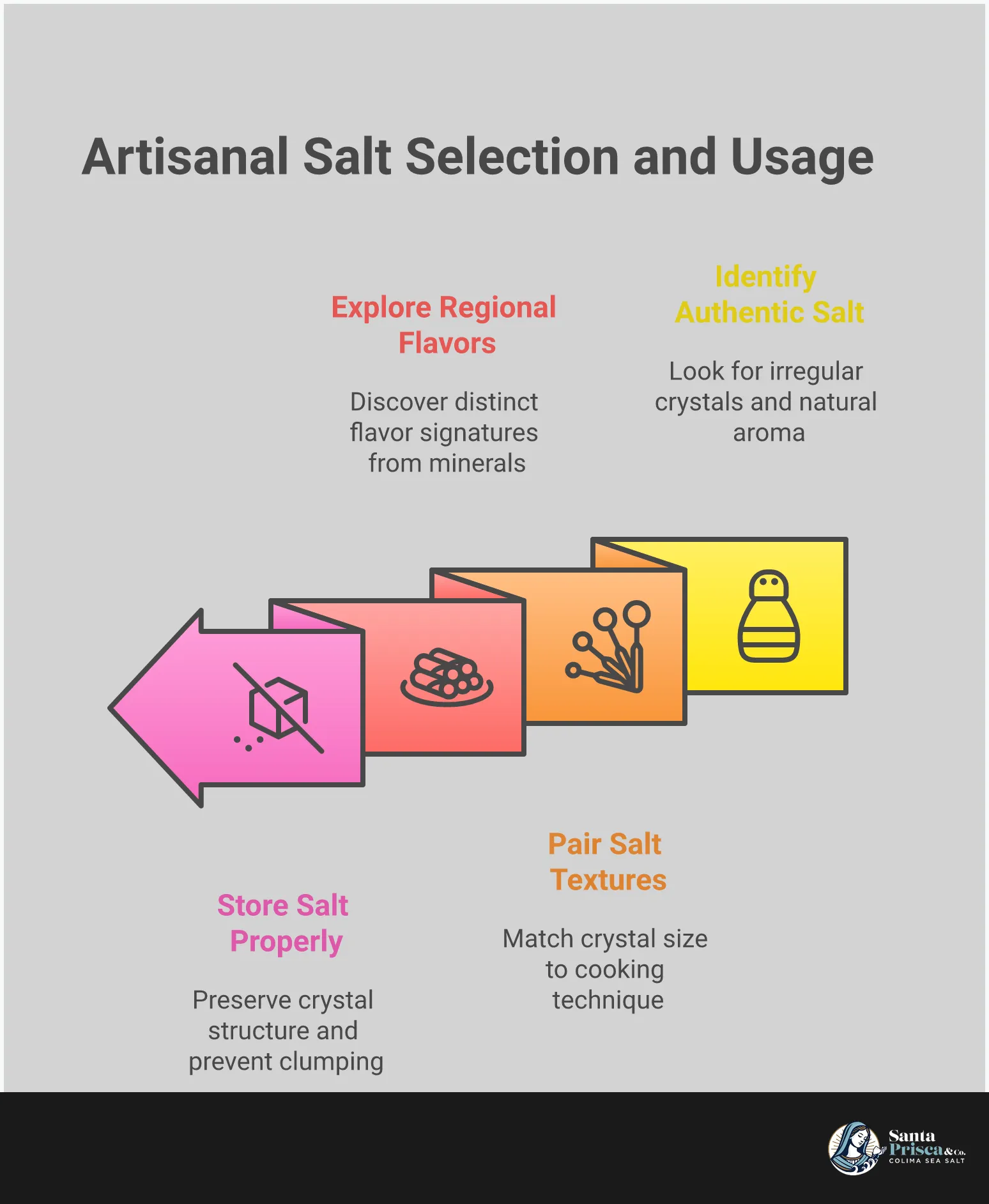
Learning to pair salt with food is like a chef learning to pair wine. The texture of the salt is your primary guide. Delicate, flaky salts are perfect for finishing, as their structure provides a delightful crunch without overwhelming the palate. They are beautiful on salads, eggs, and fresh vegetables. A medium-grain salt is a versatile workhorse for everyday seasoning, dissolving easily into sauces and marinades.
Coarser salts are best reserved for processes like brining, curing, or creating a salt crust on meats and fish, where they can dissolve slowly and work their magic over time. For roasted meats or hearty grilled vegetables, a robust salt with a bit of texture can stand up to the bold flavors. The key is to match the salt’s character to the dish’s needs, creating a harmonious balance of flavor and texture.
The Best Culinary Uses for Different Salts
Just as you might choose a specific olive oil for finishing a dish or a particular vinegar for a dressing, selecting the right salt is a beautiful way to cook with intention. Each type of salt has a unique texture, mineral composition, and flavor profile that can either complement or transform your food. Learning to pair them is less about rules and more about understanding the personality of each crystal, from delicate flakes that melt on the tongue to robust grains that add a satisfying crunch.
For Delicate Seafood and Fresh Vegetables
When working with ingredients that have subtle, nuanced flavors—like a flaky white fish, crisp garden greens, or a perfectly ripe tomato—you need a salt that whispers rather than shouts. Delicate, moist salts like Fleur de Sel are perfect here, as their fine crystals dissolve cleanly, adding a gentle burst of salinity that brightens the food's natural taste. Our own Colima Sea Salt is ideal for these applications. Its clean, mineral-forward flavor and light crunch enhance without overpowering, making it the perfect finishing touch for fresh salads, steamed vegetables, and simple seafood preparations.
For Grilled Meats and Roasted Dishes
Hearty dishes cooked with high heat call for a salt with a bit more character and structure. For grilled steaks, roasted chicken, or charred vegetables, a coarser salt is your best friend. The larger crystals won't dissolve immediately, creating a savory crust that adds both flavor and a satisfying texture. Some salts, like smoked sea salt, can even impart a deep, woodsy aroma that enhances the smokiness of the grill. When you season a steak before cooking, these robust salts help draw out moisture to create that irresistible exterior while keeping the inside tender and juicy.
For Baking and Sweet Treats
A sprinkle of the right salt can completely transform a sweet dish, creating a beautiful balance that makes the flavors sing. Flaky sea salts, like Maldon, are a baker’s secret weapon. Their broad, pyramid-shaped crystals don't just add salinity; they provide a delightful textural crunch that contrasts beautifully with soft brownies, chewy cookies, or silky caramel. Because these flakes dissolve slowly, they create little pockets of flavor that surprise the palate. Try scattering them over your favorite chocolate dessert just after it comes out of the oven for a truly special touch.
For Cocktail Rims and Beverages
Salt’s role in the kitchen extends beyond food. A well-crafted cocktail is an experience for all the senses, and a salted rim is a classic way to add visual appeal, texture, and a savory counterpoint to sweet or sour drinks. Coarse or flaky salts are perfect for this, as their crystals adhere well to the glass. You can even find salts infused with herbs or spices to add another layer of complexity. Learning how to rim a cocktail glass is a simple skill that makes any home-mixed drink feel like it came from a high-end bar.
How to Choose and Store Quality Gourmet Salt
Bringing a beautiful artisanal salt into your kitchen is an act of intention. It’s a choice to connect more deeply with your ingredients and the stories they carry. But once you have it, how do you choose the right one and care for it? Thinking about quality and storage helps you honor the journey of the salt, from its pristine source all the way to your plate.
Spotting Authentic Artisanal Salt
True artisanal salt has a character that mass-produced table salt simply lacks. Look for its beautiful imperfections—the irregular shapes of the crystals, a subtle off-white hue that speaks to its rich mineral content, and a clean, oceanic aroma. Unlike the uniform, bleached-white grains of processed salt, a gourmet salt tells a story of its origin.
An authentic salt, like our hand-harvested Colima Sea Salt, is never treated with anti-caking agents or additives. Its texture is a signature part of the experience, whether it’s a delicate, flaky crunch or a coarse, satisfying grain. When you choose a salt like this, you’re choosing flavor and texture in their purest form.
Simple Tips to Keep Your Salt Fresh
While salt itself doesn't spoil, its texture can be compromised by humidity. To preserve that signature crunch, the key is proper storage. Keep your gourmet salts in a cool, dry place away from the steam of the stove. An airtight container is your best friend here—think a beautiful ceramic salt cellar with a lid or a simple glass jar.
This simple step protects the salt from clumping and ensures that every pinch delivers the crisp texture you love. Because unrefined salts are free of the chemicals that prevent caking, they need a little extra care. Storing them well is a small ritual that honors their natural quality.
Why Sustainable Sourcing Matters
How a salt is harvested is just as important as where it comes from. As more of us seek out food with integrity, the story behind our salt becomes a meaningful part of the meal. Choosing salts from producers who use sustainable, traditional methods is a way to support both the planet and the communities that have perfected these practices over generations.
Many artisanal salts are harvested using timeless, eco-friendly techniques like natural solar evaporation, which harnesses the power of the sun and wind. This gentle process not only has a minimal environmental impact but also preserves the salt’s delicate mineral structure. When you source your ingredients with intention, you’re casting a vote for a more thoughtful and connected food system.
Separating Fact from Fiction on Health Claims
It’s easy to get confused by the wellness conversations around salt. One common myth is that gourmet salts are lower in sodium than table salt. In reality, all salt is chemically sodium chloride, so the sodium content is virtually the same by weight.
The true wellness benefit of an unrefined sea salt lies not in what it lacks, but in what it contains. Unlike processed table salt, which is stripped of its natural minerals and often contains additives, artisanal salts retain a beautiful spectrum of trace minerals like magnesium, potassium, and calcium. These elements contribute to a more complex, nuanced flavor, allowing you to use less salt for a greater impact. It’s a choice for purity and a fuller, richer taste.
Which Gourmet Salt Is Right for You?
Choosing a salt can feel deeply personal, like selecting the right olive oil or a favorite cooking pan. It’s about more than just seasoning; it’s about connecting with your ingredients and understanding how a simple crystal can transform a meal. With so many beautiful options, the best place to start is by listening to your own palate and reflecting on the food you love to create.
Start Your Essential Salt Collection
Building a salt collection doesn’t need to be complicated. Begin with one or two high-quality, versatile salts that can become your kitchen staples. Think of a foundational salt as the anchor of your pantry—one that adds a clean, balanced salinity and a whisper of mineral depth to nearly any dish.
A hand-harvested sea salt, like our Colima Sea Salt, is a perfect starting point. Its fine, irregular crystals dissolve beautifully into sauces and brines, yet they also offer a gentle crunch when sprinkled over a finished plate. From there, you can explore salts with more specific textures, like a flaky finishing salt or a coarse, briny grey salt, to add layers of flavor and character to your cooking.
Understanding Culinary Value vs. Price
It’s true that artisanal salts come with a higher price tag than their refined counterparts, but that cost reflects a world of difference in quality and intention. The value isn’t in lower sodium—a common myth, as all salt is chemically sodium chloride. Instead, the value lies in the purity of the source, the traditional harvesting methods, and the rich spectrum of trace minerals left intact.
When you choose a gourmet salt, you’re investing in flavor, texture, and a story. You’re paying for the sun, the sea, and the hands that carefully gathered each crystal. A small pinch of a truly great finishing salt can do more for a dish than a heavy-handed pour of processed table salt, making it a worthy and mindful addition to your kitchen.
Find the Perfect Salt for Your Cooking Style
The perfect salt for you is the one that complements the way you cook. Are you a baker who needs a fine-grain salt that dissolves evenly into doughs? Or do you love grilling, seeking a coarse salt that can form a perfect crust on a steak? Perhaps you enjoy making vibrant salads and need a delicate, flaky salt that won’t overwhelm fresh greens.
Take a moment to consider the meals that bring you joy. The right salt will not just season your food but enhance its inherent flavors, whether you’re working with rich meats, delicate fish, or earthy vegetables. As you begin to explore different salts, you’ll develop an intuition for which one will best honor the ingredients on your plate.
Related Articles
- The 8 Best Gourmet Salt Brands for Home Cooks – Santa Prisca & Co
- Sea Salt for Cooking: Types, Benefits, and How to Use It Like a Pro – Santa Prisca & Co
- 7 Best Gourmet Salts to Elevate Your Cooking – Santa Prisca & Co
Frequently Asked Questions
Is gourmet sea salt actually better for you than regular table salt? The main difference isn't about sodium content, but about what else is in the salt. Table salt is heavily refined, stripping it of its natural trace minerals and often including anti-caking agents. An unrefined sea salt, however, retains a beautiful spectrum of minerals like magnesium and potassium from its source. This makes it a purer choice that offers a more complex, well-rounded flavor.
Can I use gourmet salt in place of table salt in my recipes? You can, but it’s not always a direct one-for-one swap. The size and shape of the salt crystals affect how much saltiness you get in each pinch or spoonful. A coarse sea salt is less dense than fine table salt, so you may need to adjust the amount. The best approach is to season gradually and taste as you go, allowing the salt’s unique character to guide you.
If I can only buy one type of gourmet salt, which one should I start with? A wonderful place to begin is with a versatile, hand-harvested sea salt like our Colima Sea Salt. Its clean, mineral-rich flavor works beautifully whether you're seasoning a soup as it simmers or sprinkling a final touch over a finished dish. It gives you the full experience of both flavor and texture, making it a perfect and practical foundation for your collection.
Why is artisanal salt more expensive than the salt I see at the grocery store? The price reflects the story and the process behind the salt. Unlike industrial production, artisanal salt is often harvested by hand using traditional, sustainable methods that have been passed down for generations. You are investing in the careful work of the artisans, the purity of the source, and a final product that is completely free of additives—a true taste of a specific place.
My sea salt is clumping. Is it still good to use? Yes, and it’s actually a good sign! Clumping is natural for unrefined sea salts because they don’t contain the anti-caking chemicals found in processed table salt. It simply means your salt is absorbing a bit of moisture from the air. It is perfectly fine to use—just break it apart with a spoon or your fingers and be sure to store it in a sealed container in a dry place.