
A Guide to Gourmet Sea Salt for Sale
Written By Santa Prisca & Co Staff Last updated on
I used to think all salt was the same until I tasted a simple, sun-ripened tomato sprinkled with a few coarse, flaky crystals. The salt didn't just make the tomato salty; it made it taste more like itself, amplifying its sweetness and brightening its flavor in a way I’d never experienced. That small moment changed everything. It taught me that salt could be a dynamic ingredient, full of character and life. This journey is about understanding the difference between processed salt and unrefined sea salt that retains its natural minerals. When you find a truly special gourmet sea salt for sale, you’re finding a key to unlocking the true potential of your food.
Key Takeaways
- Look Beyond "Salty" to Purity and Origin: A quality gourmet salt is defined by its unrefined nature and the trace minerals it retains from its source. Choosing a salt with a clear origin story and a single ingredient—salt—is the first step toward more intentional and flavorful cooking.
- Embrace Salt as a Source of Essential Minerals: Unrefined sea salt is a natural source of electrolytes like magnesium and potassium, which are crucial for proper hydration and digestion. Seasoning your food with a mineral-rich salt is a simple, daily practice to support your body's natural balance.
- Use Texture to Transform Your Dishes: The size and shape of a salt crystal can completely change a meal. Use coarse, flaky salts as a finishing touch to add a satisfying crunch and a burst of clean flavor, while finer grains are best for dissolving into sauces and dressings.
What Defines a "Gourmet" Salt?
When we talk about salt, we’re really talking about the earth. The word “gourmet” isn’t just a label for a higher price tag; it’s a reflection of origin, purity, and the human touch. Unlike the uniform, processed salt most of us grew up with, a true gourmet salt tells a story of its environment—the sun, the sea, and the soil it came from.
What sets these salts apart is what they retain. They are unrefined, carrying a wealth of trace minerals that give them unique colors, textures, and flavors. From the delicate, flaky crystals of a finishing salt to the robust crunch of a coarse grain, each one offers a distinct experience. It’s about moving beyond simple saltiness and discovering a world of mineral depth that can truly transform a dish. Choosing a gourmet salt is an invitation to cook with more intention, connecting your kitchen to the natural world.
Table Salt vs. Sea Salt: The Real Difference
At a chemical level, all salt is sodium chloride. Many people are surprised to learn that sea salt and table salt often have the same sodium content by weight. The true distinction lies in the journey from the source to your shaker. Table salt is heavily processed, stripped of its natural minerals, and often treated with anti-caking agents to ensure a uniform flow. What’s left is a sharp, one-dimensional saltiness.
Unrefined sea salt, on the other hand, is simply evaporated seawater. It holds onto the trace minerals from its home ocean, elements that give it a gentler, more complex flavor profile. This is salt in its purest form—no additives, no bleaching, just the essence of the sea, dried by the sun.
How Minerals Create Flavor and Support Wellness
Those trace minerals are where the magic happens. Elements like magnesium, calcium, and potassium not only buffer the harshness of pure sodium chloride but also contribute to a rounder, more nuanced flavor. This is why our Colima Sea Salt, harvested from mineral-rich volcanic soil, has such a clean, bright taste without an aggressive bite.
These minerals also play a vital role in our well-being. They are the essential electrolytes our bodies use to stay hydrated and maintain proper nerve and muscle function. Sprinkling an unrefined sea salt on your food is a simple way to replenish these elements, turning a basic seasoning into a small act of nourishment that supports your body’s natural balance.
From Sun to Table: Why the Harvest Method Matters
How salt is gathered has a profound impact on its final quality. The industrial production of table salt involves mining and chemical purification. In contrast, artisanal sea salt is a testament to patience and tradition. Our salt is hand-harvested using slow, traditional methods that have been passed down through generations in Colima, Mexico.
The salineros, or salt farmers, work in harmony with the sun and wind, allowing the water to evaporate naturally in shallow lagoons. This gentle process preserves the salt’s delicate crystalline structure and mineral integrity. It’s a method that honors the rhythm of nature and the craft of the people, resulting in a pure, clean salt that carries the story of its origin in every crystal.
Exploring the Best Types of Gourmet Sea Salt
Not all salt is created equal. To think of salt as just one thing is like saying all water tastes the same. Each grain of gourmet sea salt tells a story of its origin—a story of sun, wind, and water, shaped by the unique geography of the place it was born. From the mineral-rich volcanic earth of Mexico to the breezy salt pans of coastal France, the environment imparts a distinct character, texture, and flavor into every crystal.
Exploring these different salts is a beautiful way to connect with your food on a deeper level. It’s an invitation to notice the subtle differences in how a delicate flake dissolves on your tongue versus how a coarse crystal provides a satisfying crunch. It’s about understanding how a salt’s mineral composition can not only enhance flavor but also contribute to your well-being. This journey through the world of gourmet salt will change the way you season, cook, and appreciate this fundamental element of every kitchen.
Colima Sea Salt: A Taste of Mexican Tradition
There is a special kind of magic in Colima Sea Salt. Harvested by hand from the Cuyutlán Lagoon, this salt is a true expression of its environment. The nearby volcano enriches the seawater with a unique blend of minerals, giving the salt a full-bodied, yet balanced flavor without the harsh bite of other salts.
Its texture is remarkable—a delicate, hollow crystal that crunches softly and dissolves cleanly, leaving behind a subtle mineral tang. This isn't just a seasoning; it's a piece of heritage, produced using traditional methods passed down through generations. It’s the perfect all-purpose salt that brings a quiet complexity to everything from roasted vegetables to a simple avocado toast.
Fleur de Sel: The Delicate Finishing Touch
Often called the "caviar of salts," Fleur de Sel, or "flower of salt," is a testament to patient craftsmanship. These delicate, feather-light crystals are hand-harvested by skimming the very top layer of salt ponds, typically in coastal France. This salt forms only on sunny, dry, and breezy days, making it a rare and cherished ingredient.
Because of its fine, moist texture and high mineral content, Fleur de Sel has a nuanced, gentle flavor. It’s not meant for cooking in a dish, but rather as a finishing salt. A light sprinkle over a finished salad, grilled fish, or even a chocolate dessert adds a subtle crunch and a burst of clean, oceanic flavor that enhances the final dish.
Himalayan Pink Salt: More Than Just Its Color
Known for its beautiful rosy hue, Himalayan Pink Salt is mined from ancient sea beds in the Punjab region of Pakistan. Its color comes from a rich concentration of trace minerals, including iron, magnesium, and potassium. Many people are drawn to this salt for its reported nutritional profile and its mild, gentle flavor.
The dense, hard crystals make it a great choice for salt grinders and for creating beautiful salt blocks for serving or cooking. While its mineral content is widely discussed, it serves as a wonderful example of how the earth’s elements can create a salt that is as visually stunning as it is flavorful, reminding us that our food is deeply connected to the planet.
Smoked & Infused Salts: For Depth and Character
For the culinary adventurer, smoked and infused salts offer a world of creative possibilities. Smoked salt is created by slowly cold-smoking sea salt over aromatic woods like hickory, applewood, or alderwood. This process imparts a deep, savory, and smoky flavor that can add the essence of open-fire cooking to meats, stews, and even cocktails.
Infused salts take this a step further, blending sea salt with herbs, spices, citrus zest, or even wine. These salts are a simple way to add a complex layer of flavor to any dish. A guide to flavored salts can inspire you to experiment with pairings, transforming a simple meal into something truly special with just a pinch.
How to Choose a Quality Gourmet Salt Brand
Choosing a salt can feel like a small decision, but it’s one that touches almost every meal we make. When you start to look closer, you realize that not all salt is created equal. A quality gourmet salt is more than just a seasoning; it’s an ingredient with a story, a place, and a purpose. It carries the essence of the ocean and the hands that harvested it. Finding the right one is about learning to read the signs of true quality—from the words on the label to the story of its journey from the sea to your kitchen. It’s a simple shift that can bring so much more intention and flavor to your cooking.
What to Look for on the Label
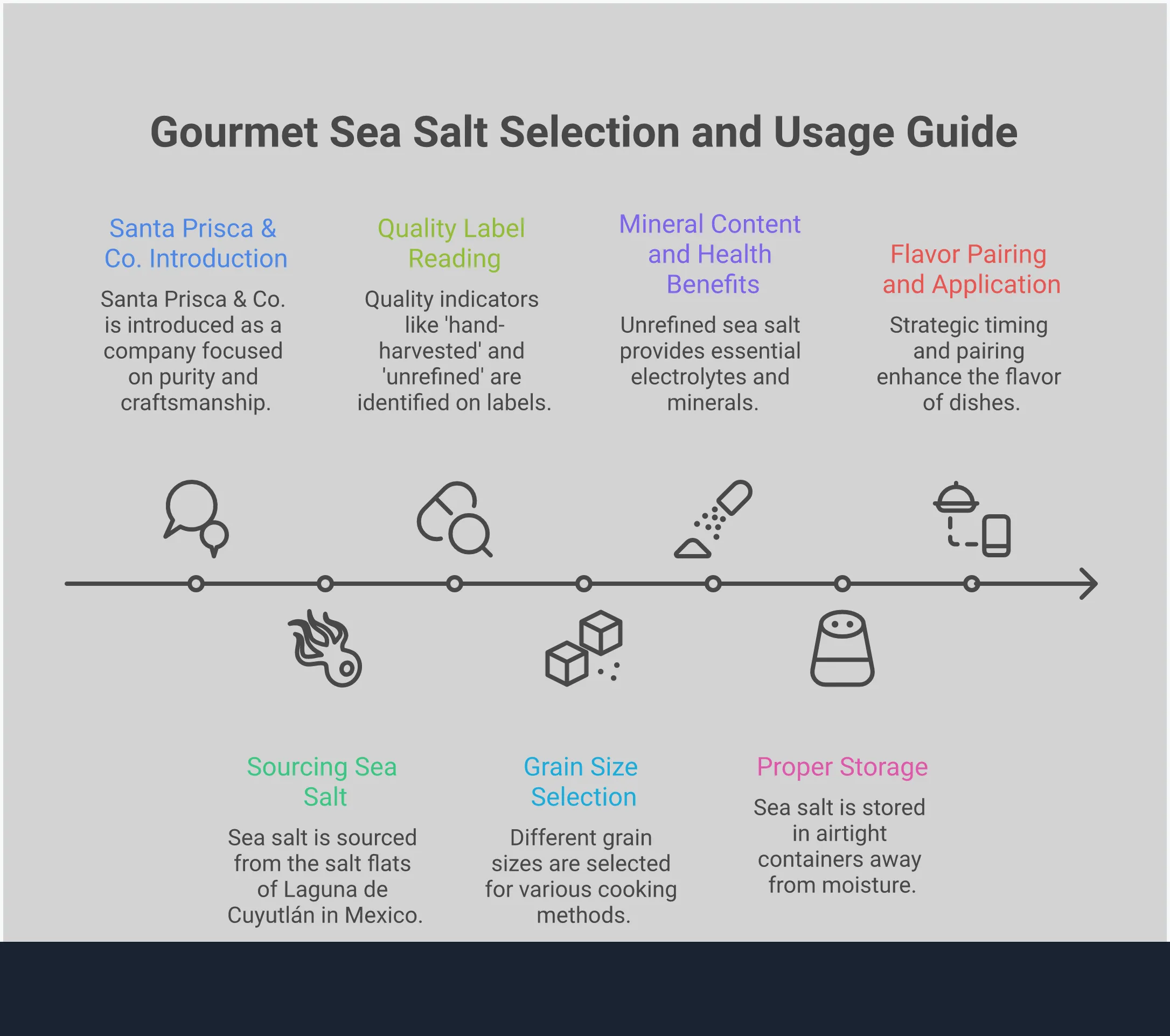
Think of a salt’s label as the first chapter of its story. The most telling signs are often the simplest. Look for clear, direct terms like “sea salt” or “unrefined.” This tells you the salt was born from evaporated seawater, retaining the trace minerals that give it a complex, lingering flavor. If you see a long list of ingredients, especially anti-caking agents like sodium ferrocyanide, it’s a sign the salt has been heavily processed and stripped of its character. A truly pure salt, like our Colima Sea Salt, will have just one ingredient: salt. This beautiful simplicity is the ultimate mark of quality and a promise of clean, unadulterated flavor.
Artisan Producers We Admire
We have a deep respect for the community of artisans who honor the traditional, patient methods of salt harvesting. When you’re exploring different brands, look for those who share their story openly. Do they talk about their connection to the land and the local community? Do they use sustainable harvesting methods that protect the ecosystem for future generations? A brand that values transparency and sustainability is one that cares about the integrity of its product, from the pristine environment it comes from to the responsible packaging it arrives in. These are the producers who see salt not as a commodity, but as a sacred ingredient worth protecting and celebrating.
Understanding Sourcing and Production
Where your salt comes from and how it’s made has the biggest impact on its flavor, texture, and mineral content. True sea salt is a living ingredient, a reflection of its unique origin. Salt harvested from volcanic earth, for example, will have a different mineral profile and a deeper, more resonant flavor than one from a clay-lined salt pan. Learning about a salt’s sourcing and production connects you to its journey and the traditions behind it. This connection does more than just add depth to your food; it supports the local economies and time-honored practices that make these beautiful, natural salts possible, turning a simple seasoning into a meaningful choice.
Where to Buy Gourmet Sea Salt Online
Once you begin to appreciate the nuance of artisan salt, you’ll find a world of options available right at your fingertips. The internet has made it possible to source salts from remote coastlines and ancient salt flats, connecting your kitchen to global traditions. Knowing where to look can help you find a salt that truly resonates with your cooking and wellness philosophy.
Our Favorite Specialty Retailers
Exploring online specialty food shops is a wonderful way to discover the sheer variety of gourmet salts available. Retailers like Spice Jungle curate collections from around the world, offering everything from smoky and infused salts to delicate finishing flakes. These stores are like libraries for the curious cook, allowing you to compare different textures and origins side-by-side. While they provide a broad overview, they are a starting point on a journey that often leads to seeking out the producers themselves. Think of it as the first step in developing your palate and understanding what makes each salt unique.
The Benefits of Buying Directly from the Source
There is a special kind of connection that forms when you buy directly from the people who harvest your food. It closes the distance between the earth and your table, offering a story and a sense of place with every pinch. When you purchase directly from an artisan producer, you gain transparency into the harvesting methods and a guarantee of purity. You can be confident that your Colima Sea Salt, for example, is unrefined, hand-harvested, and free from additives. This direct relationship honors the tradition and labor behind the product, turning a simple ingredient into a meaningful part of your meal.
Finding Value with Subscriptions and Bulk Options
Once you find a salt that becomes a staple in your kitchen, it’s worth exploring more mindful ways to purchase it. Buying in larger quantities is not only more economical but also reduces packaging and the environmental impact of shipping. Many producers offer wholesale inquiries for passionate home cooks, chefs, or small businesses who want to keep their pantries well-stocked with high-quality ingredients. Signing up for a producer’s newsletter can also be a lovely way to stay connected, learn about new harvests, and receive occasional offers, ensuring you always have your favorite mineral-rich salt on hand.
The Wellness Benefits of Unrefined Sea Salt
For so long, we’ve been told to be wary of salt. But what if the salt we’ve been told to avoid is nothing like the salt our ancestors cherished? The conversation changes entirely when we shift our focus from highly processed, stripped-down table salt to unrefined sea salt, harvested with intention. This is salt in its purest form—a crystalline mosaic of minerals that offers so much more than just flavor. It’s a way to connect with the earth and nourish our bodies from the inside out. When we choose a salt that is hand-harvested and untouched by chemicals, we’re choosing an ingredient that works with our bodies, not against them.
Essential Minerals for Your Body
Think of unrefined sea salt as a snapshot of the ocean it came from. Unlike processed table salt, which is stripped of everything but sodium chloride, true sea salt contains a beautiful spectrum of trace minerals. Our Colima Sea Salt is rich with essential minerals like magnesium, calcium, and potassium, which are vital for countless bodily functions. These are the elements that support everything from bone health to a steady heartbeat. When you sprinkle these crisp, sun-dried flakes onto your food, you’re not just adding flavor—you’re adding a burst of mineral depth that your body instinctively recognizes and knows how to use.
How Natural Salt Supports Hydration
Staying hydrated is about more than just drinking enough water; it’s about ensuring your body can actually absorb it. This is where electrolytes come in. The minerals in natural sea salt—sodium, potassium, and magnesium—are powerful electrolytes that help maintain your body’s fluid balance. They are essential for proper nerve function, muscle contraction, and overall cellular health. A pinch of unrefined sea salt in your water or a thoughtful seasoning of your meals can help your body hydrate more effectively, supporting sustained energy and a feeling of true vitality throughout your day.
Aiding Digestion, Gently and Naturally
Good digestion begins in the kitchen, with the ingredients we choose. Unrefined sea salt plays a quiet but important role in this process. It helps stimulate the production of hydrochloric acid in the stomach, which is essential for properly breaking down food and absorbing nutrients. A well-seasoned meal does more than delight the palate; it prepares your body to receive nourishment. By incorporating pure, mineral-rich salt into your cooking, you support your body’s innate digestive wisdom, encouraging gentle, natural function. It’s a simple ritual that honors your food and your well-being.
How to Use Gourmet Sea Salt in Your Kitchen
Bringing unrefined sea salt into your home is an invitation to connect more deeply with your cooking. It’s about more than seasoning; it’s about adding texture, aroma, and a story to every dish. Learning to work with its unique qualities is a simple ritual that can transform your meals. Let’s explore a few ways to honor this incredible ingredient in your kitchen.
The Art of the Finishing Salt
Think of a finishing salt as the final brushstroke on a painting. These salts, with their beautiful, delicate crystalline structures, are sprinkled over a dish just before serving. This preserves their satisfying texture and allows their pure, clean flavor to shine. When you add a pinch of Colima Sea Salt at the end, you’re not just seasoning—you’re adding a crisp flake that lingers on the tongue and a visual touch that signals care. It’s the perfect way to complete a simple avocado toast or a garden-fresh salad.
Cooking with Different Salt Textures
Your salt's texture can completely change a dish. A coarse, crunchy salt creates a savory crust on roasted meats or vegetables, slowly melting to infuse flavor as it cooks. Finer grains dissolve seamlessly into soups, sauces, and dressings. You can also explore infused salts for another layer of complexity. A smoked sea salt, for instance, lends a rich, wood-fired flavor that beautifully complements grilled foods, while an earthy truffle salt brings a luxurious depth to pasta or potato dishes.
Simple Pairings to Make Flavors Pop
A quality sea salt enhances, it doesn't overpower. Its balanced mineral profile brightens the natural flavors of your ingredients. Sprinkle a few flakes over a perfectly seared steak or roasted vegetables right before they hit the table—the contrast is divine. But don’t stop at savory. A pinch of sea salt can also transform sweets, like adding a touch to caramel brownies or a rich dark chocolate mousse to create an unforgettable depth of flavor. It’s a simple adjustment that shows true intention in the kitchen.
What to Consider When Choosing Your Salt
Choosing a salt is an invitation to connect more deeply with your food. It’s about more than just adding a salty note; it’s about texture, mineral content, and the story behind each crystal. When you begin to see salt as a key ingredient rather than an afterthought, you open up a new world of flavor. Considering a few simple factors—like grain size, purity, and flavor profile—can completely transform how you cook and enjoy your meals. It’s a small shift that brings a beautiful sense of intention to your kitchen.
Finding the Right Grain Size and Texture
The texture of salt can be just as important as its taste. Think about the satisfying crunch of a coarse crystal on a slice of ripe tomato or the way a fine grain dissolves instantly into a warm sauce. Gourmet salt is available in a range of grain sizes, each offering a different experience. Coarse salts, like our hand-harvested Colima Sea Salt, are often used as “finishing salts.” Sprinkled over a dish just before serving, they add a final touch of texture and visual appeal. That crisp flake lingers on the tongue, creating a burst of mineral depth that complements the food without overpowering it.
Why Purity and Processing Matter
Not all salt is created equal. Most common table salt is mined from underground deposits and then heavily processed to achieve its uniform, fine texture. This industrial processing strips the salt of its naturally occurring trace minerals. Unrefined sea salt, on the other hand, tells a different story. Harvested from clean ocean waters and dried by the sun, it retains a wealth of essential nutrients. When you choose a pure, unrefined salt, you’re choosing an ingredient that is whole and alive. It’s a simple way to honor your body and bring the nourishing elements of the earth directly to your table.
From Subtle to Bold: A Guide to Flavor Intensity
The world of gourmet salt is full of diverse and complex flavors. Unlike the one-dimensional taste of processed salt, the flavor of sea salt can be surprisingly nuanced—sometimes sweet, flowery, or delicate. The unique mineral composition of the water and earth where it’s harvested gives each salt its signature taste. For those who enjoy a more robust flavor, smoked sea salts offer a rich, smoky character that pairs beautifully with grilled meats and roasted vegetables. Exploring these different flavor profiles is a wonderful way to add layers of depth and character to your cooking, turning a simple meal into something truly special.
What Should a Quality Gourmet Salt Cost?
When you see a bag of artisan salt next to a cylinder of common table salt, the price difference can feel surprising. While you can find many beautiful gourmet salts in the $5 to $10 range, the cost isn’t just about seasoning—it’s about the story, the purity, and the hands that harvested it. The price reflects a commitment to quality that you can taste and feel.
Unlike mass-produced salt, which is stripped of its character and minerals, a gourmet salt carries the essence of its origin. The cost accounts for the remote, pristine environments where it’s sourced, the patient, often traditional methods used to harvest it, and the commitment to keeping it pure and unrefined. Think of it less as a simple commodity and more as an investment in flavor, wellness, and the preservation of artisanal traditions. It’s an invitation to bring a piece of the earth, untouched and vibrant, into your kitchen.
What Influences the Price of Artisan Salt?
The journey from a sun-drenched salt flat to your table is what shapes the value of an artisan salt. The price is a reflection of its careful, intentional production. It begins with the source—we believe in sourcing our salt from the most pristine environments, far from pollutants, where nature does the heavy lifting.
Hand-harvesting is another key factor. This gentle, traditional practice ensures the delicate crystal structure remains intact, preserving both texture and mineral content. There are no harsh chemicals, bleaching, or anti-caking agents involved. Finally, a commitment to sustainability, from eco-friendly harvesting to thoughtful packaging, honors the land that provides this incredible resource. Each of these steps requires more time, care, and human touch than industrial methods, and the price honors that dedication.
How to Find the Best Value
Finding the best value in gourmet salt isn’t about finding the lowest price, but about getting the highest quality for your investment. One of the best ways to do this is to buy directly from the producers who are passionate about their craft. When you shop from the source, you’re not only supporting the artisans but also ensuring you receive the freshest, most authentic product.
Many small producers and specialty retailers offer benefits like free shipping on orders over a certain amount, which can make a significant difference. If you find a salt you truly love, consider purchasing it in a larger quantity. Many brands offer wholesale gourmet sea salts in bulk or larger retail bags, which lowers the cost per ounce and ensures your pantry is always stocked with the good stuff.
Why a Premium Salt Is a Worthwhile Investment
A premium salt is one of the simplest yet most profound ways to honor the food you cook. Its value extends far beyond the initial cost. The complex flavor of a mineral-rich salt means you often need less to make a dish sing, allowing its natural character to shine through. That subtle burst of mineral depth is something refined table salt simply cannot replicate.
Beyond flavor, you’re investing in your well-being. Unrefined sea salt is a source of essential nutrients and trace minerals that support hydration and bodily functions. It’s a small, daily ritual that nourishes your body. Every pinch connects you to a place, a tradition, and a more intentional way of cooking and eating. It’s a simple luxury that transforms everyday meals into moments of gratitude.
Related Articles
- Sea Salt for Cooking: Types, Benefits, and How to Use It Like a Pro
- 7 Best Gourmet Salts to Elevate Your Cooking
- Order Sea Salt Online: The 8 Best Shops for 2025
- The 8 Best Gourmet Salt Brands for Home Cooks
- Mineralized Sea Salt 101: A Complete Guide
Frequently Asked Questions
Is unrefined sea salt actually better for you than regular table salt? The real difference comes down to what’s left in the salt. Table salt is heavily processed, stripping it of its natural trace minerals and leaving behind pure sodium chloride. Unrefined sea salt, on the other hand, retains a whole spectrum of minerals like magnesium and potassium. These elements not only create a more complex, balanced flavor but are also the electrolytes your body uses to stay properly hydrated and support its natural functions.
Can I use gourmet salt in all my cooking, or is it just for sprinkling on top? You can absolutely use it for all your cooking! The key is to think about texture. A coarse, flaky salt is beautiful as a finishing touch on salads or grilled fish because it adds a satisfying crunch. For soups, sauces, or baking, a finer grain is a better choice because it will dissolve evenly. A versatile, medium-grain salt like our Colima Sea Salt works beautifully for both.
My unrefined sea salt sometimes clumps in the shaker. Does that mean it has gone bad? Not at all—in fact, it’s a good sign! That slight clumping is proof that your salt is completely natural and free from the anti-caking agents and chemicals that are added to processed table salt to make it flow freely. A simple tap or shake is usually all it takes to loosen the crystals. It’s a small reminder that you’re using a pure, unadulterated ingredient.
With so many options, what's the best all-purpose gourmet salt to start with? If you're just beginning to explore the world of artisan salt, I recommend starting with one that has a clean, balanced flavor and a versatile texture. A hand-harvested salt like Colima Sea Salt is a perfect choice because its mineral profile is bright without being overpowering. It enhances the natural flavor of everything from roasted vegetables to a simple morning egg, making it an ideal staple for any kitchen.
How should I store my gourmet sea salt to protect its quality? To preserve its unique texture and flavor, it’s best to store your sea salt in a cool, dry place away from direct sunlight and steam. A small ceramic, glass, or wooden salt cellar with a lid is perfect for keeping on the counter. This protects the delicate crystals from absorbing excess moisture from the air, ensuring every pinch is as fresh and crisp as the day it was harvested.