
What is Gourmet Finishing Salt? A Flavor Guide
Written By Santa Prisca & Co Staff Last updated on
Think about the last truly memorable bite of food you had. Chances are, texture played a major role. This is the magic behind a great finishing salt. When people ask what is gourmet finishing salt, the answer is as much about feel as it is about flavor. While cooking salt dissolves and disappears, a finishing salt is all about its physical presence. The crisp, delicate flakes or coarse, crunchy crystals linger on the palate, creating a beautiful contrast with the food. That final sprinkle on a ripe tomato or a seared steak adds a satisfying textural pop that simply cannot be replicated.
Key Takeaways
- Treat Finishing Salt as a Final Ingredient: Unlike table salt, its purpose is to add a final layer of crisp texture and nuanced, mineral-rich flavor right before serving, transforming the entire experience of a dish.
- Add Finishing Salt Just Before Serving: To preserve its signature crunch and bright flavor, sprinkle it on your food at the very end. This keeps the delicate crystal structure intact, which would otherwise dissolve during the cooking process.
- Opt for Unrefined Salt for Purity and Flavor: Hand-harvested sea salts are free from additives and retain essential trace minerals. This results in a more complex, rounded taste and offers a simple way to incorporate nourishing elements into your meals.
What is Gourmet Finishing Salt?
Think of gourmet finishing salt as the final, thoughtful touch to a dish you’ve poured your heart into. It’s a special salt sprinkled over food right before it’s served, meant to enhance both flavor and texture in a way that cooking salt cannot. Unlike the highly processed table salt you might find in a standard shaker, finishing salts are typically unrefined, retaining a wealth of trace minerals from their source.
These salts aren't just for making food "salty." They are chosen for their unique character—a delicate crunch, a surprising shape, or a complex, mineral-rich taste that complements the ingredients it touches. Using a hand-harvested salt like our Colima Sea Salt is an invitation to slow down and appreciate the final moments of creation before a meal is shared. It’s less of an ingredient and more of a garnish, one that adds a whisper of the wild, natural place it came from.
The Art of the Final Flourish
There’s a reason culinary experts add finishing salt at the very end. When you cook with salt, it dissolves, its flavor melting into the dish. But when you finish with salt, you preserve its distinct texture and taste. That final flourish allows the beautiful, crisp flakes to sit atop the food, offering a gentle crunch and a concentrated burst of flavor with each bite. This simple act transforms the experience of eating, adding a new dimension that would be lost to the heat of the pan or pot. It’s a practice in presence, a final gesture of care that honors the food you’ve prepared.
Why That Last Pinch Matters
That last pinch is where the magic happens. It’s a small detail that can turn a simple meal into something truly memorable. A sprinkle of quality finishing salt provides a clean, bright flavor that enhances the food's natural character without overpowering it. Beyond taste, it adds a visual appeal—glistening crystals on a ripe tomato slice or a rustic crunch atop a chocolate brownie. This final touch is a signal that the food was prepared with intention. It’s a simple way to bring the story of an ingredient to the table and to explore how different unrefined salts can completely change the character of a familiar dish.
How is Finishing Salt Different from Table Salt?
It’s easy to think of salt as just… salt. But the shaker of fine white grains on most tables is a world away from the artisanal salts meant to finish a dish. The difference isn't just about being fancy; it’s about texture, flavor, and the story of how it came to your kitchen.
Understanding these distinctions can completely change how you cook and taste your food, turning a simple seasoning into a meaningful final touch.
Texture: From Fine Grains to Crisp Flakes
Think about the texture of common table salt—it’s a fine, uniform grain designed to dissolve instantly. A finishing salt, on the other hand, is all about its physical presence.
These salts are celebrated for their unique crystal shapes, from delicate, paper-thin flakes to satisfyingly crunchy pyramids. When you sprinkle Colima Sea Salt over a ripe tomato or a perfectly cooked steak, you’re adding a crisp layer that lingers on the tongue. This textural contrast is a simple, beautiful way to add another dimension to your food, creating a more engaging bite.
Flavor: Beyond "Salty" to Mineral-Rich Depth
Table salt is heavily processed, stripped of everything until it’s almost pure sodium chloride. This gives it a sharp, aggressive, one-note saltiness.
Gourmet finishing salts tell a different story. Because they are unrefined, they retain a wealth of trace minerals from their source, like magnesium, potassium, and calcium. These elements give the salt a more gentle, rounded, and complex flavor. Instead of just tasting "salty," you experience a subtle mineral depth that enhances the food's inherent flavors without overpowering them. It’s a taste that speaks of the ocean, the earth, and the sun.
Harvest: Honoring Tradition vs. Industrial Processing
The journey from source to table is perhaps the greatest difference. Table salt is often produced through industrial mining and heavy refinement, which strips away its natural character and adds anti-caking agents.
In contrast, many finishing salts are harvested with intention, often by hand, using methods passed down through generations. Our Colima Sea Salt, for example, is gathered from ancient salt flats in Mexico, where the sun and wind naturally evaporate the water. This slow, careful process honors tradition and preserves the salt’s pure mineral structure, giving you a product that is as clean and natural as the place it came from.
Explore the World of Finishing Salts
Once you begin to see salt not just as a seasoning but as a true ingredient, a whole world of flavor and texture opens up. Each finishing salt tells a story of its origin—from the misty coasts of France to the sun-drenched lagoons of Mexico. Exploring them is a simple way to bring intention and a touch of artistry to your everyday cooking.
Fleur de Sel
Often called the “flower of salt,” Fleur de Sel is a beautiful introduction to the world of finishing salts. These delicate, wispy crystals are hand-harvested from the very top layer of salt ponds, primarily on the coast of Brittany, France. Because it’s so light and moist, it dissolves slowly, offering a gentle burst of clean, oceanic flavor. Think of it as the final, thoughtful touch on a fresh summer salad, a perfectly cooked piece of fish, or even a rich chocolate brownie. Its subtle crunch and complex brine add a layer of elegance that is truly special.
Colima Sea Salt
Harvested by hand from the ancient lagoons of Colima, Mexico, this salt is a true expression of its environment. Our own Colima Sea Salt is naturally filtered through volcanic earth and gently sun-dried, a process that preserves its incredible mineral richness. The result is a coarse, moist crystal with a balanced, clean flavor—never overwhelmingly sharp. Its satisfying crunch and subtle mineral depth enhance the natural flavors of everything it touches, from grilled meats and roasted vegetables to a simple slice of avocado. It’s a versatile, foundational salt that connects your cooking to a deep, artisanal tradition.
Himalayan Pink Salt
Known for its beautiful rosy hue, Himalayan Pink Salt is mined from ancient sea beds deep within the Himalayan mountains. That lovely color comes from a wealth of trace minerals, including iron, magnesium, and potassium. Its flavor is mild and gentle, with a firm, satisfying crunch that holds up well on food. Sprinkle it over roasted vegetables, grilled fish, or even a ripe tomato to add a delightful texture and a subtle, mineral-forward saltiness. Its visual appeal also makes it a beautiful salt to serve in a small dish at the table, inviting everyone to add their own final touch.
Black Hawaiian Salt
Visually stunning and deeply flavorful, Black Hawaiian Salt gets its dramatic, jet-black color from activated charcoal, which is bonded with pure sea salt. This process gives it a unique, slightly smoky flavor and a distinct earthy note. The striking contrast it creates makes it a favorite for finishing dishes where you want a touch of drama. Try it on grilled pineapple, seared scallops, or a creamy potato salad. It adds not only a crisp texture and savory flavor but also a visual flourish that makes any dish feel thoughtfully prepared and special.
Smoked and Infused Varieties
For those who love deep, complex flavors, smoked salts are a revelation. These salts are slowly smoked over aromatic woods like hickory, applewood, or alder, infusing each crystal with a rich, savory aroma. A pinch can add the essence of open-fire cooking to grilled meats, roasted potatoes, or even a simple bowl of soup without any extra effort. Beyond smoked salts, you can find a whole universe of infused varieties in our collection of salts, blended with everything from herbs to citrus. These creative salts are an effortless way to add another layer of flavor and intention to your cooking.
How to Use Finishing Salt in Your Kitchen
Think of finishing salt as the final, thoughtful gesture you give a dish before it reaches the table. It’s more than just seasoning; it’s an ingredient in its own right, one that adds a layer of texture and a bright, clean flavor that can transform a simple meal into something truly special. Learning how to use it is less about rules and more about intuition and intention.
Why Timing is Everything
The secret to using a finishing salt is all in the name—it’s meant for the finish. While you might use a heartier, coarser salt during the cooking process to build a deep, foundational flavor within a stew or sauce, a delicate finishing salt is reserved for the very end.
When you sprinkle on a salt like our Colima Sea Salt just before serving, its crisp, flaky crystals remain intact. Instead of dissolving and disappearing into the dish, they sit on the surface, ready to offer a satisfying crunch and a burst of clean, mineral-rich salinity with every bite. This final touch awakens the palate and brightens the flavors already present in the food.
A Guide to Sprinkling, Pinching, and Pressing
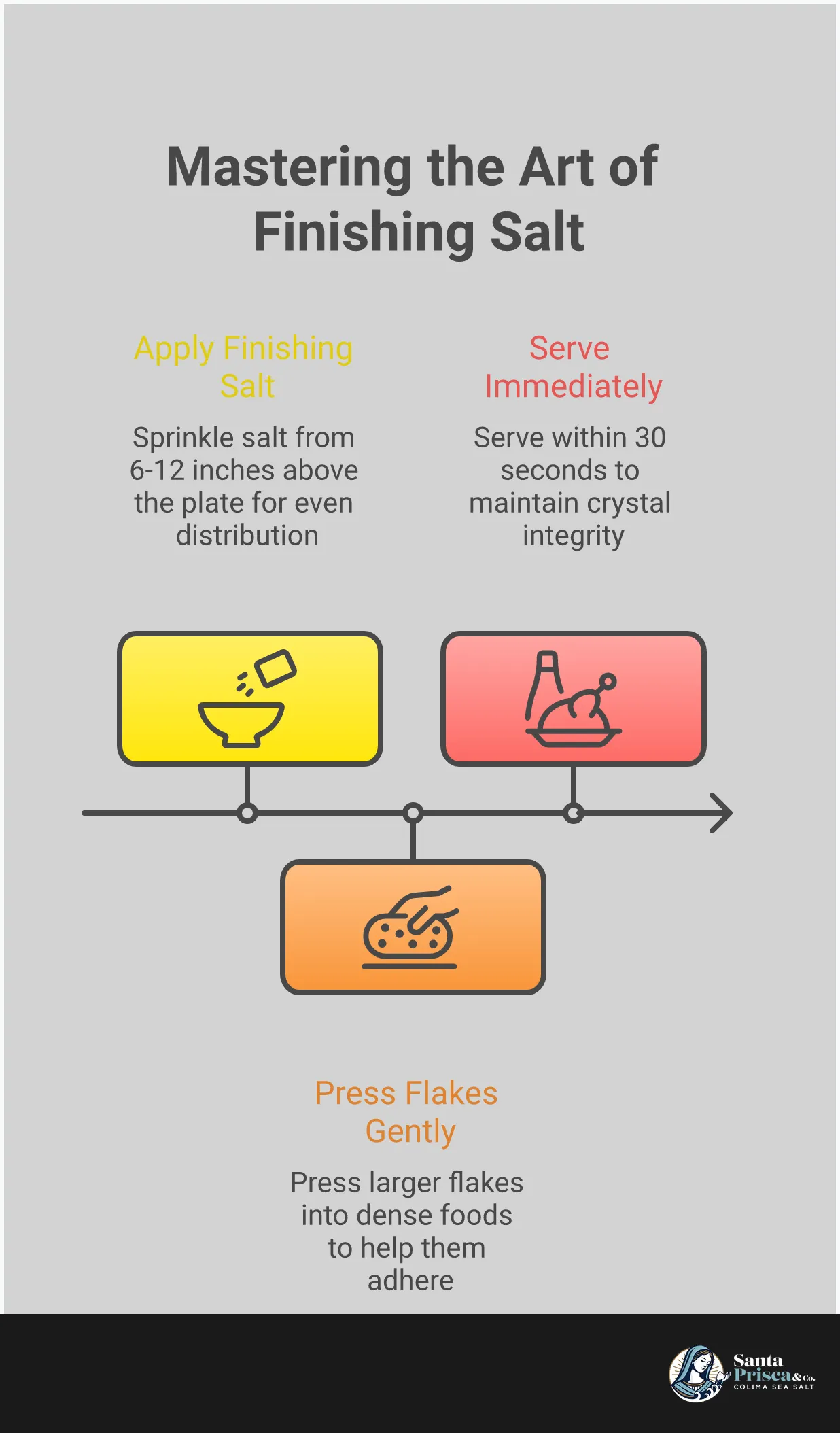
The best tool for applying finishing salt is your own fingertips. This allows you to feel the unique texture of the crystals and control exactly where they land. Pouring directly from a shaker or jar can lead to uneven clumps, but a gentle pinch and sprinkle from a few inches above your plate ensures a light, even cascade.
For heartier foods like a grilled steak or a thick slice of rustic bread, you can gently press the salt flakes into the surface. This helps them adhere and creates a beautiful, crystalline crust. This small, mindful act connects you to your food, turning the simple act of seasoning into a quiet kitchen ritual.
Dishes That Come Alive with a Finishing Touch
While a quality finishing salt can improve almost any dish, some foods are particularly well-suited for its magic. The contrast of its texture and flavor creates a memorable experience that you’ll want to recreate again and again.
Consider trying a sprinkle on:
- Roasted or grilled vegetables: A final dusting brings out their natural sweetness.
- A perfectly cooked steak or fish: The salt cuts through the richness and adds a delightful crunch.
- Fresh salads: It adds a pop of flavor that complements crisp greens and bright vinaigrettes.
- Avocado toast or a simple tomato slice: The salt crystals provide a textural counterpoint to the soft fruit.
- Chocolate desserts: A few flakes on a warm brownie or a rich chocolate mousse creates an irresistible sweet-and-salty harmony.
Once you start, you’ll find endless ways to incorporate this final flourish into your cooking. We invite you to explore our collection and discover how the right salt can bring new life to your favorite meals.
The Wellness Connection of Unrefined Sea Salt
The salt we choose is more than just a seasoning; it’s a connection to the earth and a quiet act of nourishment. When we reach for unrefined sea salt, we’re choosing a product that’s been touched by the sun and sea, not stripped by industrial processing. This choice ripples into our well-being, turning a simple finishing touch into a moment of intention.
Unlike the stark, one-note saltiness of processed table salt, unrefined sea salt carries the story of its origin. It holds a whisper of the ocean and the richness of the earth it came from. This isn't just about flavor—it's about inviting a more complete, mineral-rich element to your table. By embracing salts that are harvested with care, we honor ancient traditions and support our bodies in a gentle, elemental way. It’s a small shift in the kitchen that can create a profound difference in how we feel and how we connect with our food.
Nourish with Naturally Occurring Minerals
Think of unrefined sea salt as a whole food. While refined table salt is stripped down to pure sodium chloride, authentic sea salts retain a beautiful complexity. They are celebrated for their wealth of trace minerals like magnesium, potassium, and calcium, which are essential for our bodies to function well. These minerals do more than just support our health; they create a rounder, more nuanced flavor that is far less sharp than processed salt. A pinch of Colima Sea Salt, for example, offers a burst of mineral depth that enhances food without overpowering it.
Why Traditional Harvesting Makes a Difference
The way salt is gathered has a profound impact on its final quality. Industrial methods often involve chemical washing and high-heat processing that strips away the salt’s natural mineral content. In contrast, traditional, hand-harvesting techniques are a gentle art. This patient process preserves the delicate mineral structure of the salt crystals, ensuring they remain intact from the water to your kitchen. This minimal intervention not only maintains the salt’s incredible flavor profile but also its health-promoting properties, making it a superior choice for anyone looking to cook with intention.
How Trace Minerals Support Your Well-being
The trace minerals found in unrefined sea salt are tiny powerhouses for your body. They play a vital role in everything from regulating hydration and balancing electrolytes to supporting proper nerve and muscle function. When you season your meals with a mineral-rich salt, you’re not just adding flavor—you’re replenishing your body with essential nutrients that are often lost in modern diets. Incorporating these natural salts is a simple way to nourish your body while enjoying a truly delicious experience. It’s a beautiful synergy where exceptional taste and holistic wellness meet.
Common Myths About Gourmet Salt
Let’s clear the air around gourmet salt. There are a few common ideas that can keep us from exploring the beautiful world of unrefined, mineral-rich salts. By looking past these myths, we can open our kitchens to more flavor, texture, and intention in our cooking.
Myth: It’s Only About the Flavor
While the complex taste of a finishing salt is undeniable, its magic goes far beyond that. Unlike processed table salt, which is stripped down to pure sodium chloride, unrefined sea salts retain a wealth of trace minerals like magnesium, potassium, and calcium.
These elements are what give each salt its unique character—from its subtle color to its rounded, less aggressive flavor. It’s not just about adding saltiness; it’s about introducing a gentle, mineral depth that enhances the food it touches, creating a more complete and satisfying taste experience.
Myth: It’s Too Expensive for Everyday Use
It’s true that hand-harvested salt comes with a different price tag than its mass-produced counterpart. But this cost reflects the story behind it: the traditional methods, the respect for nature, and the incredible purity of the final product.
Think of it not as an expense, but as a small investment in your daily meals. A tiny pinch is all you need to transform a simple dish, making it a worthwhile addition to your pantry. When you consider how little is needed to make a significant impact, you realize its value extends far beyond the initial cost.
Myth: All Salts Are Created Equal
This is perhaps the biggest myth of all. The truth is, salts vary significantly in flavor, texture, and how they interact with food. A delicate, flaky Fleur de Sel offers a completely different experience than a coarse, crunchy Sel Gris or a mineral-forward Himalayan pink salt.
Each type of salt brings its own personality to the table. Understanding these beautiful distinctions is the first step toward using salt with intention. It’s about choosing the right crystal to complement your dish, whether you need a quick-dissolving flake for a salad or a robust crunch for a seared steak.
How to Choose the Right Finishing Salt
Choosing a finishing salt is a deeply personal and sensory experience, much like selecting the perfect olive oil or a bottle of wine. It’s about more than just adding salinity; it’s about introducing texture, aroma, and a story to your food. The right salt doesn’t just season a dish—it completes it, turning a simple meal into a memorable moment. When you begin to explore the world of artisanal salts, you’ll find that each one carries the essence of its origin, from the sun-drenched flats of Colima to the ancient mountains of the Himalayas.
Thinking about what you want to create in the kitchen is the first step. Are you searing a steak that calls for a robust, crunchy crystal? Or are you preparing a delicate piece of fish that would be beautifully complemented by a light, flaky salt? Considering the salt’s texture, mineral profile, and how it was harvested will guide you to the perfect choice. This intentional approach allows you to connect more deeply with your ingredients and honor the final dish with a thoughtful, finishing touch.
Match the Salt's Profile to Your Dish
Think of your salt cellar as a spice rack. Different salts have distinct personalities that pair better with certain foods. Use coarser, mineral-rich salts during the cooking process to build a deep, foundational flavor in stews, roasts, and sauces. Save the more delicate, flaky salts for the moment just before serving. A final sprinkle adds a bright burst of flavor and a satisfying crunch that enhances everything from a simple avocado toast to a perfectly ripe tomato salad. The goal is to complement, not overpower, allowing the salt to enhance the natural flavors of your ingredients.
Find Your Preferred Texture and Appearance
So much of the joy of a good finishing salt lies in its texture. For many, the unique crunch is just as important as the flavor itself. Do you prefer a large, crisp flake that shatters between your teeth, or a fine, delicate crystal that melts on your tongue? The visual element is just as significant. The subtle, irregular crystals of a hand-harvested sea salt or the rosy hue of Himalayan pink salt add a layer of beauty to the plate, signaling to your guests that something special is about to be enjoyed. Experimenting with different textures is the best way to discover what truly delights your palate.
What to Look For: Quality and Sourcing
A truly exceptional salt reveals its quality in its appearance and aroma. Look for irregular crystal shapes, subtle natural colors, and a clean, oceanic smell. True artisanal salt is unrefined and free from the anti-caking agents found in common table salt. Choosing salts from producers who honor traditional, sustainable harvesting methods not only ensures a purer product but also supports the planet and the communities behind the craft. Our Colima Sea Salt, for example, is hand-harvested using ancestral techniques, preserving its rich mineral content and unique flavor.
Keep Your Finishing Salt at Its Best
Protect Its Unique Flavor and Texture
A truly special finishing salt is an investment in flavor, a connection to the place it came from. To honor that connection, it’s important to protect its unique qualities. Look for the signs of a pure, unrefined salt: irregular crystal shapes, a subtle, earthy color, and a clean aroma. Unlike processed table salt, artisanal salts are free from anti-caking agents, allowing their natural character to shine through.
These beautiful salts retain trace minerals like magnesium, potassium, and calcium, which give them their distinctive color and a more rounded, less biting flavor. The delicate structure of a hand-harvested flake, like our Colima Sea Salt, is what provides that satisfying crunch and burst of mineral depth. This is what you’re preserving—not just salt, but a story of tradition and terroir.
Simple Storage for Lasting Quality
Caring for your finishing salt is a simple ritual that ensures every pinch is as perfect as the first. The key is to keep it in a cool, dry place, away from the steam of the stove. An airtight container, like a small ceramic cellar or a glass jar with a good seal, is your salt’s best friend. This simple step protects it from moisture and preserves its delicate texture.
You might notice your natural salt clumping over time. This is not a flaw; it’s a sign of purity. Because it contains no anti-caking chemicals, it naturally absorbs a bit of moisture from the air. A gentle shake is usually all it takes to loosen the crystals. By storing it properly, you ensure that its crisp flake and nuanced flavor are ready for that final, transformative flourish on your favorite dishes.
Related Articles
- Gourmet Finishing Salt: A Chef's Complete Guide
- Sea Salt for Cooking: Types, Benefits, and How to Use It Like a Pro
- Gourmet Salts 101: The Ultimate Beginner's Guide
- 8 Types of Gourmet Salt to Elevate Your Cooking
Frequently Asked Questions
Can I cook with finishing salt, or is it only for the end? While you certainly can cook with any salt, using a finishing salt in a simmering sauce or a pot of boiling water would be a missed opportunity. The heat and liquid will dissolve its beautiful, crisp crystals, and you'll lose the unique texture that makes it so special. It's best to use a more robust salt for the cooking process and save your finishing salt for that final flourish right before serving.
Why does my unrefined sea salt clump together in the jar? Seeing some clumping in your salt is actually a good sign. It means the salt is pure and free from the anti-caking agents and chemicals that are often added to processed table salt. Unrefined sea salt naturally retains a bit of moisture, which can cause the crystals to stick together. A gentle shake or a tap of the jar is usually all it takes to loosen them up again.
Is there a real wellness benefit to using finishing salt over table salt? Choosing an unrefined sea salt is about embracing a whole, natural ingredient. Unlike table salt, which is stripped of its minerals, finishing salts retain trace elements like magnesium and potassium from their source. This not only gives them a more complex and gentle flavor but also means you're seasoning your food with a more complete, mineral-rich ingredient. It's a simple way to add a bit more nourishment to your meals.
I'm new to this. What's a good "starter" finishing salt? If you're just beginning to explore the world of finishing salts, I always recommend starting with a versatile and balanced option like our Colima Sea Salt. Its clean, bright flavor and satisfyingly crisp texture work beautifully on almost everything, from roasted vegetables and grilled meats to a simple slice of avocado. It’s a wonderful way to experience the difference a quality salt can make without being overpowering.
How do I know how much to use? I'm worried about making my food too salty. The best approach is to start with less than you think you need. Use your fingertips to take a small pinch and sprinkle it from about a foot above your plate for an even, light dusting. Give it a taste, and then decide if you'd like to add another pinch. Over time, you'll develop an intuition for it, but the goal is always to enhance the food's natural flavor, not to mask it in saltiness.