
What Is Finishing Salt Used For? Add Flavor & Texture
Written By Santa Prisca & Co Staff Last updated on
Think about the satisfying crunch of a perfectly crisp crystal on a creamy slice of avocado, or the way a delicate flake dissolves on your tongue, releasing a clean wave of flavor. This is the magic of a finishing salt. While the salt we cook with melts away, a finishing salt is all about the sensory experience. It’s chosen for its beautiful structure and pure taste, designed to provide a final layer of texture and brightness. The answer to what is finishing salt used for is simple: it’s used to create a more engaging, dynamic, and delicious bite, transforming the act of eating into a moment of true sensory pleasure.
Key Takeaways
- Add It Last for Crunch and Flavor: Finishing salt is sprinkled on food right before serving. This timing is crucial because it preserves the salt's delicate crystal structure, adding a satisfying texture and a final burst of clean flavor.
- Season with Your Senses, Not Just a Shaker: Use your fingers to pinch and apply the salt from about a foot above your plate. This simple technique gives you better control, ensures even coverage, and turns seasoning into a mindful, intentional act.
- Choose Unrefined for a Deeper Taste: The best finishing salts are unrefined and hand-harvested, meaning they retain their natural trace minerals and unique crystal shapes. This results in a more complex, nuanced flavor that enhances food rather than just making it salty.
What Is Finishing Salt? (And Why It’s Not Your Average Table Salt)
Think of the salt you cook with as the foundation of a dish, building flavor from within. A finishing salt, however, is the final, thoughtful flourish. It’s the delicate sprinkle added just before the first bite, meant to be seen, felt, and tasted in its pure, crystalline form. Unlike the fine grains of table salt that dissolve and disappear into a recipe, a finishing salt stands apart, offering a final layer of texture and a clean burst of flavor. It’s less about making something salty and more about making every ingredient shine.
The Final Touch: Seasoning at the Table
Finishing salts are added to food after it’s cooked, right at the table. This simple act transforms a meal from simply finished to intentionally complete. Its purpose is to introduce a bright, mineral-rich salinity and a satisfying crunch that complements the dish without overpowering it. This final touch is a small ritual, a moment to pause and appreciate the food before you. It’s an invitation to engage with your meal on a deeper sensory level, noticing how a few crystals can awaken the flavors of a perfectly ripe tomato or a beautifully seared steak.
Why Crystal Shape and Texture Matter
The magic of a finishing salt lies in its structure. While table salt is processed into uniform cubes, unrefined sea salts are allowed to form their natural, beautifully imperfect crystals. Some are delicate, flaky pyramids; others are coarse, sparkling grains. These unique shapes are what create that delightful textural contrast in your mouth. A high-quality finishing salt, like our hand-harvested Colima Sea Salt, offers a crisp flake that lingers on the tongue, providing a gentle crunch that gives way to a wave of clean flavor. The difference between various salt crystal shapes creates a completely different eating experience.
How Minerals Create a Deeper Flavor
A truly exceptional finishing salt offers more than just saltiness; it provides a complex, nuanced flavor that comes from its rich mineral profile. Harvested from pristine sources and left unrefined, these salts retain naturally occurring trace minerals like magnesium, potassium, and calcium. These elements contribute to a rounder, more gentle flavor that is less sharp than processed salt. This mineral depth not only enhances the taste of your food but also connects you to the place it came from, offering a pure expression of its origin.
How to Use Finishing Salt in Your Kitchen
Bringing a finishing salt into your kitchen is about more than just seasoning; it’s about transforming your food with a final, intentional touch. Unlike the salt you cook with, which dissolves and seasons from within, a finishing salt is added just before serving. This simple act introduces a new dimension of flavor, a delightful texture, and a touch of visual beauty to a dish, turning everyday meals into something truly special. It’s the last layer of care you add to your food, a gesture that honors both the ingredients and the people you’re sharing them with.
Think of it as the final brushstroke on a painting. The foundation is already there, but this last detail brings everything to life. Using a finishing salt encourages a moment of pause, a chance to connect with your food right before you enjoy it. It’s a practice that shifts seasoning from a habit to a mindful ritual, allowing you to appreciate the subtle complexities that a pure, unrefined salt can offer. This small step can completely change your relationship with seasoning, helping you cook with more presence and intention. It’s not about making food salty; it’s about making food taste more fully of itself.
Brighten Natural Flavors
A pinch of finishing salt sprinkled over a dish at the very end can awaken and amplify its natural flavors. Think of it as a spotlight, illuminating the sweetness of a ripe tomato, the earthy depth of roasted vegetables, or the richness of a perfectly seared steak. The complex mineral profile of an unrefined salt, like our Colima Sea Salt, offers a subtle brine and a clean, pure taste that doesn’t just add saltiness, it adds character. This final touch makes every ingredient taste more like itself, creating a more vibrant and memorable experience on the palate.
Add a Satisfying Crunch
Texture is a quiet but powerful part of how we experience food. A high-quality finishing salt lends a delicate, satisfying crunch that creates a beautiful contrast with softer ingredients. Imagine the gentle crispness of a salt flake on a creamy slice of avocado, a soft-boiled egg, or a piece of flaky fish. This textural play makes each bite more interesting and engaging. The unique, irregular shape of hand-harvested salt crystals is what provides this signature crunch, a small detail that can completely change the way you enjoy a familiar dish.
Garnish with a Crystalline Sparkle
We eat with our eyes first, and a sprinkle of finishing salt is one of the simplest ways to make a dish look as good as it tastes. The coarse, crystalline flakes catch the light, adding a subtle sparkle that signals freshness and care. This final garnish can make a simple salad look restaurant-worthy or give a rustic soup a touch of elegance. It’s a small ritual that shows intention in your cooking. This final flourish is a beautiful way to present your food, inviting everyone at the table to slow down and savor the moment.
The Best Dishes for a Finishing Salt
Once you have a beautiful finishing salt in your kitchen, you’ll find yourself reaching for it constantly. Its magic lies in its versatility, transforming simple ingredients into something truly special with just a final, thoughtful pinch. From savory dinners to surprising desserts, a quality finishing salt adds texture, deepens flavor, and makes every meal feel a little more intentional.
Grilled and Roasted Meats
A generous sprinkle of finishing salt over a perfectly cooked steak or roasted chicken just before serving is a game-changer. As the salt crystals hit the warm surface, they gently cling to the crust, offering a delicate crunch and a burst of clean, mineral flavor that cuts through the richness of the meat. This final touch enhances the deep, savory notes developed during cooking. Try it on a juicy grilled steak, thick-cut pork chops, or a whole roasted leg of lamb to bring the flavors to life right at the table.
Fresh Vegetables and Salads
Finishing salt makes simple vegetables feel luxurious. A sprinkle over roasted asparagus or blistered green beans adds a satisfying texture that contrasts beautifully with their tenderness. For fresh salads, the crisp flakes add a welcome crunch and highlight the natural sweetness of ripe tomatoes or crisp cucumbers. A simple salad of mixed greens, drizzled with good olive oil and a scattering of flaky sea salt, is a testament to how minimal ingredients can create a profound flavor experience. It’s a simple way to honor the beauty of seasonal produce.
Seafood and Raw Preparations
Delicate seafood calls for a delicate touch, which is where a fine finishing salt truly shines. Its clean, briny flavor enhances the natural sweetness of the sea without overpowering it. Sprinkle a few flakes over lightly seared scallops, a simple piece of baked cod, or raw preparations like crudo and ceviche. The salt’s crystalline structure adds a subtle texture that works beautifully with the soft, tender nature of fish, creating a more dynamic and interesting bite. It’s the perfect final layer for a bright and refreshing classic ceviche.
Desserts and Sweet Applications
Perhaps the most delightful and unexpected use for finishing salt is in desserts. A few flakes scattered over a rich, dark chocolate brownie or a gooey salted caramel sauce creates an incredible contrast that deepens and intensifies the sweetness. The salt cuts through the richness, cleansing the palate and making each bite more complex and memorable. It’s that little secret that makes people pause and ask what makes your chocolate chip cookies so incredibly delicious. The answer is that final, thoughtful pinch of salt.
How to Apply Finishing Salt Like a Chef
Using a finishing salt is less about measurement and more about feeling. It’s a final, thoughtful gesture that transforms a meal from simple to special. Think of it as the last brushstroke on a painting. Chefs understand that how you apply the salt is just as important as when. This simple practice connects you more deeply to your food, turning seasoning into a small ritual of intention. With just a few techniques, you can bring that same professional touch to your kitchen, making every dish feel complete.
Know When to Add the Final Pinch
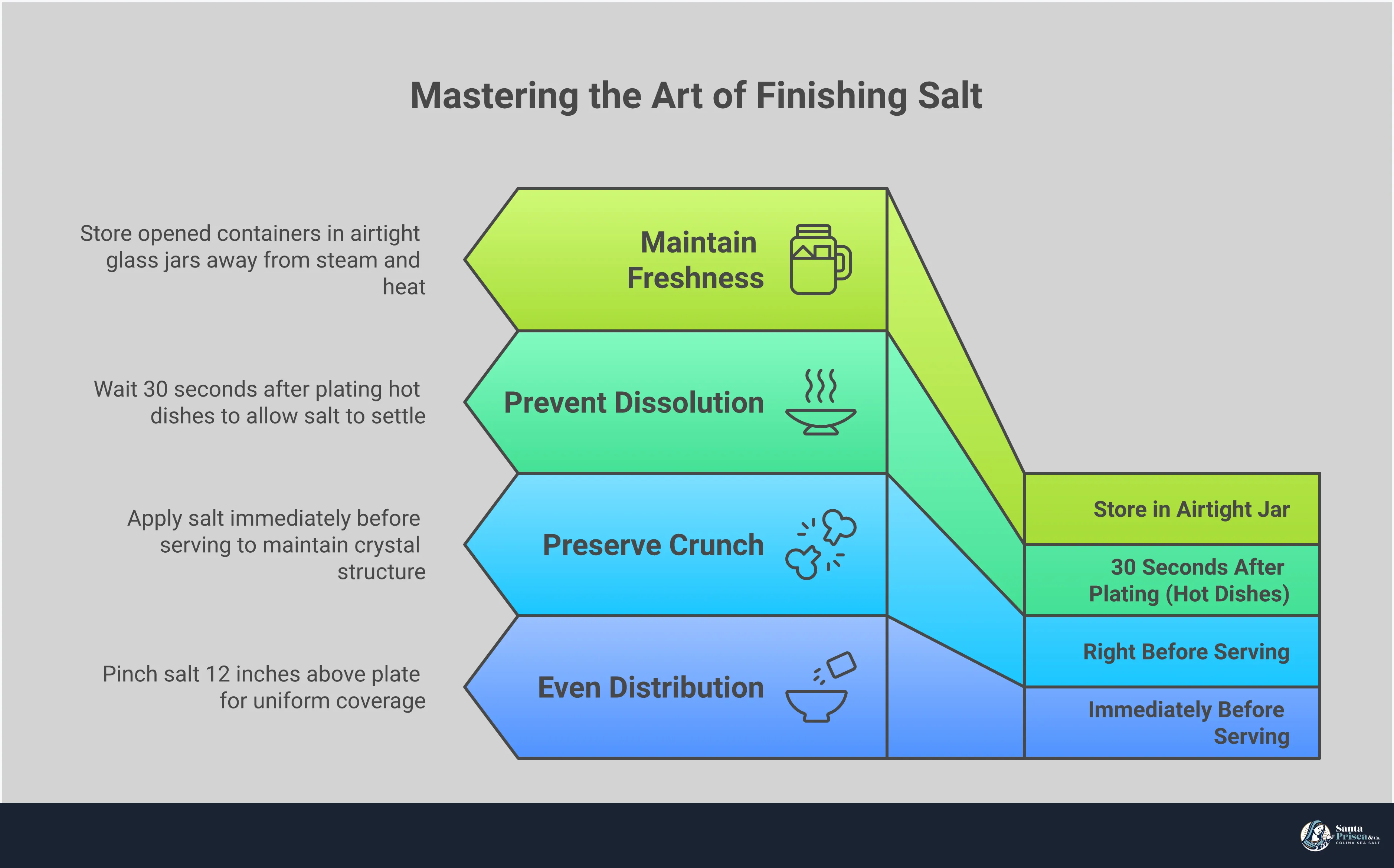
The secret to a finishing salt lies in its timing. It’s meant to be added right before the dish is served. As culinary experts explain, its main job is to add a final burst of flavor and texture right at the end. If you add it too early, the delicate crystals will dissolve into the food, and you’ll lose that satisfying, crisp crunch. Wait until your steak is rested, your salad is tossed, or your chocolate mousse is plated. This final flourish preserves the unique structure of a hand-harvested salt like our Colima Sea Salt, ensuring its crystalline flake can truly shine.
Master the Art of the Pinch
A quality finishing salt is potent and full of mineral complexity. Because of this, a little goes a long way. Instead of shaking it from a container, practice using your fingers. Take a small pinch and feel the texture of the crystals. This tactile connection helps you season with more awareness. Start with a light sprinkle, then taste. You can always add another pinch, but you can’t take it away. This mindful approach honors the ingredient and the dish, allowing the salt to enhance the food’s natural flavors without overpowering them.
Sprinkle from a Height for Even Coverage
Have you ever seen a chef season a dish from high above the plate? It’s not just for dramatic effect. Sprinkling from a height allows the salt crystals to disperse more evenly across the surface of the food. This simple technique prevents you from getting one intensely salty bite and another with no salt at all. It ensures a delicate, balanced seasoning throughout the entire dish. Hold your hand about twelve inches above your plate and let the crystals rain down gently. This method gives you beautiful coverage and turns seasoning into a moment of grace.
Discover Different Types of Finishing Salts
Not all salts are created equal, especially when it comes to that final, transformative pinch. The world of finishing salts is beautifully diverse, with each crystal telling a story of its origin through flavor, texture, and mineral composition. Exploring these different salts is like learning a new language of taste, one that allows you to add nuance and intention to every dish you create. From the sun-drenched flats of Mexico to the coastal ponds of France, let’s get to know some of the most cherished
Colima Sea Salt: Hand-Harvested Excellence
Our own Colima Sea Salt is a perfect example of nature’s artistry. Harvested by hand from the pristine Cuyutlán Lagoon, this salt carries the essence of its volcanic origins. For generations, local salineros have used traditional methods to gather these delicate, sun-dried crystals. The result is a salt with a clean, crisp flavor and a remarkable mineral depth that doesn’t just add saltiness, but enhances the inherent taste of your food. Its moist, irregular crystals dissolve slowly on the tongue, offering a gentle crunch and a lingering, balanced finish that honors any ingredient it touches.
Fleur de Sel: The Flower of Salt
Often called the "caviar of salts," Fleur de Sel translates to "flower of salt." This name beautifully captures its essence. Skimmed by hand from the very top layer of salt ponds in coastal France, these are the youngest, most delicate crystals that form on the water’s surface. It has a light, almost fluffy texture and a high moisture content, which helps it cling to food without dissolving instantly. Its subtle, oceanic flavor is perfect for sprinkling over fresh salads, grilled fish, or even a caramel-topped dessert. Using different finishing salts like this one is about adding a whisper of flavor and a delicate texture.
Maldon Salt: Pyramid-Shaped Perfection
Hailing from the coastal town of Maldon in England, this salt is famous for its striking structure. Maldon salt forms as large, pyramid-shaped flakes that are hollow and incredibly fragile. This unique geometry is what gives it such a satisfying and pronounced crunch. When you bite into a flake, it shatters, releasing a clean, bright burst of salinity that awakens the palate. It’s less about a complex mineral flavor and more about that incredible texture. This makes it a wonderful finishing touch for adding a textural contrast to steaks, roasted vegetables, or even a simple slice of avocado toast.
Smoked and Flavored Finishing Salts
For those who love to layer flavors, smoked and infused salts open up a world of creativity. Smoked salts are cold-smoked over woods like hickory, applewood, or alder, which imparts a deep, savory aroma and taste reminiscent of an open fire. They are incredible on grilled meats, hearty vegetables, and even cocktails. Flavored salts take this a step further, infused with everything from herbs like rosemary and thyme to zesty citrus or fiery chiles. Using finishing salt in this way allows you to add a final, intentional layer of complexity, turning a simple dish into something truly memorable.
Finishing Salt and Mindful Cooking
The final moments of preparing a dish are a quiet opportunity for connection. Instead of rushing to the table, we can pause and consider what the food truly needs. This is where finishing salt transforms cooking from a routine into a ritual. It’s about more than just flavor; it’s about presence. That last pinch of salt, sprinkled from your fingertips, is a gesture of care and intention, a final blessing for the meal you’ve created and are about to share. This simple act invites us to slow down, to appreciate the ingredients, and to connect more deeply with our nourishment.
Season with Intention, Not by Habit
We often salt our food on autopilot, adding it during cooking without a second thought. But a finishing salt asks for a more deliberate approach. As the name suggests, these are salts you sprinkle on food at the very end, just before serving. This final touch is a conscious choice to add a specific texture and a bright, clean salinity that enhances everything it touches. Think of it as a mindful moment to assess the dish. Close your eyes, imagine the flavor, and decide what it needs. This small shift turns seasoning from a habit into an art form, making you a more intuitive and connected cook.
Embrace Naturally Occurring Minerals
Mindful cooking begins with choosing ingredients that are close to their natural state. When you use a sea salt that has undergone very little processing, you’re tasting a salt that contains a beautiful spectrum of health-promoting trace minerals. Unlike refined table salt, which is stripped of its complexity, unrefined salts like our Colima Sea Salt carry the essence of the place they came from. Each crystal holds a story of sun, water, and earth. By choosing a salt rich in naturally occurring minerals, you are not just seasoning your food; you are adding a layer of wholesome, vibrant character that nourishes the body and pleases the palate.
Savor Every Bite
The true magic of a finishing salt reveals itself on the tongue. The delicate, crisp flakes provide a satisfying crunch that contrasts beautifully with the texture of your food. Because the crystals dissolve slowly, they create tiny bursts of flavor with each bite. This allows your taste receptors to sense flavors that might otherwise go unnoticed, creating a more dynamic and engaging eating experience. This textural and flavorful surprise encourages you to slow down and truly savor your meal. You begin to notice the subtle sweetness of a ripe tomato, the earthy depth of roasted vegetables, and the rich character of grilled meat in a whole new way.
Why Choose an Unrefined Sea Salt for Finishing?
Choosing a finishing salt is an act of intention. It’s the final, thoughtful touch you give a dish before sharing it, a chance to add not just flavor but also texture and beauty. When you reach for an unrefined sea salt, you’re choosing a salt in its most natural state, one that carries the story of its origin in every crystal. This choice connects your kitchen to a tradition of mindful harvesting and pure, unadulterated flavor.
Experience a Complex, Mineral-Rich Flavor
Unlike highly processed table salt, which is stripped of its natural minerals and often contains anti-caking agents, unrefined sea salt offers a symphony of flavor. Each crystal of our Colima Sea Salt is a small vessel of trace minerals, a gift from the volcanic earth it was filtered through. This mineral content doesn’t just add a clean, bright salinity; it creates a roundness and depth that you can truly taste. It’s the difference between a single note and a full chord, a simple saltiness that lingers and complements the food it graces.
Support Sustainable, Traditional Harvesting
Your choice in the kitchen can echo far beyond your table. Opting for a hand-harvested, unrefined sea salt often means supporting more sustainable harvesting practices. Instead of disruptive industrial mining, traditional methods like solar evaporation work in harmony with nature’s cycles of sun and wind. This gentle process not only protects the environment but also preserves the cultural heritage of salineros, the salt farmers who have passed down their craft for generations. It’s a beautiful way to honor both the planet and the people who bring this essential ingredient to us.
Appreciate the Artisanal Difference
There is a unique character to something made by hand. Artisanal sea salts are not uniform; they celebrate the beautiful imperfections of nature. You’ll notice the varied crystal sizes, the delicate, flaky texture, and the way they sparkle when they catch the light. This is the salt chefs and passionate home cooks seek out, a finishing touch that enhances a dish with both its complex flavor and its satisfying crunch. When you use an artisanal salt, you’re not just seasoning; you’re adding a layer of craftsmanship to your cooking, appreciating an ingredient that is as special as the meal you’ve prepared.
Common Finishing Salt Mistakes to Avoid
Using a beautiful finishing salt is a simple ritual, but a few common missteps can keep you from experiencing its full potential. When you understand the purpose behind that final pinch, you learn to use it with intention, turning a good meal into a truly memorable one. Let’s walk through the most common mistakes so you can season with confidence and let your ingredients shine. By avoiding these habits, you honor both the food you’ve prepared and the salt itself.
Adding It Too Soon (and Letting It Dissolve)
The magic of a finishing salt lies in its texture and the bright burst of flavor it delivers right before you take a bite. Think of it as the final, thoughtful detail. A common mistake is to add it during the cooking process, like stirring it into a simmering sauce or a pot of soup. When you do this, the delicate crystals dissolve completely, and that signature crunch is lost. The salt simply becomes part of the background seasoning. To get the full effect, always sprinkle it on after the dish is cooked and plated. This preserves the crystal’s integrity, ensuring it provides that satisfying pop of texture and salinity at the very last moment.
Using Too Much and Overpowering the Dish
With a high-quality, unrefined sea salt, a little goes a long way. These salts have a complex, mineral-rich flavor that is much more potent than standard table salt. It’s easy to be heavy-handed, but the goal is to enhance the food, not mask it. A true finishing salt should complement the natural flavors of your ingredients, not overpower them. Start with a small pinch, taste, and then add more if you feel the dish needs it. This mindful approach allows you to find the perfect balance. An exceptional salt like our Colima Sea Salt has a clean, potent salinity that makes it easy to season perfectly with just a few crystals.
Choosing the Wrong Crystal for the Job
Not all salt crystals are created equal, and their shape and size create entirely different sensations. The texture of your finishing salt is just as important as its flavor. A delicate, flaky salt might shatter and melt beautifully over warm chocolate or a fresh salad, while a coarser, more robust crystal provides a hearty, satisfying crunch on a grilled steak or roasted vegetables. Before you sprinkle, consider the texture you want to add. Do you want a subtle crackle or a more pronounced bite? Understanding the different feelings various crystals create will help you choose the perfect salt for every dish.
How to Store Your Finishing Salt
Your finishing salt is a precious ingredient, a collection of tiny crystals carrying the essence of the sun and sea. To honor its journey from the salt flats of Colima to your kitchen, it deserves a little care. Proper storage isn't just about preventing clumps; it's about preserving the very qualities that make it so special—its delicate crunch, its mineral depth, and its pure, clean flavor.
Keep It Away from Moisture and Heat
Salt is naturally hygroscopic, meaning it draws moisture from the air. This is why a salt shaker can get clogged on a humid day. When it comes to a beautiful finishing salt, excess moisture can cause the delicate flakes to stick together, robbing you of that signature crystalline texture.
Find a cool, dry spot in your pantry, away from the steam of a boiling pot or the heat of the stove. High temperatures can subtly alter the salt’s complex flavor profile. By protecting your Colima Sea Salt from these elements, you ensure every pinch is as perfect as the first.
Protect Its Delicate Texture
Beyond moisture, you’ll want to protect the salt’s structure and purity. An airtight container is your best friend here. A small glass jar with a tight-fitting lid or a traditional wooden salt cellar works beautifully, keeping the crystals safe and ready for use.
This also prevents the salt from absorbing other aromas from your kitchen. Because it’s so pure, unrefined sea salt can act like a sponge for strong smells. Sealing it away ensures that when you reach for a final garnish, you’re tasting the clean, mineral-rich flavor of the salt itself, not the garlic you chopped earlier.
Related Articles
- Sea Salt for Cooking: Types, Benefits, and How to Use It Like a Pro
- A Buyer's Guide to Coarse Sea Salt for Finishing
- 5 Best Coarse Finishing Salts to Elevate Your Food
- The Best Salt to Finish a Steak: 8 Top Choices
Frequently Asked Questions
What's the main difference between finishing salt and regular cooking salt? Think of it in terms of purpose. Cooking salt, like fine sea salt or kosher salt, is meant to dissolve into a dish to season it from the inside out. A finishing salt is added at the very end as a final layer. Its larger, more delicate crystals are designed to stay intact, providing a satisfying crunch and a clean burst of mineral flavor that stands out.
Can I use finishing salt during the cooking process? While you certainly can, you would lose the very qualities that make it special. The beautiful, crisp texture of a finishing salt is its main feature. When added to a simmering sauce or a hot pan, those delicate crystals will dissolve just like any other salt, and you'll miss out on that signature crunch and visual sparkle. It's best saved for that final flourish right before serving.
Why does unrefined sea salt taste different from table salt? The difference in taste comes down to the minerals. Standard table salt is heavily processed and stripped down to pure sodium chloride, which gives it a sharp, one-dimensional saltiness. An unrefined sea salt, like our Colima salt, retains its natural trace minerals from the ocean and earth. These elements create a more complex, rounded, and gentle flavor that enhances food rather than just making it salty.
How much finishing salt should I actually use? A quality finishing salt is potent, so you need much less than you might think. The best approach is to use your fingers. Take a small pinch and sprinkle it from about a foot above your plate. This height helps the crystals scatter evenly instead of landing in one spot. It’s always best to start with a light hand; you can add another small pinch if needed.
My sea salt seems a little damp. Is that normal? Yes, that’s completely normal and a good sign of a natural, unrefined salt. High-quality sea salts often retain a bit of moisture from their environment and don't contain the anti-caking agents found in processed table salt. This moisture helps the crystals cling to food beautifully. Storing it in a salt cellar or a small, lidded jar will keep it perfectly ready for use.