
Salt Cellar vs Salt Shaker: Which Is Right for You?
Written By Santa Prisca & Co Staff Last updated on
The tools in our kitchen often have a story to tell. The salt shaker is a relatively modern invention, created for the convenience of dispensing fine, free-flowing table salt. The salt cellar, however, has a much richer history. For centuries, it was a centerpiece on the table, a symbol of hospitality and wealth that held precious, hand-harvested salt. Choosing between a salt cellar vs salt shaker is about more than just function; it’s about connecting with a more traditional, intentional way of seasoning our food, honoring the rituals that have gathered people around the table for generations.
Key Takeaways
- Gain Tactile Control Over Flavor: A salt cellar allows you to season by feel, giving you precise control and helping you develop an intuition for cooking. This hands-on approach is something a shaker simply cannot replicate.
- Choose the Right Vessel for Your Salt's Texture: Coarse, flaky salts like Colima Sea Salt belong in a cellar where their texture can be appreciated and they won't clog a dispenser. Fine-grained salts are better suited for the quick, even flow of a shaker.
- Turn Seasoning into a Mindful Ritual: Beyond its practicality, a salt cellar serves as a beautiful countertop reminder to cook with intention. It protects your artisanal salt and transforms a simple step into a more connected, enjoyable part of your cooking process.
Salt Cellar vs. Salt Shaker: What's the Difference?
Have you ever stopped to think about the simple tools we use to season our food? On most tables, you’ll find a salt shaker, a familiar and functional object. But in many kitchens, especially those where cooking is treated as a ritual, you’ll find a salt cellar. While both hold salt, they offer entirely different experiences, connecting us to our food in unique ways.
Understanding the distinction isn't just about kitchen tools; it's about choosing how you want to interact with your ingredients. One offers convenience, the other, a deeper connection. Let’s explore the nuances between the two and discover which one truly belongs on your countertop.
A Quick Look at Design and Function
At its core, a salt cellar is a small vessel, essentially a bowl or pot designed to hold salt. It can be a simple, open dish or come with a lid or a small spoon. You’ll find them crafted from beautiful, earthy materials like wood, ceramic, or glass. The design invites you to reach in and feel the salt.
A salt shaker, on the other hand, is a container with a perforated top. It’s designed to dispense fine-grained salt by shaking. While practical, this design separates you from the ingredient. You can’t feel the texture or see the unique crystal structure of the salt inside. The cellar is about access and tactility, while the shaker is about containment and quick dispensing.
The Pinch vs. The Shake: How Each Controls Flavor
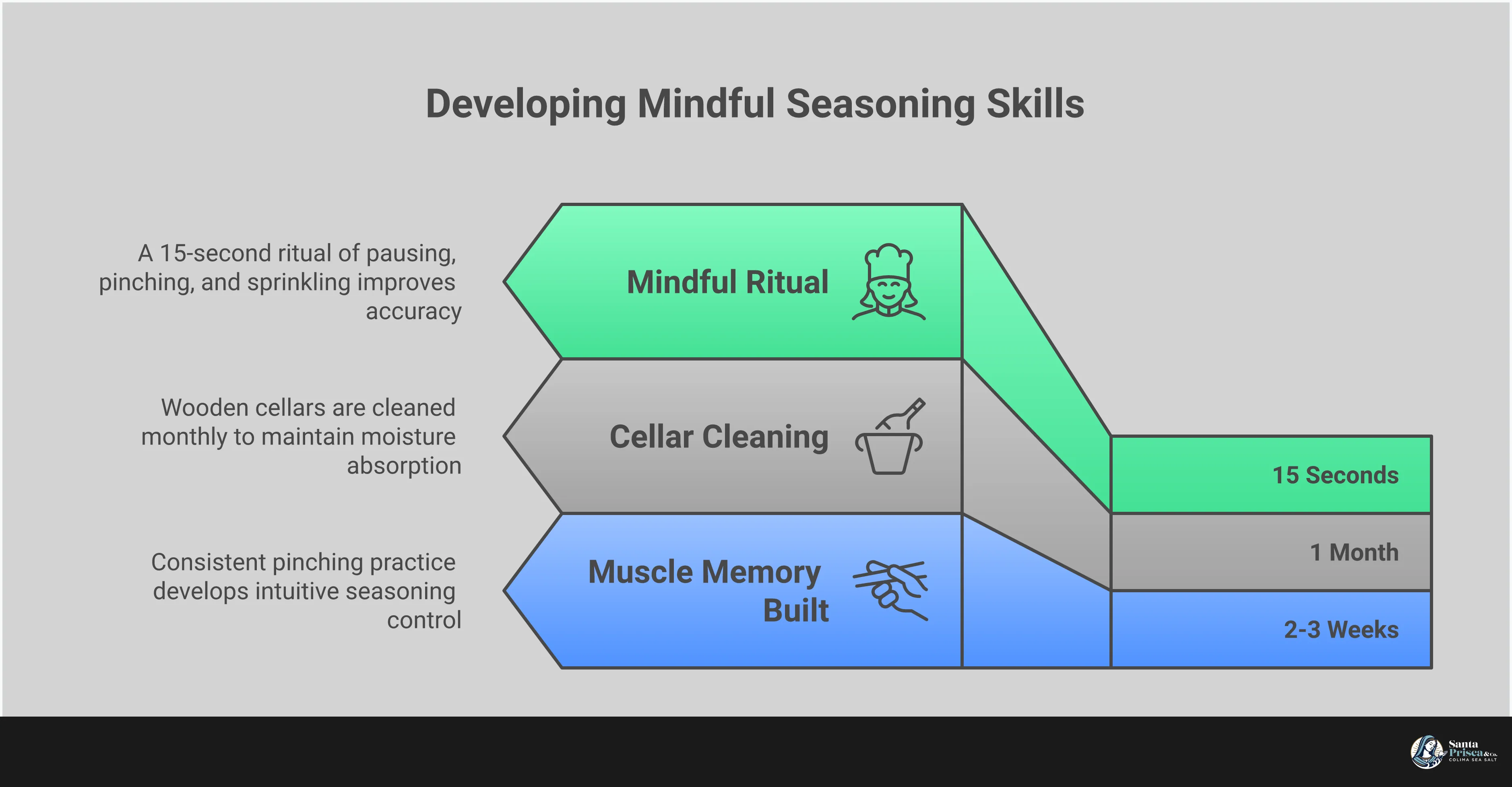
The real magic of a salt cellar lies in the pinch. Using your fingers to season gives you incredible precision. You can feel the exact amount you’re adding, whether it’s a generous pinch for a pot of boiling water or just a few delicate flakes to finish a dish. This tactile connection helps you develop an intuition for seasoning, which can truly make you a better cook.
A shaker, by contrast, can be unpredictable. The salt can come out too fast or get clogged by humidity. It’s harder to gauge how much you’re adding, which can lead to over or under-seasoned food. The pinch from a cellar is a mindful, deliberate act; the shake is often a guess.
Choosing a Material That Lasts
The material of your salt cellar does more than just look beautiful on your counter. It plays a role in keeping your salt fresh. Porous materials like wood or unglazed ceramic are excellent choices because they can absorb ambient moisture, preventing your precious sea salt from clumping. This is especially important for unrefined, mineral-rich salts that don’t contain anti-caking agents.
Glass and glazed ceramic are also wonderful options, offering a clean look and easy maintenance. They seal the salt from the air, protecting its texture and flavor. When you invest in a high-quality artisanal salt, choosing a cellar made from a lasting, natural material honors the ingredient within it.
A Brief History of Seasoning
The salt cellar is not a new invention; it has a rich history dating back to ancient Roman times. For centuries, it was the primary vessel for serving salt at the table, often an ornate object signifying wealth and status. It was a centerpiece, a symbol of hospitality.
The salt shaker only became common much later, with the industrial production of free-flowing table salt containing additives to prevent clumping. This shift moved us away from the open cellar and the communal act of pinching salt. By returning to a salt cellar, we’re not just choosing a kitchen tool; we’re reconnecting with a more traditional, intentional way of seasoning our food.
What Kind of Salt Should You Use?
The salt you choose is just as important as the vessel you keep it in. Not all salts are created equal, and their texture, grain size, and mineral content all play a role in how they interact with your food. A fine, processed table salt behaves very differently from a coarse, hand-harvested sea salt. Understanding these differences is the first step toward seasoning with more confidence and intention. It’s the difference between cooking by rote and cooking with feeling, allowing you to truly taste and adjust as you go.
Think of it this way: a salt shaker is designed for quick, widespread sprinkling, while a salt cellar invites a more deliberate, hands-on approach. The type of salt you fill them with should honor that function. A cellar filled with a beautiful, flaky sea salt allows you to connect with your ingredients on a tactile level, feeling the unique crystal structure between your fingers. A shaker, on the other hand, is better suited for finer grains that need to be distributed evenly and quickly. Let’s explore which salt belongs where, so you can make the most of every pinch and every shake in your kitchen.
Why Flaky Salts Belong in a Cellar
A salt cellar is the perfect home for coarse, flaky salts. When you can reach in and feel the salt between your fingers, you develop an intuitive sense of how much to use. This tactile connection is something a shaker just can’t offer. You can see the delicate crystals and feel their weight, giving you complete control over the seasoning.
Many home cooks find that using a cellar helps them season food better because it builds muscle memory. Plus, from a practical standpoint, the larger flakes of kosher or sea salt often won't fit through the tiny holes of a standard shaker. A cellar gives these beautiful, crystalline salts the space they deserve.
When to Use Fine-Grained Salt in a Shaker
Fine-grained salt is what most of us grew up with, and it has its place in the kitchen. Its uniform, small crystals are designed to flow easily through a shaker, making it useful for a quick dash of salt at the dinner table. It dissolves almost instantly, which can be helpful in certain applications where you want the salt to disappear completely into a dish.
However, that same fine texture can make it difficult to control. It’s easy to accidentally over-salt your food when a heavy stream pours out of the shaker. While a shaker is convenient, it removes the sensory connection you get from pinching salt from a cellar, making it harder to gauge how much you’re actually adding.
Does Salt Grain Size Really Matter?
Yes, it absolutely does. The size and shape of a salt crystal affect everything from how it dissolves to how it feels on your palate. A fine-grained salt will dissolve quickly, delivering an immediate, sharp saltiness. A larger, flakier salt, on the other hand, dissolves more slowly. This creates little bursts of flavor and a satisfying textural crunch that lingers on the tongue.
Over time, working with different grain sizes teaches you how to season different foods. You’ll learn that a delicate fish fillet benefits from a light pinch of flaky salt, while a hearty stew can handle a more generous amount. This understanding moves you from simply following a recipe to truly cooking with intuition and feeling.
Using an Artisanal Salt Like Colima Sea Salt
For a truly special cooking experience, a salt cellar should be filled with an artisanal salt that inspires you. Our hand-harvested Colima Sea Salt is the perfect companion for a cellar. Its coarse, irregular flakes are easy to pinch, and its rich mineral profile adds a subtle complexity that enhances the natural flavor of your food without overpowering it.
Each crystal is a testament to the sun, the sea, and the generations of artisans who have harvested it. Keeping it in a cellar on your countertop is a beautiful way to honor that tradition. It serves as a daily reminder to slow down, connect with your ingredients, and season your meals with intention and gratitude.
Why a Salt Cellar Might Be Your New Favorite Kitchen Tool
If you’ve only ever used a salt shaker, the idea of an open salt cellar might seem a little old-fashioned. But this simple vessel is more than just a container; it’s a tool that invites a more intentional and intuitive approach to cooking. Keeping a cellar on your countertop is a small shift that can fundamentally change your relationship with seasoning, turning a mundane step into a mindful ritual. It connects you to your ingredients, gives you greater control, and brings a touch of timeless beauty to your kitchen workspace.
Season with Intention and Precision
A salt shaker can be unpredictable, but a salt cellar puts you in complete control. When you reach for a pinch of salt, your fingers become the measuring tool, allowing you to feel the delicate texture and release the exact amount you desire. This tactile connection helps you develop a better feel for seasoning, moving from guesswork to precision and ensuring every dish is perfectly balanced.
Connect More Deeply with Your Cooking
The simple act of pinching salt from a cellar fosters a deeper connection to your cooking process. It’s a hands-on gesture that has been practiced in kitchens for centuries, a small ritual that pulls you into the present moment. Instead of mindlessly shaking, you are actively participating in the creation of flavor. This mindful engagement helps you build an intuition for how much salt a dish truly needs, seasoning with confidence and care.
Keep Your Salt Fresh and Dry
High-quality, unrefined sea salts, like our Colima Sea Salt, are free from the anti-caking agents found in common table salt. A salt cellar, especially one with a lid, is the perfect way to protect your salt from kitchen humidity and prevent clumping. It also serves as a gentle visual cue, reminding you to season your food in layers as you cook, building a deeper, more complex flavor profile.
Showcase Your Favorite Specialty Salts
An artisanal salt with a rich history and unique texture deserves to be celebrated, not hidden away in a cabinet. A beautiful salt cellar turns your salt into a functional piece of art for your countertop. It’s the perfect home for showcasing the crisp, mineral-rich flakes of a hand-harvested sea salt, keeping it within arm’s reach for that perfect finishing touch on any dish.
Add a Touch of Style to Your Countertop
Beyond its practical benefits, a salt cellar is an opportunity to bring personal style into your kitchen. These simple vessels come in a beautiful array of materials, from warm woods and smooth ceramics to sleek marble and classic glass. Choosing a salt cellar that resonates with your kitchen’s aesthetic adds a touch of warmth and personality, making your countertop feel both beautiful and ready for creation.
Is a Salt Cellar Sanitary? (Spoiler: Yes!)
It’s a fair question: is it really okay to keep an open container of salt on the counter? The answer is a resounding yes. Salt is one of nature’s most powerful preservatives. Its chemical properties create an environment where most bacteria simply cannot survive, as the salt draws water out of microbes. You can feel confident that the salt in your cellar will remain clean and pure, ready for you to use.
Mindful Salting for Your Well-Being
Using a salt cellar encourages a more mindful approach to seasoning. By taking a moment to pinch and sprinkle, you become more aware of how much salt you’re adding to your food. This isn’t about restriction; it’s about awareness. This practice helps you appreciate the potent flavor of a mineral-rich sea salt, allowing you to use less while achieving a more profound taste. It’s a small act of presence that honors both your body and the food that nourishes it.
How to Choose the Right One for Your Kitchen
Choosing between a salt cellar and a salt shaker is more than a practical decision; it’s about how you want to connect with your ingredients and the rituals in your kitchen. There’s no single right answer, only the one that feels most aligned with your cooking practice and your space. Think of it as choosing a paintbrush for an artist. The right tool can transform the experience. Let’s walk through a few gentle considerations to help you find the perfect vessel for your salt and your home.
Match the Tool to Your Cooking Style
Are you a cook who measures with your heart, or one who follows a recipe to the letter? A salt cellar invites a more tactile, intuitive approach. The simple act of pinching salt with your fingers gives you incredible control, helping you develop a feel for seasoning. You learn what a pinch truly is. A shaker, on the other hand, offers quick, uniform dashes, which can be perfect for the dinner table or for recipes that call for a specific number of shakes. A salt cellar can make you a better cook by connecting you more deeply to the process, turning seasoning from a step into an art.
Think About Upkeep and Convenience
Your kitchen tools should bring ease, not extra work. Both cellars and shakers are wonderfully low-maintenance. A common question is about the open design of a cellar, but salt is a powerful natural preservative that inhibits bacterial growth, so the salt inside stays clean. A cellar with a lid or a swiveling cover can also protect your salt from splashes. Shakers are excellent at keeping moisture out, which is helpful in humid climates, but they can sometimes clog with coarser salts. Ultimately, both are practical tools for better cooking, so the choice comes down to what feels most convenient for your daily rhythm.
Find the Right Fit for Your Kitchen's Aesthetic
The tools we surround ourselves with should bring us joy. A salt cellar can be a beautiful statement piece on your countertop, a small vessel of intention. They come in a variety of materials, from warm, earthy wood to smooth, cool ceramic or elegant marble. You can find one that reflects your personal style and complements your kitchen’s energy. A shaker can be equally stylish, from sleek, modern designs to charming vintage finds. Think about what you want to see every day. A beautiful container holding a mineral-rich, unrefined salt like our Colima Sea Salt is a quiet celebration of simple, quality ingredients.
Making the Right Choice for You
In the end, the choice is yours alone. If you crave a deeper connection to your cooking and want to season with more precision and intention, a salt cellar is a beautiful invitation to do so. It encourages a slower, more mindful practice. If you value speed, simplicity, and a classic tabletop presence, a salt shaker is a reliable and timeless companion. You might even find a place for both in your home: a cellar by the stove for cooking and a shaker on the table for guests. Trust your intuition and choose the tool that will make the simple act of seasoning feel more like you.
Related Articles
- Salt Cellar Guide: Uses, Types, and the Tradition Behind It – Santa Prisca & Co
- 9 Best Salt Containers for Your Kitchen – Santa Prisca & Co
- Your Guide to Buying Pure Salt With No Additives – Santa Prisca & Co
- 7 Best Containers for Salt for Fresher Flavor – Santa Prisca & Co
Frequently Asked Questions
Is it really sanitary to keep salt in an open cellar on my counter? This is a very common question, and the answer is yes, it’s perfectly sanitary. Salt is a natural preservative with antimicrobial properties, which means it creates an environment where bacteria and other microbes can’t survive. For centuries, salt has been used to keep food safe, and the salt in your cellar will stay pure and ready to use.
Will my unrefined sea salt clump if I keep it in a cellar? Because unrefined sea salts like our Colima salt don't contain artificial anti-caking agents, a little clumping can happen, especially in humid weather. However, a good salt cellar can help prevent this. Materials like wood or unglazed ceramic are porous and naturally absorb moisture from the air, keeping your salt flakes dry and loose.
What is the real advantage of pinching salt instead of shaking it? The main advantage is control. When you pinch salt, you develop a tactile sense for exactly how much you are adding to a dish. This practice builds intuition and muscle memory, helping you season your food with much more precision than a shaker allows. It transforms seasoning from a guess into a deliberate, mindful action.
Can I use a salt cellar for fine-grained table salt? You certainly can, but a cellar truly shines when paired with a coarse, flaky salt. The open design is meant to celebrate the texture and crystal structure of artisanal salts, making them easy to grab. Fine salt can be a bit more difficult to pinch accurately, and you miss out on the sensory experience that makes using a cellar so special.
Do I need a salt cellar with a lid? Whether you choose a cellar with a lid is a matter of personal preference. A lid offers extra protection from kitchen humidity or accidental splashes, which can be helpful if your cellar is right next to the stove. An open cellar, however, provides the quickest and easiest access. Both are excellent choices for keeping your salt fresh and within reach.