
What is Ethically Sourced Salt? A Conscious Guide
Written By Santa Prisca & Co Staff Last updated on
There is a world of flavor beyond the harsh, one-note taste of conventional table salt. A truly great salt has a clean, crisp flake that dissolves on the tongue with a subtle mineral depth, brightening food without overpowering it. This remarkable difference in taste and texture isn’t an accident; it’s a direct result of how and where the salt was harvested. The answer to what is ethically sourced salt lies in this very connection between process and palate. It’s a story of sun, wind, and patient hands working in harmony with nature to produce a seasoning that is as pure and vibrant as its origins.
Key Takeaways
- Your choice tells a story: Selecting an ethically sourced salt means you are supporting sustainable harvesting methods that honor the earth and fair labor practices that respect the communities behind the product.
- The process protects the purity: Traditional methods like solar evaporation and hand-harvesting ensure the salt retains its natural trace minerals, resulting in a more complex flavor and texture compared to heavily processed conventional salt.
- Look for what's left in, not what's taken out: When buying salt, check the label for the word "unrefined" and a simple ingredient list. This is the clearest sign you're getting a pure product without the chemical additives and anti-caking agents found in most table salts.
What is Ethically Sourced Salt?
Have you ever paused to consider the journey of the salt you sprinkle over your food? It’s more than just a mineral; it’s a story of land, water, and hands. Ethically sourced salt is harvested with deep respect for the earth and the people who tend to it. It’s a conscious choice to support practices that are sustainable, fair, and transparent, turning a simple seasoning into a meaningful connection to our food system. When we choose salt with intention, we honor the entire process, from the pristine lagoons to our kitchen table.
Honoring the Land: Environmental Responsibility
Ethical salt begins with a gentle touch. It means the salt is harvested in a way that causes the least possible harm to the environment. The most sustainable way to get salt is through solar evaporation, a timeless method that uses nothing more than the sun and wind to slowly transform seawater into delicate crystals. This natural process works in harmony with the surrounding ecosystem, protecting the wildlife that calls these salty ponds home. Unlike industrial operations that can disrupt fragile habitats, this patient art of harvesting ensures the land remains as pure as the salt it provides. It’s a quiet partnership with nature, not a conquest of it.
Supporting Communities: Fair Labor Practices
Beyond the environment, ethical sourcing is deeply human. It’s about recognizing the artisans and communities whose traditions bring this essential mineral to us. This means ensuring fair wages and safe working conditions for every person involved in the harvest. When a company commits to social accountability, it invests in the well-being of its workers and their families, preserving generational knowledge and empowering local economies. Choosing ethically sourced salt is an act of gratitude for the skilled hands that carefully rake, gather, and protect the salt, honoring their craft and their contribution to our tables.
Ethical vs. Conventional Salt: What's the Difference?
So, what truly separates an ethical salt from a conventional one? The difference lies in intention. Conventional table salt often comes from industrial mining or chemical-heavy processing that strips it of its natural minerals and can damage the environment. The human cost is often hidden, too. In contrast, an ethical salt, like our hand-harvested Colima Sea Salt, represents a commitment to a better way. When you choose an ethically sourced salt, you are casting a vote for a more transparent and equitable food system. You’re choosing a product that not only tastes better but also feels better, knowing it was sourced with care for both planet and people.
How Artisans Harvest Ethical Salt
The journey of ethical salt from the earth to your kitchen is one of patience, tradition, and deep respect for nature. It’s a story that unfolds in sun-drenched landscapes, guided by the hands of artisans who have honored these practices for generations. Unlike industrial production, which often prioritizes quantity over quality, artisanal harvesting is a collaboration with the elements. It’s about understanding the rhythm of the sun, the tides, and the land itself.
This gentle, time-honored process ensures that the salt retains its pure, mineral-rich character. Every crystal is a testament to a method that supports not just the environment, but also the communities whose livelihoods are interwoven with the salt flats. When we choose ethically harvested salt, we’re not just seasoning our food; we’re honoring a legacy of sustainable craftsmanship and preserving a connection to the natural world. It’s a conscious choice that brings a story of integrity and care to our tables.
Working with Nature: The Art of Solar Evaporation
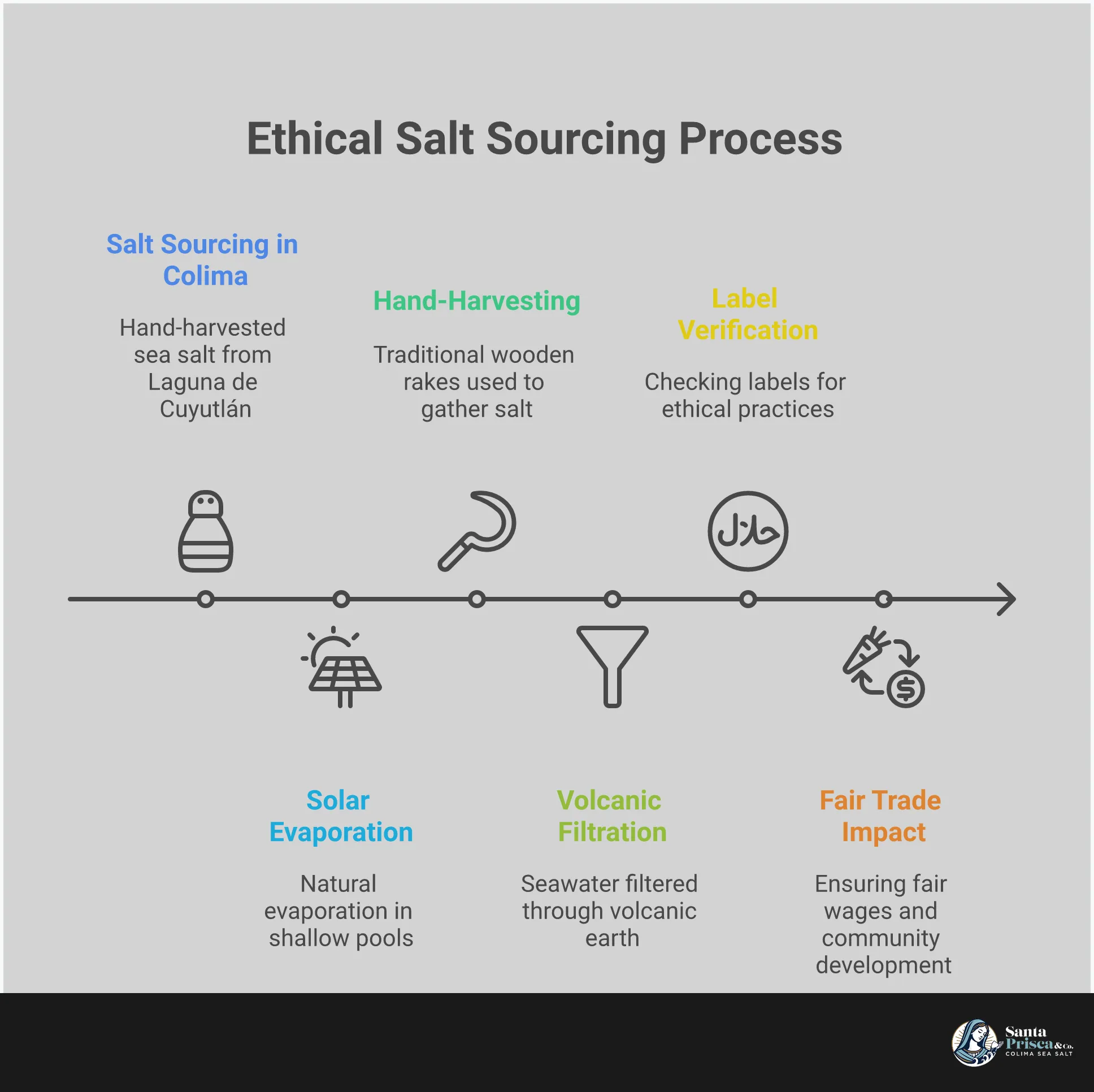
Imagine shallow pools of seawater shimmering under a warm sun. This is the beginning of solar evaporation, a beautifully simple and ancient method of harvesting salt. Artisans channel seawater into these beds, or salinas, and then let nature take the lead. The sun and wind work in harmony to slowly evaporate the water, leaving behind a delicate, concentrated layer of pure salt crystals.
This process is one of the most sustainable ways to get salt, relying entirely on renewable solar energy. It’s a slow, intentional practice that requires no harsh chemicals or disruptive machinery. By working with the natural cycles of the environment, artisans can produce a salt that is as pure as the landscape it comes from, all while supporting their local economies.
The Human Touch: Traditional Hand-Harvesting
Once the sun has worked its magic, the human touch becomes essential. Using traditional wooden tools, skilled artisans, known as salineros, gently rake and gather the delicate salt crystals by hand. This careful, manual work is crucial for preserving the salt’s unique texture and structure, ensuring each flake remains intact. It’s a skill passed down through generations, a dance of precision and care.
This commitment to tradition does more than protect the quality of the salt; it honors the people who harvest it. It ensures fair wages and safe conditions, supporting the livelihoods of entire communities. Each bag of our Colima Sea Salt carries the story of these dedicated artisans and their commitment to their craft.
A Gift from the Earth: Natural Volcanic Filtration
What makes Colima Sea Salt truly special is a step that happens long before the sun touches the water. The seawater begins its journey by being naturally filtered through ancient volcanic earth. This passage through the ground is a gift from the land itself, a slow purification process that removes impurities while infusing the water with a rich spectrum of essential minerals.
This natural volcanic filtration is what gives the salt its remarkable depth of flavor and unique nutritional profile. You can taste the clean, crisp minerality in every crystal. It’s a process that cannot be replicated by industrial means, resulting in a salt that is not only more flavorful but also more beneficial, offering a pure taste of its pristine origins.
What to Look for When Buying Ethical Salt
Walking down the grocery aisle can feel overwhelming, with so many labels vying for our attention. When we choose ingredients for our kitchen, we’re doing more than just buying food—we’re making a statement about what we value. Choosing an ethical salt means looking beyond the price tag to understand the story behind each crystal. It’s about honoring the earth it came from and the hands that gathered it.
Learning to read the labels is a simple way to bring more intention to your cooking. These certifications aren’t just symbols; they are promises of purity, fairness, and respect for our planet. They guide us toward brands that align with a more conscious way of living and eating, ensuring that what we bring to our table is not only good for our bodies but also good for the world. By understanding what these labels mean, you can feel confident that your choices support a healthier, more sustainable food system for everyone.
Understanding Organic Certifications
You might see the term "organic" and wonder how it applies to a mineral like salt. While salt itself can't be grown like a plant, organic certifications here refer to the environment and the harvesting process. This label ensures the salt comes from a source free of synthetic pesticides and pollutants. It’s a promise that the water is pure and the surrounding land is untouched by harmful chemicals. Think of it as a guarantee of cleanliness, ensuring that the salt on your table is as pristine and unadulterated as nature intended. It’s a simple way to know you’re getting pure mineral goodness, without anything extra.
What Fair Trade Labels Really Mean
Beyond the environmental impact, ethical sourcing is deeply human. Fair trade labels tell a story of community and respect, signifying that the artisans and workers behind the salt are paid a fair, living wage for their craft. This practice empowers local communities, helping to preserve generational traditions and skills that might otherwise be lost. When you see a fair trade certification, you know your purchase directly supports the well-being of the people who so carefully harvested your salt. It’s a beautiful way to connect with the producers and honor their essential role in bringing this ingredient to your kitchen.
Decoding Environmental Certifications
Certain labels speak directly to the salt’s relationship with the earth. Environmental certifications, like those from organizations such as Friend of the Sea, are a testament to a company’s commitment to sustainability. These programs set strict guidelines to ensure that harvesting methods have a minimal ecological footprint. This means protecting marine ecosystems, preserving biodiversity, and using resources responsibly. When you choose a salt with an environmental certification, you’re supporting a process that works in harmony with nature, not against it. It’s a vote for a healthier planet and cleaner oceans for generations to come.
The Importance of Third-Party Verification
In a world full of marketing claims, how do we know which ones to trust? This is where third-party verification becomes so important. When an independent organization assesses a company’s practices, it provides an unbiased and credible seal of approval. This verification confirms that a brand’s commitment to ethical and sustainable sourcing is more than just words—it’s a practice they uphold every day. Third-party verification offers us peace of mind, assuring us that the salt we choose is genuinely produced with integrity and care for both people and the planet. It’s the difference between a claim and a promise.
The Hidden Costs of Conventional Salt
The bright white salt shaker on most tables tells only a fraction of its story. Behind that seemingly simple seasoning, there’s often a complex and costly journey from the earth to your kitchen—a journey with impacts that reach far beyond flavor. When we look closer at conventional salt, we uncover hidden costs to our planet, its ecosystems, and the people who inhabit them.
The Environmental Toll of Industrial Production
Most of the salt you find in the grocery store is produced on a massive scale. It’s either extracted through industrial rock salt mining or through large-scale evaporation ponds that bear little resemblance to the natural salt flats we cherish. One common method, solution mining, involves pumping huge amounts of water underground to dissolve salt deposits, which are then brought to the surface. These methods are designed for efficiency and volume, not for harmony with the environment. They can require significant energy and disrupt the land in ways that take generations to heal. Choosing salt from sustainable sources is a small but meaningful way to honor the earth’s resources.
How Industrial Salt Harms Local Ecosystems
The impact of industrial salt production ripples outward, often harming the delicate balance of local ecosystems. Large, man-made evaporation ponds can displace wildlife, particularly the birds that rely on natural coastal wetlands for their habitat. It disrupts a rhythm that has existed for centuries. Even more concerning is the leftover brine, a super-concentrated saltwater called bitterns. When this byproduct is released back into waterways, it can be toxic to fish and other marine life, altering the water’s chemistry. This stands in stark contrast to traditional harvesting methods that work in partnership with nature, ensuring the local environment remains vibrant for generations to come.
The Human Cost of Mass-Produced Salt
The story of salt is also a human story. In the rush to produce salt cheaply and quickly, the well-being of workers can be overlooked. Mass production often prioritizes machinery over people, and in some parts of the world, this can lead to poor working conditions and unfair wages for the individuals who perform the demanding labor of salt harvesting. Ethical sourcing is about recognizing the hands that gather our food. It means choosing salt from producers who are committed to fair labor practices, ensuring that communities are supported and that their traditional skills are honored. When we choose artisanal salt, we are investing in a system that values both the product and the people who bring it to us.
Uncovering Chemical Processing and Additives
The journey for conventional table salt doesn’t end at the harvest. To achieve that uniform, pure white appearance, it is often stripped of its natural trace minerals through heavy processing. The salt is washed, bleached, and heated to extreme temperatures, removing the very elements that give unrefined sea salt its unique character and depth. After this refining process, anti-caking agents and other additives are typically mixed in to prevent clumping. This means the final product is far from the pure, wholesome crystal that the earth provided. Choosing a truly unrefined sea salt means you are getting nothing but pure salt, rich with the minerals and flavor that nature intended.
How to Choose an Ethical Salt for Your Kitchen
Choosing a salt can feel like a small act, but it’s one of the most fundamental decisions we make in the kitchen. When we choose with intention, this simple ingredient can connect us to the earth, support communities, and bring a depth of flavor to our food that transforms a meal into an experience. Here’s how to find a salt that aligns with your values and palate.
How to Read a Salt Label
The story of a salt begins on its label. Look past the marketing and search for words that speak to its origin and process, like “hand-harvested,” “unrefined,” and the specific region it comes from. These details often point to a more mindful production.
Certifications can also be a helpful guide. While not all small producers can afford them, labels for organic or fair trade practices show a commitment to sustainable practices. Pay attention to what isn’t on the label, too. The best salts have a simple ingredient list: just salt. Avoid anything with anti-caking agents or other additives.
Why Supporting Artisanal Producers Matters
When you choose an ethically sourced salt, you are casting a vote for a more equitable food system. It’s a beautiful exchange that honors the hands that harvested each crystal and supports the livelihoods of small-scale producers and their families.
This choice ripples outward, preserving traditional methods passed down through generations and protecting the delicate ecosystems where the salt is born. It’s a shift from a simple transaction to a meaningful connection. You’re not just buying a product; you are becoming part of a story of heritage, respect, and community.
Taste the Difference: The Flavor of Ethical Salt
There is a world of flavor beyond the harsh, one-note taste of conventional table salt. Ethically sourced sea salts offer a more nuanced and complex flavor profile because they retain their natural trace minerals.
Our Colima Sea Salt, for example, has a clean, crisp flake that dissolves on the tongue with a subtle mineral depth, a gift from the volcanic earth it’s filtered through. This isn’t just saltiness; it’s a flavor that enhances and brightens food without overpowering it. It’s the difference between simply seasoning a dish and truly awakening its essence.
Make the Switch to Unrefined Sea Salt
Making the switch to unrefined sea salt is one of the simplest, most impactful changes you can make in your kitchen. Because it is less processed, it holds onto the minerals it was born with, like magnesium and potassium. These elements not only contribute to its rich flavor but also offer gentle support for our bodies.
By choosing a pure, unrefined salt, you invite more nourishment and intention to your table. We invite you to experience the pure, sun-dried crystals of our Colima Sea Salt. Notice how its delicate texture and balanced flavor bring your favorite recipes to life. It’s a small change that makes every meal feel more thoughtful.
Related Articles
- How to Buy Fair Trade Sea Salt: 4 Brands to Trust – Santa Prisca & Co
- 5 Best Sustainable Sea Salt Brands of 2025 – Santa Prisca & Co
- Raw Sea Salt Guide: Benefits, Uses, and Meaning – Santa Prisca & Co
- Unrefined Sea Salt: Ultimate Flavor & Health Guide – Santa Prisca & Co
- What Makes Artisanal Small Batch Salt Special? – Santa Prisca & Co
Frequently Asked Questions
Is there really a big difference between ethical sea salt and the salt I usually buy at the store? Yes, the difference is significant and touches on everything from flavor to environmental impact. Conventional table salt is often heavily processed, stripped of its natural minerals, and sourced in ways that can harm ecosystems. Ethically sourced salt, on the other hand, is harvested in harmony with nature and supports the communities who gather it. It’s an unrefined, whole ingredient that carries the story of its origin in every crystal.
Why does ethically sourced salt sometimes cost more? The price reflects the immense care and manual labor involved in its journey. Instead of industrial machinery and chemical processing, ethical salt is often gathered by hand by skilled artisans who earn a fair, living wage. This patient, traditional method protects the environment and preserves the salt's pure quality. You're not just paying for a seasoning; you're investing in a more sustainable and equitable food system.
What does 'unrefined' actually mean when it comes to salt? Unrefined means the salt is left in its pure, natural state, just as the earth provided it. It hasn't been bleached, heated to extreme temperatures, or stripped of its valuable trace minerals like magnesium and potassium. This is why unrefined salts, like our Colima Sea Salt, have a more complex flavor and a unique texture. It’s salt without any subtractions or additions.
How can I tell if a salt is truly ethically sourced if it doesn't have a certification? Certifications are a great guide, but many small, artisanal producers may not have them. Look for transparency from the brand. Do they share the story of where their salt comes from and how it's harvested? Words like "hand-harvested," "artisan," and details about a specific origin are excellent clues. A company that is proud of its process will be open about its relationship with the land and its people.
Does unrefined, ethical salt actually taste different? Absolutely. Because unrefined salt retains its natural mineral profile, it offers a more nuanced and balanced flavor. Instead of a sharp, one-note saltiness, you’ll notice a clean, almost subtle depth that enhances food without overpowering it. Our Colima Sea Salt, for example, has a crisp flake and a mineral-rich finish that comes from its unique volcanic filtration—a taste that simply can't be replicated.