
4. The Cook's Guide to High Quality Finishing Salt for Sale
Written By Santa Prisca & Co Staff Last updated on
Every ingredient in your kitchen has a story, but few carry the essence of their origin quite like salt. A true finishing salt is a taste of a specific place—the sun, the sea, and the hands that gathered it. Unlike heavily processed table salt, which is stripped of its character, artisanal salt is a whole food, reflecting the unique mineral profile of its home. When you choose a salt that is hand-harvested using traditional methods, you’re honoring a craft and connecting your cooking to a rich heritage. Searching for a high quality finishing salt for sale becomes a way to support sustainable practices and bring a piece of that story to your own table, adding depth and meaning to every meal.
Key Takeaways
- Add it last for flavor and crunch: A finishing salt’s purpose is to be sprinkled on just before eating. This preserves its delicate crystal structure, adding a satisfying texture and a clean burst of salinity that makes the dish feel complete.
- Look for an unrefined, artisanal source: The best finishing salts are pure, hand-harvested, and free from additives. Their unique mineral content and flavor come directly from their origin, connecting your cooking to a specific place and tradition.
- A small pinch makes flavors brighter: Start with a versatile flaky sea salt to see how it enhances both savory and sweet foods. A light sprinkle can deepen the richness of chocolate or bring out the natural sweetness of roasted vegetables.
What is Finishing Salt (and How is it Different from Table Salt)?
Imagine a perfectly ripe avocado, sliced and fanned out on a plate, or a warm, fudgy brownie fresh from the oven. What’s the one simple thing that can make these moments even more special? A tiny sprinkle of the right salt. This is the beautiful role of finishing salt. It’s not the salt you cook with, but the one you garnish with, turning a simple dish into something truly thoughtful.
Think of common table salt as a foundational ingredient, one that dissolves into a dish to season it from within. It’s essential, but it works behind the scenes. Finishing salt is the final flourish, the star of the show added just before serving. Its purpose is to introduce a bright pop of flavor and a delicate, satisfying crunch right on the surface of the food. It’s a simple act that transforms a meal from good to memorable, adding texture and a visual sparkle that signals care and intention. This small gesture is less about making food overtly salty and more about making its inherent flavors sing with clarity and depth. It’s the difference between a meal that’s just seasoned and one that feels complete.
It’s All in the Crystal Structure
The real magic of a finishing salt lies in its physical form. Unlike the tiny, uniform cubes of processed table salt, finishing salts are harvested to preserve their unique, natural crystal structures. They can be delicate, paper-thin flakes or light, pyramidal crystals that collapse on the tongue.
This structure is everything. When you sprinkle a flaky salt like a French fleur de sel or our own Colima salt onto food, the crystals don't dissolve immediately. Instead, they linger for a moment, offering a delightful crunch and a clean burst of salinity that highlights the food's flavor without overwhelming it. It’s a textural experience that fine, granulated salt simply can’t replicate.
Why Minerals Matter for Flavor and Wellness
Beyond texture, the difference runs deeper—down to the minerals. Most table salt is heavily refined, stripped of its natural trace minerals and often treated with anti-caking agents. Finishing salts, especially unrefined sea salts, are a world apart. They are a whole food, carrying the mineral signature of the place they came from.
Our Colima Sea Salt, for example, is hand-harvested from ancient salt flats, giving it a unique mineral profile rich in elements like magnesium, calcium, and potassium. These minerals do more than just support our body’s balance and hydration; they create a softer, more complex flavor. Instead of a sharp, one-note saltiness, you get a nuanced taste that enhances sweetness, tempers bitterness, and adds a subtle depth to every bite.
How to Use Finishing Salt
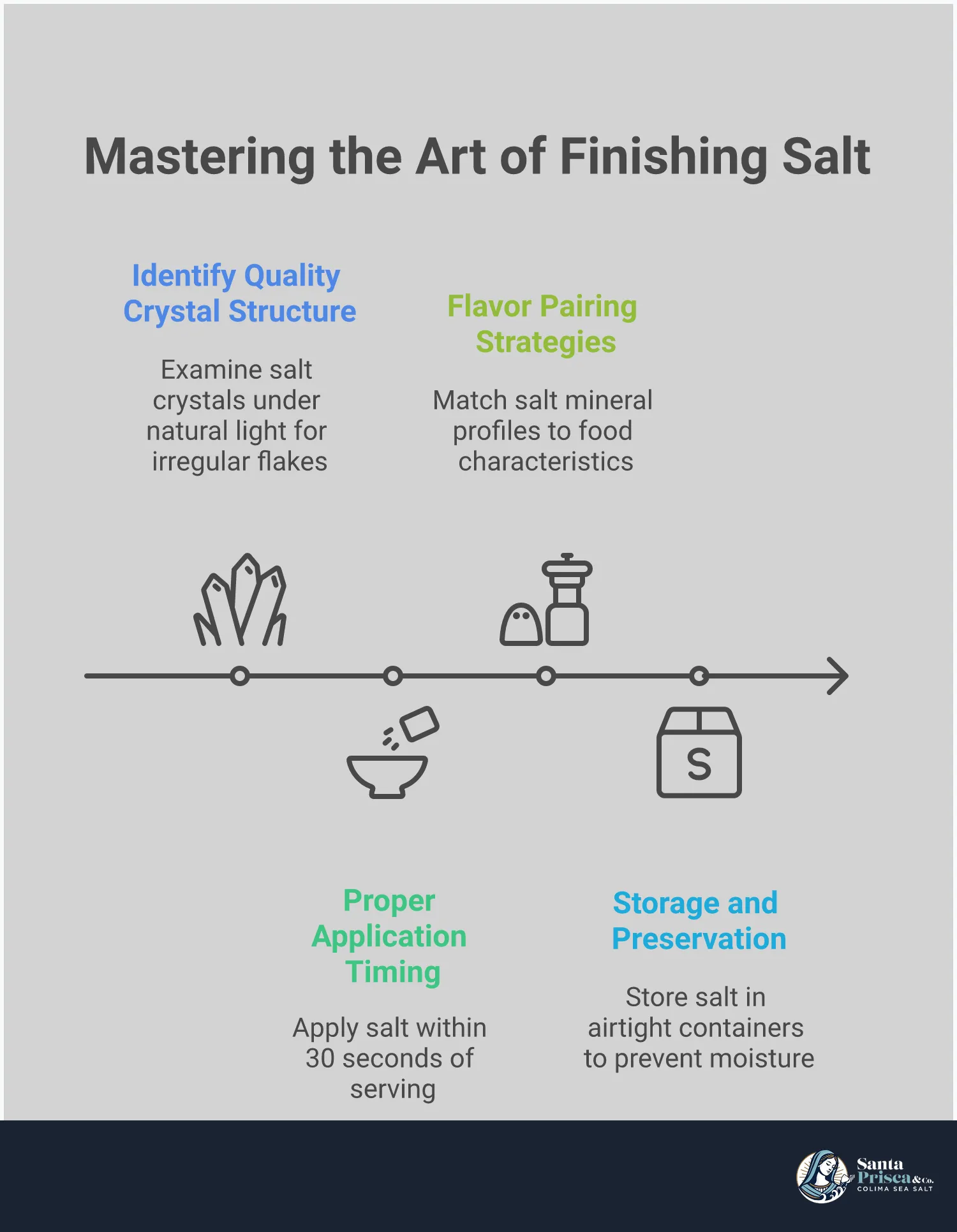
The beauty of finishing salt is in its simplicity. The key is to use it at the very end, right before the dish meets the table. A light sprinkle just before serving preserves the salt’s delicate texture and ensures you get the best flavor experience. Adding it too early would cause the beautiful crystals to dissolve, and you’d lose that signature crunch.
Think of it as the final touch on your favorite foods. Scatter it over grilled vegetables, a perfectly seared steak, or a simple salad of ripe tomatoes and olive oil. Try it on something sweet, like dark chocolate brownies or caramel sauce, to see how it deepens the flavor. It’s a simple kitchen ritual that invites you to slow down and add a final layer of intention to your cooking.
How to Choose a High-Quality Finishing Salt
Choosing a finishing salt is less about a recipe and more about an intention. It’s an invitation to slow down and connect with your food in a more meaningful way. Unlike the uniform, stripped-down salt you find in most shakers, a true finishing salt carries the story of its origin—the sun, the sea, and the hands that gathered it. When you know what to look for, you’re not just buying an ingredient; you’re choosing a pinch of place and tradition.
The right salt doesn’t just add salinity; it adds texture, a complex mineral flavor, and a final, thoughtful touch that transforms a simple meal into something special. It’s the crisp flake that lingers on a slice of ripe tomato or the subtle crunch that elevates a dark chocolate dessert. Learning to distinguish high-quality salt is a simple skill that will deepen your connection to the kitchen and bring a new layer of artistry to your cooking. Let’s explore the simple markers of a truly exceptional finishing salt.
Look for Traditional Harvesting Methods
The story of a great salt begins with how it’s gathered. Choosing an artisanal salt is a mindful act that supports sustainable, time-honored harvesting practices. Look for salts that are hand-harvested from clean, protected sources. These methods, often passed down through generations, rely on natural solar evaporation, allowing the salt crystals to form slowly and purely. This patient process preserves the salt’s delicate structure and rich mineral content, resulting in a flavor that industrial processing simply can’t replicate. When you choose a hand-harvested salt, you’re honoring a craft and the community behind it.
Consider Texture and Crystal Size
The magic of a finishing salt lies in its texture. The size and shape of the crystals determine how they feel on the palate and how they dissolve, releasing their flavor. Some salts form delicate, pyramid-shaped flakes that shatter with a gentle crispness, while others have a satisfying, coarse crunch. These elements contribute to a smoother, more rounded flavor profile that enhances the food it seasons. Think about the experience you want to create. A light, flaky salt is perfect for salads and fish, while a larger, grainier crystal can stand up to a grilled steak or roasted vegetables, providing distinct bursts of flavor with every bite.
Check for Purity and Zero Additives
A high-quality finishing salt should be just that: pure salt. Many commercial table salts contain anti-caking agents, bleaching agents, or added iodine, which can impart a bitter, chemical taste. Look for an unrefined sea salt that is free from additives. The natural color—whether it’s a brilliant white, a soft grey, or a rosy pink—comes from the trace minerals absorbed from its environment. This purity is not only better for your palate but also for your body, delivering essential minerals that support hydration and overall wellness without any unnecessary chemicals.
Prioritize Sustainable and Ethical Sourcing
Knowing where your food comes from is a cornerstone of intentional eating. The best salt producers have a deep respect for the environment and the communities they work with. We prioritize sustainability, working directly with local salt farmers to support fair wages and preserve the delicate ecosystems where the salt is harvested. When you choose a salt from a company that values ethical sourcing, you’re casting a vote for a more responsible food system. Your purchase becomes part of a cycle of respect that honors the earth and the artisans who bring its gifts to your table.
Our Favorite Finishing Salt Brands
While our kitchen is never without a jar of our own Colima Sea Salt, we believe in celebrating the craft of salt-making in all its forms. The world of artisan salt is rich with producers who honor tradition and place, each offering a unique expression of their local terroir. Exploring different finishing salts is like tasting wines from different regions—each one tells a story of the water, the sun, and the hands that harvested it.
We’ve gathered a few brands that we admire for their commitment to quality, transparency, and exceptional flavor. These are the salts that have earned a permanent place in our pantry, right alongside our own. They represent a beautiful diversity of texture and taste, perfect for any cook looking to add a thoughtful final touch to their dishes.
Santa Prisca & Co: Hand-Harvested Colima Sea Salt
There is something truly special about salt born from volcanic earth and tropical sun. Our Colima Sea Salt is hand-harvested from the Cuyutlán Lagoon, using ancestral methods passed down through generations. The salt is naturally filtered through the region’s rich volcanic soil, which gives it a remarkable mineral depth and a clean, balanced flavor. Each crisp, irregular crystal carries the essence of its origin. We love it for its versatility and the way it brings food to life without overpowering it. It’s a testament to how simple, traditional practices can yield the most extraordinary results, connecting your cooking to a rich heritage of craftsmanship.
Jacobsen Salt Co: Pacific Northwest Sea Salts
If you could taste the wild, pristine waters of the Pacific Northwest, it would taste like Jacobsen Salt. Harvested from Netarts Bay on the Oregon Coast, this salt has a bright, briny flavor and a delicate crunch that is incredibly satisfying. The cold, clean water gives their salt a distinct purity. Jacobsen Salt Co. has become a staple for chefs and home cooks who appreciate the company’s dedication to their craft and their region. Their classic flaky salt is perfect for sprinkling over roasted vegetables, grilled fish, or even a simple slice of ripe tomato, adding a clean burst of the sea.
Maldon Sea Salt: English Pyramid Flakes
A true classic in the culinary world, Maldon is instantly recognizable for its beautiful, pyramid-shaped flakes. Sourced from the coastal town of Maldon in Essex, England, this salt has been harvested for centuries. The flakes are large, light, and incredibly delicate, dissolving on the tongue with a gentle crunch. Maldon Sea Salt has a very clean, mild flavor with a subtle mineral scent, which makes it an ideal finishing touch that enhances without overwhelming. It’s the perfect salt for when you want texture to be the star, whether you’re topping a chocolate chip cookie or a perfectly seared steak.
The Meadow: Curated Artisan Collections
For the true salt adventurer, The Meadow is a treasure trove. They are curators of fine foods, and their salt selection is unparalleled. What we admire most is their focus on sourcing from artisans who are transparent about their methods and committed to ethical production. Exploring their gourmet salt gift sets is a wonderful way to discover new flavors and textures from around the globe. It’s a beautiful reminder that supporting small, responsible producers not only brings better flavor to our tables but also helps preserve important culinary traditions. They make it easy to find salts that align with a conscious, intentional way of eating.
Exploring the Different Types of Finishing Salts
Once you begin to explore the world of finishing salts, you realize it’s a landscape rich with texture, flavor, and story. Each type offers a unique way to complete a dish, adding a final layer of intention and sensory delight. From delicate flakes that shatter on the tongue to smoky crystals that evoke a wood fire, there’s a perfect salt for every meal and every mood. Understanding the differences is the first step to using them with confidence and creativity in your own kitchen.
Flaky Sea Salts: For a Delicate Finish
Imagine a salt crystal so light and delicate it looks like a tiny, shimmering pyramid. That’s the magic of flaky sea salt. These salts have a clean, bright salinity and a wonderfully crisp texture that provides a gentle crunch. Because the flakes are so fragile, they dissolve slowly, offering a lingering burst of flavor that doesn’t overwhelm the palate. A professional chef’s guide to specialty salts often highlights their visual appeal. Sprinkle them over a finished salad, a chocolate avocado mousse, or a perfectly seared steak just before serving to add a touch of elegance and a satisfying textural contrast.
Smoked Salts: For Depth and Complexity
Smoked salts are a beautiful way to introduce the deep, savory notes of a wood fire into your cooking without ever lighting a grill. These salts are slowly cold-smoked over aromatic woods like hickory, applewood, or mesquite, allowing the crystals to absorb a rich, complex flavor. The result is a salt that can transform simple dishes, adding an earthy depth to roasted vegetables, grilled fish, or even a caramel sauce. With a wide variety of flavors available, from subtle to bold, smoked salt is a powerful ingredient for adding a layer of warmth and intrigue to your favorite recipes.
Flavored and Infused Salts: For a Creative Touch
Infused salts are where the worlds of salt and spice beautifully collide. These are finishing salts blended with aromatic ingredients like herbs, spices, citrus zest, or even garlic. Think of a rosemary-infused salt that perfectly complements roasted potatoes, or a black garlic salt that adds an umami-rich note to eggs. These salts are a wonderful kitchen shortcut, layering complex flavor into a dish with a single pinch. They invite creativity and play, encouraging you to experiment with different finishing salt combinations and discover new pairings that brighten your meals.
Regional Salts: A Taste of Place
Just like wine or olive oil, salt has terroir. Regional salts carry the essence of the specific place they come from, reflecting the unique mineral composition of the water and earth. Our own Colima Sea Salt, for example, is hand-harvested from ancient volcanic salt flats in Mexico. This process gives it a distinct mineral profile and a flavor that is both subtle and profound—a true taste of its origin. Using a regional salt is a way to connect with the history and tradition of a place, honoring the artisans who have harvested it for generations and bringing a piece of that story to your table.
What Does Good Finishing Salt Cost?
When you first see a small jar of finishing salt, the price might give you pause, especially when compared to the large canisters of table salt we’re used to. But thinking of it as a simple condiment misses the point entirely. A quality finishing salt is an ingredient, a final touch that brings a dish to life with texture and a burst of clean, mineral flavor. It’s an accessible luxury, a small investment in your daily cooking rituals.
You can find beautiful finishing salts from artisan producers starting around $10 to $15 for a jar. This price reflects a world of difference in how the salt is sourced, harvested, and prepared. Unlike mass-produced salts, these crystals carry the story of their origin—from the hands that harvested them to the unique environment that shaped their character. It’s less about cost per ounce and more about the value it adds to your food and your connection to it.
What Influences the Price?
The journey from a pristine salt flat to your kitchen is what shapes the cost of a true finishing salt. It begins with the place. Our Colima Sea Salt, for example, comes from ancient lagoons in Mexico, where the salt is naturally filtered through volcanic earth. This unique terroir imparts a rich mineral profile you can truly taste.
The price also reflects the human touch. Most artisan salts are hand-harvested using traditional methods passed down through generations. This careful, patient process preserves the delicate structure of the salt crystals and ensures no impurities make their way in. Because these salts are unrefined and all-natural, they retain their full spectrum of trace minerals, which not only contributes to a more complex flavor but also offers wellness benefits that processed salts lack.
Buying in Bulk and Wholesale Inquiries
Once you find a finishing salt you love, it quickly becomes an indispensable part of your pantry. For home cooks who use it generously or for chefs and small business owners who want to share it with their customers, buying in larger quantities is often a more thoughtful and economical choice. Stocking up ensures you always have this essential ingredient on hand for everything from seasoning a steak to finishing a chocolate tart.
Many small producers recognize this and offer ways to purchase larger amounts. It’s a wonderful way to support artisans directly while making a commitment to quality ingredients in your own kitchen or business. If you’re interested in incorporating our salt into your restaurant, retail shop, or culinary creations, you can always explore wholesale options to bring the unique taste of Colima to a wider audience.
Why Premium Salt is a Worthwhile Investment
Investing in a premium finishing salt is about so much more than just flavor—it’s about transforming your relationship with food. It’s the simple gesture that turns a weeknight meal into something special, the final flourish that shows care and intention. Many chefs consider it their secret for making simple dishes sing, adding a crisp texture and a clean salinity that brightens every other ingredient on the plate.
Choosing an artisanal salt is also a vote for sustainable practices and a more mindful way of cooking. It connects you to the source of your food and honors the traditions behind it. When you use a salt that is pure, mineral-rich, and free of additives, you’re making a conscious choice for your own well-being. It’s a small act of gratitude for the earth’s gifts and a beautiful way to enrich your kitchen.
Where to Find the Best Finishing Salts
Once you begin to appreciate the subtle power of a good finishing salt, the search for the perfect crystal becomes a rewarding part of the culinary process. Finding a salt that resonates with your cooking style and values is about knowing where to look. The journey can lead you down many paths, from the digital aisles of online purveyors to the curated shelves of a local gourmet shop. Each source offers a different experience, a different connection to the food you prepare.
Whether you’re seeking a direct link to the hands that harvested your salt or the expert guidance of a passionate shop owner, the right finishing salt is waiting to be discovered. It’s an invitation to be more intentional about your ingredients and to find a deeper connection to the earth and its gifts.
Go Direct to the Source: Artisan Producers
There is something truly special about connecting directly with the people who produce our food. Buying from an artisan producer allows you to hear the story behind the salt—the history of the land, the traditional methods, and the community it supports. When you purchase directly, you’re not just buying an ingredient; you’re investing in a legacy of craftsmanship.
Many small-scale producers prioritize sustainability, working with local salt farmers to ensure fair wages and protect the environment. This direct relationship fosters a sense of gratitude and transparency. You know exactly where your salt comes from and can feel confident in its purity and ethical journey from the earth to your kitchen table.
Explore Specialty Food and Gourmet Shops
Stepping into a specialty food shop is an experience for the senses. Here, you can see the delicate, varied textures of different salts up close, from fine, powdery crystals to large, crunchy flakes. These shops are curated by people who are passionate about food, and their collections often feature unique, hard-to-find salts from around the world. The staff can be an incredible resource, offering recommendations and sharing the stories behind their favorite products.
This is where you can truly appreciate how a salt’s mineral composition contributes to a smoother, more rounded flavor profile that enhances the food it seasons. It’s an opportunity to slow down, ask questions, and choose a salt with intention.
Shopping Online: What to Look For (and What to Avoid)
The convenience of online shopping brings the world’s best salts to your doorstep, but it’s wise to shop with a discerning eye. Look for brands that share their story openly. The best producers are proud of their process and will be transparent about where and how their salt is harvested. A detailed description of the salt’s origin, texture, and flavor notes is a sign of a quality product.
Brands that are transparent about their sourcing are often the ones committed to ethical and sustainable practices. When you find a company that shares your values, like offering hand-harvested Colima Sea Salt, you can feel good about your purchase. Avoid vague product pages or those that compete on price alone, as quality and integrity are worth the investment.
How to Use Finishing Salt in Your Kitchen
Bringing a high-quality finishing salt into your kitchen is an invitation to cook with more intention. It’s the final, thoughtful touch that transforms a simple meal into something memorable. Unlike the salt you cook with, a finishing salt is added just before serving, preserving its unique texture and delivering a pure, concentrated burst of flavor. It’s less about making food salty and more about making food taste more like itself. Think of it as the final brushstroke on a painting—a small detail that makes all the difference, adding both beauty and depth to your culinary creations.
How to Pair Finishing Salts with Your Favorite Dishes
The beauty of a finishing salt lies in its texture. A delicate sprinkle just before serving adds a satisfying, subtle crunch that contrasts beautifully with the food it adorns. Imagine the crisp flake of Colima Sea Salt melting slowly on a perfectly cooked steak, or the way it brightens the flavor of a simple avocado toast.
You can scatter it over roasted vegetables, toss it with a fresh green salad, or dash it onto a piece of dark chocolate. It enhances everything from grilled fish and savory pasta to the rim of a craft cocktail. The goal is to let the salt’s character shine, providing a final layer of flavor and a visually stunning finish that awakens the palate.
How to Properly Store Your Finishing Salt
An artisan salt is a special ingredient, and it deserves to be cared for properly. To protect its delicate structure and rich mineral flavor, store your finishing salt in a cool, dry place. An airtight container is key to preventing the crystals from clumping together and losing their signature crunch.
A small ceramic salt cellar or a glass jar with a tight-fitting lid works perfectly. Unlike refined table salt, unrefined sea salt has a lower moisture content, but keeping it sealed ensures its texture and purity remain intact. This simple step honors the journey of the salt from its source to your kitchen, preserving the integrity of every hand-harvested crystal for your next meal.
How to Start Your Finishing Salt Collection
Beginning your finishing salt journey is simple. Start with one versatile, high-quality sea salt that you truly love. A pure, flaky salt is the perfect foundation, as its clean flavor and delicate texture complement nearly any dish. It allows you to discover how a pinch of unrefined salt can bring out the hidden notes in your food, making sweet flavors richer and savory dishes more complex.
Once you’re comfortable, you can explore other varieties. Consider adding a smoked salt for earthy depth or an infused salt for a creative twist. Think of it not as collecting products, but as gathering tools to help you express your creativity in the kitchen.
Related Articles
- Sea Salt for Cooking: Types, Benefits, and How to Use It Like a Pro – Santa Prisca & Co
- Where to Buy Finishing Salt: The Complete Guide – Santa Prisca & Co
- 5 Best Coarse Finishing Salts to Elevate Your Food – Santa Prisca & Co
- The 7 Best Finishing Salts for Cooking in 2025 – Santa Prisca & Co
- 7 Real Benefits of Hand-Harvested Sea Salt – Santa Prisca & Co
Frequently Asked Questions
Can I cook with finishing salt, or is it only for garnishing? While you certainly could, you would miss out on what makes it so special. The beautiful, delicate crystal structure is designed to add a final pop of flavor and a satisfying texture right before you eat. When you cook with it, those unique flakes dissolve just like any other salt, and you lose that signature crunch. It’s best to use a simple sea salt for seasoning during the cooking process and save your finishing salt for that final, thoughtful touch.
Is finishing salt actually better for you than regular table salt? It’s less about one being "healthier" and more about one being a whole, unrefined food. Most table salt is heavily processed, which strips away beneficial trace minerals and often involves anti-caking agents. A high-quality, unrefined finishing salt retains its natural mineral profile—think magnesium and potassium. These minerals not only create a more complex, less harsh flavor but also support your body's natural balance.
Why is there such a big price difference between finishing salt and table salt? The price reflects the incredible amount of care and traditional craftsmanship that goes into every crystal. Unlike mass-produced salt from a factory, artisan finishing salts are often hand-harvested from pristine sources using methods passed down for generations. This patient process preserves the salt's unique texture and rich mineral content. You're not just paying for salt; you're supporting sustainable practices and a pure, unadulterated ingredient.
What’s the best type of finishing salt to start with if I’m new to this? A great place to begin is with a versatile, flaky sea salt. Look for one with a clean, balanced flavor and a delicate crunch that won't overpower your food. A salt like our Colima Sea Salt is perfect because its character enhances everything from roasted vegetables and grilled meats to a simple slice of avocado or even a chocolate brownie. It’s a beautiful, all-purpose choice that will show you just how transformative a simple pinch of salt can be.
How should I store my finishing salt, and does it ever expire? To keep your salt's texture perfect, store it in an airtight container in a cool, dry place like a pantry. A small ceramic salt cellar or a glass jar with a good seal is ideal for keeping moisture out and preventing the crystals from clumping. The good news is that pure salt is a mineral that doesn't spoil or expire. When stored properly, your finishing salt will last indefinitely, ready for you to use whenever you want to add that final touch to a meal.