
The Home Cook's Guide to Finishing Salt Flakes
Written By Santa Prisca & Co Staff Last updated on
Most of us grew up with one kind of salt: the fine, uniform grain in a shaker. We saw it as a basic utility, something to make food "salty." But what if salt could be an ingredient with as much character and story as a fine olive oil or a heritage tomato? The truth is, the salt most of us know is a highly refined, one-dimensional product. A world of flavor and texture awaits in unrefined, hand-harvested salts. These finishing salt flakes carry the essence of where they came from, offering a complex mineral taste and a delightful crunch that makes food taste more like itself.
Key Takeaways
- Finishing salt adds flavor and texture: Unlike table salt that dissolves into a dish, a finishing salt is sprinkled on at the end to provide a satisfying crunch and a clean, mineral-rich taste that makes ingredients shine.
- Timing is everything for the perfect crunch: To preserve the delicate crystal structure, always add your finishing salt right before serving. This simple step ensures you experience its signature texture and bright flavor in every bite.
- Look for purity, story, and structure: Choose unrefined, hand-harvested salts that are free from additives. A quality salt’s unique crystal shape and mineral profile tell the story of its origin, adding a deeper, more complex flavor to your food.
What Are Finishing Salt Flakes?
Imagine a perfectly ripe tomato, sliced thick and still warm from the sun. Before you take a bite, you reach for a pinch of salt—not just any salt, but delicate, crystalline flakes that crunch ever so slightly. This is the magic of a finishing salt. It’s the final, thoughtful touch that transforms a simple ingredient into a memorable experience.
The Art of the Final Touch
A finishing salt is exactly what it sounds like: a salt added at the very end of the cooking process, or right at the table. Unlike salts used for brining or seasoning a simmering sauce, its purpose isn’t just to add salinity. It’s meant to be seen, felt, and tasted in its pure, crystalline form.
This simple act of sprinkling a few flakes over a dish is a beautiful kitchen ritual. It’s a moment to pause and add a final layer of intention. A quality finishing salt, like our hand-harvested Colima Sea Salt, brings a dish to life with a burst of clean flavor and a satisfying, delicate crunch that you just can’t get from a standard shaker.
How They Differ from Table Salt
The salt most of us grew up with is table salt—a highly refined, uniform grain that often contains anti-caking agents. Its flavor can be sharp, metallic, and one-dimensional. A finishing salt, on the other hand, is unrefined and celebrated for its complexity.
Because it’s harvested with minimal processing, it retains a wealth of trace minerals that contribute to its unique taste. Instead of a harsh chemical sting, you get a clean, bright flavor that enhances the food it touches. It doesn’t just make food salty; it makes food taste more like itself. This is the difference between a seasoning that overpowers and one that harmonizes.
Why Crystal Structure Matters
One of the most delightful qualities of a finishing salt is its texture. The crystals are often flaky, pyramidal, or coarse, a stark contrast to the tiny, dense cubes of table salt. This unique structure is everything. When you sprinkle these flakes onto food, they don’t dissolve instantly.
Instead, they rest on the surface, offering a gentle, satisfying crunch with each bite. This textural contrast adds a whole new dimension to your meal, whether it’s a creamy avocado, a grilled steak, or a rich chocolate brownie. The shape of the crystal also affects how it dissolves on your tongue, delivering a lingering, nuanced flavor. Understanding the science of salt and its structure can change the way you cook.
Why Use a Finishing Salt?
If you’ve ever wondered how a simple dish at a restaurant can feel so complete and satisfying, the secret might be in the final sprinkle of salt. Using a finishing salt is one of the simplest shifts you can make in your kitchen, yet it has a profound impact on everything you cook. It’s not just about adding saltiness; it’s about adding dimension, texture, and a final note of intention to your food. This small gesture transforms a meal from simply being cooked to being thoughtfully composed.
For Deeper Flavor and Mineral Content
The first thing you’ll notice is the flavor. Unlike the harsh, one-note flavor of processed table salt, a quality finishing salt adds a clean, bright finish. Because it’s unrefined, it retains a wealth of trace minerals that contribute to its complex taste. Our Colima Sea Salt, for example, is naturally filtered through volcanic earth, which gives it a subtle, almost sweet mineral depth that enhances food without overpowering it. This complexity brings out the inherent flavors of your ingredients, making a ripe tomato taste more like itself or a rich chocolate dessert even more decadent.
For Texture and Visual Appeal
Beyond taste, a finishing salt offers a delightful sensory experience. The coarse or flaky texture gives food a satisfying, delicate crunch that contrasts beautifully with softer ingredients. Imagine the gentle pop of a salt crystal on a creamy avocado toast or the crisp flake that lingers on a perfectly seared steak. This textural element makes each bite more interesting. A sprinkle of flaky salt also adds a beautiful, crystalline garnish. It’s a visual cue that tells everyone at the table that this dish was prepared with care and attention to detail.
For a Greater Culinary Impact
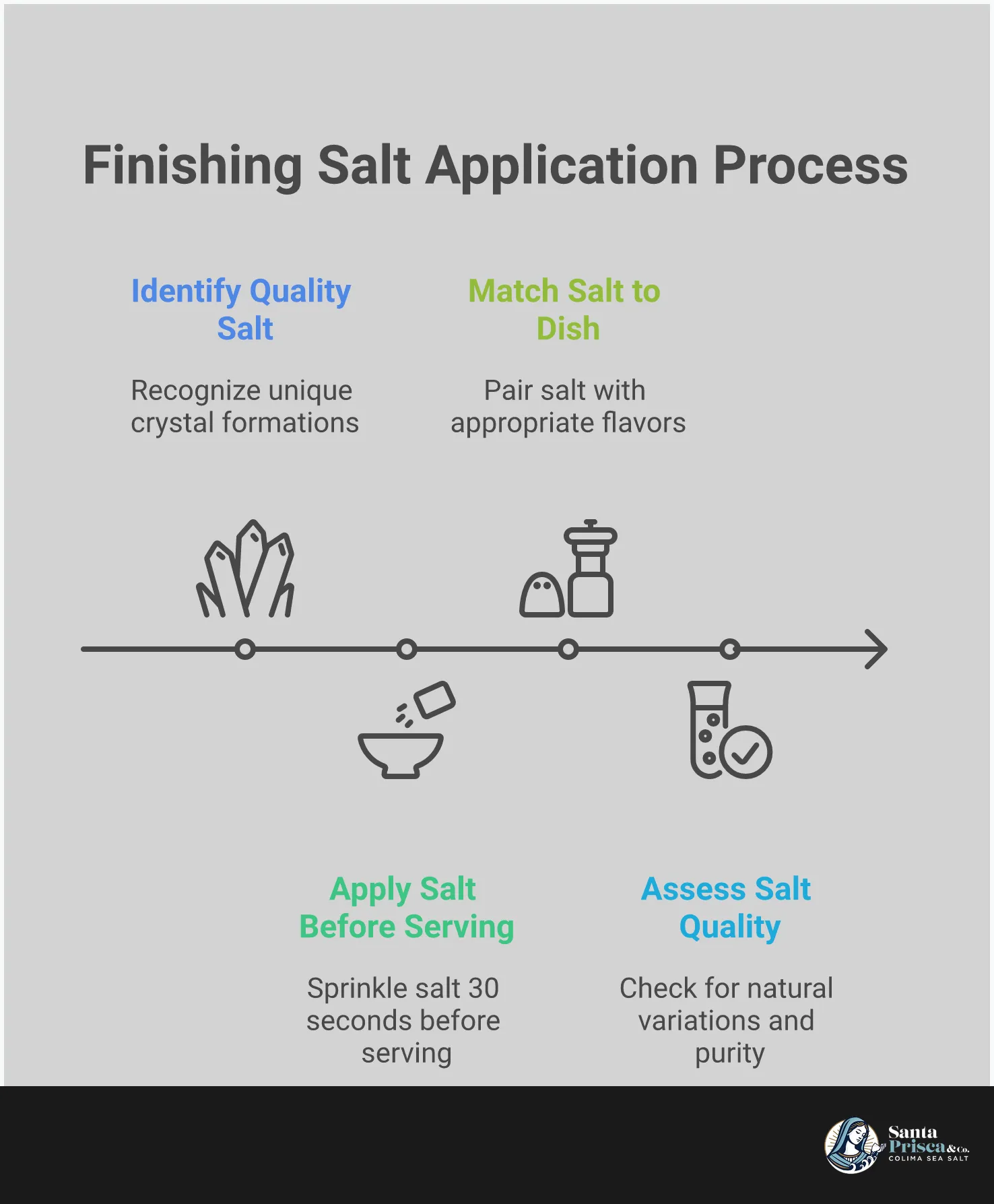
Timing is everything. To get the most out of these beautiful crystals, you should add coarse, flaky sea salts to your dishes right before serving. This simple step preserves the unique texture and ensures the salt’s distinct flavor is the first thing you taste. When you cook with finishing salt, the flakes dissolve and their special character gets lost. By adding it at the end, you allow the salt to stand on its own, creating a much greater culinary impact. It’s the final, thoughtful touch that ties the entire dish together.
What to Look for in a Quality Finishing Salt
Not all salt is created equal. The fine, iodized powder in a standard shaker is worlds away from the delicate, mineral-rich crystals of a true finishing salt. Choosing a quality salt is about more than just seasoning; it’s about adding texture, a nuanced flavor, and a final, intentional touch that honors your ingredients. When you begin to explore the world of artisan salts, you’ll find that the best ones carry a story—of the place they came from, the hands that harvested them, and the natural elements that shaped them.
So, what separates a memorable finishing salt from the rest? It comes down to a few key elements: the method of harvesting, the purity of the salt and its mineral content, the unique shape of its crystals, and the story of its origin. Understanding these qualities will help you select a salt that doesn't just make your food saltier, but makes it more alive. It’s an invitation to slow down and appreciate the small details that can transform a simple meal into a truly beautiful experience.
The Artisan's Touch: Hand-Harvested vs. Machine-Processed
There is a profound difference between salt that is scraped and processed by heavy machinery and salt that is gently gathered by hand. Hand-harvesting is a tradition, a patient art passed down through generations of salineros, or salt farmers. This gentle process preserves the delicate, complex structure of the salt crystals. Unlike the harsh, one-note flavor of processed table salt, a quality finishing salt adds a clean, bright finish. When you choose a hand-harvested salt, you’re not just getting a seasoning; you’re tasting the care and intention that went into its creation.
Purity and a Natural Mineral Profile
A truly exceptional salt is pure, meaning it’s unrefined and free from the anti-caking agents, bleaching chemicals, and other additives found in common table salt. Look for salts that are celebrated for their natural composition. For example, our Colima Sea Salt is naturally filtered through volcanic earth, which infuses it with a wealth of minerals. This process ensures an exceptional quality and a pure, briny flavor that tastes of the ocean. This rich mineral profile doesn’t just contribute to a more complex taste; it connects your cooking to the very essence of the earth.
The Shape and Size of the Flake
The magic of a finishing salt lies in its texture. The shape and size of the crystal determine how it feels on the palate and how it interacts with your food. Some salts form large, crunchy pyramids, while others are light, delicate flakes that dissolve almost instantly. For dishes like seared scallops, grilled fish, or even a simple slice of ripe tomato, a fine, flaky finishing salt is your best choice. Its light, crisp texture provides a satisfying crunch and a bright burst of salinity that enhances the natural flavors of the food without overpowering them.
Ethical Sourcing and Sustainability
Knowing where your food comes from is a cornerstone of intentional eating. A quality finishing salt has a transparent origin story, one rooted in sustainable practices that honor both the environment and the community. When you see a salt described as “Hand-Harvested, Unrefined Mexican Sea Salt Crystals,” it speaks to a commitment to tradition and ethical production. Supporting brands that value these principles means you are investing in a food system that is more connected and responsible. For chefs and retailers who share these values, exploring wholesale partnerships with artisan producers is a beautiful way to extend this story to others.
A Few Finishing Salts to Explore
Once you begin to see salt as an ingredient rather than just a seasoning, a whole world of flavor and texture opens up. Building a small collection of finishing salts is like curating a selection of fine spices—each one brings its own unique character to the table. From the delicate and flaky to the coarse and crunchy, every crystal tells a story of its origin.
Exploring different finishing salts is a simple way to bring intention and depth to your cooking. You’ll start to notice the subtle differences in how they melt on your tongue, the gentle crunch they add to a fresh salad, or the way they draw out the sweetness in a piece of fruit. Here are a few beautiful and distinct finishing salts to begin your journey with, each offering a unique taste of its home.
Santa Prisca & Co. Colima Sea Salt
Harvested by hand from the ancient salt flats of Colima, Mexico, our Colima Sea Salt is a true taste of place. Each small batch is crafted with intention, resulting in a pure, briny flavor that carries a whisper of the ocean. The crystals are unrefined and naturally filtered through volcanic earth, which gives them a rich mineral profile you can taste. Its crisp, clean finish brightens everything it touches without overpowering. Sprinkle it over grilled fish, ripe avocado, or even a slice of dark chocolate to experience its full character.
Maldon Sea Salt Flakes
Known for their distinctive pyramid shape, Maldon Sea Salt Flakes are a classic in many kitchens for a reason. These large, light flakes have a wonderfully clean taste and a delicate texture that dissolves slowly, providing a satisfying crunch. Because the flakes are so thin, they adhere beautifully to food, making them ideal for sprinkling over roasted vegetables, seared steaks, or even the top of a freshly baked cookie. Their visual appeal is just as lovely as their flavor, adding a touch of elegance to any finished dish.
Jacobsen Salt Co. Pure Flake Sea Salt
Harvested from the cold, pristine waters of the Oregon coast, Jacobsen Salt Co. Pure Flake Sea Salt is celebrated for its bright, briny flavor and delicate crunch. The flakes are large and pyramid-shaped, similar to Maldon, but with a distinct taste of the Pacific Northwest. This salt has a straightforward purity that beautifully highlights the natural flavors of fresh, high-quality ingredients. It’s an excellent choice for finishing simple salads, fresh oysters, or a perfectly ripe summer tomato, allowing the food’s own character to shine.
Murray River Salt Flakes
These beautiful, peach-colored flakes come from the ancient saline aquifers of Australia’s Murray-Darling Basin. The delicate pink hue of Murray River Salt Flakes is completely natural, a result of the minerals present in the water. The flakes themselves are small to medium in size, offering a mild flavor and a satisfying crunch that isn’t too aggressive. This gentleness makes them incredibly versatile. They are wonderful on roasted meats, grilled vegetables, and salads, adding both texture and a subtle mineral depth without overwhelming the palate.
Fleur de Sel and Other Varieties
Often called the “caviar of salts,” Fleur de Sel translates to “flower of salt.” This delicate finishing salt is hand-harvested by skimming the very top layer of salt from coastal salt pans, typically in France. It has a fine, light crystal structure and a high moisture content, which gives it a unique flavor that melts beautifully on the tongue. It’s traditionally used on salads, eggs, and grilled fish. Beyond this classic, there are countless other varieties to explore, from smoky salts to those infused with herbs, each offering a new dimension to your cooking.
Exploring the Flavors of Finishing Salts
To think of salt as just “salty” is to miss the point entirely. Like a good wine or olive oil, a true finishing salt has a sense of place—a terroir that tells the story of the sun, water, and earth from which it came. The way it’s harvested and the minerals it gathers on its journey create a spectrum of flavors that can transform a dish from simple to extraordinary.
When you taste a hand-harvested sea salt, you’re not just tasting sodium chloride; you’re experiencing a delicate balance of minerals that can be bright and oceanic or deep and earthy. This is the magic of a finishing salt. It’s not just an ingredient, but an experience. It invites you to slow down and notice the subtle complexities that a pinch of carefully chosen crystals can bring to your food. Exploring these flavors is one of the most rewarding parts of intentional cooking.
Bright and Briny Notes
Imagine the clean, refreshing feeling of a cool ocean breeze. That’s the essence of a salt with bright and briny notes. Unlike the harsh, one-note flavor of processed table salt, a quality finishing salt adds a clean, bright finish that awakens the palate. This crispness can cut through richness, balance sweetness, and make the natural flavors of your ingredients sing.
Think of it as a final, sparkling touch. A sprinkle over a ripe summer tomato, a delicate white fish, or a fresh green salad provides a burst of pure, oceanic flavor. Our own Colima Sea Salt is a beautiful example, offering a sun-dried crystal that dissolves with a gentle, mineral-rich brightness.
Rich and Earthy Mineral Tones
Some finishing salts offer a deeper, more grounding flavor profile. These salts carry the essence of the land, with rich mineral tones that add complexity and warmth to your cooking. Their flavor is often less about a sharp, salty hit and more about a lingering, savory depth. You might notice subtle notes that are almost sweet, earthy, or even slightly smoky, depending on their origin.
This complexity comes from the trace minerals absorbed from ancient seabeds or volcanic earth. A salt with these characteristics is incredible on roasted root vegetables, grilled steaks, or even a simple piece of dark chocolate. It adds a foundational richness that feels both nourishing and deeply satisfying—a pure, briny flavor that tastes of the ocean and the earth combined.
Finding a Subtle or Bold Flavor
The beauty of a flaky finishing salt is that you control its impact. The final character—whether subtle and integrated or bold and crunchy—comes down to how and when you use it. The key is timing. When you add coarse, flaky sea salts to your dishes right before serving, you preserve the texture and impact of the salt.
For a more subtle flavor, you can crush the flakes between your fingers and sprinkle them from a bit higher up, allowing them to distribute evenly and melt gently into the food. For a bold, textural crunch and a concentrated burst of flavor, pinch larger flakes and place them deliberately on the finished dish. Experimenting with this final touch is how you make a recipe truly your own.
How to Use Finishing Salt Flakes
Once you have a beautiful finishing salt in your kitchen, the real joy begins. Using it is less about following a strict recipe and more about developing an intuition for flavor and texture. Think of it as the final brushstroke on a painting—a deliberate act that brings the entire dish into focus. It’s a simple ritual that connects you to your food, transforming a meal into a moment of intention. Whether you’re preparing a simple weekday lunch or an elaborate dinner, a pinch of finishing salt is an invitation to slow down and savor the details.
The key is to add it at the very last moment. This preserves the delicate, crystalline structure that makes finishing salt so special, ensuring you experience its signature crunch and clean, mineral-rich flavor with every bite. From savory to sweet, the applications are nearly endless, and each one offers a new way to appreciate how one small ingredient can make a profound impact. Let’s explore a few simple ways to bring this practice into your own cooking.
With Meats and Seafood
A beautiful cut of meat or a fresh piece of fish deserves to be honored with ingredients that complement its quality. A finishing salt does just that, adding a final layer of flavor and a satisfying textural contrast. For delicate dishes like seared scallops, grilled fish, or raw oysters, a fine, flaky finishing salt is your best choice. Its light, crisp texture enhances the natural flavors of the seafood without overpowering them.
Imagine a perfectly seared steak, its rich crust sprinkled with crystalline flakes that crunch with each bite, their mineral depth cutting through the richness of the meat. The same principle applies to roasted chicken, where a scattering of salt over the crispy skin just before serving adds a welcome pop. This final touch is one of the simplest ways to bring a restaurant-quality experience to your home kitchen, as detailed in this gourmet finishing salt guide.
On Vegetables and Fresh Produce
Finishing salt has a way of making vegetables truly shine, coaxing out their inherent sweetness and brightening their flavors. A simple plate of sliced, sun-ripened tomatoes can be transformed into something extraordinary with just a light sprinkle of flaky salt and a drizzle of good olive oil. The salt’s crispness provides a beautiful contrast to the tomato’s soft flesh.
This magic works wonders on cooked vegetables, too. After you roast vegetables until they are tender and caramelized, dust them with finishing salt just before they hit the table. The flakes will cling to the surface, adding a burst of clean salinity and a delicate crunch that elevates everything from asparagus and broccoli to sweet potatoes and zucchini. It’s a simple way to turn a humble side dish into the star of the meal.
In Desserts and Cocktails
The partnership between sweet and salty is one of culinary’s most delightful pairings. A finishing salt can balance sweetness, add complexity, and make flavors like chocolate and caramel feel deeper and more nuanced. Add a pinch to your favorite chocolate chip cookies right after they come out of the oven; the salt melts ever so slightly into the warm chocolate, creating an irresistible combination.
This principle extends to other desserts, too. Sprinkle a few flakes over a rich chocolate tart, a scoop of vanilla ice cream drizzled with caramel, or even a slice of fresh watermelon. In drinks, a rim of coarse sea salt on a margarita or paloma glass does more than just look pretty—it tempers the sweetness and acidity of the cocktail, creating a more balanced and refreshing sip with every taste.
Tips for Application and Timing
To get the most out of your finishing salt, timing and technique are everything. The golden rule is to add coarse, flaky sea salts to your dishes right before serving. This simple step preserves the unique texture and visual appeal of the salt. If you add it too early, the delicate crystals will dissolve into the dish, and you’ll lose that signature crunch that makes it so special.
For the best application, use your fingers. Pinch a small amount of salt and sprinkle it from a height of about 8-12 inches above your dish. This allows the flakes to fall evenly, giving you a light, balanced dusting rather than a concentrated pile. This tactile approach also helps you connect more deeply with your cooking, turning the final seasoning into a mindful, finishing touch. You can find more tips on using gourmet salts to perfect your technique.
Where to Find Premium Finishing Salts
Once you start cooking with intention, you begin to see ingredients differently. The search for a beautiful finishing salt becomes less of a chore and more of a treasure hunt—a way to connect more deeply with your food and its origins. Finding a salt that resonates with you is a rewarding part of the culinary process.
Thankfully, these precious crystals aren't hidden away. You can find exceptional finishing salts in a few key places, each offering a unique experience. Whether you prefer to browse curated shelves or connect directly with the people who harvest the salt, there’s a path that will lead you to the perfect final touch for your dishes.
Specialty Food Shops
There’s a certain magic to stepping into a specialty food shop. It’s a space curated by people who are passionate about flavor, where every item on the shelf has a story. Finishing salts are often available at these shops, where you can find a variety of gourmet options that are hand-harvested and crafted in small batches.
Here, you can hold the jars in your hands, admire the unique crystal structures, and compare different textures. Don’t hesitate to ask the staff for their favorites; they often have incredible knowledge and can guide you to a salt that suits your cooking style. It’s a wonderful, tactile way to discover what you truly love.
Directly from Artisan Producers
For the purest connection to your ingredients, consider sourcing your salt directly from an artisan producer. This path offers a direct line to the hands that harvested the salt and the land it came from. Artisan producers like Santa Prisca & Co. offer premium finishing salts that are hand-harvested and unrefined, ensuring exceptional quality and a pure, briny flavor that tastes of the ocean.
When you buy from the source, you’re not just purchasing an ingredient; you’re supporting a tradition. You gain a deeper appreciation for the process—the sun, the sea, and the careful work that goes into producing each perfect flake. This is where you’ll find salts with unparalleled mineral richness and a story you can feel proud to share at your table.
Your Local Culinary Store
Your local culinary store is another great place to find a selection of finishing salts. These shops are dedicated to equipping the home cook, and their shelves often feature a thoughtful collection of pantry staples, including popular brands and unique local options that can transform your cooking.
While browsing for new kitchen tools, take a moment to explore their ingredients section. You might be surprised by the quality and variety you find. Supporting these local businesses is a beautiful way to invest in your community while expanding your own culinary horizons. It’s a reliable and inspiring place to begin your search for the perfect salt.
How to Care for Your Finishing Salt
A hand-harvested finishing salt has made a long journey to reach your kitchen. From the sun-drenched salt flats to the hands of the artisans who gathered it, each crystal carries a story. Honoring that journey is simple—it just requires a little intention in how you store and handle it. These small acts of care ensure that every pinch delivers the full, vibrant flavor and delicate texture the salt was meant to have.
Proper Storage for Lasting Quality
The key to preserving your finishing salt is keeping it in a cool, dry place. Humidity is the enemy of a perfect salt crystal, causing the delicate flakes to absorb moisture from the air and clump together. To protect its integrity, I recommend transferring your salt from its bag to a small, lidded salt cellar or a sealed glass jar. This keeps it pristine and ready for use. If you do notice some clumping in your Colima Sea Salt, don’t worry—a gentle shake is usually all it takes to loosen the crystals again.
Maintaining the Perfect Crystal Flake
The magic of a finishing salt lies in its texture—that satisfying, crisp flake that shatters on the tongue and adds a final burst of mineral depth. Unlike finely ground table salt, these crystals are meant to be seen and felt. To maintain this unique structure, always handle your salt gently. Avoid grinding it, which would destroy the delicate flakes. Instead, keep it in an open cellar by your stove or on your table, and use your fingers to pinch and sprinkle it over your dishes. This simple, tactile ritual connects you to your food and preserves the salt’s beautiful form.
Shelf Life and Freshness
While salt is a natural preservative and doesn’t truly expire, its character can change over time. For the best culinary experience, it’s wise to use your finishing salt within a couple of years. This ensures you’re enjoying it at its peak, when the flavor is most vibrant and the texture is perfectly crisp. Think of it not as an ingredient to be hoarded, but as a daily pleasure to be enjoyed. Use it generously to honor the food you cook and the hands that harvested it. When you’re ready for more, you can always explore our collection to replenish your pantry.
Related Articles
- Where to Buy Finishing Salt: The Complete Guide
- 5 Best Coarse Finishing Salts to Elevate Your Food
- A Buyer's Guide to Coarse Sea Salt for Finishing
- The Best Salt to Finish a Steak: 8 Top Choices
Frequently Asked Questions
Can I use finishing salt for cooking, or only at the end? While you certainly can cook with it, you’ll miss out on what makes it so special. When a finishing salt dissolves in a simmering sauce or a pot of boiling water, its beautiful, flaky texture is lost. Its true purpose is to be added right before serving, so you can experience that delicate crunch and the clean burst of flavor that only a final sprinkle can provide.
Is finishing salt really that different from the regular sea salt I already have in my grinder? Yes, the difference is all about the crystal structure. Most sea salts sold for everyday use are finely ground, designed to dissolve quickly and season food from within. A finishing salt is celebrated for its unique, unrefined crystal shape—whether it’s a delicate flake or a coarse pyramid. This structure is intentionally preserved to add a final layer of texture and a pop of flavor right on the surface of your food.
With so many options, how do I choose the right finishing salt for my food? A great place to start is with a versatile, clean-tasting salt like our Colima Sea Salt, which enhances almost any dish. As a general guide, think about balance. Lighter, flakier salts are beautiful on delicate foods like fish, eggs, and fresh greens. Coarser, crunchier salts can stand up to heartier dishes like a grilled steak or roasted root vegetables. The best way to learn is to experiment and taste the difference for yourself.
Why is hand-harvested salt often more expensive than other salts? The price reflects the incredible amount of care and manual labor involved. Unlike industrial salt production that uses heavy machinery, hand-harvesting is a patient, traditional art practiced by skilled artisans. This gentle process preserves the salt’s delicate crystal structure and natural mineral content. When you invest in a hand-harvested salt, you are supporting sustainable practices and the generations of families who have perfected this craft.
Does finishing salt have any health benefits over table salt? The primary difference lies in its purity and what it contains—and what it doesn't. A quality finishing salt is unrefined, meaning it’s free from the anti-caking agents and bleaching chemicals often found in standard table salt. Because it undergoes minimal processing, it also retains trace minerals from its natural environment, which contribute to its complex flavor and character.