
Eco-Friendly Sea Salt: Why Your Choice Matters
Written By Santa Prisca & Co Staff Last updated on
The beauty of a true sea salt crystal lies in its imperfection—the delicate flake, the satisfying crunch, the subtle mineral notes that brighten every dish. This unique character isn’t an accident; it’s a direct result of a pure and natural process. Unlike highly refined table salt, which is stripped of its complexity, unrefined sea salt is simply evaporated seawater. This ancient, low-impact method preserves the salt’s integrity and protects the coastal ecosystems where it is born. When you choose an eco-friendly sea salt, you’re choosing a product that is as clean and authentic as nature intended, for a richer flavor and a healthier planet.
Key Takeaways
- Opt for Salt Harvested in Harmony with Nature: Traditionally harvested sea salt uses only sun and wind, leaving a gentle footprint that protects coastal ecosystems, unlike the disruptive, energy-heavy process of industrial salt mining.
- Nourish Your Body with Whole, Unrefined Salt: Natural sea salt retains a spectrum of trace minerals from the ocean, like magnesium and potassium, which support hydration and offer a more complex flavor than industrially processed table salt.
- Support Artisans by Understanding Your Salt's Origin: Look for brands that are transparent about their sourcing. Choosing hand-harvested salt from protected regions ensures a purer product and directly supports the traditional communities and cultural heritage behind it.
What Makes Sea Salt an Eco-Friendly Choice?
When we choose our ingredients with intention, we’re not just thinking about flavor. We’re considering the story behind our food and its connection to the earth. Salt, a fundamental element in every kitchen, can be a powerful symbol of this connection. Unlike heavily processed table salt, traditionally harvested sea salt is a product of nature’s simplest elements: sun, wind, and water. This ancient method is inherently gentle, leaving a light footprint on the planet and preserving the salt’s pure, mineral-rich character. It’s a choice that honors both the environment and our well-being.
How It's Naturally Harvested
Imagine shallow basins of seawater resting quietly under the sun. This is where the journey of authentic sea salt begins. The process is a patient one, relying on natural evaporation. As the sun and wind work their magic, the water slowly disappears, leaving behind delicate, crystalline salt flakes. This method is beautifully simple and has been practiced for centuries by coastal communities. Because it works in harmony with natural cycles, this form of salt production is inherently sustainable, requiring minimal intervention and respecting the coastal ecosystems where it takes place. It’s a quiet process that yields a pure gift from the sea.
Harnessing the Sun and Wind
The energy that powers true sea salt production is entirely renewable, drawn directly from the sun and wind. Artisan farmers don’t rely on fossil fuels or heavy industrial machinery. Instead, they become stewards of a natural process, using their knowledge of the local climate to guide the solar evaporation. This low-impact approach stands in stark contrast to more aggressive mining operations. By harnessing natural forces, artisan salt producers create a product that is not only superior in flavor but also represents a more sustainable way of working with the land. It’s a testament to how ancient wisdom offers modern solutions for a healthier planet.
Minimal Processing, Maximum Purity
The beauty of hand-harvested sea salt lies in its simplicity. Once the salt crystals form, they are gathered with care and left to dry, with little to no industrial processing. This preserves the salt’s complex structure and the wealth of trace minerals it inherits from the ocean. High-quality sea salt should be just that: pure salt and trace minerals, free from the anti-caking agents or bleaching chemicals found in common table salt. This commitment to purity means you’re getting a product that is as close to its natural state as possible. Choosing an unrefined salt is a way to ensure the ingredients in your kitchen are clean, authentic, and truly nourishing.
Sea Salt vs. Table Salt: What's the Environmental Difference?
When we choose an ingredient, we’re choosing the story behind it. For salt, there are two very different stories. One begins in the quiet, sun-drenched salt flats where wind and water work in harmony. The other starts deep within the earth, with heavy machinery and intensive industrial processing. The salt that lands in your kitchen has a profound connection to the planet, and understanding its origin can help us make a more intentional choice.
While table salt and sea salt might look similar, their journeys are worlds apart. The path from source to shaker leaves a distinct footprint on our environment. One method honors natural cycles, while the other often disrupts them. Thinking about this difference allows us to season our food not just with flavor, but with a sense of gratitude for the earth’s resources and the hands that protect them. It’s a small shift in the kitchen that reflects a much larger commitment to living in balance with our world.
The Impact of Rock Salt Mining
Most common table salt comes from underground salt deposits, which are mined much like coal or other minerals. This process, known as rock salt mining, is incredibly energy-intensive. It involves drilling, blasting, and transporting massive quantities of earth, disrupting the land in a significant way.
Unlike the gentle harvesting of sea salt from evaporating seawater, mining requires a forceful extraction that can cause lasting damage to the soil and surrounding landscape. The industrial scale of these operations stands in stark contrast to the patient, traditional methods of sea salt farming, which work with the environment rather than against it. This distinction is at the heart of why choosing your salt matters.
Comparing Carbon Footprints
The environmental cost of salt becomes clearer when we look at its carbon footprint. The production of refined table salt is a multi-step industrial process. From the heavy machinery used in mining to the energy required for purification and chemical treatment, each step adds to its environmental toll. This intensive processing can contribute to deforestation, soil erosion, and increased carbon pollution.
In contrast, traditionally harvested sea salt relies on the oldest and cleanest energy sources we have: the sun and the wind. Solar evaporation is a slow, natural process that requires minimal human intervention and produces virtually no emissions. This simple, ancient method leaves a much lighter touch on our planet.
Protecting Natural Habitats
Choosing artisan sea salt is a vote for a more sustainable system—one that often protects and preserves delicate ecosystems. The coastal salt flats where sea salt is harvested are vital natural habitats, supporting diverse bird and marine life. Traditional salt farming works in rhythm with these environments, maintaining the integrity of the wetlands.
Artisan farmers who use natural evaporation have a low impact on their surroundings, acting as stewards of the land. By supporting them, we help sustain these beautiful, wild places and the ancient traditions that have thrived there for generations. It’s a beautiful reminder that our food choices can be a powerful force for good, nurturing both our bodies and the planet.
How Does Natural Sea Salt Support Your Well-being?
Choosing ingredients that are kind to the earth often means we’re also being kinder to our bodies. When we move away from heavily processed foods and toward ingredients in their most natural state, we invite a different kind of nourishment to our table. Natural sea salt is a beautiful example of this connection—a simple crystal that carries the mineral signature of the ocean it came from, offering a more complex story than just "salty."
A Profile of Essential Minerals
Think of unrefined sea salt as a snapshot of the sea itself. Unlike processed table salt, which is stripped of its companion minerals and often treated with anti-caking agents, natural sea salt retains a beautiful complexity. Our Colima Sea Salt contains trace amounts of magnesium, potassium, and calcium. These elements contribute to its unique flavor and texture—that crisp flake that lingers on the tongue. While many table salts are fortified with iodine, natural sea salt provides a much broader profile of natural minerals that supports the body’s intricate systems.
Why Trace Elements Matter
Beyond the well-known minerals, it’s the subtle presence of dozens of trace elements that sets unrefined sea salt apart. These micronutrients work in synergy, creating a balanced profile that our bodies recognize. Some research even suggests that the presence of these additional minerals in sea salt may help the body process sodium more effectively. It’s a gentle reminder that nature rarely offers ingredients in isolation. Choosing a whole, unrefined salt is a simple way to honor that natural balance and bring a more complete ingredient into your kitchen.
Hydration and Electrolyte Balance
We all know hydration is key to feeling our best, and electrolytes are at the heart of that process. Sodium is a critical electrolyte that helps our bodies maintain proper fluid balance, nerve function, and muscle contraction. While sea salt and table salt contain similar amounts of sodium chloride, unrefined sea salt also delivers other electrolytes like magnesium and potassium. This complete package helps replenish what we lose through sweat and daily activity. A pinch of mineral-rich sea salt in your water or meals is a simple ritual to support your body’s natural need for electrolytes.
How to Choose a High-Quality, Sustainable Sea Salt
Walking down the grocery aisle, you’ll find a sea of salts. The labels can be confusing, but choosing a salt that is good for your body and gentle on the earth doesn’t have to be complicated. It’s about learning to read between the lines and understanding the story of where your salt comes from. When you know what to look for, you can confidently select a pure, mineral-rich salt that truly nourishes.
Look for Purity and Certifications
The first place to look is the ingredient list. High-quality sea salt should be just that: pure salt and trace minerals, free from additives. Many common table salts contain anti-caking agents to prevent clumping, but these additions are unnecessary in a truly natural salt. Look for a clean, simple label.
While salt itself is a mineral and cannot be certified organic, you can find salts that are “organic compliant.” This means the salt is harvested and processed according to the same standards as organic foods—no additives, no harsh chemical processing. It’s a simple way to ensure you’re getting a product in its most natural state. Learning the nuances of choosing authentic artisan salts helps you bring only the best into your kitchen.
Understand the Sourcing
Where your salt comes from matters just as much as what’s in it. The source and harvesting method tell a story about the salt’s quality, flavor, and environmental impact. Look for brands that are transparent about their origins, sharing the specific region where the salt is harvested.
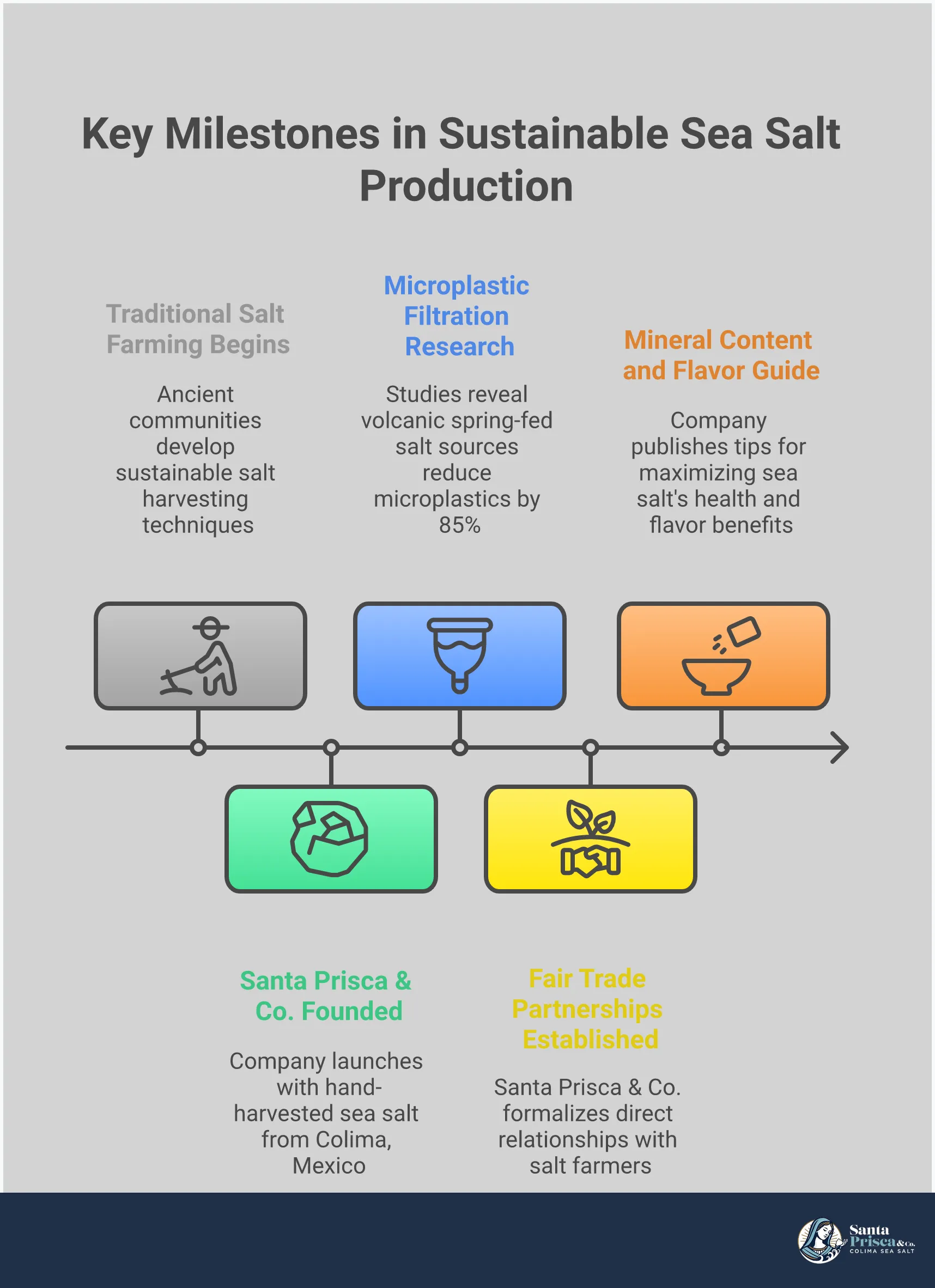
Artisanal, hand-harvested methods are often a sign of a superior and more sustainable product. This traditional approach is gentle on the surrounding ecosystem and helps preserve the salt’s delicate crystal structure and mineral profile. Our hand-harvested Colima Sea Salt, for example, comes from ancient salt flats fed by a volcanic spring, a testament to a pure and protected source. When you know the origin, you can connect more deeply with the food you eat.
How to Avoid Microplastics
It’s a difficult truth that our oceans are facing significant pollution. Studies have shown that sea salt from around the world is often contaminated by plastic. This is why the purity of the water source is so critical when choosing a sea salt.
To minimize your exposure, seek out salts harvested from remote, protected waters or from sources that have a natural filtration system. For instance, salt flats fed by underground springs that pass through the earth, like volcanic rock, offer a layer of natural purification. By choosing salt from pristine environments, you are not only protecting your own well-being but also supporting the preservation of cleaner waterways.
Why Your Choice in Salt Matters
The salt you sprinkle over your food is more than a seasoning; it’s a connection to the earth. Every crystal carries a story, and the choices we make in our kitchens can ripple outward, touching ecosystems and communities. When we pause to consider where our salt comes from, we open the door to a more intentional way of cooking—one that honors the planet and the people who tend to it.
Choosing a hand-harvested sea salt is a small act with a significant impact. It’s a vote for tradition over industry, for balance over extraction, and for a food system that nourishes everyone involved.
Support Sustainable Food Systems
When you choose a salt like our Colima Sea Salt, you directly support the salineros—the traditional salt farmers of Mexico. For generations, these artisans have worked in harmony with the sun, sea, and seasons in a beautiful dance with nature. This choice helps preserve time-honored practices and ensures this cultural heritage can continue. It sustains local economies and honors a way of life deeply connected to the land, contributing to a more equitable and resilient global food community.
Reduce the Impact of Industrial Mining
Most common table salt comes from underground deposits extracted through industrial mining. This process is incredibly energy-intensive and can cause lasting damage to the soil. Think heavy machinery, deforestation, and significant carbon emissions for a single ingredient. In contrast, artisan sea salt is harvested gently from the earth's surface without drilling or blasting. By opting for sea salt gathered through solar evaporation, you sidestep the environmental toll of mining and choose a path that is far kinder to our planet.
Protect Our Marine Ecosystems
Hand-harvested sea salt is a product of the elements: saltwater, sunshine, and wind. Artisan farmers use natural processes to coax salt from the water, allowing it to crystallize slowly in shallow pools. This method has a very low environmental impact, leaving delicate coastal ecosystems undisturbed. This gentle approach stands in stark contrast to industrial salt production, which can pollute waterways and disrupt marine habitats. When we choose salt harvested with respect for its source, we help protect the vibrant life within our oceans.
Sustainable Sea Salt Brands to Know
When you choose your salt with intention, you’re not just seasoning your food—you’re casting a vote for the kind of food system you want to support. It’s a small act that ripples outward, supporting communities and protecting delicate ecosystems. We believe in this connection deeply, and it’s the reason we do what we do.
Our Commitment: Hand-Harvested Colima Sea Salt
Our story begins in a place of quiet magic: the Cuyutlán Lagoon in Colima, Mexico. Here, the saltwater is naturally filtered through ancient volcanic earth, gathering a rich profile of minerals along its journey. This isn't a place of heavy machinery or industrial processing. Instead, everything is done by hand, guided by the sun and the seasons.
The result is our Colima Sea Salt, a sun-dried crystal with a crisp flake and a burst of mineral depth. Each grain is a testament to its pure origins, hand-harvested with care to preserve its natural structure and flavor. This is salt as nature intended—unrefined, clean, and full of life.
Artisans Honoring Tradition
The practice of harvesting salt in Colima is a tradition that stretches back centuries, passed down through generations of salineros, or salt farmers. These artisans are the guardians of a time-honored craft, working in harmony with the land to draw salt from the earth.
When you bring our salt into your kitchen, you are doing more than just buying an ingredient. Your choice directly honors the sustainable, time-honored practices of these Mexican salineros, helping to preserve a vital piece of cultural heritage. It’s a beautiful exchange that connects your table to their tradition, celebrating a process that is both patient and profound.
The Importance of Ethical Sourcing
Sustainability for us is about more than just the environment; it’s about people. We believe that the hands that harvest our salt should be honored and supported. That’s why we work directly with local salt-producing families, building relationships grounded in respect and fairness.
This direct partnership ensures fair wages and supports the continuation of eco-friendly harvesting practices that have sustained this region for generations. By choosing Santa Prisca & Co., you become part of a cycle of good—one that nourishes families, protects the land, and brings an ingredient of unparalleled purity to your kitchen. For other businesses who share these values, we invite you to partner with us to share this tradition.
Bring Sustainable Salt into Your Kitchen
Choosing a sustainable salt is a beautiful first step. The next is weaving that intention into your daily life. When you welcome an ingredient like hand-harvested sea salt into your home, you’re not just seasoning your food—you’re honoring a tradition, a place, and the people who made it possible. Here are a few simple ways to integrate this practice into your kitchen.
How to Store Your Sea Salt
To preserve the delicate texture and mineral complexity of your salt, proper storage is key. High-quality sea salt should be just that: pure salt and trace minerals, free from the anti-caking agents found in common table salt. Because it’s so natural, it can absorb moisture from the air.
Keep your Colima Sea Salt in a cool, dry place away from the steam of the stove. A simple glass jar with a secure lid works beautifully, or you can embrace tradition with a wooden or ceramic salt cellar. This not only protects the salt but also turns a simple ingredient into a beautiful, touchable part of your kitchen counter, ready for a pinch.
Cooking to Highlight Natural Flavor
Unrefined sea salt interacts with food in a way that is completely different from processed salt. The unique taste of sea salt comes from its natural minerals, which are often removed from regular table salt. This mineral profile doesn't just make food salty; it adds a subtle depth and complexity that brightens the ingredients themselves.
Think of it as a finishing touch. A sprinkle of coarse sea salt over a ripe tomato, a warm chocolate brownie, or a perfectly grilled steak adds a satisfying crunch and a final burst of flavor. Because it’s less processed, it’s a choice that’s better for both your palate and the planet. You can explore our collection to find the perfect texture for your dishes.
Create Mindful Kitchen Rituals
Choosing an artisan sea salt is an invitation to slow down and connect with your food. It helps bring back old traditions and fosters a deeper understanding of where our ingredients come from, much like buying produce from a local farmer. Each crystal carries the story of the sun, the sea, and the hands that harvested it.
Let this be a small ritual of gratitude in your kitchen. As you reach for your salt, take a moment to appreciate its journey. By choosing ethically sourced products, you’re directly supporting the salt-working families who uphold these sustainable, time-honored practices. It’s a simple choice that ripples outward, turning the act of cooking into a more meaningful and connected experience.
Related Articles
- 5 Best Sustainable Sea Salt Brands of 2025 – Santa Prisca & Co
- 7 Real Benefits of Hand-Harvested Sea Salt – Santa Prisca & Co
- Industrial Salt vs Table Salt: What's the Difference? – Santa Prisca & Co
- The Ultimate Guide to High Quality Sea Salt – Santa Prisca & Co
- Raw Sea Salt Guide: Benefits, Uses, and Meaning – Santa Prisca & Co
Frequently Asked Questions
Why is hand-harvested sea salt a more eco-friendly choice than regular table salt? The main difference comes down to the source and the method. Most table salt is mined from underground deposits using heavy machinery and a great deal of energy, which disrupts the land. Hand-harvested sea salt, on the other hand, is gathered from evaporated seawater using the natural power of the sun and wind. This gentle, ancient process works in harmony with coastal ecosystems instead of extracting from them.
Besides being better for the planet, what makes unrefined sea salt different from the salt I'm used to? Unrefined sea salt offers a completely different experience in flavor and texture. Because it isn't heavily processed, it retains a wealth of trace minerals from its ocean source, giving it a more complex and nuanced flavor that is less sharp than pure sodium chloride. You'll also notice a delicate, crisp texture that adds a beautiful finishing touch to dishes, something you won't find in uniform, free-flowing table salt.
How can I be sure the sea salt I buy is pure and free from microplastics? This is a valid concern, and the answer lies in the purity of the water source. Look for brands that are transparent about where and how their salt is harvested. The best salts come from remote, protected waters or from unique sources with natural filtration. For example, our Colima salt comes from a spring that is naturally filtered through volcanic earth, which provides an incredible layer of purification before it even reaches the salt flats.
Will I get enough minerals from sea salt to make a health difference? While unrefined sea salt shouldn't be considered a primary supplement, it does provide a broad profile of trace minerals like magnesium and potassium in their natural state. Think of it as choosing a whole food over a processed one. Your body recognizes and uses these elements in synergy. It’s a simple way to incorporate a more complete and balanced ingredient into your meals, supporting your body’s need for natural electrolytes.
How should I use a finishing salt like Colima Sea Salt differently in my cooking? A beautiful finishing salt is best used to complete a dish, not disappear within it. Its delicate, flaky crystals provide a satisfying crunch and a final burst of clean flavor that can get lost during cooking. Sprinkle it over your food just before serving. It’s perfect on everything from a simple avocado toast and grilled fish to a warm chocolate brownie for that perfect sweet and savory balance.