
How to Choose the Perfect Salt Jar with Spoon
Written By Santa Prisca & Co Staff Last updated on
Your kitchen counter tells a story about what you value. Each object, from a well-loved wooden board to a pot of fresh herbs, contributes to the feeling of your space. So why let a disposable cardboard box detract from that beauty? Choosing a vessel for your salt is an opportunity to add a touch of artistry to your daily routine. It’s about finding a piece that feels good in your hands and complements your kitchen’s aesthetic. A thoughtfully chosen salt jar with spoon becomes a permanent fixture, a small object of intention that honors one of nature’s most essential ingredients and turns the simple act of seasoning into a moment of gratitude.
Key Takeaways
- Make Seasoning an Intentional Act: A dedicated salt jar brings your salt from the back of the pantry to the heart of your kitchen, turning a hurried afterthought into a mindful, graceful gesture.
- Honor Your Ingredients: A quality vessel is crucial for protecting unrefined sea salt. Choose non-reactive materials like glass or ceramic with a snug lid to shield the delicate, mineral-rich crystals from humidity, preserving their pure flavor and crisp texture.
- Choose a Vessel That Fits Your Flow: The best salt jar complements your personal cooking style. Prioritize practical details like a wide opening and a secure lid, while selecting a design that brings a touch of beauty and intention to your countertop.
Why a Simple Salt Jar Can Transform Your Cooking
Think about the way you season your food. Is it a hurried shake from a generic container, or a frantic search through the pantry for a cardboard box? The simple act of adding salt is central to nearly every dish we create, yet we often treat it as an afterthought. A dedicated salt jar, or salt cellar, changes this dynamic entirely. It’s a small shift that brings intention and grace back to your countertop, transforming a mundane step into a meaningful ritual.
Having your salt within arm’s reach creates a more fluid and intuitive cooking experience. Instead of interrupting your flow, you can simply reach for a pinch or a spoonful. A well-designed salt jar with a wide opening allows you to feel the texture of the salt, giving you a deeper connection to the ingredient and better control over your seasoning. It’s the difference between cooking on autopilot and cooking with presence. This immediate access makes seasoning less of a task and more of a thoughtful gesture.
Beyond its practicality, a proper salt jar protects the integrity of your salt. Our hand-harvested Colima Sea Salt is unrefined and rich with essential minerals, giving it a unique moisture content and a delicate, crisp flake. Leaving it exposed to the air or in a poor container can introduce humidity, causing it to clump and dull its vibrant flavor. A good jar with a lid shields these precious crystals, ensuring every pinch you use is as pure and potent as the day it was harvested.
Ultimately, a salt jar is a beautiful object that honors a vital ingredient. It becomes a piece of your kitchen’s landscape, a small vessel of intention that reminds you to slow down and savor the process. Choosing a jar you love—whether it’s warm earthenware, rustic wood, or clear glass—turns the simple act of seasoning into a moment of gratitude. It’s a quiet statement that you care about your ingredients, your process, and the nourishment you provide.
The Ritual of Seasoning: Why a Dedicated Salt Jar Matters
Think about the moment you reach for salt. It’s often the final, transformative touch—a thoughtful pinch that awakens the flavors of a dish. This simple gesture is more than a step in a recipe; it’s a ritual, a quiet connection between you and the food you’re preparing. Giving your salt a proper home on your counter isn’t just about convenience; it’s about honoring this ritual.
When your salt lives in a dedicated jar or cellar, it becomes an invitation to season with intention. Instead of fumbling with a box or a grinder, you have immediate, graceful access. This simple shift makes seasoning feel more intuitive and fluid, turning a mundane step into a mindful practice. It’s no wonder a salt cellar is often considered a chef’s most trusted tool, always within arm’s reach for that perfect finishing touch.
A quality salt jar also serves a vital practical purpose: it protects the salt itself. Unrefined sea salt is alive with minerals and moisture, and its delicate crystal structure is what gives it its unique character. A proper cellar with a lid shields your salt from excess humidity, preventing clumping and preserving the crisp, clean texture of a hand-harvested salt like our Colima Sea Salt. This ensures every pinch is as pure and potent as the last.
Ultimately, choosing a salt jar is about creating a more beautiful and intentional cooking experience. The vessel you choose becomes a part of your kitchen’s story—a small object of beauty that holds one of nature’s most essential ingredients. It’s a daily reminder to slow down, to savor the process, and to appreciate the simple elements that bring our meals to life.
Exploring Materials: From Earthenware to Glass
The vessel you choose to hold your salt is more than just a container; it’s a part of your kitchen’s story and a daily touchpoint in your cooking ritual. The right material not only protects the delicate, mineral-rich crystals of your sea salt but also complements the way you move and create in your space. Each option offers a different experience—from the clarity of glass to the earthy weight of ceramic. Let’s explore which one resonates most with you.
Glass: For Clarity and Purity
A glass jar offers a beautiful window to the salt within, showcasing the unique texture and crystalline structure of a hand-harvested salt. Because glass is non-reactive, it’s a perfect choice for preserving the pure, clean flavor of your Colima Sea Salt. It won’t interact with the salt or impart any unwanted tastes.
Look for a glass jar with an airtight seal, like a classic mason jar. This is especially important in humid climates, as it protects the salt from moisture that can cause clumping. A clear glass container is a simple, honest choice that honors the purity of the ingredient it holds, keeping it fresh, dry, and ready for a perfect pinch.
Ceramic: For Artisanal Beauty
There is a grounded, earthy quality to a ceramic salt cellar. Holding one in your hands connects you to a long tradition of craftsmanship. Often thrown by hand, each piece carries its own unique character, adding a touch of artisanal warmth to your countertop. Ceramic is a wonderful choice for keeping salt dark and dry, and its weight feels substantial and intentional.
While you can’t see the salt inside, the tactile experience of lifting a ceramic lid and scooping from a hidden reserve feels special. Many potters create beautiful ceramic salt cellars that are as much a piece of art as they are a functional kitchen tool, turning the simple act of seasoning into a moment of beauty.
Wood: For Natural Warmth
Wood brings an undeniable warmth and organic texture to the kitchen. A wooden salt box can feel rustic and inviting, connecting your cooking space to the natural world. The gentle sound of a wooden lid closing or the smooth feel of a matching spoon adds a sensory layer to your seasoning ritual.
However, it’s important to be mindful of moisture. Wood is porous and many boxes are not airtight, which can cause unrefined sea salt to absorb humidity from the air. If you live in a dry climate or use your salt quickly, wood can be a lovely choice. Just be sure to select a well-crafted box made from a dense wood to best protect your salt’s integrity.
Bamboo: For a Sustainable Touch
For those who value sustainability, bamboo is an excellent material. As a fast-growing grass, it’s a highly renewable resource, making it a thoughtful choice for an eco-conscious kitchen. Bamboo salt cellars are lightweight yet durable, and they often feature clever designs like a magnetic swivel lid for easy, one-handed access while you’re busy at the stove.
This material blends modern convenience with a connection to nature. Choosing bamboo is a small way to incorporate sustainable kitchen practices into your daily life. It’s a practical, mindful option that is both functional and gentle on the planet.
What to Look For in a Quality Salt Jar
Choosing a salt jar is about more than just storage; it’s about creating a small, beautiful ritual in your daily cooking. The right vessel honors the salt it holds and makes the simple act of seasoning feel intentional and graceful. When you have a pure, mineral-rich salt, you want to house it in something that is both functional and a joy to use.
A quality salt jar becomes a permanent fixture on your countertop, a trusted companion that you reach for instinctively. It should feel good in your hands and work seamlessly with the rhythm of your kitchen. From the way the lid closes to the ease of grabbing a quick pinch, every detail matters. Let’s explore the key features that separate a simple container from a cherished kitchen tool.
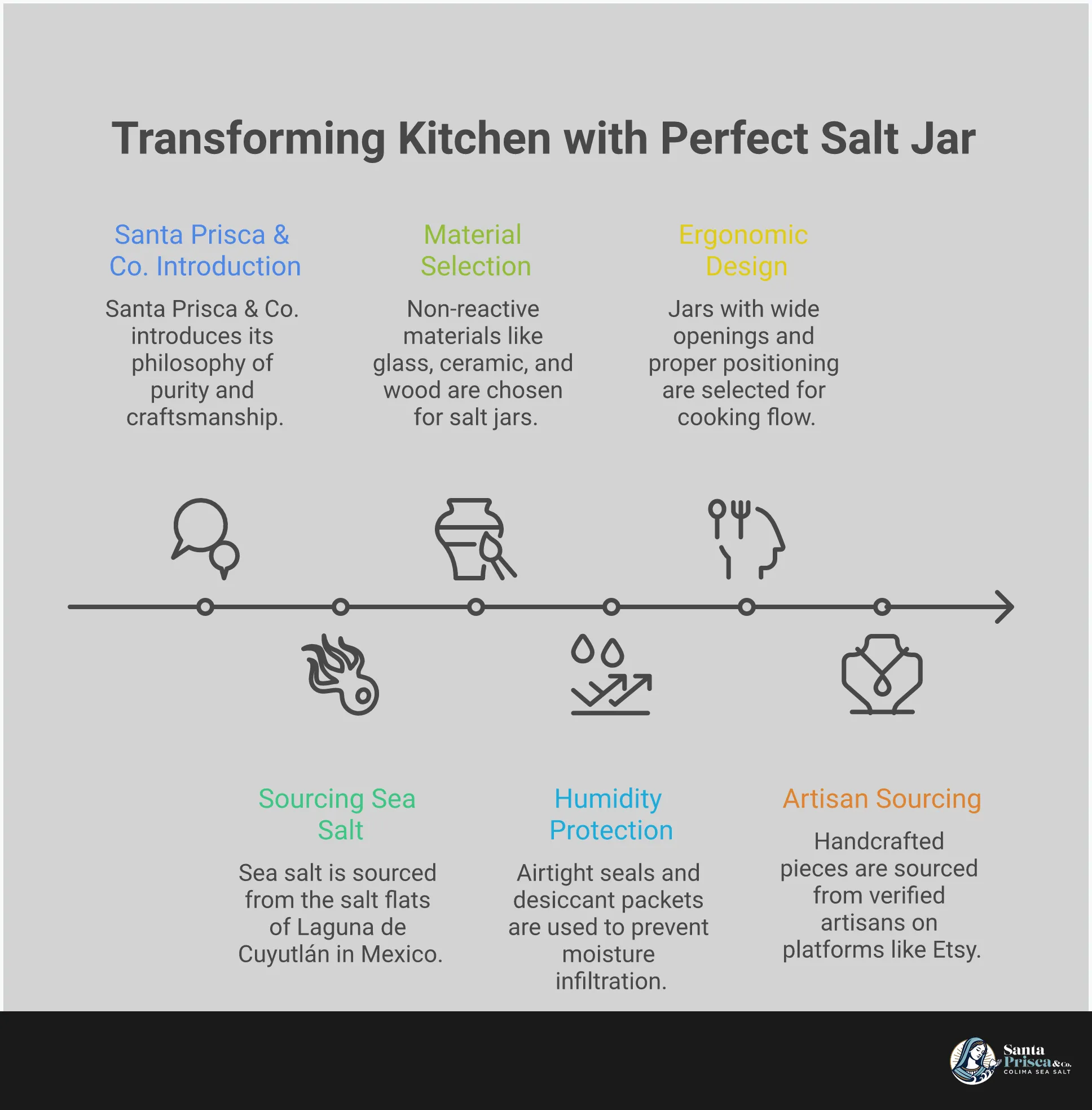
Finding the Right Size for Your Countertop
Consider how a salt jar will live in your kitchen. The right size feels balanced on your countertop, accessible but not in the way. Most salt cellars hold between 6 and 16 ounces, offering a generous supply without needing constant refills.
Think about your cooking style. If you love seasoning generously from a single, go-to salt, a larger jar is a practical choice. If you prefer to have different salts for different purposes—a coarse salt for cooking and a delicate flake for finishing—you might opt for a smaller jar or even a cellar with two compartments. The goal is to find a size that feels both abundant and personal to your space.
Lids and Seals to Protect from Moisture
A well-designed lid is crucial for protecting the integrity of your salt. This is especially true for unrefined salts like our Colima Sea Salt, which is free from the anti-caking agents found in common table salt. Without a proper seal, humidity can cause the beautiful, natural crystals to clump together.
Look for a salt jar with a snug-fitting lid. Many wooden cellars feature a swivel lid, often with a small magnet to ensure it stays securely closed. This simple feature keeps your salt pure, dry, and free from dust. There’s a quiet satisfaction in a lid that closes perfectly, protecting the precious minerals within.
A Perfectly Paired Spoon
A dedicated spoon transforms the act of seasoning into a more mindful practice. Many salt cellars come with a small, perfectly paired spoon, often carved from wood or crafted from ceramic. This allows you to scoop and sprinkle with precision, keeping the salt pristine by avoiding contact with your fingers, which can introduce moisture and oils.
Beyond hygiene, a spoon adds to the tactile experience. The smooth feel of a wooden spoon scooping delicate salt crystals is a small moment of connection in the kitchen. It encourages you to pause and be deliberate with your seasoning, appreciating the texture and form of the salt itself.
A Wide Opening for an Easy Pinch
There are moments in cooking that call for intuition over measurement—a quick, generous pinch of salt tossed into a simmering pot or scattered over roasted vegetables. For this, a salt jar with a wide, accessible opening is essential. It allows you to reach in easily with your fingers or a spoon without any fuss.
This practical design feature supports a fluid cooking process, letting you season freely as you taste and create. When your tools work with you, the entire experience becomes more effortless and enjoyable. A well-designed jar invites you to explore different salts and use them with confidence and ease.
Our Favorite Styles of Salt Jars
The vessel you choose to hold your salt is more than just storage; it’s a part of the daily ritual of cooking. It sits on your counter as a quiet companion, holding one of the most essential elements of your kitchen. The right salt jar feels good in your hands, makes seasoning an effortless gesture, and honors the precious minerals within. It’s a small detail that brings so much intention to your space.
Choosing a style is a personal reflection of your kitchen’s story. Do you gravitate toward the clean lines of glass, the earthy touch of ceramic, or the grounding warmth of wood? Each material offers a different experience, a different connection to the simple act of seasoning your food. We’ve gathered a few of our favorite styles to help you find the one that speaks to you, turning a functional object into a piece of countertop art that you’ll reach for with gratitude every day.
The Minimalist Glass Jar
There is a beautiful honesty to a glass salt jar. It allows the salt itself to be the centerpiece, showcasing the unique texture and sun-dried crystal of a pure, unrefined salt. We love how a simple glass pot with a wide mouth invites you to reach in for a generous pinch, connecting you directly with the ingredient. Paired with a simple wooden spoon, it feels both modern and timeless. This style is perfect for the cook who appreciates clarity, purity, and letting high-quality ingredients speak for themselves. It’s a clean, bright addition to any kitchen counter.
The Handcrafted Ceramic Cellar
A ceramic salt cellar brings an immediate sense of artistry and earthiness to your kitchen. Often thrown by hand, each handmade ceramic jar carries the unique touch of its maker, making it a truly one-of-a-kind piece. The weight of it in your hand feels grounding, a connection to the clay from which it was formed. Ceramic cellars come in countless glazes and shapes, from rustic and unadorned to vibrant and polished. Choosing a ceramic piece is a wonderful way to support artisans while adding a touch of soulful, handcrafted beauty to your daily cooking rituals.
The Rustic Wooden Box
For a touch of natural warmth, nothing compares to a wooden salt box. The organic grain and smooth finish feel comforting to the touch, bringing a piece of the outdoors into your kitchen. Many wood salt jars are designed with clever details, like a swiveling magnetic lid or a tiny nested spoon that’s always right where you need it. A wooden box protects the salt from light and moisture while adding a rustic, traditional charm to your countertop. It’s a practical and enduring choice for any home cook who values natural materials and thoughtful design.
Honoring Tradition with Santa Prisca & Co.
Ultimately, the perfect salt jar is one that honors the salt it holds. When you invest in a mineral-rich, hand-harvested salt, you’re bringing a piece of tradition into your home. Our Colima Sea Salt is the result of generations of artisanship, and it deserves a vessel that reflects that care. Whether you choose glass, ceramic, or wood, select a jar that feels like a small treasure. It’s a daily reminder to cook with intention, to appreciate the journey of your food from the earth to your table, and to find beauty in the simplest of kitchen tools.
How to Match a Salt Jar to Your Cooking Style
Your salt jar is more than just a container; it’s a reflection of your rhythm in the kitchen. The right one feels like an extension of your hand, a silent partner in your culinary creations. Choosing a vessel for your salt is a personal decision, one that should honor the way you move, cook, and gather in your space. It’s about finding a piece that complements your unique approach to cooking.
Think about how you season your food. Are you an intuitive cook who adds a pinch here and a dash there, tasting as you go? If so, you need immediate, easy access. A salt cellar with a wide opening is your best friend. Consider a simple ceramic bowl or a wooden box with a magnetic swivel lid that you can open with one hand. This design allows you to grab the perfect three-finger pinch of flaky Colima Sea Salt without missing a beat.
Perhaps you are a more methodical cook, a baker who relies on precision and carefully measured ingredients. For you, a glass jar with a snug lid and a dedicated spoon is ideal. The clear glass lets you see exactly how much salt you have left, and a secure lid protects your precious granules from humidity—a baker’s sworn enemy. This ensures every teaspoon is pure, dry, and ready for your delicate pastries and breads.
If your kitchen is the heart of your home, a place where you love to entertain, your salt jar can be a piece of art. A beautiful, handcrafted vessel made of marble or glazed earthenware becomes a conversation starter and a functional part of your tablescape. It signals a reverence for good ingredients and invites your guests to season their food with intention. The vessel you choose becomes part of the story you tell through your food, a small detail that elevates the entire experience.
Common Mistakes to Avoid When Choosing a Salt Jar
A beautiful, mineral-rich salt deserves a home that honors its purity. Choosing a salt jar is a small act of intention, but overlooking a few key details can compromise the very qualities you love about your salt. It’s about more than just storage; it’s about preserving the texture, flavor, and spirit of an ingredient that has traveled from ancient sea beds to your kitchen. Let’s walk through a few common missteps to ensure your salt stays perfect from the first pinch to the last, so every meal is seasoned with care.
Reactive Materials That Can Alter Flavor
The material of your salt jar matters more than you might think. Some plastics aren't completely inert and can subtly interact with the salt over time, potentially altering its delicate flavor profile. To protect the clean, sun-dried taste of a truly special Colima Sea Salt, choose a vessel made from glass, high-quality ceramic, or natural wood. These materials act as neutral guardians, ensuring that every crystal remains pure and untainted, just as nature intended. Your salt should taste of the ocean and the earth, not its container.
Poorly Designed Lids
We’ve all experienced it: reaching for a pinch of salt only to find a solid, stubborn clump. This is almost always the result of moisture, which a poorly designed lid will welcome right in. A loose or ill-fitting top can compromise the beautiful, crisp texture of hand-harvested salt flakes, turning them heavy and damp. Look for a salt cellar with a lid that sits snugly, creating a protective seal against humidity. This simple feature is essential for preserving the integrity and freshness of your salt, keeping it dry and ready for you.
Impractical Spoon Designs
The ritual of seasoning should feel fluid and graceful. A salt jar with a clunky or detached spoon can interrupt that flow, forcing you to fumble through a drawer mid-recipe. An impractical spoon makes cooking more cumbersome than it needs to be. The most thoughtful designs often include a perfectly sized spoon that nests neatly within the jar or under the lid. This keeps it clean, accessible, and always ready for that quick, intuitive dash of flavor your dish needs, making the entire process feel seamless and intentional.
Where to Find an Artisanal Salt Jar
The search for the perfect salt jar is a journey in itself. It’s about finding a vessel that not only protects your precious salt but also brings a small moment of beauty to your daily cooking ritual. When you find the right one, it feels less like a container and more like a cherished kitchen companion.
For those who appreciate unique, handmade pieces, the online marketplace Etsy is a treasure trove. Here, you can connect directly with artisans and find a salt jar with a story. From hand-thrown pottery to carved wooden cellars, each piece carries the mark of its maker, adding a layer of intention to your countertop.
Curated home goods shops are another wonderful place to look. Boutiques like Market by Modern Nest offer pieces chosen for their quiet elegance and functionality. Their beautiful glass salt jar is a perfect example—simple, pure, and designed to make scooping a pinch of salt effortless. For a wider selection, you can also explore the many stylish salt cellars on Amazon, where you can find a variety of materials and designs to suit your kitchen’s aesthetic.
Sometimes, the best vessels come from fellow salt producers who understand the importance of proper storage. Companies like Halen Môn offer beautiful ceramic salt jars that often come filled with their own sea salt. It’s a lovely way to honor the ingredient and the traditions behind it. Don’t forget to explore local antique shops or artisan markets, too—you never know when you’ll stumble upon a one-of-a-kind piece with a history all its own.
How to Care for Your Salt Jar and Spoon
Your salt jar is more than just a container; it’s a vessel that holds a piece of the earth. Tending to it is a small ritual that honors the journey of the salt from the lagoons of Colima to your kitchen counter. Just as we care for our cast iron pans or wooden cutting boards, giving a little attention to your salt cellar and spoon ensures they remain beautiful, functional, and ready for your next culinary creation. A well-kept salt jar protects the integrity of the salt, preserving its unique texture and mineral-rich flavor for every pinch.
Simple Cleaning for Lasting Use
A pure ingredient deserves a pure home. For glass jars, a simple wash with warm, soapy water is all that’s needed to keep them sparkling. Glass is a wonderful, inert material, meaning it won’t react with the salt or alter its delicate flavor profile. If you’ve chosen a beautiful wooden or ceramic cellar, it’s best to wash it by hand. A gentle wipe with a damp cloth and mild soap will do the trick. Be sure to let it dry completely before refilling to prevent any moisture from getting in. Proper caring for wooden kitchen tools will ensure they last for years, becoming cherished heirlooms in your kitchen.
Storing Your Salt to Preserve Its Mineral Richness
Our unrefined Colima Sea Salt is treasured for its crisp, delicate flake and rich mineral depth. To protect these qualities, it’s important to shield it from its greatest foe: humidity. Moisture in the air can cause the salt crystals to clump together, losing that beautiful texture we love. Storing your salt in a cellar with a well-fitting lid is the best way to keep it dry and fresh, especially if you keep it near the stove. Just like properly storing your spices preserves their potency, keeping your salt sealed protects its essence. This simple step ensures every pinch delivers that perfect burst of clean, mineral flavor.
Related Articles
- 7 Best Containers for Salt for Fresher Flavor
- The Ultimate Salt Jar Guide: Find Your Match
- Find the Perfect Container for Salt: Our Top Picks
Frequently Asked Questions
Why is a dedicated salt jar better than just using the original packaging? Think of it as giving an essential ingredient a proper home. The original bag or box isn't designed to protect the salt from kitchen humidity, steam, and splatters once it's opened. A quality salt jar with a good lid shields the delicate, mineral-rich crystals from moisture, preventing clumping and preserving that pure, clean flavor. It also turns the simple act of seasoning from a clumsy fumble into a graceful, intentional gesture.
My unrefined sea salt keeps clumping in its jar. What am I doing wrong? Clumping is almost always caused by moisture. Unrefined sea salt is beautifully natural and free from the anti-caking chemicals found in table salt, which makes it more susceptible to humidity. The key is to choose a cellar with a snug-fitting lid that creates a protective seal. Also, try to avoid placing your salt jar directly next to the stove where steam is most prevalent.
Does the material of the salt jar actually affect the salt's flavor? Yes, it certainly can. Some materials, particularly certain plastics, are not completely inert and can subtly interact with the salt over time, imparting a faint, unwanted taste. To preserve the pure, clean profile of a hand-harvested salt, it’s best to choose a non-reactive material like glass, ceramic, or natural wood. These materials act as neutral guardians, ensuring your salt tastes only of the ocean and earth it came from.
Is a spoon really necessary, or can I just use my fingers to pinch the salt? This is a wonderful question that gets to the heart of the seasoning ritual. A dedicated spoon is excellent for keeping the salt pristine, as it prevents any moisture or oils from your fingers from getting into the container. However, many cooks love the tactile connection of feeling the salt crystals. A well-designed jar with a wide opening allows for either, so you can choose the method that feels most intuitive to you in the moment.
How should I clean my salt jar, especially if it's made of wood or ceramic? Caring for your jar is simple. Glass cellars can be washed with warm, soapy water, but be sure they are bone dry before refilling. For wood or unglazed ceramic, it's best to avoid soaking them. Instead, wipe them clean with a slightly damp cloth. The goal is to keep moisture away from the salt, so ensuring the vessel is completely dry is the most important step.