
How Sea Salt Is Harvested: From Ocean to Table
Written By Santa Prisca & Co Staff Last updated on
There is a quiet magic in the way the sun and sea conspire to create salt. It’s an ancient, elemental dance—a slow transformation that turns vast ocean water into delicate, crystalline flakes. This natural alchemy is at the heart of what makes artisanal salt so special. It’s a process that can’t be rushed, relying entirely on the warmth of the sun and the whisper of the wind. When we explore how is sea salt harvested, we uncover a story of patience and purity. Each crystal holds the essence of its coastal home, a tiny time capsule of sun, sea, and earth.
Key Takeaways
- Embrace mineral-rich salt for better flavor: Unrefined sea salt retains its natural trace minerals, giving it a complex, nuanced taste that enhances food, unlike processed table salt which is stripped of its nutrients and character.
- Artisanal harvesting preserves purity and texture: The gentle, traditional methods of solar evaporation and hand-harvesting protect the salt's natural mineral content and create a delicate, crisp crystal structure that industrial processing cannot replicate.
- Transform your cooking with a simple switch: Choosing a hand-harvested sea salt is an easy way to add profound flavor and a satisfying crunch to your meals, turning the simple act of seasoning into a mindful moment of nourishment.
Sea Salt vs. Table Salt: What's Really the Difference?
It’s easy to think that all salt is the same, but the journey from its source to your kitchen shaker makes a world of difference. The bright white, free-flowing salt on most tables is a world away from the unrefined, mineral-rich crystals harvested from the sea. Understanding this distinction is the first step toward cooking with more intention and flavor.
Rich in Minerals, Free from Refining
Think of table salt as the heavily processed version of a beautiful, natural ingredient. It’s typically mined from underground deposits, then refined at very high temperatures, a process that strips it of its beneficial minerals. What’s left is pure sodium chloride, often with anti-caking agents and other additives mixed in to prevent clumping.
Unrefined sea salt, on the other hand, is a whole food. High-quality sea salts can contain a beautiful spectrum of over 60 trace minerals, which are preserved through gentle harvesting methods. This means you’re not just getting saltiness; you’re getting a touch of magnesium, potassium, and calcium, just as nature intended. It’s a simple choice for a more nourishing kitchen.
Exploring Complex Flavors and Crisp Textures
Beyond the mineral content, the difference in taste and texture is profound. Table salt has a sharp, one-dimensional flavor, while sea salt offers a softer, more complex profile with a gentle brininess that enhances food without overpowering it. Prized for their unique character, artisanal salts can truly transform your cooking.
Texture is where sea salt truly shines. The uniform, tiny grains of table salt dissolve instantly. Sea salt crystals, however, come in various shapes and sizes, from delicate flakes to a satisfying crunch. This variety allows for diverse culinary applications, whether you’re seasoning a roast or adding a finishing touch to a chocolate tart. It transforms seasoning from a simple step into a sensory experience.
From Ocean to Table: How Sea Salt is Harvested
Have you ever paused to wonder where the salt in your shaker truly comes from? The journey of a single salt crystal is a beautiful story of patience, tradition, and the quiet power of nature. Long before it reaches your kitchen to season a meal, it begins as a simple drop of seawater, transformed by the sun, wind, and sometimes, the careful hands of an artisan. Understanding this process connects us more deeply to our food, turning a common ingredient into something truly special.
The path from ocean to table varies, with each method leaving its unique signature on the salt’s flavor, texture, and mineral content. From vast, sun-drenched ponds to the meticulous work of salt farmers, the way salt is gathered is as important as where it comes from. This transformation is a delicate dance between the elements and human intention, one that has been perfected over centuries. Let’s explore the primary ways we harvest sea salt from the earth’s pristine waters.
Harnessing the Power of the Sun
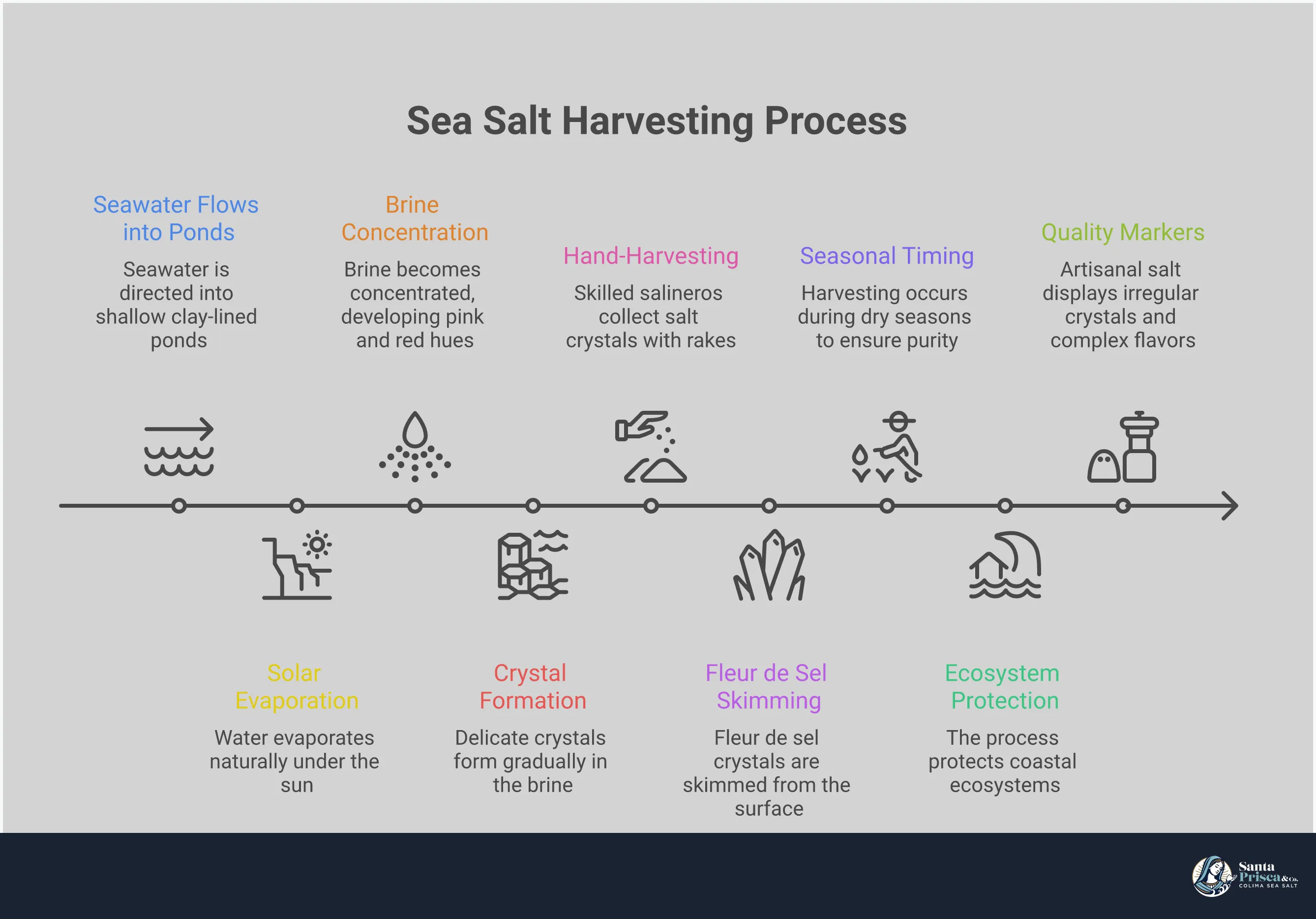
The most ancient and natural method of harvesting sea salt is solar evaporation. It’s a slow, intentional process that relies entirely on the sun and wind. Seawater is guided into a series of shallow, interlocking ponds, often called salt pans. Here, the water rests, allowing the sun’s warmth and the gentle breeze to work their magic, slowly evaporating the water over weeks or even months.
As the water disappears, it leaves behind a concentrated brine, and soon, pure salt crystals begin to form, glittering in the sun. This patient method does more than just produce salt; it allows the rich, trace minerals from the ocean to remain, contributing to a more complex flavor and nutritional profile. It’s a beautiful example of how sea salt is made in harmony with nature’s own rhythms.
The Art of Hand-Harvesting
Hand-harvesting is where craftsmanship meets nature. In this traditional method, skilled artisans, known as salineros, use specialized wooden rakes to gently collect the salt crystals from the ponds. It’s a physically demanding art that requires a deep understanding of the environment. The most delicate crystals, like fleur de sel or “flower of salt,” are carefully skimmed from the surface of the water before they can sink.
This gentle approach preserves the salt’s delicate, flaky structure, resulting in a crisp texture that dissolves beautifully on the tongue. For generations, cultures around the world have revered this practice of salt harvesting, not just as a way to gather food, but as a sacred tradition that honors the gifts of the sea.
A Look at Modern Mechanical Methods
For large-scale salt production, efficiency often calls for a more industrial approach. In these operations, machinery is used to collect the salt from the vast evaporation ponds. Self-propelled machines with large blades and conveyors move through the salt fields, scraping and gathering the crystallized salt in a single, swift process.
While this method allows for a much larger volume of salt to be produced quickly, the heavy machinery can sometimes crush the natural crystal structure. This often results in a more uniform, dense grain. Mechanical harvesting is designed for mass production, prioritizing quantity and speed over the nuanced texture and delicate mineral balance that is so carefully preserved through hand-harvesting.
Sun, Sea, and Salt: The Magic of Solar Evaporation
There is a quiet magic in the way sea salt comes to be. Long before industrial processing, our ancestors understood that all you truly need is the sun, the sea, and a bit of patience. This ancient method, known as solar evaporation, is a slow dance between the elements. It’s a process that honors the natural rhythms of the earth, allowing salt to form just as nature intended: pure, unhurried, and full of character. This method is the heart of what makes artisanal salt so special, turning a simple mineral into a cornerstone of intentional cooking.
This method isn't about rushing. It’s about creating the perfect conditions for seawater to transform. In shallow ponds, under the warmth of the sun, water gently recedes, leaving behind a delicate crust of salt crystals. Each crystal is a tiny time capsule, holding the essence of the ocean and the energy of the sun. This is how we get salt that’s not just a seasoning, but a true ingredient, rich with the minerals and story of its origin. By choosing salt harvested this way, you are choosing a product that is deeply connected to its environment. The result is a collection of pure, unrefined salts that carry the soul of the coast and nourish the body with their natural mineral content. It’s a beautiful reminder that the most profound flavors often come from the simplest, most patient processes.
Preparing the Salt Pans: The First Step
The journey begins with a simple, intentional act. Seawater is welcomed from the ocean into a series of large, shallow ponds, often lined with mineral-rich clay. These ponds, called salt pans, are the stage for the transformation to come. This first step is crucial; it’s about selecting the purest ocean water and giving it a calm, protected space to rest. It’s a process of gentle guidance, working with the tides and the landscape to begin the patient work of evaporation.
Watching the Crystals Form
Once the seawater settles in the pans, the sun and wind begin their work. Day by day, the water slowly evaporates, becoming an increasingly concentrated brine. This isn't a process that can be rushed; it can take months, or in some cases, years. As the water vanishes, you can witness the first delicate salt crystals beginning to appear, like frost on a windowpane. Sometimes, the ponds take on stunning hues of pink or red, a sign of the tiny, salt-loving microorganisms that thrive in the brine, adding to the beauty of the natural process.
How Nature Shapes the Final Crystal
The final form of the salt crystal is a direct reflection of its unhurried journey. The slow pace of solar evaporation allows for the formation of beautiful, complex crystals with a signature crispness. This gentle method also ensures that essential trace minerals from the ocean remain intact, giving the salt its profound depth of flavor. When you taste a flake of true Colima Sea Salt, you’re tasting the sun, the sea, and the patient collaboration of the elements that shaped its perfect, mineral-rich structure.
The Artisan's Touch vs. The Industrial Approach
Not all sea salt is created equal. The journey from ocean to table can follow two very different paths: one guided by ancient tradition and the human hand, the other by the scale of modern industry. The path taken doesn't just change how the salt is gathered; it defines its very essence, from its mineral content to the way it feels between your fingers and tastes on your tongue. Understanding this difference is the first step toward cooking with more intention and appreciating the story behind your ingredients.
Honoring Tradition: The Craft of Hand-Harvesting
Artisanal salt harvesting is a practice steeped in patience and respect for nature. It’s a dance with the sun and the sea, where skilled salt farmers, or salineros, gently coax the crystals from the water. This hand-harvesting method is a delicate craft that preserves the salt’s natural integrity, keeping its unique mineral composition and crystalline structure intact. Because it’s done in harmony with the local ecosystem, it’s a truly sustainable process. This is the tradition we honor with every bag of our Colima Sea Salt, ensuring every crystal is as pure as nature intended.
Understanding Large-Scale Production
Industrial salt production operates on a much different scale. In this approach, seawater is moved into vast, man-made ponds where it evaporates over time. Heavy machinery is then used to scrape and collect the salt in massive quantities. To keep the salt flowing freely and prevent clumping, this process often involves high-heat processing and the addition of anti-caking agents or other additives. While efficient for producing large volumes, this industrial method can strip the salt of its trace minerals and alter its natural texture, creating a uniform product that lacks the character of its hand-harvested counterpart.
Why the Method Matters for Minerals and Flavor
The way salt is harvested directly impacts its quality. The gentle, hands-on approach preserves the wealth of trace minerals that naturally occur in seawater. High-quality sea salts can contain more than 60 trace minerals, which contribute to a more complex, nuanced flavor and offer wellness benefits. These minerals are often lost during aggressive industrial processing. The result is that hand-harvested salt, with its unique crystal shapes and mineral depth, adds a crisp texture and a richer taste to your food, transforming a simple seasoning into a true culinary experience.
Harvesting in Harmony with Nature
True artisanal salt harvesting is less about manufacturing and more about a conversation with the earth. It’s a practice rooted in patience, observation, and a deep respect for the natural world. Unlike industrial methods that can disrupt landscapes, traditional salt gathering works in partnership with the elements, honoring the cycles of the sun, the sea, and the seasons. This gentle approach isn't just better for the planet; it’s what gives the salt its unique character and mineral richness.
When we choose salt that is harvested this way, we’re not just seasoning our food. We are supporting a legacy of environmental stewardship. The process begins with clean ocean water and relies on the sun's warmth and the wind's breath to slowly coax crystals into being. This method protects the delicate balance of the local environment, ensuring that the salt flats remain vibrant ecosystems for generations to come. It’s a beautiful reminder that the most nourishing ingredients come from a place of harmony, where human hands work with nature, not against it. This connection is something you can feel, and taste, in every single crystal.
Working with the Rhythms of the Seasons
Artisanal salt production doesn’t follow a factory schedule; it follows the sky. The harvest begins when the conditions are just right, typically in the dry, sunny months when rain is scarce. This is when the sun is generous enough to slowly evaporate the seawater, allowing the salt crystals to form naturally and patiently.
The salineros, or salt farmers, are deeply attuned to these rhythms. They understand that the best salt can’t be rushed. It requires waiting for that perfect stretch of warm, dry weather. This seasonal approach ensures that the evaporation process is slow and gentle, which is essential for creating perfectly structured, mineral-dense crystals. It’s a testament to working with time, not against it.
Protecting the Local Ecosystem
The salt flats, or salinas, are not sterile environments; they are thriving, living landscapes. The shallow ponds teem with microorganisms that play a vital role in the salt’s development. As the water evaporates and the salinity increases, the ponds often change color, shifting from green to a soft pink. This beautiful transformation is a visual sign of a healthy, balanced ecosystem at work.
Artisanal harvesting methods help preserve these healthy coastal ecosystems, allowing local flora and fauna to flourish. By avoiding harsh chemicals and disruptive machinery, traditional salt farmers act as custodians of the land. This careful stewardship ensures the water remains pure and the environment undisturbed, which directly contributes to the clean, unadulterated quality of the final salt.
A Commitment to Sustainable Resources
Sustainability is at the very heart of traditional salt harvesting. The entire process is powered by renewable resources: the sun provides the energy for evaporation, the wind aids the process, and the ocean offers the raw material. It’s a beautifully simple and efficient system that has sustained communities for centuries without depleting natural resources.
This commitment extends beyond the harvest itself. It’s about honoring the entire cycle, from the pristine waters to your kitchen table. Choosing an artisanal salt means you are supporting practices that are kind to the earth. It’s a conscious choice to value quality over quantity and to celebrate ingredients that are as pure and natural as the environment they come from.
Why Hand-Harvested Salt Transforms Your Cooking
Have you ever noticed how some meals feel deeply satisfying, while others fall flat, even when you follow the recipe perfectly? Often, the secret lies in the simplest of ingredients. Salt is the foundation of flavor in almost every dish, yet we rarely give it a second thought. Switching from processed table salt to a hand-harvested sea salt is one of the most profound changes you can make in your kitchen. It’s not just about adding saltiness; it’s about adding character, texture, and a story to your food.
This isn't about a minor upgrade. It’s a fundamental shift in how you approach flavor. Hand-harvested salt, like our Colima Sea Salt, carries the essence of its origin, from the sun that evaporated the water to the earth that filtered it. This connection to nature brings a complexity that refined salt simply cannot replicate. The difference is something you can taste, feel, and appreciate in every bite. It invites you to slow down and cook with more intention, turning a daily routine into a mindful ritual of nourishment.
Unlocking Deeper Flavor Through Minerals
When salt is stripped of its natural minerals during industrial refining, it becomes a one-dimensional ingredient: pure sodium chloride. Its only job is to make things salty. But unrefined sea salt tells a much richer story. It retains dozens of trace minerals from the ocean, and this complex mineral profile is what gives it such a nuanced and gentle flavor. Instead of a harsh, chemical bite, you get a subtle brine with a whisper of sweetness.
These minerals don't just add their own taste; they enhance the flavor profile of your food, making sweet notes sweeter and savory notes deeper. It’s the difference between a flat, muted color and a vibrant, multi-tonal painting.
The Perfect Crunch: How Crystal Shape Matters
Texture is a quiet but powerful part of the culinary experience. The way salt is harvested directly influences the shape and size of its crystals, which in turn affects how it feels in your mouth. The slow, patient process of solar evaporation allows for the formation of delicate, flaky crystals. These are the artisanal salts prized by chefs for their signature finish.
Unlike the tiny, dense cubes of table salt that dissolve instantly, these beautiful flakes linger on the tongue, offering a satisfying, gentle crunch before melting away. Sprinkling them over a finished dish, from a simple avocado toast to a perfectly seared steak, adds a final layer of texture that makes each bite more interesting and delightful.
The Unique Purity of Volcanic Earth Filtration
Purity in salt means more than just a clean taste. It means the salt is free from the additives, anti-caking agents, and bleaching processes common in mass production. Our Colima salt undergoes a unique natural filtration process, seeping through ancient volcanic earth before reaching the salt flats. This not only imbues it with a rich mineral balance but also ensures it remains pristine.
This commitment to purity means you’re getting nothing but what nature intended. Because it’s unrefined sea salt, it retains essential mineral electrolytes that support proper hydration. Choosing a hand-harvested salt is a simple act of wellness, a way to nourish your body while honoring the earth’s natural processes.
Invite Artisanal Sea Salt Into Your Kitchen
Choosing your salt is more than a simple kitchen decision. It’s an opportunity to connect with the food you eat, the planet we share, and the traditions that have nourished people for centuries. When you welcome artisanal sea salt into your home, you’re choosing an ingredient that carries a story of place and purpose. It’s a small shift that can bring more intention to your cooking, turning everyday meals into moments of gratitude and simple pleasure.
This isn’t about adding another complicated step to your routine. It’s about simplifying with an ingredient that is pure, flavorful, and deeply nourishing. By understanding where your salt comes from and how it’s made, you can transform your relationship with one of the most essential elements in your pantry.
Nourish Your Body with Unrefined Salt
So much of the salt we see on grocery store shelves has been stripped of its character. Industrial processing removes the rich array of minerals that naturally occur in seawater, leaving behind a one-dimensional product. Unrefined sea salt, on the other hand, is a world apart. Because it’s harvested and dried with minimal intervention, it retains dozens of trace minerals that our bodies recognize and need.
These minerals do more than just add flavor. They include essential electrolytes that support hydration and overall balance. Think of it as seasoning your food with the earth’s own wisdom. Using a pure, unrefined salt like our Colima Sea Salt is a simple way to honor your body’s needs while enjoying a clean, bright flavor that enhances every ingredient it touches.
Choose Salt that Cares for the Planet
Our choices in the kitchen have a ripple effect that extends far beyond our tables. Opting for hand-harvested sea salt is a vote for sustainable practices that honor the environment. Traditional salt harvesting works in harmony with nature’s rhythms, using the sun and wind to gently evaporate seawater. This method has a limited ecological footprint and helps protect the delicate ecosystems of coastal wetlands.
When you choose salt from artisans who are stewards of the land, you support a system that values clean water, biodiversity, and long-term balance. It’s a beautiful way to ensure that the ingredients you love are sourced with respect for the planet. This commitment to ethical and sustainable harvesting is at the very heart of what we do at Santa Prisca & Co.
Turn Every Meal into a Ritual
What if seasoning your food could become a small moment of mindfulness? Artisanal salt invites you to do just that. Its unique crystal structure and complex mineral profile transform it from a simple ingredient into a true culinary tool. The crisp, flaky texture adds a delightful crunch, while the nuanced flavor brings out the best in everything from a simple tomato slice to a slow-roasted chicken.
Take a moment to feel the salt between your fingers before you sprinkle it over a dish. Notice its shape and texture. This simple act can ground you in the present and connect you to the meal you’re about to enjoy. Using a salt that is thoughtfully harvested turns the act of cooking into a ritual of care. Explore our collection of salts and find the one that speaks to your kitchen.
Related Articles
- Buy Natural Sun Dried Sea Salt: A 2026 Guide – Santa Prisca & Co
- Healthy Sea Salt: A Guide to Purity & Minerals – Santa Prisca & Co
- Best Sea Salt for Health – Benefits & Buying Tips – Santa Prisca & Co
- Best Sea Salt for Health | Guide to Healthy Cooking Salt – Santa Prisca & Co
- Best Sea Salt for Health | Why Colima Stands Out – Santa Prisca & Co
Frequently Asked Questions
Is unrefined sea salt really a better choice than table salt? Think of it less as "healthier" and more as a whole, complete food. Table salt is heavily processed, which strips away the naturally occurring trace minerals. Unrefined sea salt keeps those minerals, like magnesium and potassium, intact. These elements not only contribute to a more complex flavor but also support your body’s natural balance and hydration. It’s a simple switch to an ingredient that is closer to its natural state.
What makes Colima sea salt different from other sea salts on the market? Our Colima salt has a truly unique origin story. It comes from the pristine salt flats of Colima, Mexico, where the seawater naturally filters through ancient volcanic earth. This special journey enriches the salt with a distinct mineral profile you won't find elsewhere. Combined with the traditional hand-harvesting techniques, this process results in a salt that is exceptionally pure, with a crisp texture and a clean, nuanced flavor.
Why does hand-harvested salt cost more than regular salt? The price reflects the incredible amount of care and intention that goes into the harvest. Instead of being collected by industrial machines, artisanal salt is gathered by skilled farmers using traditional tools. This gentle, seasonal process is more time-consuming and labor-intensive, but it’s what protects the salt’s delicate crystal structure and rich mineral content. You are investing in a higher quality product and supporting sustainable, time-honored craftsmanship.
When should I use a flaky finishing salt versus a finer sea salt? The crystal shape makes all the difference. A flaky finishing salt is perfect for sprinkling over a dish right before you serve it. Its delicate crunch adds a wonderful texture to salads, grilled vegetables, steaks, or even chocolate desserts. A finer grain sea salt is better for mixing into recipes like soups, stews, marinades, and baked goods, as it dissolves more easily and distributes its flavor evenly throughout the dish.
How should I store my artisanal sea salt to keep it at its best? To preserve its texture and quality, store your sea salt in a cool, dry place away from direct sunlight and moisture. A ceramic or wooden salt cellar is a beautiful and practical option for your countertop, as is a simple sealed glass jar in your pantry. Because our salt is completely natural and free from anti-caking agents, it may clump slightly in humid weather. This is a sign of its purity, and the clumps can be easily broken up with a spoon.