
Maldon Salt on Amazon: A Chef's Guide to Salt
Written By Santa Prisca & Co Staff Last updated on
What makes a salt truly artisanal? It’s a story of place and people. It’s about salt pans shimmering under the sun and the patient hands that harvest the crystals. While it’s easy to click and buy a familiar box after searching ‘maldon salt amazon,’ there’s a deeper story to uncover. An artisanal salt is unrefined, free from additives, and carries the unique mineral profile of its origin. Choosing one is a vote for tradition, for sustainable practices, and for the communities that have stewarded these resources for generations. It’s a way to bring that story right into your kitchen.
Key Takeaways
- Pay attention to texture: The shape and size of a salt crystal, from a delicate flake to a dense crystal, are not just details; they create a distinct mouthfeel and sensory experience that can transform a dish.
- Taste the salt's origin: An unrefined salt carries the flavor of its source, with minerals from the earth and sea creating a complex taste profile that connects you to its unique terroir and the artisans who preserve it.
- Use salt as a final flourish: Reserve artisanal salt for finishing a dish, sprinkling it on just before serving to preserve its texture and deliver a clean, bright burst of flavor that highlights your ingredients.
What Makes a Finishing Salt So Special?
Have you ever wondered what that final sprinkle of salt before a dish is served really does? It’s so much more than just seasoning. A true finishing salt is an ingredient in its own right, a final, thoughtful touch that adds texture, complex flavor, and a little bit of beauty. It’s the difference between a simple meal and a memorable experience, turning everyday food into something truly special. It’s an invitation to slow down and savor the final detail.
It’s All About Texture: From Delicate Flakes to Satisfying Crystals
Imagine a delicate, pyramid-shaped flake dissolving on your tongue, or the satisfying crunch of a sun-dried crystal on a piece of warm, crusty bread. This is the magic of texture. The physical form of a finishing salt is just as important as its flavor. Some salts are known for their soft, crunchy pyramid flakes that provide a unique mouthfeel. This textural play is what makes a finishing salt so captivating. Our own Colima Sea Salt offers a crisp, irregular flake that provides a bright burst of mineral depth and a lingering, clean finish. It’s a conscious choice that adds another layer of enjoyment to every bite.
The Story Behind the Salt: Why Hand-Harvesting Matters
Behind every great finishing salt is a story of place and people. When salt is hand-harvested, it’s a practice of patience and deep respect for nature. Artisans use time-honored techniques, often passed down through generations, to gently coax the crystals from the water. This careful process protects the salt’s delicate structure and preserves its unique mineral profile, which can be lost in aggressive, industrial harvesting. It’s a connection to tradition you can feel, a reminder that the best ingredients are often the ones touched by human hands and harvested with intention. This story becomes part of the meal itself, adding a layer of gratitude for the journey from the earth to your table.
The Chef’s Secret: Why Unrefined Salt Is a Kitchen Staple
Chefs and thoughtful home cooks reach for unrefined sea salt for one simple reason: flavor. Unlike processed table salt, which is stripped of its minerals and can have a harsh, one-note taste, unrefined salt carries the essence of its origin. The trace minerals, naturally filtered through volcanic earth in the case of our Colima salt, create a nuanced, balanced salinity that enhances food without overpowering it. It’s the secret to making the sweetness of a tomato sing and the richness of chocolate deepen. When you choose an unrefined salt, you’re choosing a fuller, more authentic flavor for all your culinary creations.
How to Compare Premium Sea Salts
Walking down the aisle of a specialty food store can feel like visiting a library of flavors. When it comes to sea salt, the variety can be surprising. How do you choose between a delicate pink flake from the Himalayas, a smoky grey salt from France, or a sun-dried crystal from Mexico? The truth is, not all salts are created equal. Each one carries the story of its origin, from the water it came from to the hands that harvested it. Comparing them isn't about finding the "best" one, but about discovering which salt speaks to your palate and your cooking style.
Think of it as a quiet conversation between the earth and your palate. The journey begins with understanding three key elements: texture, flavor, and purpose. By paying attention to the crunch of a crystal, the mineral notes on your tongue, and how the salt interacts with your food, you begin to build a personal relationship with this essential ingredient. It’s a simple way to bring more intention and depth to your kitchen, transforming a simple seasoning into a source of connection and culinary delight. Exploring different salts is an invitation to slow down, taste with curiosity, and appreciate the subtle nuances that make each one unique.
Finding Your Preferred Texture and Crunch
The first thing you’ll notice about a premium salt is its feel. Texture is more than just a physical trait; it’s a sensory experience that can completely change a dish. Some salts, like the well-known Maldon Sea Salt, are famous for their large, pyramid-shaped flakes. These are delicate and hollow, offering a soft, satisfying crunch that dissolves quickly on the tongue.
Other salts, like our own Colima salt, have a different structure. Harvested by hand and dried by the sun, they form fine, dense crystals. This creates a more pronounced, lingering crunch that holds its own on heartier foods. The texture you prefer is personal. Do you want a gentle crispness that melts away, or a distinct pop of salinity and texture in every bite?
Tasting the Terroir: How Minerals Create Flavor
Just like wine, salt has terroir. Its flavor is a direct reflection of the environment where it was formed. The mineral composition of the water and surrounding earth imparts a unique taste profile that you simply won't find in refined table salt. This is why an unrefined, hand-harvested salt tastes so much more complex and alive.
For example, the volcanic soil of Colima, Mexico, enriches our sea salt with a wealth of natural minerals. This gives it a clean, bright flavor with a subtle mineral depth, rather than a harsh, one-note saltiness. When you taste a true artisanal salt, you’re tasting a place: the sun, the sea, and the earth, all captured in a single crystal.
A Salt for Every Occasion: From Savory to Sweet
Different salts shine in different roles. A fine-grain sea salt is wonderful for general cooking, as it dissolves easily into soups, sauces, and brines, seasoning the dish from within. A flaky or crystalline salt, however, is often reserved as a “finishing salt.” This is the salt you sprinkle over a dish right before serving.
A finishing salt is your final flourish, a small act of intention that adds a burst of flavor and a delightful textural contrast. Imagine the gentle crunch on a perfectly grilled steak, a crisp salad, or even a rich chocolate brownie. The larger crystals stand out, providing bright pops of salinity that awaken the other flavors in the dish. Having both a cooking salt and a finishing salt in your pantry allows you to season with purpose at every stage.
How to Choose a Truly Artisanal Sea Salt
When you begin to see salt not just as a seasoning but as a vital ingredient, your entire approach to cooking changes. Moving beyond the big-box brands opens up a world of flavor, texture, and history. Choosing an artisanal salt is an intentional act, a way to connect more deeply with your food and the hands that prepared it. Here’s how to find a salt that truly resonates with your cooking.
Look Beyond the Hype: What to Check on the Label
It’s easy to grab the box everyone is talking about, but the real story is often found in the fine print. A truly special salt will tell you about itself on the label. Look for words like “unrefined,” “hand-harvested,” and “sun-dried.” These terms signal a salt that is closer to its natural state, free from industrial processing. Also, check the ingredient list. The only ingredient should be sea salt. If you see anti-caking agents or other additives, it’s a sign of heavy processing. The best salts are pure, letting their natural character shine through as a beautiful finishing salt that enhances a finished dish.
Know Your Source: The Importance of Origin and Ethics
Where does your salt come from? This question is about more than just geography; it’s about flavor, quality, and connection. Just like wine has terroir, so does salt. A salt harvested from pristine lagoons filtered by volcanic earth will have a completely different mineral profile and taste than one from another part of the world. Understanding the origin of your salt gives you insight into its journey. When you choose a salt with a specific, storied origin, you’re not just buying a seasoning. You are supporting the traditional methods and the local communities that have been its stewards for generations.
How Packaging Protects Purity and Flavor
The delicate structure of a hand-harvested salt flake is part of its magic. That structure needs to be protected. Good packaging does more than just look pretty on your shelf; it preserves the integrity of the salt inside. Look for sturdy, resealable containers that keep out moisture, which can cause the precious crystals to clump and dissolve. Airtight packaging also protects the salt from absorbing other aromas in your pantry, ensuring its pure, clean flavor remains intact. When you see thoughtful packaging, like the resealable tubs used for Maldon's Sea Salt Flakes, it’s a sign that the producer cares about delivering the best possible experience from the first pinch to the last.
Support the Source: The Value of Buying Direct
In a world of endless online options, where you choose to buy from matters. While it’s convenient to find brands on large marketplaces, there is a unique value in supporting producers directly. When you purchase from a company that works hand-in-hand with artisans, you are casting a vote for tradition, sustainability, and ethical practices. This connection ensures that more of your money goes back to the communities that steward the land and its resources. It also often means you receive a fresher, more vibrant product. Exploring a producer’s own shop is a beautiful way to honor their craft and bring their story into your kitchen.
How to Use a Finishing Salt for Maximum Flavor
A finishing salt is the last thoughtful touch you add to a dish, a final flourish that brings everything into focus. Unlike the salt you cook with, which dissolves and seasons from within, a finishing salt is all about texture and that final burst of flavor. When you sprinkle hand-harvested crystals over a finished plate, you’re adding a delicate crunch and a clean, mineral complexity that can transform a simple meal into something truly special. It’s a small ritual that honors the food and the moment.
This is where the story of the salt really comes alive. Each crystal carries the essence of its origin, the sun and the earth it came from. Using it as a final touch is an act of intention, a way to connect with the ingredients and the artisans who gathered them. It’s less about just making food salty and more about adding a layer of texture and a bright, clean taste that highlights the quality of everything on the plate. It’s a simple practice that makes your cooking feel more personal and complete. Think of it as the difference between a quick note and a handwritten letter; both communicate, but one carries so much more meaning and care. This final step is your signature on the dish.
For Grilled Meats and Roasted Vegetables
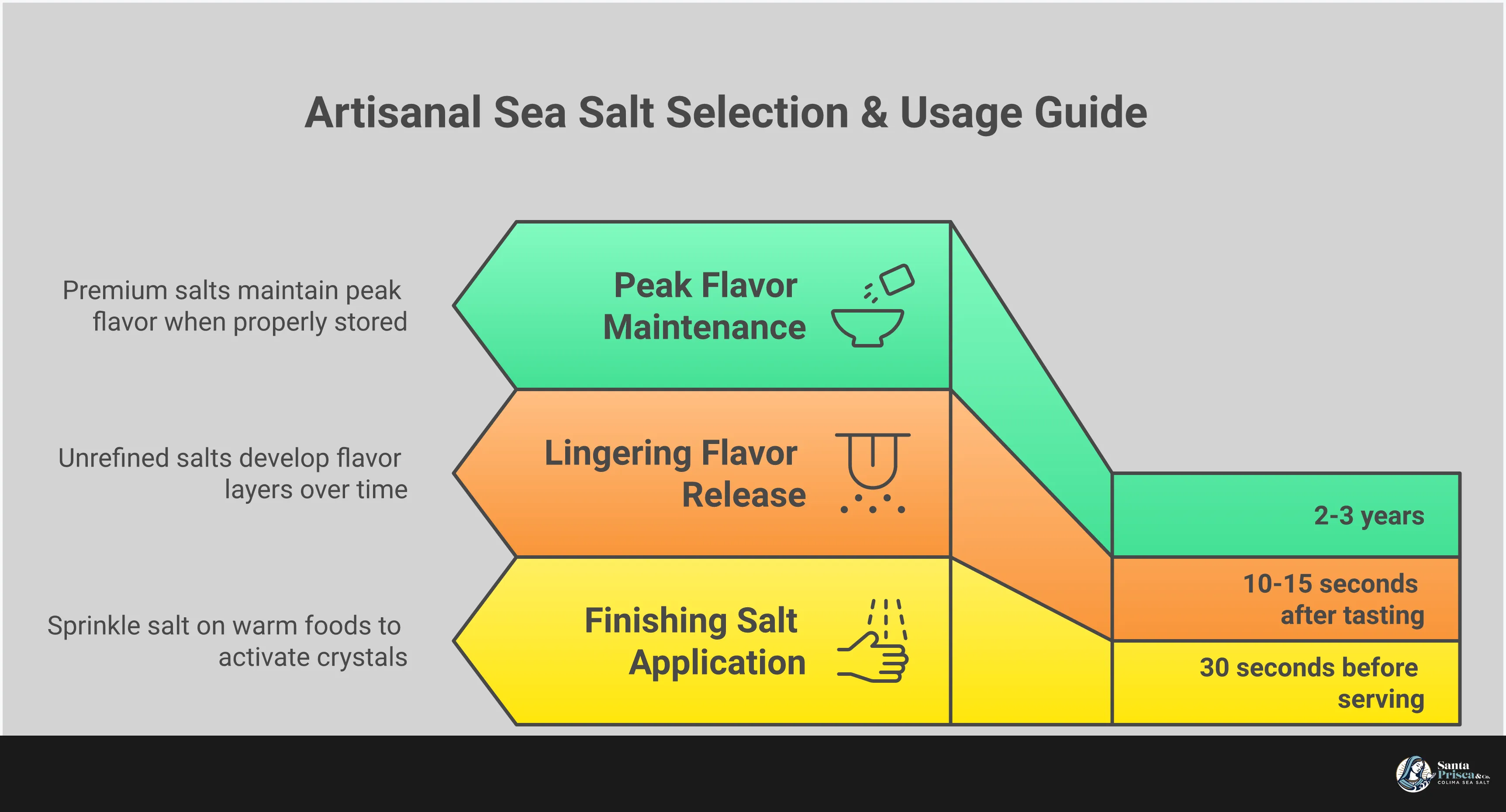
Imagine a perfectly grilled steak or a pan of deeply caramelized root vegetables, fresh from the heat. This is the moment for a finishing salt. Sprinkle a pinch of Colima Sea Salt over the top just before serving. The residual warmth of the food will gently warm the crystals, releasing their nuanced flavor without fully dissolving them.
You get that deeply satisfying crunch against the tender meat or soft vegetable, a bright pop of salinity that cuts through richness and enhances smoky, earthy notes. It’s a simple technique that chefs use to add dimension and a rustic, elegant finish to their dishes. This final touch makes every bite more interesting.
For Fresh Seafood and Crisp Salads
With delicate foods like fresh seafood or a simple green salad, a finishing salt works its magic in a different way. Here, its pure flavor and gentle texture are key. A fine, unrefined sea salt won’t overpower the subtle sweetness of scallops or the clean taste of fresh greens. Instead, it elevates them.
Sprinkle a few flakes over a crudo or a salad dressed with good olive oil. The salt provides a crisp counterpoint and a wave of mineral depth that makes the other ingredients sing. Because it’s the last flavor to hit the palate, using a pure, additive-free salt ensures the taste is clean and bright. It’s an invitation to explore all the beautiful ingredients in our shop.
For Chocolate, Caramel, and Cocktails
Salt’s ability to enhance flavor isn’t limited to savory dishes. In fact, it’s a secret weapon in the world of sweets and drinks. A few flakes on a dark chocolate tart or a spoonful of caramel don’t just add saltiness; they actually intensify the perception of sweetness and balance the richness. That little crunch provides a surprising and sophisticated contrast.
This is also where you can connect with the salt’s heritage. Instead of a fine powder, try using a coarse, flaky salt to rim your cocktail glass for a Paloma or Margarita. Each sip delivers a textural pop and a clean, salty note that complements the bright citrus. It’s a nod to tradition and a simple way to make your drink feel more intentional and artfully crafted.
Why Your Choice of Salt Matters
It’s easy to think of salt as a simple, one-dimensional ingredient. But when we pause and look closer, we find that the salt we choose tells a story. It’s a choice that touches everything from the final flavor of our food to the well-being of our bodies and the preservation of ancient traditions. Moving beyond generic table salt opens up a world of texture, minerality, and intention. It’s an invitation to connect more deeply with our cooking, turning a simple seasoning into a meaningful ritual.
Experience the Difference in Your Cooking
The first thing you’ll notice about an artisanal sea salt is its texture. Instead of uniform, harsh grains, you get beautifully imperfect crystals. Some are delicate and flaky, dissolving instantly on the tongue, while others offer a satisfying, lingering crunch. This is the magic of a finishing salt. When you sprinkle it over a dish just before serving, it doesn’t just add salinity; it adds a whole new layer of sensory experience. Imagine the crisp flake of Colima Sea Salt on a slice of ripe tomato or the subtle crunch it gives to a dark chocolate brownie. This textural contrast is what makes a simple meal feel special.
Support Artisans and Time-Honored Traditions
Behind every pinch of hand-harvested salt is a person, a family, and a history. These are not mass-produced commodities from a factory; they are the result of generations of knowledge passed down through time. Choosing an artisanal salt means you are directly supporting the stewards of these traditions. You are honoring the patient, meticulous work of harvesting salt from natural salt flats, often using the same sustainable methods that have been practiced for centuries. This connection makes cooking more meaningful, knowing your ingredients are part of a story that respects both people and the planet. When you explore these products, you become part of that story.
Nourish Your Body with Natural Minerals
Unlike highly processed table salt, which is stripped of its natural components, unrefined sea salt retains a wealth of trace minerals from its source. Our Colima Sea Salt is naturally filtered through volcanic earth, which infuses it with minerals like magnesium, potassium, and calcium. These elements do more than just contribute to your well-being by supporting hydration and balance; they also create a more complex and nuanced flavor. You’ll find that a good sea salt has a gentle, almost sweet taste without the harsh chemical bite of its processed counterparts. It’s a simple way to bring both pure flavor and a touch of nature’s wellness to your table.
Related Articles
- High Quality Finishing Salt for Sale: A Buyer's Guide
- What Is Finishing Salt Used For? A Chef's Guide
- Sea Salt for Cooking: Types, Benefits, and How to Use It Like a Pro
- 5 Best 5 lb Bags of Finishing Salt Reviewed
- A Buyer's Guide to Coarse Sea Salt for Finishing
Frequently Asked Questions
What’s the real difference between a finishing salt and the salt I cook with? Think of it in terms of timing and texture. The salt you cook with, like a fine-grain sea salt, dissolves into a dish to season it from the inside out. A finishing salt is added at the very end. Its purpose is to provide a final burst of clean flavor and, most importantly, a satisfying textural crunch that highlights the food it’s on.
Why should I choose an unrefined sea salt over regular table salt? The biggest difference comes down to what is left in the salt. Table salt is heavily processed, stripped of its natural minerals, and often contains anti-caking agents. An unrefined sea salt, on the other hand, retains its full spectrum of trace minerals from its source. These minerals not only contribute to a more complex, nuanced flavor but also support your body’s natural hydration and balance.
Can I use a finishing salt for cooking, or is it only for the end? You certainly can, but you might be missing out on what makes it so special. The beautiful, delicate crystal structure of a finishing salt provides that signature crunch. When you add it during cooking, it will dissolve just like any other salt, and its unique texture will be lost. It’s best to use a fine-grain sea salt for cooking and save your finishing salt for that final, impactful sprinkle.
How can I tell if a sea salt is truly high-quality and artisanal? Start by looking at the label. A quality salt will proudly state its origin and mention methods like "hand-harvested" and "sun-dried." The ingredient list should be simple: just sea salt. If you see additives like anti-caking agents, it’s a sign of industrial processing. A true artisanal salt is pure and lets the character of its origin shine through.
Does the flavor of salt really change depending on where it's from? Absolutely. Just like wine, salt has a "terroir," meaning its flavor is a direct reflection of the environment it came from. The mineral composition of the water and the earth it touches gives each salt a unique taste. For example, a salt harvested from lagoons filtered through volcanic earth will have a clean, bright minerality that you won't find in a salt from another part of the world.