
How to Use Finishing Salt on Steak for Perfect Flavor
Written By Santa Prisca & Co Staff Last updated on
A perfectly cooked steak is a full sensory experience. It’s the sizzle in the pan, the rich aroma as it rests, and the tender give of the meat as you slice it. But what about the sound? A truly great steak has a subtle, satisfying crunch, a delicate pop of texture that contrasts with its juicy interior. This is the magic of finishing salt. Unlike the salt you cook with, these beautiful, unrefined crystals are meant to be felt as much as they are tasted. This guide will walk you through how to use finishing salt on steak to create that perfect textural contrast, turning a simple meal into something more dynamic and engaging.
Key Takeaways
- Treat Salt as a Final Flourish: A true finishing salt is meant to be added right before serving, not during cooking. Its role is to provide a final layer of satisfying texture and a clean, mineral-rich flavor that completes the dish.
- Time Your Sprinkle for Maximum Crunch: The secret to preserving the salt's delicate texture is patience. Always wait until your steak has rested and been sliced to add your finishing salt, ensuring every bite has that signature crisp pop.
- Choose Quality and Get Creative: Opt for an unrefined, artisanal sea salt for its complex flavor and purity. Think beyond steak and use it to brighten everything from roasted vegetables and compound butters to fresh salads and sauces.
What Is Finishing Salt? (And Why Your Steak Needs It)
Think about the last time you had a truly memorable steak. The perfect sear, the juicy, tender center—it’s an experience. But what if I told you a tiny final touch could make it even better? That’s the magic of finishing salt.
Finishing salts are special salts you sprinkle on food right before serving. Unlike the salt you cook with, their purpose is to add a final burst of flavor and a satisfying texture. They’re meant to stand out, not dissolve away. For a beautiful cut of steak, a quality finishing salt doesn’t just make it saltier; it amplifies its rich, savory notes and adds a delicate crunch that makes every bite more interesting. It’s the simple, intentional step that transforms a great meal into an exceptional one. These are salts with character—flaky, coarse, or crystalline—that offer a final layer of complexity just before the first bite. They are the last word in the conversation between the chef and the dish, a final gesture of care that shows you appreciate every element on the plate.
Finishing Salt vs. Table Salt: What's the Difference?
It’s easy to think all salt is the same, but the salt in your shaker and a true finishing salt are worlds apart. Most table salt is heavily processed to remove minerals, leaving behind pure sodium chloride. It’s uniform, sharp, and often contains anti-caking agents.
A beautiful, unrefined sea salt, on the other hand, is a world of its own. It’s harvested with care and minimally processed, which means it retains a wealth of trace minerals. This is why sea salt is often preferred for its complex flavor and natural character. Think of it like this: table salt is a single note, while a good finishing salt is a chord, adding depth and nuance to your food.
It's All About the Crunch: Why Texture Matters
One of the most delightful qualities of a finishing salt is its texture. When you sprinkle a coarse, flaky salt over a warm, resting steak, the crystals don’t immediately melt. Instead, they cling to the surface, waiting to deliver a tiny, satisfying pop of salinity and crunch with each bite.
This textural contrast is what makes the experience so special. The tender steak gives way to a crisp, delicate flake of salt that dissolves on your tongue. This texture is a key part of the sensory experience, turning a simple meal into something more dynamic and engaging. It’s a small detail that shows care and intention in your cooking.
The Mineral-Rich Benefits of Unrefined Sea Salt
When you choose an unrefined finishing salt, you’re not just getting sodium—you’re getting a spectrum of minerals from the sea. Salts like our Colima Sea Salt are hand-harvested from pristine sources and retain essential minerals like magnesium, potassium, and calcium.
These minerals do more than just add to the flavor; they contribute to a more balanced salt. Unrefined sea salts carry trace minerals that work with sodium to help your body regulate hydration and maintain a healthy electrolyte balance. It’s a beautiful example of how choosing whole, natural ingredients can bring both incredible flavor and gentle nourishment to your table.
The Perfect Moment: When to Add Finishing Salt to Steak
You’ve done everything right. You chose a beautiful cut of steak, seasoned it with care, and cooked it to the perfect temperature. The aroma is incredible, and it’s resting peacefully on the cutting board, its juices settling back into the meat. Now comes the final, transformative touch: the finishing salt. But when you add it is just as important as the salt you choose. Timing is the secret to turning a great steak into an unforgettable one.
Adding a finishing salt isn’t just about adding more saltiness. It’s about introducing a final layer of texture and a burst of clean, mineral flavor that complements the rich, savory notes of the meat. Think of it as the final brushstroke on a painting. If you add it too soon, the delicate crystals will dissolve into the steak’s juices, and you’ll lose that signature crunch. The magic lies in waiting for the perfect moment, a simple act of patience that honors both the steak and the salt. This final step is a small ritual that makes all the difference, creating a moment of pure sensory delight with every bite. It’s how you give that perfectly cooked steak the respect it deserves, ensuring the final taste is bright, complex, and perfectly balanced.
Why You Should Salt Your Steak While It Rests
The best time to add finishing salt is after your steak has rested and just before you serve it. This is the key to preserving its texture. Think of the beautiful, sun-dried crystals of a hand-harvested sea salt—they are meant to be experienced. When you sprinkle them onto a warm, rested steak, you ensure the delicate salt crystals stay crunchy.
This preserves that satisfying textural contrast: the tender, juicy meat against the crisp, clean pop of the salt. It’s a sensory detail that enhances the entire eating experience. Waiting until the last moment allows the salt to sit right on the surface, ready to greet your palate with a bright burst of mineral depth.
Slice First, Then Salt for the Best Results
For even more precision, take it one step further. After the steak has rested, slice it against the grain. Then, arrange the slices on a platter and sprinkle a small amount of finishing salt over each piece. This simple technique ensures every single bite gets a consistent, perfect amount of salt. It’s an intentional approach that guarantees no bite is bland and no bite is overly salty.
By salting each slice, you control the distribution, allowing the pure flavor of a salt like our Colima Sea Salt to shine. This method turns serving a steak into an art form, ensuring that the final seasoning is as thoughtful as the cooking process itself.
How to Choose the Right Finishing Salt for Your Steak
Selecting a finishing salt is an intuitive art, much like choosing the right wine to pair with a meal. It’s about more than just saltiness; it’s about texture, mineral content, and the story behind the crystal. The right salt doesn’t just season your steak—it completes it, adding a final layer of intention and flavor that honors the beautiful cut of meat you’ve prepared.
For Mineral Complexity: Santa Prisca & Co. Colima Sea Salt
When you want to add a flavor that is both subtle and profound, reach for a salt with a story. Our Colima Sea Salt is hand-harvested from ancient salt flats in Mexico, where the water is naturally filtered through volcanic earth. This process gives each crystal a unique, mineral-rich profile that you simply won’t find in processed salts. It’s less about a sharp, salty bite and more about a gentle burst of mineral depth that awakens the natural flavors of the beef. A quality finishing salt has a transparent origin, one rooted in sustainable practices that honor both the environment and the community. Sprinkling it over a finished steak feels like a small act of gratitude.
For a Delicate Crunch: Flaky Sea Salts
Texture is a crucial, often overlooked, element of a perfectly cooked steak. This is where flaky sea salts truly shine. Unlike dense, granular table salt, these delicate crystals provide a light, satisfying crunch that dissolves beautifully on the tongue. Think of them as the final, thoughtful touch that elevates each bite from delicious to memorable. These finishing salt flakes are meant to be seen and felt, adding a rustic elegance to the plated steak. The crisp flake lingers for just a moment, a perfect counterpoint to the tender, juicy meat.
For Added Depth: Smoked and Flavored Salts
For those moments when you want to introduce another layer of complexity, smoked and flavored salts are a wonderful tool. A pinch of hickory-smoked salt can echo the char of a grilled steak, while a rosemary-infused salt can add an herbaceous note that complements the richness of the beef. These salts are an invitation to play with flavor and use finishing salt in a more creative way. They work especially well with simpler cooking methods like pan-searing, where they can introduce a smoky depth you wouldn’t get otherwise. Start with a small amount, as their flavors can be quite concentrated.
How to Pair Salts with Different Cuts of Steak
Just as different cuts of steak have unique characteristics, so do finishing salts. A tender, lean cut like filet mignon pairs beautifully with a delicate, mineral-forward salt that won’t overpower its flavor. For a rich, marbled ribeye, a larger, flakier salt provides a welcome textural contrast that cuts through the fat. A hearty cut like a New York strip can stand up to a more robust, crunchy salt. There are no hard rules here—the best way to learn is to experiment. Trust your palate and notice how different salts can enhance various flavors and textures, making your meal even more special.
The Art of Sprinkling: How to Apply Finishing Salt Perfectly
The final moment before a steak is served is a quiet ritual. This is your chance to add a last layer of flavor and texture, turning a great meal into something truly memorable. Applying a finishing salt isn’t just about seasoning; it’s an intentional act that honors the food and the moment. The right technique ensures every bite has that perfect, subtle crunch and burst of mineral depth.
It’s a simple gesture, but one that makes all the difference. Let’s walk through how to do it with grace and precision.
Master the High-Pinch Technique
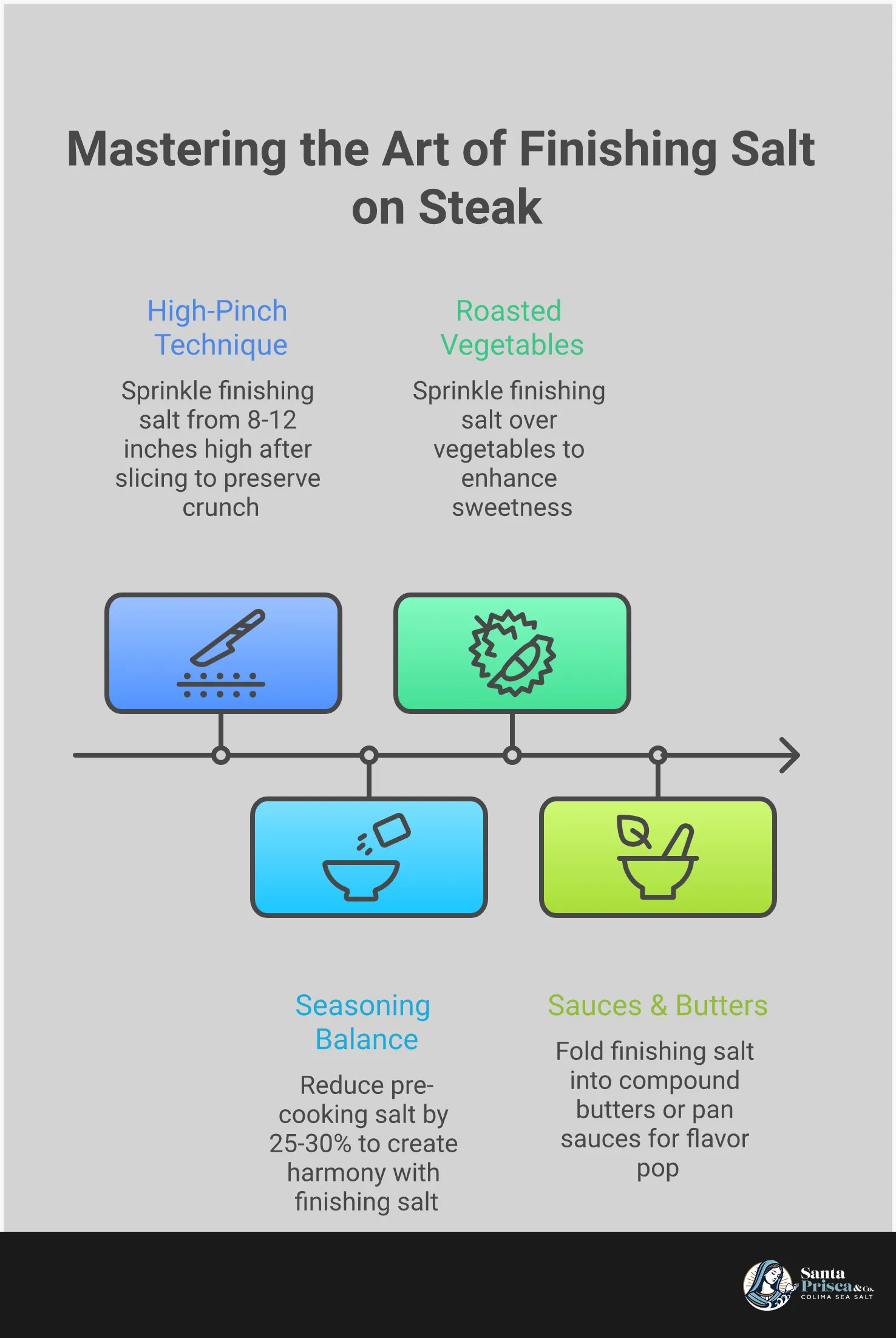
To get a beautiful, even layer of salt, embrace what chefs call the high-pinch. Take a generous pinch of Colima Sea Salt between your thumb and forefingers. Feel the unique, granular texture of the sun-dried crystals.
Then, holding your hand about 8 to 12 inches above the sliced steak, gently rub your fingers together. This allows the salt to fall in a delicate, even shower across the surface. Sprinkling from a height is the key to avoiding clumps and ensuring each slice receives a light, consistent dusting. This simple technique for using finishing salts creates a far more balanced and beautiful result.
How Much Salt Should You Use?
When it comes to finishing salt, a little goes a long way. Remember, its purpose is to enhance, not to be the primary seasoning. You’re adding a final flourish of texture and bright, clean flavor—not trying to cure the meat.
Think of it as a gentle dusting. You want to see the individual crystals glistening on the surface of the steak, not a heavy white coat. A light sprinkling is all you need to add a tremendous amount of flavor and a satisfying crunch to each bite. It’s always best to start with less; you can always add another pinch at the table if needed.
Common Finishing Salt Mistakes to Avoid
Using a beautiful finishing salt is an act of intention—the final, thoughtful touch that transforms a great steak into a memorable one. It’s a small ritual that honors the food and the moment. But like any art form, there’s a gentle technique to it. A few common missteps can keep you from that perfect, crunchy, flavor-enhancing finish you’re looking for. Let’s walk through them so you can season your steak with confidence and grace every single time, turning a simple meal into a sensory experience.
Mistake #1: Wrong Time, Wrong Amount
There’s a moment of anticipation right before you serve a perfectly cooked steak. This is the only moment your finishing salt should make its appearance. These salts are celebrated for being more delicate in flavor and texture than cooking salts. Their magic lies in the crisp flake that lingers on the tongue. If you add it too early—while the steak is cooking or even resting—the heat and moisture will cause those precious crystals to dissolve. You’ll lose the signature crunch and the nuanced burst of flavor. Think of it as the final flourish, added just before the first bite to preserve its perfect structure.
Mistake #2: Forgetting to Balance Your Seasoning
A well-seasoned steak is a symphony of flavors, not a solo performance by salt. When you plan to use a finishing salt, it’s essential to adjust the amount of salt you use during the cooking process. Season the steak more lightly than you normally would beforehand. This creates space for the finishing salt to shine without overwhelming the palate. Remember, its purpose is to add a final layer of texture and a pop of clean, mineral flavor—not to be the primary source of saltiness. It’s all about creating harmony between the rich flavor of the meat and the bright crunch of the salt.
Mistake #3: Uneven Sprinkling
We’ve all had that bite: an intense, overly salty crunch followed by a bite with no salt at all. This comes from uneven sprinkling. The secret to a perfect, even distribution is to season from a height. Pinch a small amount of Colima Sea Salt between your fingers and let it shower down from several inches above the steak. This allows the flakes to disperse naturally. For the best experience, wait until after you’ve sliced the meat. Sprinkling a tiny amount over each slice ensures every single bite has that perfect balance of savory meat and crisp, mineral-rich salt.
Finishing Salt for Every Cooking Method
A beautiful steak deserves a thoughtful finish, no matter how you cook it. The method you choose—whether it’s the fiery kiss of a grill or the controlled heat of a pan—creates a unique canvas of flavor and texture. A finishing salt isn’t just a final ingredient; it’s a tool that helps you honor the specific character of your dish. By understanding how salt interacts with smoke, char, and a perfect sear, you can turn a great steak into a truly memorable one. It’s about meeting the meat where it is and giving it exactly what it needs to shine.
For the Grill: Balancing Smoke and Minerals
There’s something primal and beautiful about cooking over an open flame. The smoky aroma, the satisfying sizzle—it all culminates in a steak with a deeply flavorful, slightly charred crust. This is where a mineral-rich finishing salt truly comes alive. A generous sprinkle of Colima Sea Salt just after grilling cuts through the richness and balances the smokiness with a clean, bright salinity. The coarse, crystalline texture provides a satisfying crunch that contrasts beautifully with the tender meat inside. It’s the final touch that enhances grilled meats and seafood, bringing a harmony of flavor to the entire dish.
For Pan-Seared and Sous-Vide Steaks
Pan-searing creates a different kind of magic. That gorgeous, golden-brown crust is the result of the Maillard reaction, a complex process that develops hundreds of aromatic compounds. A finishing salt enhances these rich, caramelized flavors, adding a final layer of depth. For sous-vide steaks, which are known for their unparalleled tenderness, that final textural element is even more crucial. After a quick, hot sear, a sprinkle of finishing salt provides the delicate crunch the gentle cooking method lacks. It’s a simple gesture that makes each bite more dynamic and satisfying.
More Than Just a Topping: Creative Uses for Finishing Salt
While a perfectly cooked steak crowned with glistening salt crystals is a beautiful sight, the journey of a good finishing salt doesn’t end there. Think of it less as a single-use garnish and more as a versatile tool for layering flavor and texture throughout your entire meal. When you use a salt as pure and mineral-rich as our Colima Sea Salt, you invite its unique, sun-dried character into every component of the dish.
This practice transforms cooking from a series of steps into a more intentional, sensory experience. It’s about understanding how one foundational ingredient can connect the main course to its supporting sides, creating a cohesive and memorable meal. By weaving your finishing salt into butters, sauces, and vegetables, you’re not just seasoning—you’re composing a complete palate of flavors that tells a story of place and care. It’s a small shift in perspective that brings a deeper sense of connection to the food you prepare and share. The crisp flake and clean salinity of a true finishing salt can brighten vegetables, deepen sauces, and even add a surprising twist to desserts. It’s an invitation to get creative and see how one simple, pure ingredient can find its way into every corner of your kitchen.
Stir It into Compound Butters
One of the most elegant ways to use finishing salt is by folding it into a compound butter. The process itself is a simple, grounding ritual. Start with softened, high-quality butter and fold in finely chopped fresh herbs—think rosemary, thyme, or parsley. Then, add a generous pinch of finishing salt. The coarse, sun-dried crystals won’t dissolve completely, creating tiny pockets of mineral depth within the creamy butter.
When a medallion of this butter melts over a hot, resting steak, it creates a self-basting sauce that is both rich and bright. The salt crystals gently dissolve, releasing a clean, crisp flavor that cuts through the richness of the fat. It’s a simple touch that adds a layer of thoughtful complexity to your meal.
Season Your Sides and Sauces
Extend the magic of finishing salt beyond the steak to everything that shares the plate. A final scatter of salt can awaken the earthy notes of roasted root vegetables or add a satisfying crunch to a simple green salad. It brings a bright, clean salinity that enhances the natural sweetness of vegetables without overpowering them. This simple act helps tie the entire meal together, making every bite feel connected.
This principle also applies beautifully to sauces. Whether you’ve made a classic pan sauce or a vibrant, herby chimichurri, a final pinch of finishing salt just before serving can make the flavors pop. Adding it at the end preserves the salt’s delicate texture, providing a subtle crunch that offers a delightful contrast to the smoothness of the sauce. It’s a final, thoughtful touch that shows care in every detail.
How to Choose and Store Your Finishing Salt
Choosing a finishing salt is about more than just flavor; it’s an invitation to connect with your food on a deeper level. The right salt tells a story of its origin, and caring for it properly ensures that its unique character shines through in every bite. When you bring a beautiful, unrefined salt into your kitchen, you’re holding a piece of the earth, and a little intention goes a long way in preserving its magic.
Look for Artisanal Quality and Sustainable Sourcing
When you’re selecting a salt, I encourage you to pause and look for one with a story. A quality finishing salt has a transparent origin, one rooted in sustainable practices that honor both the environment and the community. This choice is a mindful act that supports time-honored harvesting methods, ensuring you’re not just enhancing your meal but also contributing positively to the people and places behind the product.
Look for salts that are hand-harvested and unrefined, like our Colima Sea Salt. These salts are free from anti-caking agents and other additives, offering a pure, mineral-rich flavor that processed table salt simply can’t match. When you choose an artisanal salt, you’re choosing a product made with care, one that carries the essence of its unique terroir from the salt flat to your table.
Keep Your Salt Dry to Preserve Its Texture
The magic of a finishing salt lies in its texture—that satisfying, delicate crunch that bursts with flavor. To protect this quality, proper storage is key. Moisture is the enemy of a good finishing salt, causing the beautiful crystals to clump together and lose their crispness. Think of it as a small ritual of care for a precious ingredient that gives so much back to your cooking.
The best practice is to store finishing salts in airtight containers in a cool, dry, dark place, like a pantry. A small ceramic salt cellar with a wooden lid or a simple glass jar works beautifully. This simple step keeps your salt fresh and crunchy, ready for that final, perfect sprinkle over a resting steak or a fresh salad. It ensures every pinch delivers that signature texture and mineral depth.
Related Articles
- The Best Salt to Finish a Steak: 8 Top Choices – Santa Prisca & Co
- The Ultimate Guide to Finishing Salt for Steak – Santa Prisca & Co
- Gourmet Finishing Salt: A Chef's Complete Guide – Santa Prisca & Co
- 5 Best Coarse Finishing Salts to Elevate Your Food – Santa Prisca & Co
- Sea Salt for Cooking: Types, Benefits, and How to Use It Like a Pro – Santa Prisca & Co
Frequently Asked Questions
Can I just use my regular table salt as a finishing salt? While you certainly can, you'll miss out on the two key qualities that make a finishing salt special: texture and flavor complexity. Table salt is processed to be uniform and sharp, so it dissolves quickly and adds a one-note saltiness. A true finishing salt, like a hand-harvested sea salt, has a delicate, crystalline structure that provides a satisfying crunch and a more nuanced, mineral-rich flavor that enhances food rather than just making it salty.
Is finishing salt only for steak? Absolutely not! While it’s a classic pairing for a beautiful steak, that’s just the beginning. Think of finishing salt as a final, thoughtful touch for almost any dish. Sprinkle it over roasted vegetables to make their natural sweetness pop, add a pinch to a simple salad with olive oil, or even try a tiny scatter over a dark chocolate dessert to see how it brightens the flavor.
I seasoned my steak before cooking. Do I still need a finishing salt? Yes, because they serve two completely different purposes. The salt you use before cooking works its way into the meat to season it from within. A finishing salt is all about the final sensory experience—it’s added just before serving to provide a burst of clean flavor and a delightful textural crunch on the surface that you wouldn't get otherwise. Think of it as adding a final, bright layer to the dish.
What makes an unrefined sea salt like Colima Sea Salt different in flavor? The flavor of an unrefined sea salt is a direct reflection of where it comes from. Unlike processed salt, which is stripped down to pure sodium chloride, our Colima Sea Salt retains a spectrum of trace minerals from the volcanic earth it’s filtered through. These minerals add a subtle, clean depth and a milder salinity that you can’t find in other salts. It’s less of a sharp, aggressive saltiness and more of a gentle flavor that awakens the food it touches.
My finishing salt got clumpy. Is it still okay to use? Clumping is actually a good sign! It means your salt is unrefined and free from the anti-caking agents found in most table salts. This happens when the salt is exposed to a bit of moisture in the air. It’s perfectly fine to use—just break it up with your fingers or a spoon. To prevent it, be sure to store your salt in an airtight container, like a small jar or a salt cellar, in a dry place.