
Flaky Sea Salt: What It Is & How to Use It
Written By Santa Prisca & Co Staff Last updated on
Flaky sea salt isn’t made in a factory; it’s born from a collaboration between the sun, the sea, and the patient hands of artisans. Its delicate, pyramid-like structure is a direct gift from nature, a crystalline map of the place it comes from. Unlike the uniform grains of table salt, each flake tells a story of its origin, capturing the unique mineral essence of the water and the warmth of the sun that created it. This natural process is what gives it a signature light texture and complex flavor. When you hold a flake of sea salt, you’re holding a piece of the ocean itself.
Key Takeaways
- Embrace its unique texture and flavor: Flaky sea salt’s delicate, hollow crystals offer a satisfying crunch and a complex mineral taste that enhances food without overpowering it, unlike the harsh, one-dimensional saltiness of processed table salt.
- Use it as a finishing salt for the best results: To protect its signature delicate crunch, always sprinkle flaky sea salt on your food right before serving. This preserves its texture and adds a final burst of flavor and visual appeal.
- Choose unrefined salt for its wellness benefits: Look for pure, additive-free sea salt to take advantage of its naturally occurring trace minerals, which provide a cleaner flavor and gently support your body’s hydration and digestive processes.
What Makes Flaky Sea Salt Different?
At first glance, salt is just salt. But when you look closer, you’ll find a world of difference in a single crystal. Unlike the uniform grains of table salt or the coarse chunks of kosher salt, flaky sea salt offers a completely distinct experience for the senses. Its unique structure and mineral composition are not accidents—they are the direct result of a slow, intentional harvesting process where sun and sea work in harmony.
This isn't the salt you hide in a shaker. This is the salt you celebrate, the kind that transforms a simple dish into something memorable. The difference lies in its delicate texture, its complex flavor, and the way it interacts with food, adding a final touch of artistry to your cooking.
The Art of the Crystal
Flaky sea salt is defined by its beautiful, delicate structure. Instead of small, hard cubes, its crystals are thin, broad, and irregular, often forming hollow pyramids of light. This unique shape is a gift from nature, created as seawater slowly evaporates under the sun. The best flaky salts are hand-harvested, preserving the fragile crystals that get their shape naturally.
This structure gives the salt its signature delicate crunch—a texture that dissolves gently on the tongue, releasing a clean, bright salinity. It’s a far cry from the harsh, aggressive saltiness of highly processed salts. Each flake is a testament to the unhurried, traditional methods that honor the salt’s origin.
How It Compares to Table and Kosher Salt
While all salt is chemically sodium chloride, the physical form changes everything. The fine, dense grains of table salt dissolve instantly, creating a uniform saltiness throughout a dish. Kosher salt has larger, more irregular grains, but it still lacks the paper-thin delicacy of a true finishing salt.
Flaky sea salt, with its broad, light structure, sticks to food more easily and dissolves more slowly. This means that instead of a single wave of salt, you experience little bursts of bright, mineral flavor with each bite. This contrast creates a more dynamic and satisfying taste experience, allowing the flavors of the food itself to shine through.
Where Does Flaky Sea Salt Come From?
Flaky sea salt isn’t made in a factory; it’s born from a collaboration between the sun, the sea, and the patient hands of artisans. Its delicate, pyramid-like structure is a direct gift from nature, a crystalline map of the place it comes from. Unlike the uniform grains of table salt, each flake tells a story of its origin, capturing the unique mineral essence of the water and the warmth of the sun that created it.
This natural process is what gives flaky salt its signature light texture and complex flavor. It’s a testament to a slower, more intentional way of gathering food, one that honors the elements and preserves the integrity of the ingredient. When you hold a flake of sea salt, you’re holding a piece of the ocean itself.
The Ancient Art of Solar Evaporation
The creation of flaky sea salt relies on a method as old as civilization itself: solar evaporation. This gentle process begins with pure seawater being guided into shallow pools or pans. From there, the sun and wind work their magic, slowly coaxing the water to evaporate over time. It’s a patient art, allowing the salt to form naturally without harsh processing or chemical intervention.
This ancient technique ensures that the salt retains its rich mineral composition. Because the crystals are gathered by hand and minimally processed, they keep the trace elements that give them their distinct character and depth. It’s a beautiful, simple method that respects the rhythm of nature and results in a pure, unadulterated salt.
How Sun and Sea Shape Each Crystal
As the sun warms the surface of the brine, a delicate crust of salt begins to form. If conditions are just right—with the right temperature and a gentle breeze—these crystals grow downward into hollow, inverted pyramids. These are the beautiful, fragile flakes we recognize as finishing salt. They are carefully harvested from the surface before they can sink to the bottom.
This natural crystallization is what creates the salt’s signature texture. The hollow shape gives it a delicate, satisfying crunch that dissolves cleanly on the tongue, releasing a burst of flavor without overwhelming the palate. Each crystal is a small miracle of geometry, shaped entirely by the elements.
Why Its Origin Defines Its Flavor
Just as the terroir of a vineyard defines the taste of a wine, the origin of seawater defines the flavor of a salt. The mineral content of the ocean varies dramatically around the world, and these nuances are captured in every crystal. A salt harvested from the volcanic coast of Mexico will have a completely different profile from one gathered in the cold waters of the North Atlantic.
Our Colima Sea Salt is a perfect example. Sourced from a lagoon fed by the Pacific Ocean, the water is naturally filtered through ancient volcanic earth, which enriches it with a unique blend of minerals. This gives the salt a clean, balanced flavor with a subtle mineral depth that enhances food without overpowering it. The taste is a direct reflection of its pure, protected source.
Why You’ll Love Cooking with Flaky Sea Salt
There are certain ingredients that change the way you experience food, turning a simple meal into a moment of genuine pleasure. Flaky sea salt is one of them. It’s more than just a seasoning; it’s an invitation to engage with your food on a deeper level, appreciating the texture, flavor, and story behind each crystal. Cooking with it feels less like following a recipe and more like creating something truly special. It reminds us that the simplest elements often hold the most profound beauty.
A Delicate Crunch in Every Bite
Imagine a salt that doesn’t just dissolve but shatters. Flaky sea salt crystals are incredibly thin and light, giving them a delicate crunch that adds a surprising layer of texture to any dish. This crispness is a quiet celebration in every bite, whether it’s sprinkled over a ripe avocado, a warm chocolate chip cookie, or a perfectly seared steak. It’s a sensory detail that transforms the familiar into something remarkable, offering a gentle contrast that lingers just long enough on the tongue. This is how food becomes an experience, not just sustenance.
A Richer, More Complex Mineral Flavor
Unlike the sharp, one-dimensional taste of processed table salt, unrefined flaky sea salt offers a softer, more complex flavor. Hand-harvested salts like our Colima Sea Salt are valued for their clean taste and rich profile of natural minerals, a direct gift from the earth and sea where they were formed. This isn’t an aggressive saltiness, but a nuanced flavor that enhances the food it touches without overpowering it. It’s the kind of pure, balanced taste that speaks to its pristine origins, allowing the true character of your ingredients to shine through.
The Perfect Finishing Touch
Because of its beautiful structure and clean flavor, flaky sea salt shines as a finishing salt. Chefs in gourmet kitchens sprinkle it over dishes right before they arrive at the table, adding a final flourish of texture and visual appeal. The delicate crystals catch the light and create a subtle sparkle, signaling that the dish was prepared with care. A simple pinch can make a salad feel more intentional, a roasted vegetable more complete, and a dessert profoundly more satisfying. It’s the last, thoughtful step that ties everything together, turning a meal into a masterpiece.
How to Use Flaky Sea Salt in Your Kitchen
Bringing flaky sea salt into your kitchen is an invitation to play with texture and flavor in a new way. Its delicate, crystalline structure is meant to be seen and felt, not just tasted. Think of it less as a background seasoning and more as a final, thoughtful flourish that transforms a simple meal into something special. It’s about adding a moment of intention right before you serve, a small ritual that honors the food you’ve prepared.
Why It Shines as a Finishing Salt
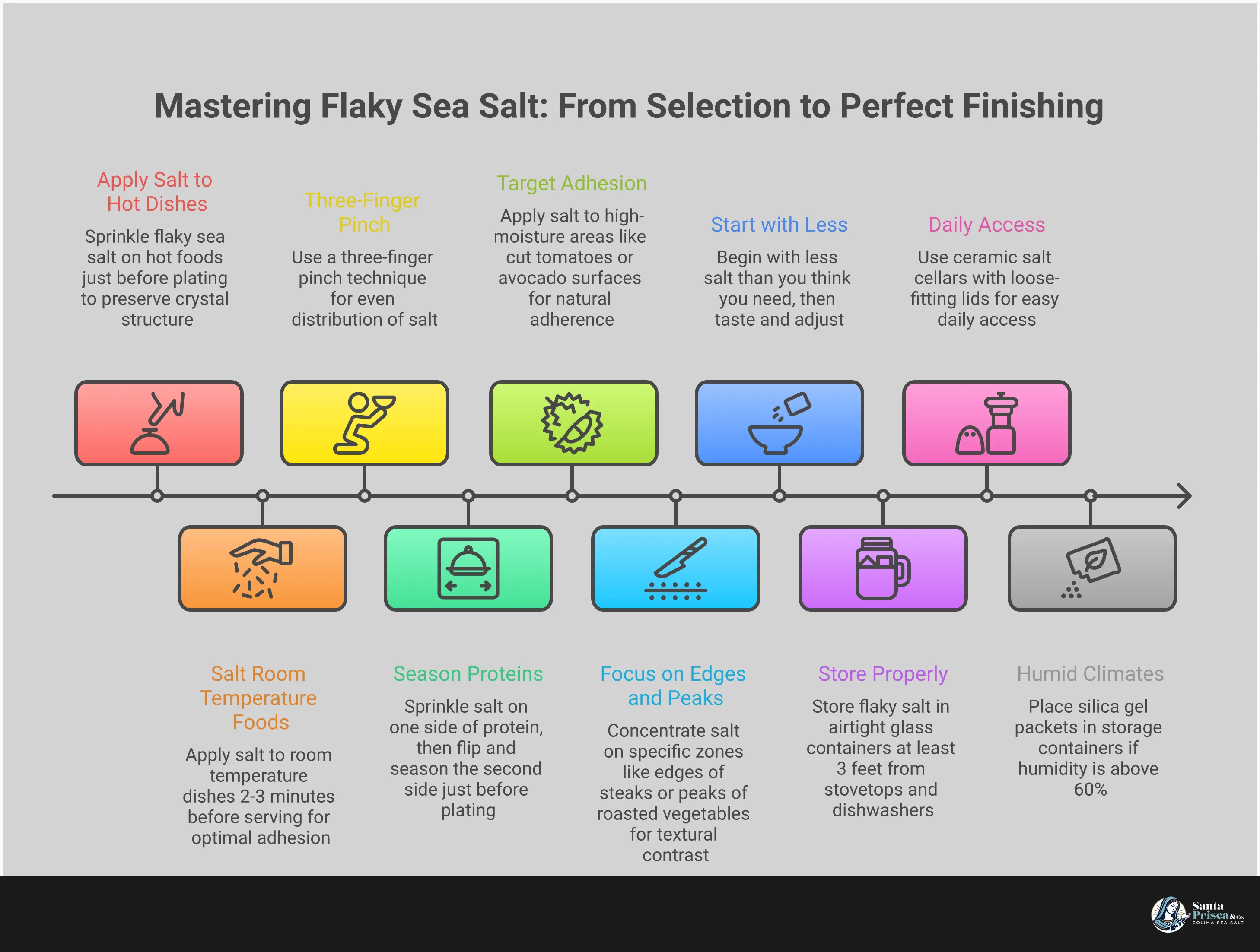
The true beauty of a flaky sea salt is revealed when it’s used as a finishing salt. This simply means it’s sprinkled over a dish right before it’s served. Because the crystals are so thin and light, they don’t dissolve immediately like finer grains. Instead, they rest on the surface, offering a gentle, satisfying crunch and a clean burst of mineral flavor with every bite. This final touch adds a beautiful visual element and a textural contrast that elevates the entire dish. A pinch of Colima Sea Salt can make a simple plate of sliced tomatoes feel like a gourmet experience.
Simple Ideas for Sweet and Savory Dishes
Flaky sea salt is incredibly versatile, lending its magic to both sweet and savory creations. Its ability to enhance and balance flavors makes it a wonderful companion to a wide range of foods. Once you start, you’ll find yourself reaching for it constantly.
Here are a few simple ways to begin:
- Sprinkle over warm chocolate chip cookies just as they come out of the oven.
- Toss with roasted vegetables like asparagus or sweet potatoes after they’re cooked.
- Garnish a perfectly seared steak or piece of fish to complement its richness.
- Add a pinch to avocado toast or a simple salad with olive oil.
- Finish a caramel sauce or chocolate tart for a delightful sweet-and-salty contrast.
When to Add Salt for the Best Results
Timing is everything when it comes to preserving the unique texture of flaky sea salt. To protect its delicate crunch, you should always add it at the very end of the cooking process or just before serving. If you add it too early, the prolonged heat and moisture will cause the beautiful flakes to dissolve, and you’ll lose the very quality that makes it so special. Think of it as a final garnish, not an ingredient to be stirred into a simmering sauce or soup. By waiting until the end, you preserve its structure and allow it to shine.
How to Choose the Right Flaky Sea Salt
Finding the right flaky sea salt is a personal journey, much like choosing a favorite olive oil or wine. Each salt carries the story of its origin—the sun, the sea, and the hands that gathered it. The differences in texture, mineral content, and flavor can be subtle yet profound, and understanding them can transform the way you finish a dish. It’s about more than just salinity; it’s about adding a final layer of intention and character to the food you prepare. Let’s explore a few beloved flaky salts to help you find the one that resonates with your palate and your cooking style.
Santa Prisca & Co. Colima Sea Salt
Our Colima Sea Salt is born from the ancient salt flats of Colima, Mexico. Each delicate, sun-dried crystal is hand-harvested, preserving a tradition that honors the earth. Filtered naturally through volcanic soil, this salt has a clean, balanced flavor with a remarkable mineral depth that doesn’t overpower your food. Its fine, irregular flakes dissolve gently, adding a subtle crunch and a burst of pure flavor. It’s a versatile salt that feels both special and essential, perfect for everything from seasoning ripe tomatoes to finishing a chocolate tart.
Maldon Sea Salt
Hailing from the coastal town of Maldon in Essex, England, this salt is known for its distinctive pyramid-shaped crystals. Maldon has been harvested for centuries, using traditional methods of controlling time and temperature to create its signature large, hollow flakes. The flavor is bright and purely saline, with a bold, satisfying crunch that holds its shape well. It’s a classic finishing salt that many chefs love for its dramatic texture and clean taste, especially on grilled meats and salads.
Jacobsen Salt Co.
Harvested from the cold, pristine waters of the Oregon coast, Jacobsen Salt Co. offers a taste of the Pacific Northwest. Their Pure Flake Sea Salt is celebrated for its large, crunchy flakes that provide a beautiful finishing touch. The flavor is briny and clean, reflecting the wild waters from which it came. This salt is wonderful for adding a textural pop to roasted vegetables, baked goods, and caramel sauces, bringing a crisp, clean salinity to every bite.
What to Look For in a Quality Sea Salt
When selecting a flaky sea salt, let curiosity guide you. Look for salts that are unrefined and free from anti-caking agents or other additives—the ingredient list should simply say "sea salt." Pay attention to the crystal structure; high-quality flakes are often irregular and delicate, not uniform. Finally, consider how you’ll store it. To protect its signature texture, keep your salt in a sealed glass jar or a traditional salt cellar, away from moisture, ensuring every pinch remains as crisp and flavorful as the first.
The Wellness Benefits of Unrefined Sea Salt
When we talk about salt, it’s easy to think of it as just one thing: the white, uniform crystals in a shaker. But that’s like comparing a sun-ripened heirloom tomato to a canned one—they’re worlds apart. Unrefined sea salt, especially one harvested with intention, is a completely different ingredient. It’s a direct connection to the ocean and the earth, carrying the story of its origin in every single flake.
Beyond its incredible flavor and texture, this kind of salt brings a touch of wellness to your kitchen. Unlike heavily processed table salt, which is stripped of its natural goodness and often contains anti-caking agents, pure sea salt offers a more holistic way to season your food. Choosing it is a simple shift that honors your body and connects you more deeply to the ingredients you cook with. It’s about seeing salt not just as a flavor enhancer, but as a source of vital minerals that can gently support your body’s natural rhythms. From maintaining healthy hydration to aiding digestion, the benefits are woven into its very structure. It’s a small change in the pantry that can make a world of difference on your plate and in your well-being.
Packed with Naturally Occurring Minerals
When salt is harvested directly from the sea and allowed to dry in the sun, it retains a beautiful complexity. This is where the magic lies. Pure, unrefined sea salt contains a spectrum of trace minerals that are often lost during industrial processing. Our Colima Sea Salt, for example, is naturally filtered through volcanic earth, which enriches it with a unique mineral profile. It’s well-known that sea salt contains minerals like magnesium, potassium, and calcium, which are essential for supporting your body’s daily functions, from muscle health to nerve transmission. Each crystal carries a piece of its origin, offering a depth that refined salt simply can’t match.
How It Supports Healthy Hydration
We often hear about limiting sodium, but the right kind of salt in the right amounts is crucial for our well-being. The sodium chloride in unrefined sea salt is essential for maintaining the body’s fluid balance, helping your cells stay properly hydrated throughout the day. Think of it as a partner to the water you drink. The minerals in sea salt help your body hold onto the hydration it needs to function at its best. This process also helps your body absorb nutrients from the foods you eat, ensuring you get the most out of every meal. A small pinch in your water after a workout or in a nourishing broth can feel deeply restorative.
A Gentle Way to Aid Digestion
Good digestion begins before you even take the first bite, and quality salt can play a supportive role. The chloride found in sea salt is a necessary building block for stomach acid, which is essential for breaking down food properly. By seasoning your meals with a mineral-rich, unrefined salt, you’re gently supporting your body’s natural digestive processes. It’s a small, intentional act that contributes to overall gut wellness. This simple kitchen staple helps your body do its job more effectively, allowing you to feel your best after enjoying a beautiful meal.
Common Myths About Flaky Sea Salt
Let's clear the air around this beautiful ingredient. When something is as loved as flaky sea salt, a few misunderstandings are bound to pop up. It’s helpful to know what makes it truly special and how to use it with intention.
Separating Fact from Fiction
You might hear that all salt is essentially the same. Chemically speaking, there’s some truth to that. Whether it’s from a shaker or a salt cellar, all salt is sodium chloride that originates from seawater, either present or ancient.
But that’s where the similarities end. The real story is in the journey. The way salt is harvested and the environment it comes from create vast differences in texture, mineral content, and flavor. Unlike processed table salt, which is stripped of its minerals, unrefined sea salt like our Colima Sea Salt retains its natural character, offering a more complex and gentle salinity.
A Closer Look at Sodium Content
Does flaky salt taste saltier? Yes and no. The sensation of saltiness comes from its structure. A large, delicate flake dissolves right on your tongue, delivering a bright burst of flavor that feels more potent than fine-grained salt.
Because of their irregular shape, these crystals don't pack as tightly into a measuring spoon. This means that, teaspoon for teaspoon, flaky salt often contains less sodium than dense table salt. It’s a beautiful way to season with more texture and flavor, while being mindful of your intake. While some sea salts can vary in their mineral makeup, a truly unrefined flake salt offers a wealth of trace minerals that contribute to its unique taste.
When to Use a Different Salt
Flaky sea salt is a brilliant finishing touch, but it isn't always the right tool for the job. Its signature crunch is its greatest asset, and that delicate texture can get lost in certain dishes.
Think of it this way: if you’re seasoning a soup, a stew, or the batter for a cake, the salt needs to dissolve completely and season the dish from within. In these cases, a finer grain of sea salt is a better choice. Save your beautiful flakes for the end, where they can shine. Using the right salt at the right time is a simple practice that makes a world of difference in the kitchen.
How to Store Your Flaky Sea Salt
Those beautiful, delicate salt crystals deserve a little care. Unlike dense table salt, flaky sea salt is fragile. Its pyramid-like structure is what gives it that signature crispness, and protecting that texture is key to enjoying it fully. Proper storage is more than just a practical step; it’s a small act of gratitude for the sun, sea, and hands that brought this ingredient to your kitchen.
When you store your salt correctly, you preserve not just its delightful crunch but also its pure, mineral-rich flavor. The goal is simple: keep it dry and away from humidity. A little attention here ensures that every pinch you sprinkle over a dish is as perfect as the first. Think of it as creating a safe home for your salt, so it’s ready to shine whenever you need it.
Keep Your Crystals Crisp and Dry
The magic of flaky sea salt lies in its texture—that light, satisfying crunch that dissolves on the tongue. This delicate structure is vulnerable to moisture. When exposed to humidity, the intricate flakes can absorb water and collapse into finer, denser grains, losing the very quality that makes them so special.
To preserve that beautiful texture, an airtight container is your best friend. A sealed glass jar works wonderfully, allowing you to see the crystals while keeping them protected. This simple step ensures your salt remains crisp and ready to provide that perfect finishing touch to everything from roasted vegetables to a decadent chocolate tart.
Protect It from Moisture
Moisture is the number one enemy of flaky sea salt. Even a little steam from a boiling pot of water can cause the crystals to clump together and lose their distinct shape. To prevent this, find a home for your salt away from the immediate vicinity of your stove, sink, or dishwasher—anywhere steam is common.
Your pantry or a cool, dry cabinet is an ideal spot. By keeping your salt in a designated dry zone, you maintain its quality and ensure it flows freely. This small habit protects the integrity of the salt, honoring the natural evaporation process that formed each unique crystal.
The Best Containers for Lasting Freshness
Choosing the right vessel for your salt can feel like a small kitchen ritual. While a simple sealed jar is effective, certain materials are particularly well-suited for salt storage. Traditional ceramic salt cellars and wooden salt boxes are excellent choices because they help keep the salt dry and flavorful.
A small wooden box or a ceramic pot with a loose-fitting lid allows for easy access while you’re cooking—perfect for pinching and sprinkling. These containers not only protect your salt but also add a touch of natural beauty to your countertop, keeping this essential ingredient within arm’s reach.
Related Articles
- Sea Salt for Cooking: Types, Benefits, and How to Use It Like a Pro
- Colima Sea Salt Benefits: Flavor, Minerals & Wellness
Frequently Asked Questions
Can I use flaky sea salt in all my cooking, like in soups or for baking? Think of flaky sea salt as a finishing touch rather than a workhorse ingredient. Its greatest gift is its delicate, crisp texture, which gets lost when dissolved into liquids like soups, stews, or batters. For recipes where the salt needs to season from within, a finer grain of sea salt is a better choice. Save your beautiful flakes for sprinkling over the dish right before you serve it, so that signature crunch can truly shine.
Is unrefined sea salt actually better for me than regular table salt? The main difference comes down to processing. Table salt is heavily refined, which strips it of its naturally occurring trace minerals and often includes anti-caking agents. Unrefined sea salt, on the other hand, is simply evaporated seawater, so it retains a beautiful spectrum of minerals like magnesium and potassium. Choosing an unrefined salt is a simple way to season your food with a more whole, natural ingredient, just as nature intended.
Why does flaky sea salt cost more than other salts? The price reflects the incredible amount of care and patient labor that goes into producing it. Flaky sea salt isn't mass-produced in a factory; it's hand-harvested by artisans who use traditional, slow methods. The delicate crystals are gently skimmed from the surface of the water as they form under the sun. This intentional process honors the ingredient and preserves its fragile structure, resulting in a truly special product.
My flaky salt got a little damp and clumpy. Can I still use it? Absolutely. If your salt has clumped together, it just means it has been exposed to a bit of moisture. While it may have lost some of its signature crispness, the flavor is still perfectly pure and delicious. You can gently break up the clumps with your fingers before using. This is a great reminder to store your salt in a sealed container or a traditional salt cellar, away from the steam of the stove.
Does the origin of the salt really change the flavor? Yes, it makes a world of difference. Just like the soil and climate affect the taste of wine, the body of water and its surrounding environment give each sea salt a unique mineral profile and flavor. Our Colima Sea Salt, for example, is shaped by water that naturally filters through volcanic earth, giving it a clean, balanced taste you won't find anywhere else. Each salt tells the story of the place it came from.