
Finding Salt Without Microplastics & Heavy Metals
Written By Santa Prisca & Co Staff Last updated on
For years, I believed all salt was essentially the same. A salt shaker on the table was just a given, a simple source of flavor. But as I learned more about our food systems, I began to question that assumption. I discovered that many common table salts are stripped of their natural minerals and filled with anti-caking agents. Even worse, many sea salts carry traces of our polluted oceans. This sent me on a quiet mission to find a salt without microplastics or heavy metals. It became a foundational step in creating a kitchen rooted in true nourishment and transparency.
Key Takeaways
- Not all salt is created equal: Highly refined table salts are often stripped of their natural minerals and may include additives, while many sea salts can contain microplastics from polluted waters.
- Purity begins at the source: The cleanest salts are harvested from protected environments, such as ancient underground seabeds or naturally filtered springs, which shields them from modern contaminants.
- Choose consciously by looking for transparency: You can find a pure, high-quality salt by selecting brands that are open about their sourcing, provide third-party testing results, and offer an unrefined product.
What's Really in Your Salt Shaker?
Have you ever paused to think about what’s inside your salt shaker, beyond the salt itself? This fundamental ingredient, a source of essential minerals and pure flavor, has a story. And sometimes, that story includes elements we’d rather not invite to our table. Taking a moment to understand the journey of your salt from the earth to your kitchen is one of the most grounded ways to practice intentional eating. It’s about connecting with your food on a deeper level and ensuring that what you use to season your meals is as clean and life-giving as the meal itself.
Why Salt Purity Matters for Your Well-being
Salt is more than flavor; it’s a mineral essential for our body’s balance. When we choose our salt, we're choosing what to put into our bodies. Unfortunately, many salts carry unseen passengers, like tiny plastic particles from polluted environments and traces of heavy metals. These contaminants can carry unwanted chemicals, and research suggests their consumption may lead to health issues like inflammation. Heavy metals such as lead and mercury are especially concerning for their effects on our brain and nervous system. Considering the purity of your salt is a simple, powerful act of care for your well-being.
The Unseen Ingredients in Common Table Salt
It’s surprising to learn just how common these impurities are. Studies have revealed that the vast majority of salt products tested worldwide contained microplastics. In fact, it’s estimated that 90% of commercial sea salt is affected, a direct reflection of the pollution in our oceans. Beyond plastics, many refined table salts also contain anti-caking agents to keep them flowing freely. Even some unrefined salts can naturally contain trace amounts of heavy metals from the earth. This is why knowing the source of your salt and how it’s harvested is so important. It’s the only way to be sure you’re seasoning your food with nothing but pure, clean salt.
Where Do Contaminants in Salt Come From?
The journey of salt from its source to your table is a story worth knowing. When we choose our ingredients with intention, we look beyond the label and consider the path they took to reach our kitchens. For salt, this path can sometimes introduce elements we’d rather not have in our food, like microplastics and heavy metals. Understanding where these contaminants come from is the first step toward choosing a purer, more life-giving salt.
From Our Oceans to Our Kitchens
Many of us picture sea salt coming from sparkling, pristine waters. While the ocean is a powerful and beautiful source, today’s seas carry the weight of modern pollution. Tiny plastic particles, known as microplastics, are found in oceans and rivers across the globe. These particles come from larger plastics breaking down over time.
When salt is harvested from these waters, it can bring these microscopic pollutants along with it. This means that the salt in many shakers may contain more than just sodium chloride; it can hold traces of the environmental pollution that affects our planet’s water systems.
The Journey of Mined Salt
In contrast to salt from modern oceans, some salt has been resting for millennia. Mined salt is harvested from ancient, underground sea beds that dried up long ago, protected deep within the earth. These deposits are often shielded from the industrial and plastic pollution that affects our surface waters.
Because of this natural protection, salt from these ancient sources generally avoids the modern contaminants found in many ocean-harvested salts. This is one reason why people seeking purity often look for salts with an ancient, terrestrial origin, as it offers a way to sidestep the issue of microplastics in our food.
How Processing Can Introduce Impurities
A salt’s origin story is only part of the picture; the steps taken after harvesting are just as important. Even a pure source can be compromised during processing. Some studies have shown that the production process itself can introduce microplastics from factory equipment, packaging, or handling.
Beyond that, highly refined table salt often undergoes intensive processing that strips it of its natural minerals. To prevent clumping and ensure a uniform white color, manufacturers frequently add anti-caking agents, bleaching agents, and other additives. This journey from a whole, natural crystal to a refined grain can take away its character and introduce unwanted chemicals.
The Santa Prisca & Co. Difference: A Commitment to Purity
In a world of mass-produced ingredients, we believe that what is left out is just as important as what is put in. True purity in food isn't a given; it’s a conscious choice, a commitment that begins long before the salt ever reaches your kitchen. For us, that commitment is woven into every step of our salt’s journey, from its ancient source to the moment you sprinkle it over a meal.
Our difference lies in a deep reverence for nature’s wisdom and the traditions that protect it. We don’t interfere with the process; we honor it. This means sourcing from a place shielded from modern contaminants, using harvesting methods that have been passed down for centuries, and holding ourselves accountable to the highest standards. It’s a promise that the salt you use is as clean and whole as nature intended.
Naturally Filtered Through Volcanic Earth
Our Colima Sea Salt begins its journey in a place of exceptional purity. The salt flats of Colima are fed by an ancient, underground river that flows through volcanic earth. This land acts as a natural, protective filter.
As the water makes its way to the surface, it is cleansed of impurities, unlike salts sourced from unprotected oceans that may contain microplastics. This slow, earthen filtration also infuses the brine with a rich profile of essential minerals. The result is a pristine, sun-dried crystal with a complex flavor and a burst of mineral depth that you can truly taste and feel.
A Traditional Harvest from Protected Lands
The salt flats of Colima are a protected treasure, a remote landscape far from industrial pollution. Here, local salineros (salt farmers) continue a tradition that spans generations. They work in harmony with the sun and the seasons, hand-harvesting the salt with a gentle touch that preserves its delicate crystalline structure.
This patient, artisanal method stands in stark contrast to aggressive industrial mining. By honoring these time-honored techniques, we not only support the local community but also ensure the salt’s integrity remains intact. Each flake is a testament to a process rooted in respect for the land and its guardians.
Our Promise: Verified for Purity
We believe that trust is earned through transparency. While we have complete faith in our pristine source and traditional methods, we take an extra step to ensure our salt meets the highest standards of purity. We partner with third-party labs to verify that our salt is free from microplastics, heavy metals, and other environmental contaminants.
This commitment to testing is our promise to you. It provides peace of mind, knowing that the salt you share with your loved ones is genuinely clean. This level of accountability is what you should expect from any brand, and we are proud to provide it. These independent testing laboratories offer the specialized analysis needed to confirm the purity of natural products.
What Are the Purest Types of Salt?
When we search for purity in our food, we’re really searching for a connection to the source. For salt, this means looking to pristine environments where nature’s filtering processes are still intact. The purest salts are those harvested from locations untouched by modern industrial pollutants. Understanding where your salt comes from is the first step in choosing one that truly nourishes you.
Exploring Spring-Fed Salts
Imagine a clean, underground spring high in the mountains, far from any source of pollution. This is the origin of spring-fed salt. Water flows through the earth, dissolving ancient salt deposits before emerging at the surface, where it’s gathered by hand. Because the water is naturally protected from surface contaminants, these salts are often completely free of microplastics. This method honors old traditions, resulting in a salt that is as pure as its source. The flavor is often clean and delicate, a direct reflection of the pristine environment it came from.
The Qualities of Ancient Rock Salt
Some of the purest salts available today are millions of years old. Rock salt is harvested from ancient underground beds that were once seas or lakes. These deposits were formed long before the age of industrial pollution, trapping the salt in a geological time capsule. This means they can be a wonderful way to avoid the modern microplastics often found in salts from contemporary oceans. When you use a true ancient rock salt, you’re seasoning your food with a piece of the earth’s history, full of trace minerals from a bygone era.
Sourcing Salt from Remote Waters
Not all sea salts are created equal, and the key difference lies in the water. The cleanest sea salts come from remote, protected waters, far from shipping lanes and industrial runoff. When you choose salts from clean sources, you are choosing a product with a much lower risk of contamination. This is the principle behind our own Colima Sea Salt. Harvested from a protected estuary in Mexico, our salt benefits from a unique, natural filtration system. The water is filtered through volcanic earth, which not only purifies it but also enriches it with a beautiful mineral complexity you can taste.
How to Choose a Pure, High-Quality Salt
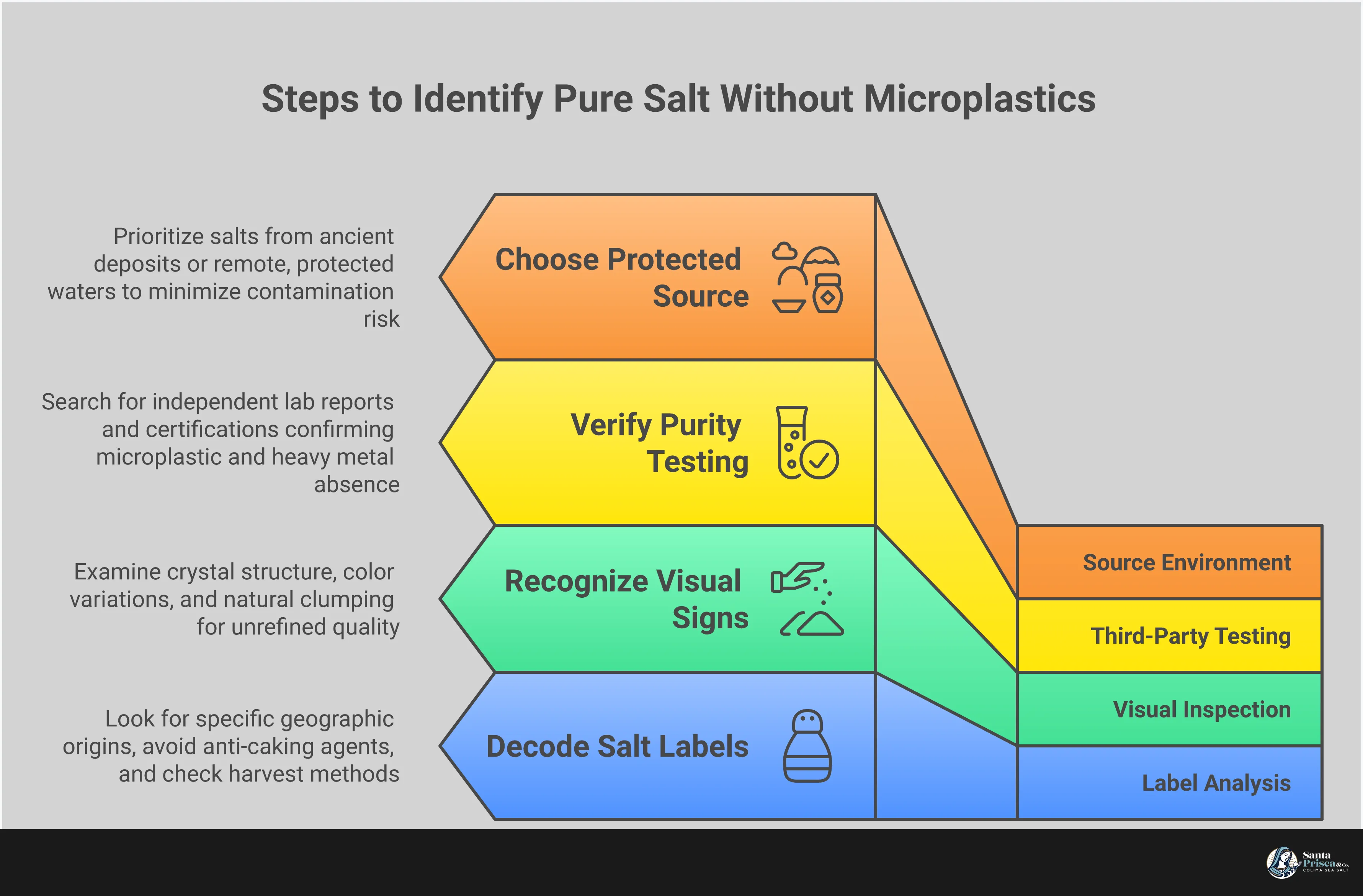
Choosing a salt can feel like a small act, but it’s a beautiful opportunity to bring intention into your kitchen. When you learn to read the signs of a truly pure, high-quality salt, you’re not just seasoning your food; you’re making a conscious choice for your well-being. It’s about looking past the marketing and connecting with the story of the ingredient in your hands. Think of it as a simple ritual of nourishment, starting with the most fundamental element in your pantry. By learning what to look for, you can confidently select a salt that honors both your body and the earth.
Read the Label for Clues on Sourcing
The story of a salt begins with its source, and the label is your first window into that world. Look for specifics. Where, exactly, did this salt come from? Vague terms like “sea salt” aren’t enough. A brand that takes pride in its product will tell you about its origin. Some salts are naturally shielded from pollutants simply because of where they come from, like deep underground springs. Salts harvested from pristine, well-managed flats have a natural barrier against ocean microplastics. Our Colima Sea Salt, for example, comes from protected lands and is filtered through volcanic earth, a process that has purified it for centuries.
Look for Third-Party Purity Testing
While a pristine source is a great start, verification is key. The most trustworthy brands are transparent about their commitment to purity and will often invest in third-party testing to prove it. Look for companies that openly share their results for contaminants like microplastics and heavy metals. This shows they have nothing to hide. You might see phrases like “microplastic-free” or find a purity report on the company’s website. When a company takes the extra step to test their products, it demonstrates a deep respect for both the ingredient and the person using it. It’s a promise of quality you can feel good about.
Spot the Red Flags of Low-Quality Salt
Just as important as knowing what to look for is knowing what to avoid. A major red flag is a lack of information. If a package tells you nothing about its origin or purity, it’s best to be skeptical. With studies showing that most sea salt contains microplastics and that heavy metals are found in many commercial salts, silence is not golden. Pay attention to the salt’s appearance. A stark white color often means it has been bleached and stripped of its natural minerals. You may also see anti-caking agents on the ingredient list. A truly natural, unrefined salt will have a subtle, off-white hue and a beautifully imperfect crystal structure.
Clearing Up Common Myths About Salt
The world of salt can feel overwhelming, with so many colors, textures, and origin stories. It’s easy to get lost in the claims. Let’s take a moment to gently clear the air around a few common beliefs, so you can feel confident about the salt you bring into your kitchen.
Is Pink Salt Always a Purer Choice?
That beautiful rosy hue of Himalayan salt has captured our attention, becoming a symbol of wellness. But is pink always a sign of purity? The truth is more complex. While it is a mined salt, its journey from the earth to your table involves handling, processing, and packaging.
Surprisingly, some studies have found that certain mined salts can contain microplastics, sometimes even more than sea salts. This doesn't mean all pink salt is compromised, but it reminds us to look beyond color. True purity is about a commitment to careful, conscious sourcing from beginning to end.
Why Not All Sea Salts Are the Same
The term "sea salt" brings to mind images of pristine waves and sun-drenched shores. While the origin is the ocean, the quality can vary dramatically. Our oceans, unfortunately, are not as pure as they once were, and this can be reflected in the salt harvested from them.
Many mass-market sea salts are sourced from waters that contain microplastics. This is why choosing a salt from a protected, clean source is so important. Our Colima Sea Salt comes from an ancient, inland salt lagoon, naturally filtered by volcanic earth. This unique process ensures a salt free from modern ocean contaminants, offering only the crisp flake and mineral depth nature intended.
Refined vs. Unrefined: What's the Real Story?
Walking down the grocery aisle, you’ll see bright white, uniform table salt next to more rustic, unrefined varieties. The difference is more than just appearance. Refined salt is heavily processed, often bleached and stripped of its natural trace minerals. Anti-caking agents are then added to prevent clumping.
Unrefined salt, on the other hand, is left in its whole, natural state. It retains a beautiful spectrum of trace minerals from its source, which contributes to its complex flavor and unique texture. Choosing unrefined means choosing a salt that is complete, just as nature created it. Explore our full collection to experience the difference.
Bringing Purer Salt into Your Kitchen
Choosing a purer salt is a simple, beautiful act of intention. It’s about honoring your body and the food you prepare with an ingredient that is as clean and whole as nature intended. Once you’ve decided to make this shift, the next steps are about knowing what to look for and how to care for your new kitchen staple. This small change can create a meaningful ripple effect, connecting you more deeply to your food and the earth it comes from.
Where to Find High-Quality, Artisanal Salt
The search for pure salt begins with its origin story. The most pristine salts often come from sources naturally protected from environmental pollutants. Think of ancient, underground springs high in the mountains or remote salt flats where the elements have worked their magic for centuries. These locations shield the salt from the microplastics that can be found in modern oceans. Our own Colima Sea Salt is a perfect example, hand-harvested from a protected lagoon where volcanic earth acts as a natural filter. When you shop, look for brands that share the story of their salt’s journey from a pure source to your kitchen.
Why Pure Salt Is a Worthwhile Investment
Investing in a high-quality salt is an investment in your well-being and your culinary craft. Unlike refined table salt, which is stripped of its natural character, unrefined salt retains a wealth of trace minerals like potassium and magnesium that support hydration and balance. Choosing a salt verified for its purity also gives you peace of mind, knowing you are seasoning your food without introducing unwanted contaminants like heavy metals or microplastics. This simple switch allows the true flavors of your ingredients to shine, enhanced by a salt that is both delicious and nourishing. We invite you to explore our collection of pure, mineral-rich salts.
How to Store Your Salt to Preserve Its Quality
Once you bring a beautiful, unrefined salt into your home, you’ll want to store it properly to preserve its unique texture and mineral integrity. The key is to keep it in a cool, dry place, away from humidity and direct sunlight. A ceramic salt cellar or an airtight glass jar in your pantry is perfect. Because pure sea salt contains no anti-caking agents, you might notice some clumping, especially in humid weather. This is a natural and reassuring sign of its purity. A gentle stir is all it needs. Proper storage is a small ritual that honors the journey of your salt and ensures it’s perfect every time you reach for it.
Related Articles
- Healthy Salts Compared: Top Types Ranked
- The Purest Additive-Free Sea Salt Brands of 2026
- Eco-Friendly Sea Salt: Good for You & the Planet
- Best Sea Salt for Health | Why Colima Stands Out
- Where to Buy Authentic Colima Sea Salt
Frequently Asked Questions
I thought sea salt was a healthier choice. Is it really contaminated? That’s a great question, and the answer really comes down to the source. While sea salt can be a wonderful, mineral-rich ingredient, many of our planet's oceans are affected by pollution. When salt is harvested from these open waters, it can carry microscopic plastic particles with it. The key is to look for sea salts from protected, remote, or naturally filtered sources, like our Colima salt, which comes from an inland lagoon shielded from modern ocean contaminants.
Why should I be concerned about microplastics or heavy metals in my salt? Choosing pure ingredients is a simple act of care for your body. When contaminants like microplastics and heavy metals find their way into our food, they can bring unwanted chemicals along with them. Research points to these impurities as potential contributors to inflammation and other health concerns. By choosing a salt that is verified for its purity, you can feel confident that you are seasoning your meals with nothing but clean, life-giving minerals.
My unrefined salt sometimes clumps in the shaker. Does this mean it has gone bad? Not at all, in fact, it’s a reassuring sign of your salt’s purity. Most commercial table salts contain chemical anti-caking agents to make them flow freely in any condition. A truly natural, unrefined salt is free from these additives. A little clumping, especially in humid weather, simply means your salt is in its natural state. A gentle stir or shake is all it needs to loosen up again.
Is pink salt automatically a purer choice than white sea salt? The color of a salt is beautiful, but it isn't the only indicator of its purity. While many pink salts are mined from ancient sea beds, their journey from the earth to your kitchen involves processing and handling that can sometimes introduce contaminants. The most important factor is a brand’s commitment to clean sourcing and transparent testing, regardless of the salt's color. True purity comes from a conscious process, from start to finish.
Besides the source, what is the main difference between your salt and regular table salt? The biggest difference is that our salt is left in its whole, unrefined state. Regular table salt is heavily processed, which strips it of its natural trace minerals and often involves bleaching to achieve a uniform white color. Our Colima Sea Salt is simply hand-harvested and sun-dried, so it retains its full spectrum of minerals. This not only contributes to a more complex flavor and delicate texture but also provides your body with beneficial elements that refined salt lacks.