
Salt Cellar vs Salt Pig: Which Is Right for You?
Written By Santa Prisca & Co Staff Last updated on
There is a quiet confidence that comes from learning to season by feel. The tactile connection of taking a pinch of coarse sea salt, feeling its delicate structure, and sprinkling it over a dish is a skill that transforms your cooking. This sensory experience is at the heart of the salt cellar vs salt pig conversation. Both of these countertop vessels are designed to encourage this hands-on approach, but they do so in slightly different ways. One offers immediate, one-handed access for the fast-moving cook, while the other encourages a more deliberate, mindful pace. Let’s explore how each design can deepen your connection to your ingredients and help you season with pure instinct.
Key Takeaways
- Choose the right vessel for your kitchen rhythm: A salt pig offers quick, one-handed access for intuitive cooks by the stove, while a salt cellar encourages a more deliberate, mindful approach to seasoning.
- Coarse, unrefined salts are best for open storage: Their larger, mineral-rich crystals are less prone to clumping and provide a better tactile experience, allowing you to feel and control your seasoning.
- Seasoning by hand builds culinary intuition: Using your fingers to pinch salt from an open keeper helps you develop a physical sense for quantity, leading to more consistently balanced dishes.
Salt Pig vs. Salt Cellar: What's the Difference?
In the world of intentional cooking, even the smallest details matter, right down to how you store your salt. Keeping your salt in an open vessel on the counter isn't just for looks; it’s a simple ritual that connects you more deeply to your ingredients. Both a salt pig and a salt cellar invite you to ditch the shaker and season with your senses. But while they share a purpose, their distinct designs cater to different rhythms in the kitchen.
Understanding the subtle differences between them can help you choose the one that best complements your cooking style and brings a little more grace to your countertop. Let’s explore what sets these two beautiful and functional tools apart.
Comparing Design and Function
Think of a salt cellar as a broad term for any small dish, bowl, or box made to hold salt. It can be a simple ceramic pot, a wooden box with a swiveling lid, or even a delicate glass dish reserved for the dining table. Its primary role is to keep a small amount of salt contained, protected, and ready for use.
A salt pig, on the other hand, is a more specialized container. It typically features a distinct, pig-like shape with a large, hooded opening. This clever design allows you to easily reach in for a pinch of salt while the "hood" protects the contents from dust or splatters from a nearby stove. It’s a tool born from pure kitchen utility.
Accessibility for Quick Seasoning
The true beauty of an open salt container is how it transforms seasoning from a guess into an instinct. When you can feel the salt crystals between your fingers, you develop a tactile memory for quantity. This practice, as many chefs will tell you, is how you learn to season by instinct.
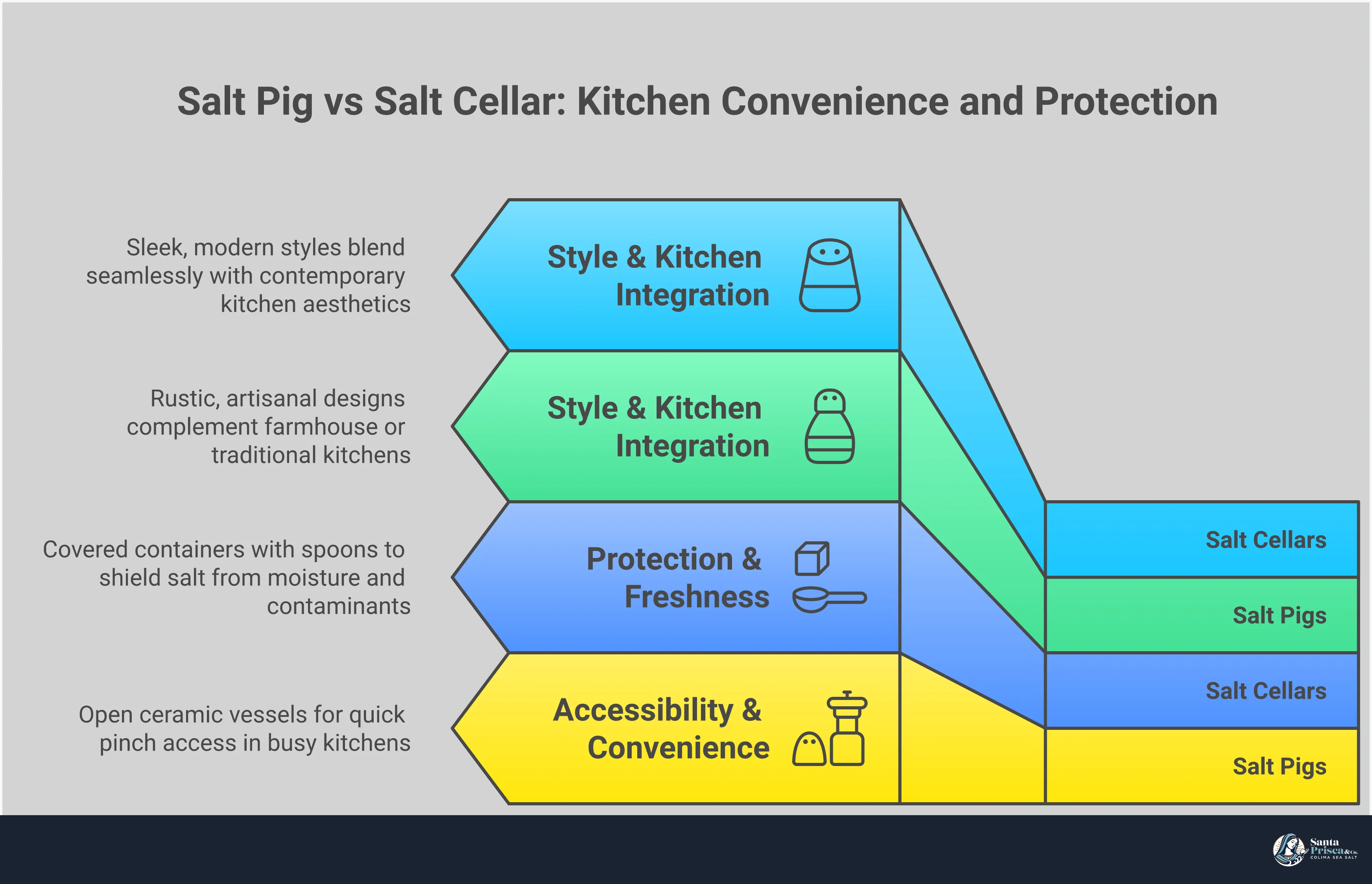
A salt pig is the ultimate companion for active cooking. Its wide, angled mouth is perfect for a quick, one-handed pinch while you’re stirring a sauce or searing vegetables. A salt cellar, especially one with a lid, encourages a more deliberate pace. It invites you to pause, open the container, and mindfully scoop what you need, making it wonderful for both prep work and finishing dishes at the table.
How They Protect Salt from Clumping
A common question is whether leaving salt out will cause it to clump. Both vessels are designed to prevent this. A salt cellar with a well-fitting lid creates a simple barrier against humidity and steam, keeping your salt dry and flowing freely.
The salt pig’s design offers a different kind of protection. Its signature hood shields the salt from airborne grease and moisture rising from your stovetop. Many traditional salt pigs are also made from unglazed terracotta or ceramic on the inside, which naturally wicks away ambient moisture from the air. This makes them an ideal home for pure, unrefined salts like our Colima Sea Salt, which are free from the anti-caking agents found in common table salt.
Which One Matches Your Cooking Style?
The way you store your salt can be as personal as the way you cook. It’s a small ritual that connects you to your ingredients and the rhythm of your kitchen. Let’s explore which vessel, the salt pig or the salt cellar, feels like a natural extension of your hands as you create.
The Salt Pig: For the Intuitive, Hands-On Cook
If you cook with your senses, letting intuition guide your hand, the salt pig might be your perfect companion. This charming ceramic vessel has a wide, curved opening, designed to sit by your stove for immediate access. It allows for a quick, one-handed pinch, so you can season a simmering sauce or a sizzling pan without missing a beat. The clever, hooded design also protects the delicate salt crystals from steam and splatters, ensuring every pinch is as pure and dry as the last. It’s a tool for the cook who moves freely, seasoning by feel and trusting their palate.
The Salt Cellar: For the Precise, Measured Chef
For the cook who finds beauty in precision, the salt cellar offers a more measured approach. If you love the quiet satisfaction of following a recipe to the letter, a cellar gives you the control you need. These small, often lidded bowls invite you to connect with the salt directly. By taking a pinch between your fingers, you can feel the texture of the crystals and see exactly how much you’re adding. This tactile connection can truly make you a better cook, helping you season with intention and consistency. It’s a small, mindful practice for creating perfectly balanced dishes every time.
Considering Your Kitchen's Style and Space
Your kitchen is a personal space, and the tools you choose should bring you joy. Beyond function, both the salt pig and salt cellar can be beautiful objects that reflect your style. A rustic, handmade ceramic salt pig can add warmth to your countertop, becoming a stylish decoration in its own right. Salt cellars are available in a wide array of materials, from warm olive wood to cool, polished marble, allowing you to find one that complements your kitchen’s aesthetic. Think of it as a worthy home for your salt, a vessel that honors the precious mineral within.
What Kind of Salt Belongs in Open Storage?
Not all salts are created equal, especially when it comes to leaving them on your counter. The best salts for open storage, like in a salt cellar or pig, are those that are coarse, unrefined, and full of character. These salts invite you to reach in, feel their texture, and connect with your cooking in a more tactile way. Think of it as choosing an ingredient that is as beautiful and functional sitting on your counter as it is in your food.
Why Coarse, Mineral-Rich Salts Thrive
Coarse salts are the clear winner for open-air keepers. Their larger crystals are less prone to clumping from ambient moisture, and their texture is a joy to work with. There’s an intuitive connection that happens when you season with your fingers. Using a salt box helps cooks measure salt better than a shaker, allowing you to develop a feel for exactly how much you need. A generous pinch of a mineral-rich sea salt delivers a clean, bright flavor and a delicate crunch that you just can’t get from a fine-grained salt. It’s about trusting your senses and adding seasoning with intention, one pinch at a time.
A Note on Fine Salts and Blends
While you certainly can keep fine-grained salt in a cellar, it’s not always the best choice. The smaller particles have more surface area, making them more susceptible to absorbing moisture from the air, which can lead to clumping. It’s also much harder to get a feel for how much you’re grabbing when the texture is powdery. Seasoned salt blends, with their added herbs and spices, are also better off in airtight containers. This helps preserve the potency and aroma of the other ingredients, ensuring they remain vibrant and flavorful for as long as possible.
Why Unrefined Salts (Like Our Colima Sea Salt) Are a Perfect Fit
Unrefined sea salts are perfectly suited for life in a salt cellar. Because they haven’t been stripped of their trace minerals, they carry a natural, subtle moisture that prevents them from drying out completely while resisting clumping. Our Colima Sea Salt is an ideal companion for your countertop keeper. Hand-harvested and naturally filtered, its crisp, irregular flakes are easy to pinch and sprinkle. Each crystal offers a burst of mineral depth that enhances food without overpowering it. Keeping this beautiful salt within arm’s reach turns the simple act of seasoning into a small, mindful ritual, connecting you to the heart of your kitchen.
How to Choose and Care for Your Salt Keeper
Choosing a salt keeper is like choosing a home for a cherished ingredient. It’s more than just storage; it’s a vessel that becomes part of your daily kitchen ritual. A beautiful salt cellar or pig sitting by your stove is a gentle reminder to season with intention and connect with your food. Taking a moment to select the right one and care for it properly honors the salt inside and the hands that harvested it. This simple act can transform cooking from a task into a mindful practice, making every pinch of salt a small moment of gratitude.
Selecting the Right Material
The material of your salt keeper contributes to your kitchen’s story and the sensory experience of cooking. Ceramic is a classic choice, especially for a salt pig. Its hooded design and natural, porous material work together to keep moisture and dust away from your salt, ensuring every crystal stays fresh and dry. Wood offers a warm, earthy presence, and materials like olivewood or acacia can add a beautiful, organic touch to your counter. There’s something grounding about reaching into a wooden box. Marble cellars feel solid and timeless, keeping salt cool to the touch. Think about what feels right in your hands and what complements the heart of your home. The goal is to find a piece that you’ll love reaching for day after day.
Simple Tips for Cleaning and Maintenance
Caring for your salt keeper is a simple, grounding ritual. Since pure sea salt is naturally antibacterial, your vessel won’t need constant, deep cleaning. Just wipe the outside regularly to keep it clean from kitchen splatters. When it’s time to refill your keeper with more Colima Sea Salt, take the opportunity to give the inside a quick wipe with a dry cloth. If you notice any residue, use a slightly damp cloth, but be sure to let the vessel dry completely, perhaps overnight, before adding fresh salt. This ensures a perfectly dry environment, keeping your salt pristine and free-flowing. This small act of care maintains the integrity of both your keeper and the precious salt within it.
Common Myths About Storing Salt
Many people worry that open salt storage will lead to clumping or contamination, but with unrefined sea salt, this is rarely a concern. Unlike processed table salt, which contains additives and anti-caking agents, pure sea salt’s mineral structure helps it resist clumping in a proper keeper. A salt pig’s hooded opening or a cellar’s loose lid provides enough protection from dust while allowing the salt to breathe. As for hygiene, keeping a small, dedicated spoon in your cellar is a lovely way to serve guests. For everyday cooking, clean hands are all you need. Trust the resilient, pure nature of real salt to stay fresh and ready for you right by the stove.
Where to Find a Salt Cellar or Pig You'll Love
The search for the perfect salt keeper can be a joy in itself, a treasure hunt for a piece that speaks to you. Look for vessels that feel special and tell a story. You can often find beautiful, handcrafted options at local artisan markets or from independent ceramic artists online. These makers pour their hearts into their work, creating unique pieces that bring soul to a kitchen. Specialty kitchenware shops also carry curated collections, offering a range of styles from rustic to modern. Choose a keeper that not only functions beautifully but also resonates with your personal style, turning a simple kitchen tool into a piece of cherished art that you’ll be happy to see and use every single day.
Related Articles
- 9 Best Salt Containers for Your Kitchen
- Find the Perfect Container for Salt: Our Top Picks
- Salt Cellar Guide: Uses, Types, and the Tradition Behind It
- 7 Best Containers for Salt for Fresher Flavor
Frequently Asked Questions
What's the real difference between a salt pig and a salt cellar? Think of it this way: a salt cellar is a general term for any small dish or box meant to hold salt, while a salt pig is a very specific design. A salt pig has a distinct, wide opening with a hood that protects the salt from kitchen splatters. This makes it perfect for quick, one-handed seasoning right next to the stove. A cellar, which might have a lid or be a simple open bowl, is wonderful for both cooking and finishing dishes at the table.
Won't my salt get clumpy if I leave it out on the counter? This is a common worry, but a proper keeper is designed to prevent this. The hooded opening of a salt pig or the lid of a cellar shields the salt from steam and humidity. More importantly, using a coarse, unrefined sea salt makes a huge difference. Unlike processed table salt, its natural mineral structure and larger crystals are far less likely to clump together.
Can I just put my regular table salt in one of these? While you technically could, it’s not the best choice. Fine-grained table salt absorbs moisture more easily, which can lead to clumping. You also miss out on the tactile joy of seasoning. The beauty of using a keeper is feeling the texture of coarse crystals between your fingers, which helps you develop an instinct for seasoning. An unrefined sea salt offers a much better experience and flavor.
Is it unhygienic to season with my fingers? Not at all, as long as your hands are clean. This is a technique chefs have used forever to connect with their ingredients. Using your fingers gives you precise control and helps you build a physical memory for the right amount of salt. It turns the simple act of seasoning into a more mindful and intuitive part of the cooking process.
How do I take care of my salt keeper? Caring for your keeper is incredibly simple. Pure salt is naturally antibacterial, so it doesn't require frequent, deep cleaning. Just wipe the outside down to keep it free of kitchen dust or splatters. When it’s time for a refill, give the inside a quick wipe with a dry cloth. If you need to use a damp cloth for any reason, just be sure the vessel is completely dry before you add fresh salt.