
Your Guide to Choosing a Glass Salt Cellar
Written By Santa Prisca & Co Staff Last updated on
Every crystal of our Colima Sea Salt carries the story of its origin—the sun, the volcanic earth, and the hands that carefully harvested it. How we store this precious mineral in our own homes should honor that journey. The right vessel keeps us connected to the source of our food, turning a mundane object into a meaningful one. A glass salt cellar does more than just hold salt; it provides a clear window to its very essence. It allows you to see the unique texture and appreciate the raw beauty of the ingredient, turning the simple act of seasoning into a daily moment of gratitude.
Key Takeaways
- Glass Protects Your Salt’s Integrity: Choose a glass cellar because it’s non-porous and non-reactive. This ensures your salt won't absorb moisture or unwanted flavors, preserving its pure, mineral-rich taste with every pinch.
- Functionality Makes Cooking Effortless: The best salt cellar is one you’ll love reaching for. Look for a wide opening that’s easy to pinch from and a well-fitting lid to keep your salt dry, making seasoning feel intuitive and graceful.
- Turn Storage into a Statement: A clear glass cellar does more than just hold salt—it showcases its natural beauty. Displaying the unique crystalline structure on your counter is a simple way to honor your ingredients and cook with intention.
Why Choose a Glass Salt Cellar?
The vessel you choose to hold your salt is more than just a container; it’s a part of your kitchen ritual. It sits on your counter as a quiet invitation to pause, season with intention, and connect with your ingredients. While there are many options, a glass salt cellar offers a unique blend of beauty, purity, and presence. It turns a simple seasoning into a mindful moment, honoring the precious mineral you’re about to add to your food.
Choosing glass is a way to celebrate the ingredient itself, keeping its natural character at the forefront of your cooking experience. It’s a simple shift that brings a deeper sense of awareness and appreciation to your kitchen.
Showcase Your Salt's Natural Beauty
A truly beautiful salt deserves to be seen. When you store your Colima Sea Salt in a clear glass cellar, you’re not just organizing your counter; you’re creating a small piece of art. The light catches the unique crystalline structure of each flake, reminding you of its journey from the sun-drenched salt flats of Mexico.
This transparency does more than just look elegant. A glass salt cellar allows you and your guests to appreciate the salt's texture and subtle variations in color. It becomes a conversation piece, a chance to share the story of where your food comes from and appreciate the simple, profound beauty of Mother Nature’s offerings.
Preserve Pure, Unaltered Flavor
Your salt should taste like salt—and nothing else. The material of your cellar plays a crucial role in preserving the pure, clean flavor of an unrefined sea salt. Glass is an ideal choice because it’s non-porous and inert, meaning it won’t absorb moisture from the air or leach unwanted flavors into your salt.
Unlike some plastics, metals, or woods, glass ensures that the delicate mineral balance and crisp taste remain completely unaltered. This is essential when you’ve invested in a high-quality, hand-harvested salt. Proper salt storage in a glass vessel respects the integrity of the ingredient, ensuring every pinch delivers the authentic flavor you expect.
Are They as Fragile as You Think?
It’s natural to worry about having glass in a busy kitchen. But a well-made salt cellar isn’t as delicate as you might imagine. Many are crafted from thick, durable glass designed to withstand the gentle rhythm of daily use.
More importantly, using a glass cellar invites a sense of mindfulness into your cooking. The simple act of lifting a glass lid and pinching salt encourages a slower, more deliberate pace. It’s a small ritual that grounds you in the moment. Rather than seeing it as fragile, think of it as a reminder to move with intention and care—a practice that will undoubtedly translate into the food you create.
What to Look For in a Glass Salt Cellar
Choosing a home for your salt is a thoughtful act. It’s about more than just storage; it’s about honoring a vital ingredient and creating a small ritual in your daily cooking practice. A well-chosen glass cellar not only protects the integrity of your salt but also becomes a beautiful, functional piece on your countertop. When you’re ready to select one, here are a few simple things to keep in mind to ensure you find the perfect vessel for your kitchen.
Find the Right Size and Capacity
Consider how often you reach for salt. If you’re an avid home cook, a larger cellar that holds a generous amount of Colima Sea Salt will mean fewer refills. For a smaller household or a secondary salt, a more petite container might be perfect. One of the simple joys of a glass cellar is that it allows you to see the beautiful crystalline structure of the salt inside. A clear vessel also lets you take inventory at a glance, so you’ll always know when it’s time to replenish your supply.
Consider the Lid and Seal
Your kitchen is a place of steam, moisture, and changing temperatures. To protect your salt’s delicate texture and prevent clumping, a well-fitting lid is essential. Look for lids made from natural materials like cork or wood, which can create a gentle seal without being airtight. This protects the salt from humidity while still being easy to lift with one hand while you cook. The goal is to keep moisture out while keeping your precious salt easily accessible.
Ensure Easy Access for Pinching
So much of cooking is tactile, and there’s a certain connection that comes from pinching salt between your fingers. A good salt cellar should have a wide opening that allows you to reach in comfortably. This simple design feature makes seasoning feel more intuitive and connected. Some cellars also come with a small, dedicated scoop, which can be wonderful for measuring larger quantities for recipes without introducing moisture from other utensils.
Check for Quality and Durability
The material of your cellar matters deeply. High-quality, non-porous glass is ideal because it provides a pure, inert environment for your salt. Unlike other materials, it won’t absorb moisture from the air or leach unwanted flavors into your salt, ensuring every pinch tastes exactly as it should. Look for glass that feels sturdy and substantial. A well-crafted cellar is an investment that will not only protect your salt but will also bring a touch of enduring beauty to your kitchen for years to come.
Glass vs. Other Materials: What's the Difference?
The vessel you choose for your salt is more than just a kitchen accessory; it’s a guardian of flavor and texture. Different materials interact with salt in unique ways, and understanding these nuances helps preserve the pure, mineral-rich character of a hand-harvested salt. Let's explore how glass compares to other popular options, so you can make a choice that honors your ingredients.
Glass vs. Ceramic
Ceramic is a beautiful and worthy contender for salt storage. Much like glass, it’s non-porous, meaning it won’t absorb moisture from the air or leach unwanted flavors into your salt. This makes it an excellent material for keeping your salt dry and pure. The primary difference comes down to aesthetics and connection. While a ceramic cellar offers an earthy, handmade feel, its opacity hides the salt within. A glass cellar, on the other hand, allows you to see and appreciate the delicate, crystalline structure of your Colima Sea Salt, turning simple storage into a quiet display of natural beauty.
Glass vs. Metal
There’s a certain charm to a gleaming metal salt cellar, but this material has a complicated relationship with salt. Salt is naturally corrosive, and over time, it can cause most metals to tarnish or rust. This is why many antique silver salt cellars were designed with fitted glass liners—a clever solution to protect both the vessel and its contents. Without a protective barrier, metal can also impart a subtle metallic taste, masking the nuanced, clean flavor of your salt. For preserving the purest taste, it’s best to choose a material that won’t react with the salt’s natural properties.
Glass vs. Wood
Wood brings a sense of warmth and tradition to the kitchen, and a wooden salt cellar can be a work of art. However, wood is a porous material. This means it can absorb ambient moisture, which may lead to clumping, especially in humid environments. It can also absorb aromas and oils from your kitchen, potentially altering the pure taste of the salt over time. While some woods are better than others, they all require a bit more mindfulness to ensure your salt stays pristine. A wooden cellar is a beautiful object, but glass offers a more reliable and inert environment for your precious salt.
Why Glass Best Protects Your Salt's Integrity
When it comes to preserving the true essence of a high-quality sea salt, glass is simply unparalleled. Because it is non-reactive, glass ensures that the only flavors you experience are the ones intended by nature—the bright, mineral notes of the salt itself. Its non-porous surface creates a perfect barrier against moisture and kitchen odors, keeping your salt dry and its flavor untainted. Choosing a glass container is a way to properly store your spices and honor the journey of your salt, from the pristine salt flats to your table. It’s a clear choice for those who believe every ingredient deserves to be celebrated in its purest form.
Exploring Different Styles of Glass Salt Cellars
Choosing a salt cellar is more than a practical decision; it’s an invitation to bring beauty and intention to your kitchen counter. A glass cellar, in particular, offers a window to the very essence of your salt. Let’s explore a few styles to help you find the one that feels right for you and your home.
Our Approach to Thoughtful Salt Storage
We believe that how you store your ingredients is part of the ritual of cooking. A glass salt cellar puts the raw, crystalline beauty of your salt on full display, turning a simple seasoning into a point of connection. When guests can see the unique, crisp flakes of a hand-harvested salt, it becomes a conversation starter. This transparency honors the ingredient, allowing the natural texture of our Colima Sea Salt to be appreciated even before it touches the tongue. It’s a small way to practice gratitude for the gifts of the earth.
Vintage-Inspired Designs
There’s a special kind of warmth in vintage-inspired pieces. These antique salt cellars, sometimes called salt dips by collectors, carry stories in their unique shapes and soft-hued glass. You can find them in a rainbow of colors and intricate patterns, from pressed glass designs to delicate, footed bowls. Choosing a vintage cellar is like finding a treasure—it adds a layer of history and personality to your kitchen, celebrating a time when even the smallest household items were crafted with artistry and care. It’s a beautiful nod to tradition.
Modern and Minimalist Options
If your style leans more toward clean lines and simplicity, a modern glass cellar might be the perfect fit. These designs prioritize function, often using clear, non-porous glass that protects your salt from absorbing moisture or unwanted flavors. A minimalist cellar doesn’t compete for attention; instead, it frames the salt, making the ingredient itself the focal point. This approach aligns with a wellness-minded kitchen, where purity and integrity are paramount. It ensures every pinch delivers the pure, unadulterated taste you expect from a quality sea salt container.
Classic and Functional Styles
Beyond aesthetics, a great salt cellar needs to work for you in the rhythm of your daily cooking. Classic styles, like the simple open-top bowl or the lidded pinch pot, are timeless for a reason: they offer effortless access. While any glass piece requires a bit of care, a well-chosen cellar balances elegance with durability. When you’re learning what a salt cellar is, consider one with a wide enough opening for your fingers to comfortably pinch the perfect amount. This blend of form and function makes seasoning your food feel intuitive and graceful.
Finding the Right Size for Your Kitchen
Choosing a salt cellar is a personal decision, one that should feel as natural as the act of seasoning itself. The right vessel becomes an extension of your kitchen, a small detail that brings intention and ease to your daily cooking rituals. It’s not just about storage; it’s about finding a piece that fits the rhythm of your home and honors the beautiful ingredients within.
How Much Counter Space Do You Have?
Take a moment to look at your kitchen counters. Where do you do most of your prep work? Your salt cellar should live there, ready and waiting. If your space is limited, a compact glass cellar can feel both accessible and unobtrusive. A clear glass design also helps you take inventory of your salt supply at a glance, so you’re never caught without it mid-recipe. It adds a touch of functional beauty without creating clutter, keeping your most essential mineral close at hand.
How Often Do You Reach for Salt?
Are you a cook who seasons intuitively, adding a pinch here and a dash there throughout the process? If so, you’ll want a cellar with a generous opening that’s easy to reach into. For those who cook daily or love to host, a larger cellar means fewer refills and a more seamless flow. A beautiful glass vessel on the counter can even become a conversation starter, inviting guests to appreciate the diverse qualities of an unrefined sea salt like our Colima salt.
Match the Capacity to Your Household
Consider the size of your household and how often you gather around the table. A larger family or frequent entertainer will appreciate a cellar that can hold a good supply, ensuring it’s always ready for big batch cooking or last-minute seasoning. The goal is to find a size that feels abundant but not excessive for your needs. No matter the capacity, it’s important to choose a non-porous material like glass, which is essential for properly storing sea salt and protecting its pure flavor and delicate texture from moisture.
Match Your Salt Cellar to Your Kitchen's Style
Your kitchen is a reflection of you—a space where you create, nourish, and gather. Every tool and vessel should feel like a natural extension of that intention, including the one that holds your most essential seasoning. A salt cellar isn't just a container; it's a piece of your kitchen's story. Choosing one that resonates with your style creates a sense of harmony and turns a simple act, like seasoning a dish, into a small moment of beauty.
A glass salt cellar, in particular, offers a unique blend of form and function. It brings a quiet elegance to your countertop, allowing the salt itself to become part of the decor. Whether your kitchen is rustic and warm, modern and streamlined, or filled with treasured vintage finds, there is a glass cellar that will feel right at home. It’s about finding that perfect piece that not only serves its purpose but also brings a little joy every time you reach for a pinch of salt.
Complement Your Kitchen Decor
Think of a salt cellar as a functional piece of art for your counter. A clear glass design is wonderfully versatile, fitting seamlessly into any aesthetic. Its transparency allows it to feel light and unobtrusive, letting your countertops, backsplash, and other decor elements remain the focus. For a minimalist kitchen, a simple glass box with clean lines adds a touch of sophistication without creating clutter. In a more traditional or farmhouse-style space, a pressed-glass cellar can echo the patterns of vintage glassware. The beauty of glass is its ability to either blend in or stand out, depending on the design you choose.
Showcase the Beauty of Colima Sea Salt
Why hide something as beautiful as hand-harvested sea salt? Our Colima Sea Salt is known for its coarse, irregular crystals that catch the light. A glass cellar becomes a frame for this natural artistry, allowing you to appreciate the unique texture and subtle off-white hue of the salt every day. Watching the sun-dried crystals sparkle through the glass is a simple reminder of their pure, volcanic origins. It’s a way to honor the ingredient and the journey it took to get to your kitchen, turning storage into a display of natural beauty.
Embrace Timeless and Vintage Styles
There is a special charm to pieces that carry a sense of history. Vintage-inspired glass salt cellars, sometimes called salt dips, connect us to a long tradition of seasoning food with intention. These designs often feature intricate patterns, unique shapes, and delicate feet, adding a touch of character and nostalgia to your table or countertop. Choosing a vintage-style cellar is more than an aesthetic choice; it’s a nod to the past and the timeless ritual of gathering for a meal. It feels special, turning the everyday act of seasoning into a thoughtful practice.
Balance Function with Elegance
The ideal salt cellar is one where practicality and beauty meet. While aesthetics are important, the primary role of your cellar is to protect your salt. Glass is a perfect material for this, as it’s non-porous and won't impart any unwanted flavors or absorb moisture from the air, preserving the salt’s pure taste and texture. When you choose a well-made glass cellar, you are selecting a vessel that is both elegant and effective. It’s a mindful choice that ensures every pinch of salt you use is as clean and mineral-rich as the day it was harvested.
How to Store Different Salts in Your Glass Cellar
Not all salts are created equal, and how you store them can protect their unique texture and flavor. A glass cellar is a beautiful home for any salt, but understanding the nuances of each type will help you preserve its integrity, from the coarsest flake to the finest grain.
Storing Flake and Mineral Salts
Flake and mineral salts are treasured for their delicate structure and complex taste. Think of the crisp, sun-dried crystals of our Colima Sea Salt—each one holds a story of its origin. Glass is the perfect guardian for these salts because it’s non-porous and won’t absorb moisture from the air or impart unwanted flavors.
This ensures that every pinch you take delivers that clean, mineral-rich burst you expect. Storing these salts in a glass cellar with a simple lid protects their beautiful, crystalline form from humidity and keeps them ready for finishing a dish with that signature crunch.
Storing Fine Grain Salts
Fine grain salts are the workhorses of the kitchen, essential for baking and everyday cooking. Because you might use them more frequently, it’s helpful to see how much you have left. A clear glass cellar lets you take inventory at a glance, so you’re never caught off guard mid-recipe.
A well-fitting lid is especially important here, as the smaller grains are more prone to clumping in a humid environment. By keeping your fine sea salt in a sealed glass container, you ensure it stays loose, dry, and ready to dissolve perfectly into your creations.
Storing Flavored and Infused Salts
When you have a salt infused with delicate herbs, zesty citrus, or rich smoke, preserving its aroma is everything. Glass is wonderfully non-reactive and flavor-neutral, meaning it won’t interfere with the salt’s carefully crafted profile.
Unlike some metals or plastics that can leach flavors, a glass container acts as a pure vessel, ensuring the salt tastes exactly as it should. This is especially important for salts with volatile aromatic compounds. A glass cellar with a secure lid will lock in that beautiful fragrance until the moment you’re ready to use it.
Tips for Keeping Moisture Out
Moisture is the natural enemy of salt, leading to clumping and dissolving. While a glass cellar is an excellent choice, its placement in your kitchen matters. Try to keep it away from the direct steam of a boiling pot or a running dishwasher.
Always make sure your fingers are completely dry before pinching salt from the cellar. For a deeper look at choosing the right container, you can explore our guide to storing sea salt properly. A snug-fitting lid is your best defense, creating a barrier that protects the salt’s texture and purity.
Caring for Your Glass Salt Cellar
A beautiful glass salt cellar is more than just a container; it’s a vessel that holds one of your kitchen’s most essential elements. It sits on your counter as a quiet invitation to cook with intention and flavor. Caring for it is a simple ritual that honors the precious, hand-harvested salt within and ensures every pinch is as pure as the last. With just a little attention, your salt cellar will remain a clear, sparkling home for your salt, protecting its delicate texture and mineral depth for years to come.
To Hand Wash or Use the Dishwasher?
When it’s time to clean your cellar, you can embrace ease or mindfulness. Many glass salt cellars are designed for convenience, and you can often wash them in the dishwasher without a second thought. This is perfect for a quick refresh between refills.
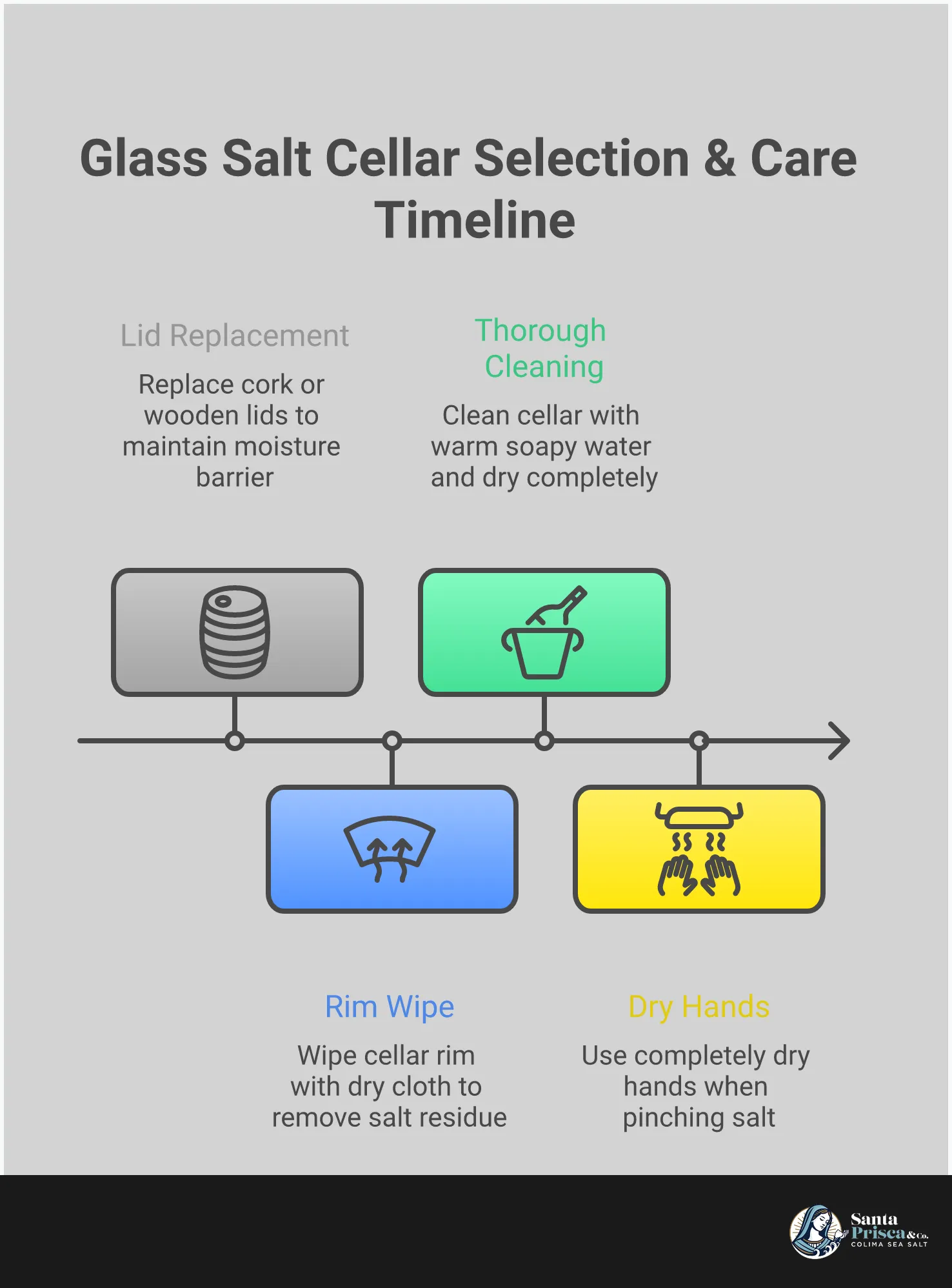
Alternatively, washing your cellar by hand can be a grounding moment. As you gently scrub the glass, it’s a chance to pause and appreciate the simple tools that support your culinary practice. Whichever method you choose, the most important step is to ensure the cellar is completely dry before you refill it with fresh Colima Sea Salt. Any lingering moisture can cause the salt to clump.
How to Prevent Salt Buildup
Our sea salt is a pure, unrefined crystal, and its natural properties are part of what makes it so special. Salt has very low water activity, which means it naturally inhibits the growth of bacteria. The primary goal in caring for your cellar is simply to keep moisture out, which prevents the salt from caking and preserves its light, crisp flake.
A simple wipe with a dry cloth around the rim and lid every so often is usually all that’s needed. When you reach for a pinch, do so with dry hands to avoid introducing moisture. These small acts of care ensure that every time you season a dish, you’re getting the pure, unadulterated flavor of the salt.
Proper Storage and Temperature
Where you place your salt cellar matters. Glass is an ideal material because it’s non-porous, meaning it won’t absorb moisture or leach unwanted flavors into your salt. To protect this integrity, find a home for your cellar away from direct sources of steam, like right next to the stovetop or a frequently used kettle.
A cool, dry spot on the counter is perfect. This protects the salt’s delicate structure and ensures it remains free-flowing. By thoughtfully placing your cellar, you honor the journey of the salt from the lagoons of Colima to your kitchen, preserving the sun-dried minerality that makes each crystal so unique.
Where to Find the Perfect Glass Salt Cellar
Once you know what you’re looking for, the search for the perfect glass salt cellar can be a delightful treasure hunt. From modern online boutiques to charming antique shops, beautiful options are waiting to be discovered. Here are a few places to begin your search.
Specialty Kitchen and Online Shops
For a wide and thoughtfully curated selection, specialty kitchen stores are an excellent starting point. Online retailers offer the convenience of browsing countless styles from home, with detailed descriptions to guide you. A clear glass salt box allows you to see how much salt you have at a glance, while a well-fitted lid keeps the seasoning pure and free from moisture. Many culinary publications offer roundups of their favorite designs, which can be a wonderful source of inspiration. Look for shops that value craftsmanship, ensuring your choice is both beautiful and built to last.
Local Home Goods and Kitchen Stores
There’s a certain magic in finding a piece in person. Visiting local home goods and kitchen stores allows you to hold a cellar in your hands, feel its weight, and imagine it on your counter. You might even stumble upon a vintage find with a story to tell. Glass salt cellars, sometimes known as antique salt dips to collectors, can be found in a beautiful variety of shapes and colors. Supporting local shops also connects you to your community, adding another layer of meaning to your find.
Directly from Artisans and Makers
Choosing a salt cellar from an artisan connects you to the hands that crafted it. You can find stunning, hand-blown glass pieces from independent makers on sites like Etsy or at local craft fairs. These pieces often have a unique character and story that you won’t find in mass-produced items. Many small businesses are built around this kind of intentional craftsmanship, offering items that bring both beauty and soul into your kitchen. It’s a beautiful way to honor the tradition of handmade goods.
A Note on Finding Quality Pieces
No matter where you shop, always prioritize quality. The material of your cellar is key to protecting the integrity of your salt. As we’ve shared in our guide to storing sea salt, materials like glass are ideal because they don’t absorb moisture or leach unwanted flavors. When you hold a piece, check for sturdy, non-porous glass that feels substantial. This simple step ensures your beautiful Colima Sea Salt remains as pure and mineral-rich as the day it was harvested, ready for your next intentional meal.
Related Articles
- Salt Cellar Guide: Uses, Types, and the Tradition Behind It – Santa Prisca & Co
- Salt Cellar 101: Your Guide to This Kitchen Gem – Santa Prisca & Co
- Salt Cellar Guide | Uses & Types – Santa Prisca & Co
Frequently Asked Questions
Will a glass cellar affect the taste of my salt? Not at all—in fact, it’s the best material for protecting your salt’s pure flavor. Glass is non-reactive and non-porous, which means it won’t impart any metallic or woody notes, and it won’t absorb any aromas from your kitchen. This ensures that every pinch of salt tastes exactly as it should: clean, crisp, and full of natural mineral depth.
My kitchen gets humid. Will a glass cellar really keep my salt from clumping? A glass cellar is an excellent defense against humidity, but the lid and placement are just as important. A well-fitting lid made of a material like cork or wood creates a gentle seal that keeps most ambient moisture out. To give your salt the best protection, place the cellar on a counter away from the direct steam of your stovetop or dishwasher.
Does the lid on my salt cellar need to be airtight? An airtight seal isn't necessary and can sometimes be inconvenient when you’re in the middle of cooking. The goal is to protect the salt from direct moisture and debris, not to vacuum-seal it. A simple, loose-fitting lid that you can easily lift with one hand is perfect. It provides enough of a barrier while keeping your salt accessible for intuitive seasoning.
Can I just use any small glass jar, or is a dedicated salt cellar better? While any clean glass jar is a good start, a dedicated salt cellar is designed with function in mind. Most importantly, it will have a wide opening that allows you to comfortably reach in and pinch the salt with your fingers. This tactile connection is part of the ritual of cooking, and a proper cellar makes that experience more graceful and intuitive.
How often do I really need to clean my salt cellar? Because salt is naturally antibacterial, you don’t need to wash your cellar constantly. A simple wipe with a dry cloth to remove any salt dust is usually enough for regular upkeep. I typically give mine a full wash with soap and water only when it’s time for a complete refill. Just be sure it is one hundred percent dry before you add new salt.