
5 Ethically Harvested Salt Companies to Support
Written By Santa Prisca & Co Staff Last updated on
Behind every grain of exceptional salt is a person—an artisan, a farmer, a steward of the land. Supporting ethical salt means supporting these communities. It ensures that local salineros (salt farmers) receive fair wages for their skilled labor and that their time-honored traditions are preserved for future generations. When you choose an ethically harvested salt company that works directly with these artisans, you become part of a cycle of respect. You’re not just buying a product; you’re investing in small-batch harvesting, eco-friendly practices, and the dignity of the people who pour their care and expertise into every single crystal they gather for your table.
Key Takeaways
- Season with Intention: Choosing ethical salt connects your kitchen to a larger story that supports environmental stewardship, fair wages for artisan communities, and the preservation of traditional harvesting methods.
- Prioritize Purity for Flavor and Wellness: Unrefined sea salt retains its natural trace minerals, offering a more complex flavor and cleaner finish than processed table salt, which is often stripped of its character and contains additives.
- Identify Brands with Integrity: Spot a truly ethical company by its transparency—look for a clear sourcing story, information about its partnerships with artisans, and a demonstrated commitment to sustainable, low-impact practices.
What Does "Ethical Salt" Really Mean?
Have you ever paused before seasoning a dish and wondered where, exactly, that pinch of salt came from? The term "ethical" gets used a lot, but when it comes to an ingredient as fundamental as salt, it carries a profound weight. It invites us to look beyond the shaker and into the story of how those crystals made their way to our kitchen. Ethical salt isn’t just about what’s been removed—like anti-caking agents or bleaches—but about what has been preserved: the integrity of the environment, the vitality of a community, and the mineral-rich gift of the earth itself.
Choosing ethical salt is an intentional act. It’s a commitment to understanding the journey from its source to your table. This means considering the planet, the process, and the people behind the product. It’s about supporting methods that honor natural cycles and sustain local traditions, ensuring that what seasons our food also nourishes the world it came from. When we choose consciously, we connect our kitchens to a larger story of respect and stewardship.
The Environmental Cost of Mass-Produced Salt
Most salt on supermarket shelves is the product of industrial mining. This process often involves heavy machinery, chemical treatments, and significant disruption to local ecosystems. Mass-produced salt can come with a steep environmental cost, from habitat destruction to pollution of nearby water sources. To achieve that uniform, bright-white appearance, the salt is often washed and stripped of the very minerals that give natural sea salt its unique character and depth. What’s left is a product disconnected from its origin, a shadow of what it once was. This approach prioritizes quantity over quality, leaving a heavy footprint on the planet.
Harvesting in Harmony with Nature
Ethical harvesting, on the other hand, is a dance with nature. Instead of disrupting the environment, artisans work in harmony with it, using methods that have been passed down for generations. Imagine shallow lagoons where seawater is left to evaporate naturally under the warmth of the sun, or ancient salt flats where brine is filtered through volcanic earth. This gentle, patient approach not only protects the local ecosystem but also allows the salt to retain its full spectrum of trace minerals. The result is an all-natural sea salt that is a true expression of its environment—a sun-dried crystal with a story to tell.
Honoring the People Behind the Product
Behind every grain of ethical salt is a person—an artisan, a farmer, a steward of the land. Supporting ethical salt means supporting these communities. It means ensuring that local salineros (salt farmers) receive fair wages for their skilled labor and that their time-honored traditions are preserved for future generations. When you choose a brand that works directly with these artisans, you become part of a cycle of respect. You’re not just buying a product; you’re investing in small-batch harvesting, eco-friendly practices, and the dignity of the people who pour their care and expertise into every crystal.
Why Ethical Salt Matters in Your Kitchen
The salt you choose is more than just a seasoning. It’s a connection—to the earth, to tradition, and to the hands that gathered it. When we choose ethically harvested salt, we’re making a conscious decision that ripples from our kitchens out into the world. It’s an invitation to cook with more intention, honoring the story behind our food and the delicate balance of our planet. This simple act of selection turns an everyday ingredient into a statement of values, a quiet acknowledgment that how our food is produced matters just as much as how it tastes.
This choice transforms a simple pantry staple into a meaningful ingredient. It’s about appreciating the pure, mineral-rich flavor that can only come from a pristine environment and careful harvesting. It’s about knowing that your purchase supports vibrant communities and protects the natural ecosystems that sustain us all. When we understand the journey of our salt, from a sun-drenched salt flat to our table, we bring a deeper sense of gratitude and awareness to our meals. Let’s explore why bringing ethical salt to your table is one of the most beautiful and impactful decisions you can make.
Supporting Artisan Communities
Behind every pinch of truly exceptional salt is a story of human connection and generational wisdom. Ethically harvested salt directly supports the local artisans and their families who have perfected their craft over centuries. When you choose a brand like Santa Prisca & Co., you are investing in a system that prioritizes fair wages and small-batch harvesting, ensuring these traditions can continue to thrive.
This approach moves beyond simple transactions. It fosters a partnership built on respect for both the people and the process. By honoring their deep knowledge of the land and sea, we help preserve a way of life and ensure that the communities at the heart of this craft are sustained for generations to come.
Discovering Richer Flavor and Minerals
There is a profound difference in taste and texture when salt is left in its natural state. Ethically sourced sea salt is typically unrefined, meaning it’s free from the anti-caking agents, additives, and microplastics found in mass-produced table salt. What you get instead is a clean, complex flavor straight from the source—a burst of mineral depth that enhances food without overpowering it.
This purity also carries wellness benefits. Unrefined sea salt retains a spectrum of trace minerals that are stripped away during industrial processing. Some studies even suggest that the presence of these minerals may help balance the effects of sodium. Choosing this kind of salt is a simple way to nourish your body while enjoying a far superior culinary experience.
Protecting Our Planet's Ecosystems
The way our salt is gathered has a direct impact on the health of our planet. Industrial salt production can be incredibly disruptive, harming delicate coastal ecosystems. In contrast, sustainable harvesting methods work in harmony with nature. This gentle approach, often relying on the simple power of the sun and wind, ensures a minimal environmental footprint.
By choosing salt from companies that prioritize sustainable sourcing, you are supporting practices that protect biodiversity and preserve the pristine landscapes where the salt is born. It’s a quiet but powerful way to vote for a healthier planet, ensuring these precious natural resources are protected for the future.
5 Ethical Salt Brands to Know
Choosing a salt is about more than just flavor; it’s a chance to connect with the hands and landscapes that produce our food. The brands we gather in our kitchens tell a story of intention, care, and respect for the earth. When we support companies dedicated to ethical and sustainable practices, we honor the artisans who preserve tradition and protect our planet’s precious resources. These five companies are stewards of their craft, offering salts that are not only exceptional in quality but also rich in purpose.
Santa Prisca & Co: Hand-Harvested Colima Sea Salt
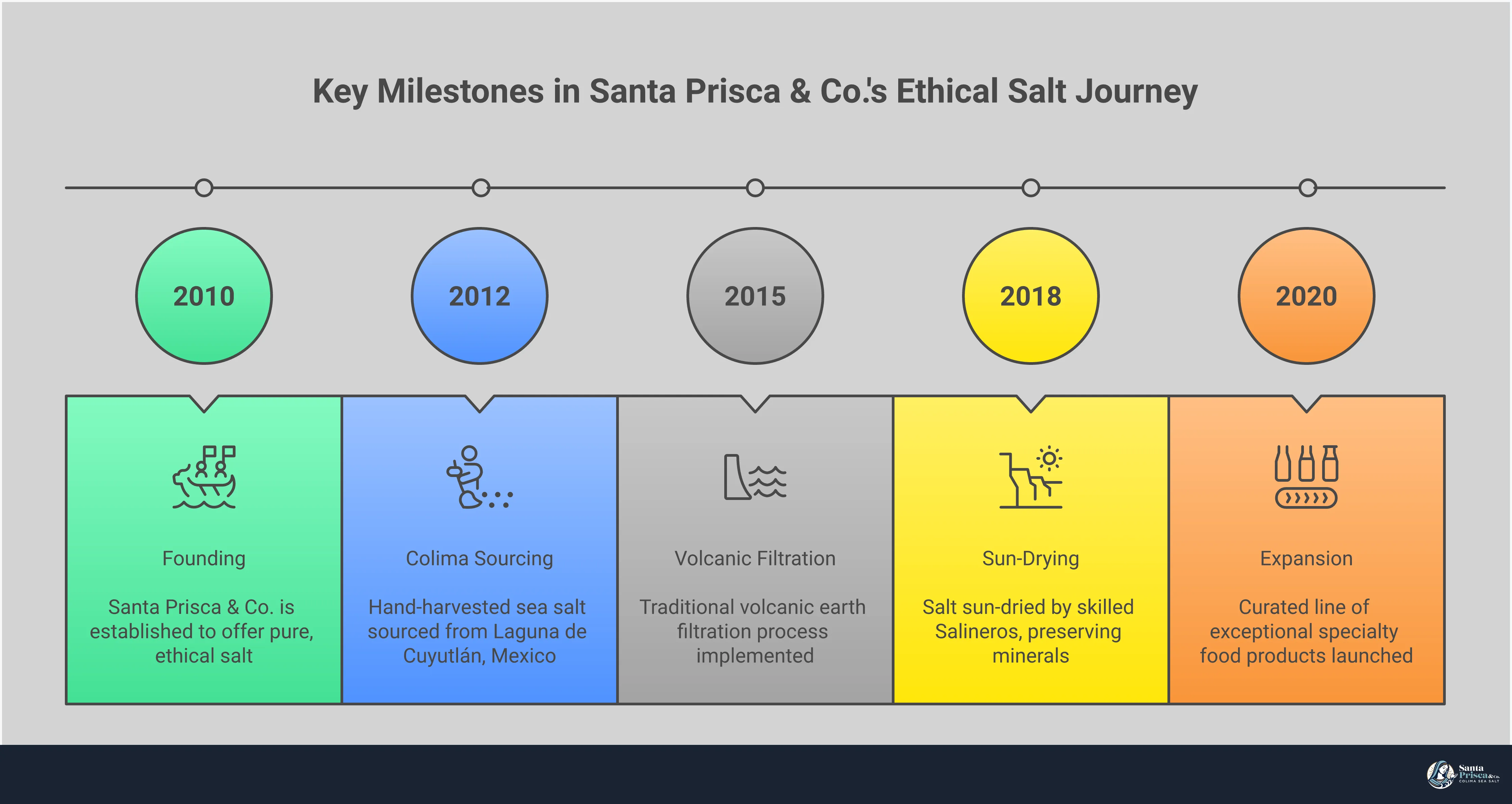
Deeply rooted in the heritage of Colima, Mexico, Santa Prisca & Co. honors the generations of salineros (salt farmers) who have harvested salt by hand for centuries. Their beautiful, unrefined Colima Sea Salt is naturally filtered through ancient volcanic earth, giving it a remarkable mineral depth and a clean, crisp flavor. By working directly with local artisans and ensuring fair wages, the company helps preserve these time-honored traditions. Each glistening crystal tells a story of sun, earth, and community, bringing a piece of Colima’s spirit directly to your table. This is salt harvested with gratitude, meant to be savored in moments of connection.
Saltverk: Icelandic Geothermal Salt
From the pristine Westfjords of Iceland, Saltverk offers a modern approach to an ancient craft. Their process is a beautiful example of working in harmony with nature, using 100% geothermal energy from the region’s hot springs to evaporate clean Arctic seawater. This sustainable method produces zero carbon emissions, leaving behind nothing but pure, flaky sea salt. The result is a bright, mineral-forward salt with a delicate crunch that melts on the tongue. Saltverk’s commitment to environmental stewardship and innovative techniques makes their salt a thoughtful choice for the conscious kitchen.
Cape Ann Sea Salt: Solar-Dried Atlantic Salt
Nestled on the coast of Massachusetts, Cape Ann Sea Salt embodies the simple power of the elements. Their salt is created using only the sun and sea, a patient process that honors the natural rhythm of the environment. Seawater from the cold Atlantic is slowly evaporated in solar houses, a method that requires no fossil fuels and produces a pure, unrefined salt free from additives. This gentle technique preserves the ocean’s trace minerals, offering a briny, balanced flavor. Cape Ann Sea Salt reminds us that sometimes the most profound results come from the simplest, most natural methods.
Jacobsen Salt Co.: Pacific Northwest Sea Salt
Harvested from the cold, wild waters of Netarts Bay on the Oregon coast, Jacobsen Salt Co. captures the unique essence of the Pacific Northwest. As the first company to harvest salt in the region in over 200 years, they have revived a local tradition with a deep respect for craftsmanship. Their meticulous process results in a bright, clean salt with a distinctive crunch, perfect for finishing any dish. Jacobsen Salt Co. celebrates the connection between food, place, and community, offering a taste of the region’s rugged beauty in every flake.
Celtic Sea Salt: French Grey Salt
For over 40 years, Celtic Sea Salt has been a trusted name for those seeking mineral-rich, traditionally harvested salt. Sourced from the coastal region of Brittany, France, their iconic light grey salt is gathered from clay-lined salt beds using methods that are centuries old. The salt retains its moisture and its signature color from the vital minerals absorbed from the clay. This unrefined, whole crystal salt has a complex, briny flavor that speaks to its rich origins. Celtic Sea Salt is a testament to the enduring wisdom of traditional harvesting and its benefits for both flavor and wellness.
How Is Ethical Salt Sourced?
Ethical salt sourcing is a story of partnership. It’s about working in harmony with the elements—sun, earth, and water—rather than against them. Instead of industrial force, this approach relies on patience, ancient wisdom, and a deep respect for the natural world. The result is a pure, mineral-rich salt that carries the essence of its origin, connecting your kitchen to the pristine landscapes where it was born.
Harnessing the Power of the Sun
Imagine shallow pools of seawater, shimmering under a warm sun. This is the gentle beginning for many ethically sourced salts. Solar evaporation is an ancient method that lets the sun do the work, slowly coaxing the water away and leaving behind pure salt crystals. This process eliminates the need for fossil fuels, preserving the air and the integrity of the salt. Companies like Cape Ann Sea Salt rely entirely on this natural rhythm, allowing the sun to craft their salt with a clean, bright flavor that only patience can produce.
Naturally Filtered by Volcanic Earth
Some of the most extraordinary salts get their character from the ground they touch. Our own Colima Sea Salt begins this way, as saltwater is naturally filtered through ancient volcanic earth. This journey purifies the salt and infuses it with a rich profile of essential minerals, giving it a complex flavor and a subtle, grounding depth. It’s a beautiful example of how the land itself can be a partner in creating something truly special, a salt that tastes of its unique geology and pristine origins.
The Art of Hand-Harvesting
The final step in gathering ethical salt is often done by hand, a practice that honors both the product and the people who harvest it. Hand-harvesting is a delicate art. Artisans use traditional tools to gently rake and collect the fragile salt crystals, preserving their unique structure. This careful approach, practiced by brands like Saltverk, ensures that only the purest salt is collected while protecting the surrounding ecosystem. It’s a method rooted in tradition, connecting us to the generations of salt farmers who have worked the same lands with care.
Using Renewable Energy in Production
Beyond the sun, ethical producers are finding innovative ways to power their process with clean energy. This commitment shows a holistic view of sustainability, considering every step from source to pantry. In Iceland, for example, Saltverk uses the island’s natural geothermal energy to heat the seawater, a modern technique that leaves a minimal carbon footprint. By pairing renewable energy with traditional methods, these producers prove that ancient crafts and modern environmental consciousness can create a truly exceptional product.
Exploring the World of Ethical Salts
Once you move past the salt shaker, a world of texture and flavor opens up. Here are a few types of ethical salt to welcome into your kitchen.
Pure, Unrefined Sea Salts
This is salt in its most honest form. Pure, unrefined sea salts are harvested and dried with minimal intervention, preserving the trace minerals that give them their unique character and color. Our own Colima Sea Salt, for example, is naturally filtered through volcanic earth, which imparts a gentle, complex flavor without the harsh bite of processed salt. Because it’s completely free from additives and microplastics, you’re tasting the pure essence of the ocean. This type of salt is perfect for everyday cooking, seasoning everything from soups to roasted vegetables with a burst of mineral depth that processed salts simply can’t replicate. It’s a simple way to honor the ingredients you cook with.
Flake and Finishing Salts
Think of these as the final flourish for your favorite dishes. Flake salts have a delicate, pyramid-like structure that provides a satisfyingly light crunch before dissolving on the tongue. They are crafted to be seen and savored, sprinkled over a finished meal just before serving. Brands like Jacobsen Salt Co. harvest these beautiful crystals from the Pacific Northwest, creating a texture that adds a new dimension to salads, grilled meats, or even chocolate chip cookies. Because of their delicate nature, they aren’t meant for seasoning a pot of soup; their magic lies in that final, textural touch. It’s a small ritual that can make any meal feel more intentional and complete.
Creative Flavored and Infused Salts
For moments when you want to add another layer of aroma and flavor, infused salts are a beautiful tool. Artisans take high-quality sea salt and combine it with natural ingredients like smoke, herbs, or spices. The Icelandic company Saltverk creates incredible varieties like Birch Smoked Salt, using time-honored traditions to impart authentic flavor—no artificial additives needed. These salts invite creativity into the kitchen, inspiring you to try new combinations. A pinch of smoked salt can transform roasted potatoes, while an herb-infused salt can brighten a simple vinaigrette. They are a testament to how a single ingredient can carry the essence of a landscape.
Stocking Your Pantry: Bulk and Wholesale
When you find a salt you truly love, it becomes a trusted staple in your kitchen. Buying in larger quantities is not only more economical but also a more sustainable choice, reducing packaging waste over time. Many small, ethical brands offer bulk options for passionate home cooks or chefs who want to make a conscious choice for their pantry or restaurant. If you’ve fallen in love with the clean, mineral-rich taste of our salt, we invite you to explore our wholesale inquiries. Stocking your pantry with intention means you always have pure, high-quality ingredients on hand to nourish yourself and the people you cook for.
Common Myths About Ethical Salt, Debunked
When we choose ingredients with intention, we often find ourselves asking deeper questions. The world of salt is full of stories, traditions, and a surprising amount of misinformation. Let's clear the air around a few common myths, so you can feel confident and connected to the salt you bring into your kitchen.
Is It Really More Expensive?
It’s easy to see the price difference and wonder if it’s truly worth it. But the cost of ethically harvested salt reflects its true value—a value that extends far beyond the shaker. The price honors the artisans who carefully harvest each crystal by hand and ensures they receive fair wages for their skilled work. It also accounts for sustainable practices that protect delicate ecosystems. When you choose a salt like our Colima Sea Salt, you’re investing in a healthier planet and supporting communities. Plus, its rich flavor is so potent that a small pinch goes a long way.
Isn't All Sea Salt Natural?
While all sea salt originates from the ocean, the journey it takes to your table can vary dramatically. The word "natural" doesn't always tell the whole story. Many mass-produced sea salts are harvested using industrial methods, then washed and refined, which strips away the trace minerals that give the salt its unique character. Truly unrefined sea salt is gently harvested through sun and wind evaporation. This minimal intervention preserves its beautiful, complex mineral profile. Think of it like the difference between a vine-ripened tomato from a local garden and one from a factory farm—both are tomatoes, but one is bursting with life.
Separating Health Facts from Fiction
Let’s talk about one of the biggest myths: that sea salt has less sodium than table salt. By weight, their sodium levels are quite similar. The real difference lies in the texture and flavor. The crisp, flaky structure of an unrefined sea salt means less of it fits in a measuring spoon, and its potent taste allows you to use less while achieving a more dynamic flavor. While table salt is often fortified with iodine, a varied, whole-foods diet is a wonderful way to get the iodine your body needs. Choosing an unrefined salt is about embracing a whole, pure ingredient that offers a symphony of trace minerals.
How to Spot a Truly Ethical Brand
When you stand in the aisle, faced with a dozen different salts, how do you choose the one that truly aligns with your values? It’s about looking beyond the beautiful packaging and marketing claims. Making a conscious choice means knowing what to look for—the small but significant details that tell a much larger story about a brand’s commitment to the planet and its people. It’s a practice of curiosity, a way of connecting more deeply with the food that nourishes us.
Navigating the world of ethical sourcing can feel complex, but it doesn't have to be. Think of it as learning a new language—once you know the key phrases, you can understand the conversation. A truly ethical brand isn’t afraid to share its story, from the mineral-rich waters where the salt is born to the hands that carefully harvest each crystal. They operate with a transparency that invites you in, showing you that their practices are as pure as their product. By learning to identify these markers of integrity, you can fill your pantry with ingredients that not only taste better but also contribute to a healthier, more sustainable world.
Look for Meaningful Certifications
Certifications are like a trusted seal of approval. They show that a brand has invited an outside organization to verify its claims, holding it accountable to specific environmental and social standards. When you see a certification, it means the company has gone the extra mile to prove its commitment. For example, organizations like Friend of the Sea have criteria for sustainable salt that require conservation efforts and legal compliance. These labels aren’t just for show; they represent a deep respect for the ecosystems and communities involved in the salt’s journey from the earth to your table.
Demand Transparency in Sourcing
An ethical brand will proudly tell you where its salt comes from. Look for a clear story on their website or packaging that details the origin, the harvesting methods, and the people behind the product. Truly sustainable salt is gathered with minimal impact on the environment, and the process ensures fair wages and safe working conditions for the artisans. When a company is open about its supply chain, it’s a sign that they have nothing to hide. This transparency allows you to feel connected to the product’s journey and confident in the integrity of your purchase.
Check for Third-Party Verification
Beyond a brand’s own story, look for outside validation. This can come in the form of the certifications we just discussed, but it also includes features in reputable publications, partnerships with environmental groups, or adherence to recognized environmental standards. Third-party verification acts as an impartial confirmation of a brand’s promises. It shows that their commitment to ethical practices stands up to scrutiny. This extra layer of accountability helps you separate the genuinely responsible brands from those that simply use "natural" as a marketing buzzword, ensuring your choice supports a truly positive impact.
How to Choose the Right Ethical Salt for You
Choosing a salt can be a deeply personal act, a small way to infuse your daily rituals with intention. It’s about more than just flavor; it’s about finding a connection to the food you prepare and the values you hold. When you find the right salt, it feels less like an ingredient and more like an ally in your kitchen.
Match the Salt to Your Cooking Style
Think about how you love to cook. Are you searing fresh fish, slow-roasting vegetables, or baking bread from scratch? The texture and flavor of your salt should complement your craft. A delicate, flaky salt is perfect for finishing a dish, adding a crisp burst of salinity that lingers on the tongue. For everyday cooking, a versatile, mineral-rich salt like our Colima Sea Salt dissolves beautifully, seasoning from within. Some brands, like Saltverk, even offer smoked or herb-infused salts that can introduce a whole new layer of complexity to your meals. Let your culinary curiosity guide you.
Understand the Story Behind the Brand
Every grain of salt has a story. It carries the memory of the sun, the sea, and the hands that gathered it. When you choose a brand, you become part of that story. We believe in honoring the generations of salineros who harvest our salt, which is why we work directly with local farmers to support fair wages and preserve their small-batch traditions. Take a moment to learn about the people behind the product. When you know their story, seasoning your food becomes an act of gratitude and a connection to a community you can feel proud to support.
Align with a Mission You Believe In
Your pantry can be a reflection of your values. Do you prioritize environmental stewardship? Look for brands that use sustainable methods, like Cape Ann Sea Salt, which relies entirely on the sun for its drying process. Is purity paramount? Seek out companies that are transparent about their sourcing and avoid all additives. Choosing an ethical salt means you’re investing in a mission you believe in. You’re supporting businesses that care for the planet, honor their artisans, and are committed to bringing a pure, life-giving mineral from the earth to your table.
Bringing Ethical Salt into Your Kitchen
Welcoming these salts into your home is an act of intention. It’s about more than just seasoning; it’s about connecting with the source of your food and honoring the hands that gathered it. When you choose salt that is harvested with care, you bring that same mindfulness to your table. A simple pinch can transform a meal from ordinary to memorable, adding a layer of story and integrity to every dish you create. Let’s explore a few simple ways to make these beautiful, mineral-rich crystals a part of your daily kitchen rituals.
How to Stock Your Pantry
Building a thoughtful pantry begins with a foundational, all-purpose salt. Start with a pure, unrefined sea salt that you can rely on for everything from seasoning soups to baking bread. Our Colima Sea Salt is perfect for this, offering a balanced flavor that enhances without overpowering. Once you have your go-to, consider adding a finishing salt with a distinct texture, like a delicate flake. When choosing salts, look for brands that are transparent about their methods, whether it’s using geothermal energy or traditional sun-drying. A well-stocked pantry isn’t about having dozens of salts; it’s about having a few high-quality options that you love to use.
Exploring Different Flavors and Textures
Artisanal salt is a world of sensory discovery. Each grain tells the story of its origin through its unique taste and form. Our Colima Sea Salt, for example, is naturally filtered through volcanic earth, which gives it a remarkable mineral depth and a subtle sweetness you won't find in processed salt. You might notice its crisp, clean flake that dissolves perfectly on the tongue. Other salts offer different experiences—some are briny and bold, while others carry smoky notes or the faint essence of the herbs that grow near their shores. We encourage you to explore different salts and notice how their unique characteristics can complement and brighten your favorite foods.
Simple Ways to Use Finishing Salts
Finishing salts are the final, thoughtful touch you add to a dish just before serving. Think of them as jewelry for your food. Their purpose is to add a burst of clean flavor and a satisfying textural crunch. A gentle sprinkle over a ripe avocado, sliced tomatoes, or a perfectly grilled steak can make all the difference. Try a pinch on top of a dark chocolate brownie to see how it deepens the cocoa flavor. Even a simple bowl of steamed vegetables becomes something special with a scattering of beautiful, flaky salt. This simple gesture is a ritual of gratitude, a final blessing for the meal you’ve prepared.
Related Articles
- How to Buy Fair Trade Sea Salt: 4 Brands to Trust – Santa Prisca & Co
- 5 Best Sustainable Sea Salt Brands of 2025 – Santa Prisca & Co
- The 5 Best Handcrafted Small Batch Sea Salts – Santa Prisca & Co
- Raw Sea Salt Guide: Benefits, Uses, and Meaning – Santa Prisca & Co
- Unrefined Sea Salt: Ultimate Flavor & Health Guide – Santa Prisca & Co
Frequently Asked Questions
What’s the main difference between ethical sea salt and the salt I find at the grocery store? The biggest difference is the journey. Most table salt is industrially produced, stripped of its natural minerals, and treated with anti-caking agents. Ethical sea salt, on the other hand, is harvested in harmony with nature and left in its whole, unrefined state. This means you’re getting a pure salt that retains its full spectrum of trace minerals, a complex flavor, and a story of connection to the place and people who gathered it.
Is unrefined sea salt actually better for my health? Choosing unrefined sea salt is about embracing a whole, pure ingredient. Unlike processed table salt, it’s free from additives and contains a variety of trace minerals that are naturally present in seawater. While all salt should be used in moderation, the complex mineral profile of an unrefined salt offers a more complete and flavorful seasoning, which often means you can use less to achieve a richer taste.
Why does ethically sourced salt cost more? The price of ethical salt reflects its true value. It honors the skilled artisans who harvest each crystal by hand and ensures they receive fair wages for their work. It also supports sustainable practices that protect delicate ecosystems for future generations. When you choose an ethical salt, you’re investing in quality, community, and a healthier planet, and its potent flavor means a little goes a long way.
I’m new to artisanal salts. How should I use them differently in my cooking? Think of them in two ways: for seasoning and for finishing. A fine-grain, unrefined sea salt like our Colima Sea Salt is a wonderful all-purpose salt for seasoning dishes as you cook. A finishing salt, which often has a larger, flakier texture, is meant to be sprinkled on food just before serving. This adds a final burst of clean flavor and a satisfying crunch to everything from salads and grilled fish to chocolate desserts.
With so many options, how do I know if a brand is truly ethical? A truly ethical brand is transparent. Look for companies that proudly share where their salt comes from, how it’s harvested, and who the artisans are behind the product. They won’t hide behind vague terms like "natural." Instead, they’ll tell you a clear story about their commitment to sustainable methods, fair labor practices, and the purity of their salt, giving you confidence in the ingredient you’re bringing into your kitchen.