
Does Salt Go Bad If It Gets Wet? Here's What to Do
Written By Santa Prisca & Co Staff Last updated on
An unrefined sea salt is a living ingredient, connected to the sun, the sea, and the earth it came from. Unlike processed table salt, it interacts with its environment, especially the humidity in your kitchen. This beautiful, natural quality is also why you might find it clumping together on a damp day. This interaction often leads people to ask, does salt go bad if it gets wet? The simple answer is no. Your salt hasn't spoiled; it has simply absorbed a bit of moisture. This is a sign of its purity, a gentle reminder that you’re using an ingredient that is truly natural and free from additives.
Key Takeaways
- Clumping confirms purity, not spoilage: When unrefined sea salt clumps, it’s simply absorbing moisture from the air, a natural process that proves it’s free from anti-caking chemicals.
- Your salt is safe unless contaminated: Pure salt is a stable mineral that doesn't go bad. Only discard it if you see foreign particles or notice strange odors, which indicates it has absorbed something from its environment.
- Restore texture with gentle heat and proper storage: A few minutes in a low-temperature oven will dry out damp salt and bring back its delicate crunch. Storing it in a wooden or ceramic cellar helps prevent future moisture.
Help! My Sea Salt Got Wet. What Now?
You reach for your beautiful jar of sea salt, ready to finish a dish with that perfect, flaky crunch. But when you open it, you find the once-loose crystals have gathered into dense, damp clumps. It’s a common moment of kitchen confusion, but I’m here to reassure you: your salt is not ruined. In fact, this little change tells you something wonderful about its purity.
This is a completely natural process, especially for unrefined salts that are free from the additives found in common table salt. Let’s explore why this happens and what it means for your cooking.
Why Salt Clumps in Humidity
The simple answer is moisture. When we talk about salt "going bad," it almost always just means that humidity from the air has found its way into the container. This moisture causes the individual crystals to stick together, forming the clumps you see.
Think of it as a physical change, not a chemical one. The salt itself hasn't spoiled or lost its incredible flavor. It’s just holding onto a bit of water from its environment, which is especially common on rainy days or in humid climates. Your salt is still pure, safe, and ready to use.
How Salt Naturally Attracts Moisture
Salt has a natural property of being hygroscopic, a simple way of saying it absorbs water from the air. This is an inherent characteristic of pure salt crystals. They actively draw in moisture from their surroundings, which can cause them to bind together over time.
Instead of seeing this as a flaw, I like to think of it as a sign that the salt is alive and interacting with the world around it. It’s a gentle reminder of the natural forces at play, from the sun-drenched salt flats to the humidity in your own kitchen.
Unrefined vs. Table Salt: A Moisture Test
Have you ever wondered why that shaker of fine table salt always flows so freely? It’s because most commercial table salts contain anti-caking agents, like calcium silicate, which are added to prevent clumping. These additives coat the salt crystals to block moisture absorption.
Our hand-harvested Colima Sea Salt is completely unrefined and free of any additives. We believe in salt in its purest form. So, when you see a few clumps, you can feel good knowing it’s a testament to its natural state. You’re getting nothing but pure, mineral-rich sea salt, just as it was meant to be.
Is Clumpy Salt Still Safe to Eat?
Discovering your beautiful sea salt has formed into a solid block can be disheartening. It’s easy to wonder if it’s gone bad or lost its magic. The short answer is almost always no, your salt is perfectly fine. But let’s walk through the difference between a simple clump and a reason for concern, so you can feel confident every time you reach for that pinch of mineral-rich goodness.
Separating Salt Fact from Fiction
First, let’s clear the air. Pure salt is a remarkably stable mineral. Because it contains no water, it’s an environment where the bacteria and mold that cause spoilage simply can’t survive. This means that, on its own, pure salt does not expire. A container of unrefined sea salt, like our hand-harvested Colima salt, has a shelf life that can be measured in millennia, not months.
So, when you see clumps, it’s not a sign of spoilage. It’s simply a sign that the salt has absorbed a bit of moisture from the air, causing the crystals to cling to one another. It’s a natural, harmless process, especially for a pure salt that is free of the anti-caking agents found in common table salt.
When to Actually Worry About Wet Salt
While clumping itself isn’t a problem, you should always trust your senses. There are a few rare instances where it’s best to part ways with your salt. If you notice any strange odors, it might mean the salt has absorbed aromas from other pantry items. More importantly, if you see any visible signs of contamination, like food particles, dust, or anything else that doesn’t belong, it’s time to discard it.
Think of your salt cellar as a sacred space. If other ingredients have accidentally spilled into it, the salt’s purity is compromised. A quick visual check and a sniff are all you need to know if your salt is still in its pristine state.
Flavor and Texture vs. Food Safety
Even if your clumpy salt is perfectly safe to eat, you might notice a change in its texture. That signature delicate crunch of a finishing salt can become less pronounced when it’s holding onto moisture. While the rich, mineral-forward flavor of Colima Sea Salt remains intact, the experience of using it changes.
This is where the art of cooking comes in. The joy of a beautiful sea salt is as much about its crisp flake as it is about its taste. While a clumped salt is still safe and flavorful, restoring its original texture brings back that full sensory experience we cherish in the kitchen. Luckily, it’s incredibly simple to do.
How to Revive Clumped Sea Salt
Finding your beautiful, flaky sea salt has formed into small clumps can feel a little disheartening. But this is actually a good sign. It means your salt is unrefined and free of the anti-caking agents found in common table salt. Because our Colima Sea Salt is completely natural, it will absorb moisture from the air, especially in humid environments. This is a simple, reversible process. With just a little care, you can restore its delicate texture and have it flowing freely again.
Simple Air-Drying Solutions
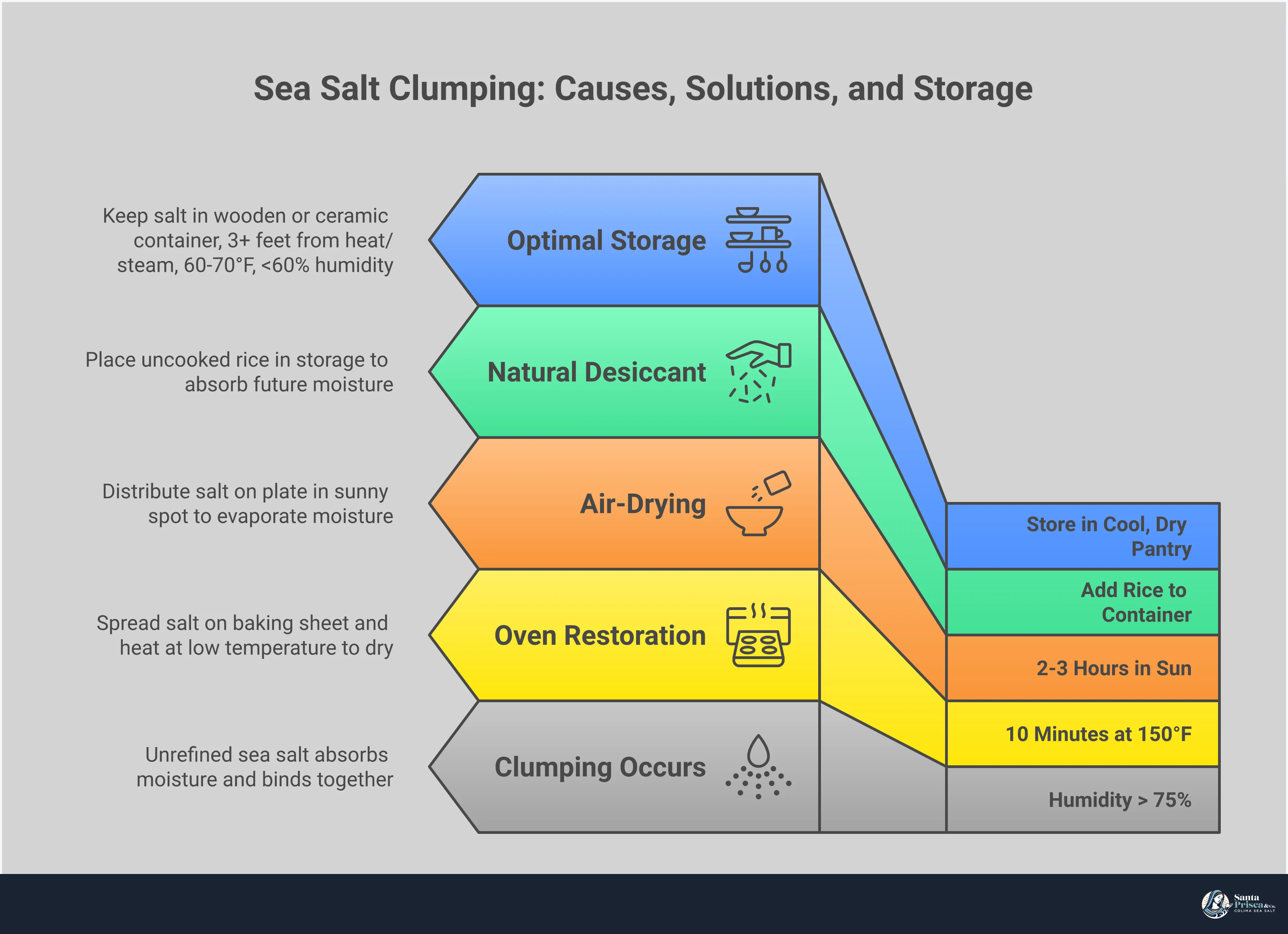
The most gentle way to dry your salt is to let nature do the work. If your salt feels just a bit damp, spread it in a thin layer on a clean, dry plate or baking sheet. Find a warm, sunny spot in your kitchen and let it rest for a few hours. You’ll see the moisture evaporate, leaving behind the crisp, crystalline flakes you love. This simple method requires nothing more than a little patience and sunlight. As some helpful Instagram tips remind us, damp salt is perfectly fine for seasoning, but a little air-drying can bring back that perfect pinchable texture.
Gently Drying Salt in the Oven
For a quicker fix, especially on a damp or cloudy day, your oven can be a wonderful tool. The key is to use very low heat to gently coax the moisture out without altering the salt’s delicate mineral structure. Spread your clumpy salt on a baking tray and place it in an oven set to a low temperature, between 50–70°C (or about 120–160°F). After just 10 minutes, it should be completely dry and ready to use. This gentle warmth restores the salt to its original state, ensuring every crystal is perfect for finishing your favorite dishes.
Natural Ways to Absorb Excess Moisture
To prevent clumping in the first place, think about how you store your salt. A proper container can make all the difference. While you don't need anything fancy, a wooden salt cellar or a well-sealed glass jar is much better than a simple cardboard box, especially if you live somewhere humid. These containers help keep salt dry and clean. For an extra layer of protection, you can add a few grains of uncooked rice to your salt cellar. The rice acts as a natural desiccant, absorbing any excess moisture from the air before the salt does. It’s a simple, time-honored kitchen ritual.
Does Wet Salt Go Bad?
It’s a familiar moment in the kitchen: you reach for your beautiful jar of sea salt, only to find it’s damp and clumpy. Your first thought might be, “Is it ruined?” Take a deep breath. When it comes to pure, unrefined sea salt, the answer is almost always no. Unlike many other pantry staples, salt is a remarkably stable mineral. Its inherent properties make it resistant to spoilage, meaning a little moisture won't send it to the compost bin. Think of it less as a perishable food and more as a timeless element from the earth.
The Staying Power of Pure Sea Salt
Pure sea salt is, at its heart, a mineral. Just like a stone from the earth, it doesn’t really have an expiration date. The salt crystals harvested today have been part of the earth for an incredibly long time, and their composition makes them naturally resistant to the bacteria and mold that cause other foods to spoil. This is especially true for unrefined salts like our Colima Sea Salt, which are free from the anti-caking agents and additives that can degrade over time. When your salt gets a little damp, it’s not going bad; it’s just reacting to the environment, a simple sign of its natural, unaltered state.
Signs It's Time for a New Jar
While pure salt itself doesn't spoil, there are a few rare instances where you might consider replacing your jar. The main concern is contamination. If you notice any foreign food particles, dust, or signs of pantry pests, it’s best to start fresh. Another sign is a strange odor. Salt is known to absorb aromas from its surroundings, so if it starts smelling like the onions it was stored next to, its pure flavor may be compromised. While clumping is usually just a moisture issue, if the salt becomes a solid, rock-hard block that can’t be revived, it may be easier to begin with a new jar.
Do Salt Expiration Dates Really Matter?
You might notice a "best-by" date printed on salt packaging and wonder if it contradicts the idea that salt lasts forever. These dates are typically added to comply with food labeling regulations, as salt is sold as a food item. However, this date refers to optimal quality (like preventing clumping), not safety. Pure sodium chloride is a mineral that can last for millions of years without spoiling. For an unrefined, additive-free sea salt, that date is more of a suggestion than a rule. As long as it’s stored properly and kept free of contaminants, your salt will remain pure and flavorful far beyond any printed date.
How to Properly Store Your Artisanal Sea Salt
Your beautiful jar of Colima Sea Salt is more than just an ingredient; it’s a connection to the earth and the artisans who harvested it. To honor its journey and preserve its delicate, mineral-rich character, a little intention in how you store it goes a long way. Proper storage isn’t about preventing spoilage, as pure salt is incredibly resilient. Instead, it’s about maintaining that perfect, flaky texture and protecting its pure flavor from moisture and kitchen contaminants. Think of it as creating a worthy home for a cherished guest.
Find the Perfect Container for Your Salt
The right container is key to keeping your salt tasting its best. I recommend a small wooden salt cellar, a ceramic pot, or a glass jar with a loose-fitting lid. These materials allow the salt to breathe a bit, which is important for unrefined crystals, while an airtight container can sometimes trap ambient moisture inside. A simple, beautiful vessel not only protects your salt from dust and splatters but also makes reaching for a pinch a more mindful moment. You can explore our shop for inspiration on creating a beautiful home for your salt.
Keep Your Pantry Dry and Salt-Friendly
Have you ever noticed your salt shaker getting sticky in the summer? That’s because salt is naturally hygroscopic, meaning it draws moisture from the air. This is especially true for unrefined sea salt, which doesn't contain anti-caking agents. To prevent clumping, find a home for your Colima Sea Salt away from the stove, sink, or a steamy dishwasher. A cool, dry spot in a pantry or cabinet is perfect. The main goal is to protect it from moisture and contamination, ensuring every pinch is as pure as the day it was harvested.
A Simple Ritual for Storing Colima Sea Salt
Even with the best care, a humid day can cause your beautiful salt crystals to stick together. Don’t worry, this is completely natural and easily remedied. Think of it as a small ritual of care. If you notice clumping, simply spread the salt in a thin layer on a baking sheet. Place it in a warm oven, set to the lowest temperature (around 150°F), for about 10 minutes. This gentle heat will evaporate the excess moisture, restoring the salt’s delicate, flaky texture. Let it cool completely before returning it to its container.
Preserve Your Sea Salt's Flavor and Minerals
Your jar of Colima Sea Salt is more than just a seasoning; it’s a collection of delicate, mineral-rich crystals harvested with intention. To honor its journey from the salt flats of Mexico to your kitchen, it deserves a little care. Proper storage is a simple practice that protects the salt’s unique texture, potent minerals, and clean, bright flavor. By creating the right home for your salt, you ensure that every pinch delivers the full experience it was meant to offer.
Think of it as a small ritual of gratitude. Just a few thoughtful steps will preserve the integrity of this beautiful ingredient, keeping it ready to transform your meals from simple to soulful. It’s less about preventing something from going “bad” and more about maintaining its vibrant character.
How to Keep Salt Flaky in Humid Climates
If you’ve noticed your sea salt starting to clump, you’re seeing a natural process in action. Salt is hygroscopic, which means it actively attracts and holds water molecules from the surrounding air. In humid kitchens, this can turn those distinct, crisp flakes into dense clusters.
To maintain that signature delicate texture, the key is to limit moisture exposure. Store your salt in an airtight container, like a glass jar with a tight-fitting lid, and keep it in a cool, dry cabinet away from the steam of the stove. A traditional wooden or ceramic salt cellar also works beautifully, as these materials can help absorb a small amount of ambient moisture.
Why Storage Matters for Mineral Content
Unlike refined table salt, which is stripped of its natural minerals and often treated with anti-caking agents, our Colima Sea Salt is beautifully unrefined. Its complex flavor and nutritional value come from a rich profile of trace minerals, a gift from the volcanic earth it’s filtered through. Proper storage helps protect this delicate balance.
While pure sodium chloride is incredibly stable, the added ingredients in processed salts can degrade over time, affecting their quality. By choosing an unrefined salt, you’ve already avoided these additives. Now, by storing it correctly, you’re preserving the very essence of what makes it so special: its pure, mineral-rich composition.
Protect the Pure Taste of Your Sea Salt
Artisanal sea salt has a clean, nuanced flavor that can be easily influenced by its environment. Because it can absorb not just moisture but also aromas, it’s best to keep it away from fragrant spices, coffee, or onions. Storing it in a dedicated, sealed container ensures its taste remains pure and untainted.
Even if your salt does clump a bit from humidity, it’s almost always perfectly safe to use. The main goal of storage is to protect its texture and flavor. A beautiful salt cellar on your counter not only keeps your salt within reach but also serves as a gentle reminder to appreciate the simple, powerful ingredients that nourish us.
Related Articles
- How Long Does Sea Salt Last? A Simple Guide
- How to Store Sea Salt and Keep It Fresh (No Clumps, No Waste)
- Find the Perfect Container for Salt: Our Top Picks
- A Chef's Guide to the Highest Quality Sea Salt
Frequently Asked Questions
Is it normal for my unrefined sea salt to get clumpy? Yes, it’s completely normal and actually a wonderful sign. When you see clumps, it means your salt is pure and free from the anti-caking agents found in common table salt. It’s just a natural reaction to humidity in the air, where the crystals absorb a bit of moisture and stick together.
My salt is clumpy. Is it still safe to use? Absolutely. Clumping is just a physical change and has no effect on the salt's safety or flavor. Pure salt is a mineral that naturally prevents the growth of bacteria, so it doesn’t spoil. The only time to be concerned is if you notice strange odors or see visible contaminants like dust or food particles in the jar.
What's the easiest way to restore my salt's flaky texture? The most gentle method is to spread the salt in a thin layer on a plate and let it air-dry in a warm, sunny spot for a few hours. If you need a quicker fix, place it on a baking sheet in your oven at its lowest temperature setting, around 150°F, for about 10 minutes. This will gently remove the moisture and bring back its perfect crunch.
I see a 'best-by' date on the package. Does sea salt actually expire? That date is more of a guideline for optimal texture rather than a strict expiration date. Pure, unrefined salt is a stable mineral that doesn't spoil like other foods. As long as your salt is stored properly and kept free of contaminants, its quality and flavor will last far beyond any date printed on the label.
What kind of container is best for storing my sea salt? A wooden salt cellar, a ceramic pot, or a glass jar with a well-fitting lid are all excellent choices for daily use. These containers protect the salt from dust and kitchen splatters while keeping it easily accessible. For long-term storage, the key is to keep it in a cool, dry place away from steam, like a pantry or cabinet.