
Crispy Boneless Fried Chicken Recipe: Simple & Delicious
Written By Santa Prisca & Co Staff Last updated on
The soul of a dish often lies in its simplest components. While the chicken is the star, the quality of your salt can completely transform the final flavor. Unlike refined table salt, an unrefined sea salt carries a subtle mineral complexity that adds a clean, resonant depth to everything it touches. This boneless fried chicken recipe is a celebration of that principle. We’ll explore how hand-harvested Colima Sea Salt works in harmony with spices to season every layer, from the tenderizing brine to the final, flaky finish, creating a dish that is profoundly flavorful and satisfying.
Key Takeaways
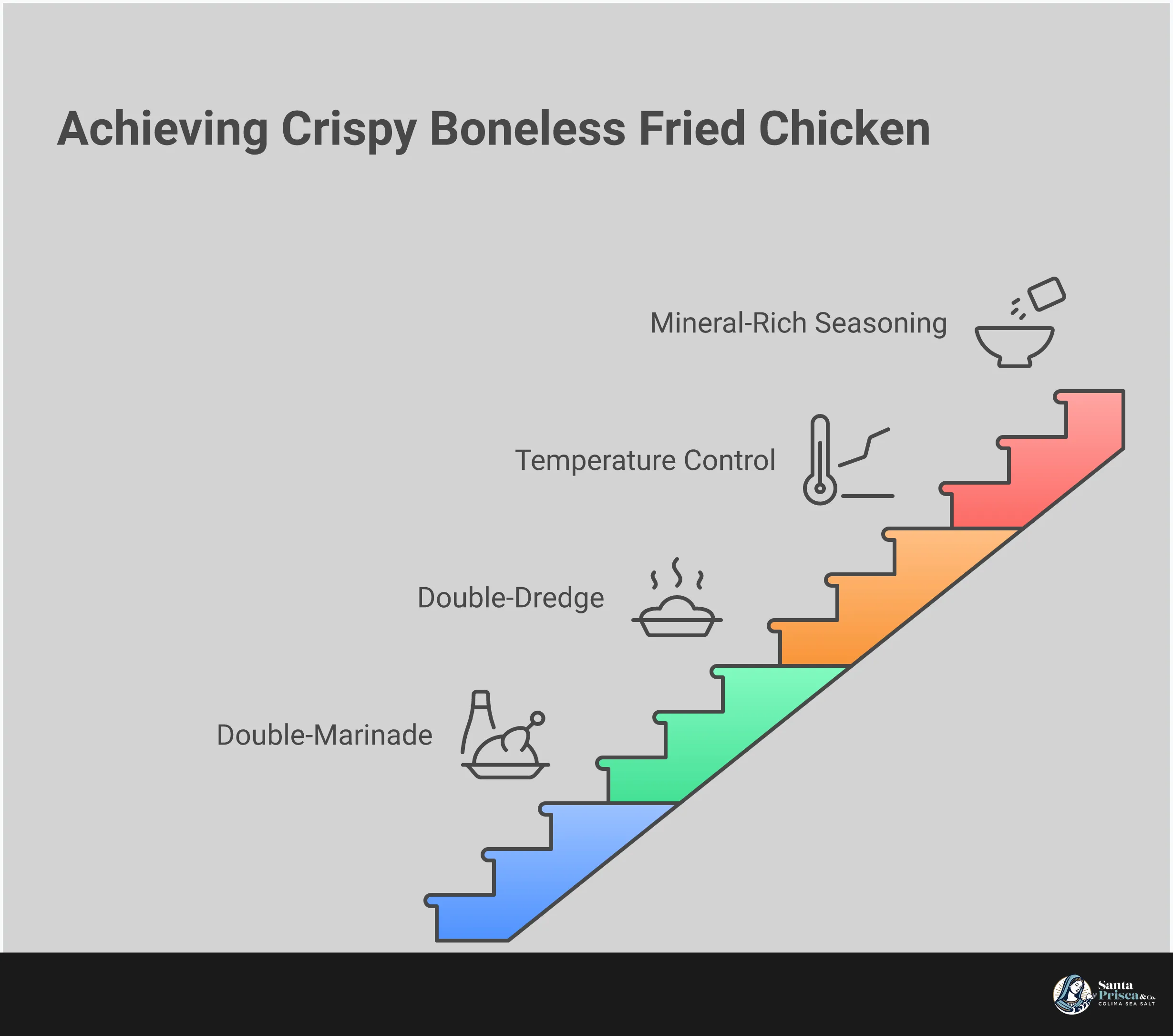
- Build flavor from the inside out: The secret to succulent fried chicken is a two-step marinade. A mineral-rich brine with unrefined sea salt seasons the meat deeply, while a buttermilk soak ensures it stays incredibly tender through frying.
- Create a shatteringly crisp crust: Use the double-dredge method—dipping from flour to marinade and back to flour—to build a substantial, craggy coating that holds onto seasoning and becomes perfectly crunchy.
- Control the heat for a golden finish: The key to a non-greasy, perfectly cooked piece is steady oil temperature. Fry in small batches between 350–375°F and use a thermometer to ensure a flawless result every time.
What Makes Fried Chicken Truly Exceptional?
There’s something deeply satisfying about truly great fried chicken. It’s a dish that feels like a celebration, a comfort, and a craft all at once. But what separates a memorable bite from a forgettable one? It’s not a single secret, but a thoughtful combination of technique and intention, starting long before the chicken ever meets the oil.
Exceptional fried chicken is a balance of contrasts. It’s the shatteringly crisp crust giving way to tender, juicy meat. It’s the savory, well-seasoned coating that complements, rather than overpowers, the rich flavor of the chicken itself. Achieving this harmony comes down to three core elements: a perfectly engineered crust, the right cut of chicken, and seasoning that brings the entire dish to life. When you pay attention to these details, you’re not just frying chicken; you’re creating an experience.
The Art of the Crispy Crust
The perfect crust is an auditory experience as much as a textural one—that signature crunch is everything. The foundation for this begins with a buttermilk marinade. This gentle, acidic bath tenderizes the meat, ensuring it stays succulent and flavorful through the cooking process. For the coating itself, a simple blend of flour, cornstarch, and a touch of baking powder creates an extra crispy texture that’s light, airy, and golden. It’s a simple technique that makes a world of difference, turning a good crust into an unforgettable one.
Why We Love Boneless Chicken
While bone-in chicken has its place, boneless thighs are a beautiful choice for frying. They are wonderfully forgiving and packed with a richer flavor than leaner cuts. Because of their higher fat content, they stay juicier and more tender during frying, making every bite consistently delicious. This choice simplifies the eating experience, too, allowing you to focus purely on the delightful contrast between the crisp coating and the succulent meat inside. It’s a small shift that yields a truly satisfying result.
The Difference Quality Ingredients Make
Seasoning is the soul of fried chicken, and the salt you choose matters immensely. While any salt will add flavor, a quality unrefined sea salt brings so much more to the table. Unlike refined table salt, which is stripped of its natural complexity, unrefined salt retains a wealth of trace minerals. These essential minerals don’t just support wellness and hydration; they add a subtle, clean depth of flavor that you can’t get anywhere else. It’s a simple swap that honors the ingredients and brings a burst of pure, resonant flavor to your final dish.
Gather Your Foundational Ingredients
A truly memorable meal begins long before the stove is lit. It starts with the simple, intentional act of gathering your ingredients. The quality of each component—from the chicken to the salt—lays the groundwork for a dish that not only tastes incredible but also feels nourishing. Let’s walk through what you’ll need.
How to Select Your Chicken
For this recipe, I always reach for boneless, skinless chicken thighs. They are wonderfully forgiving and remain incredibly juicy and tender through the frying process. Their rich flavor provides the perfect canvas for a crispy, seasoned coating. When you choose thighs, you’re setting yourself up for a succulent, flavorful result every single time.
Building the Perfect Coating
The secret to a shatteringly crisp crust lies in a simple blend of pantry staples. A combination of all-purpose flour, cornstarch, and a touch of baking powder creates a coating that is both substantial and light. The cornstarch is key for that signature crunch, while the baking powder helps it puff ever so slightly. When you dredge the chicken, press the flour mixture firmly onto every surface to ensure it adheres beautifully.
Why Unrefined Sea Salt is Key
Salt is the soul of fried chicken, and not all salt is created equal. Using an unrefined sea salt transforms the flavor from simply salty to deeply savory. The hand-harvested crystals of our Colima Sea Salt carry a subtle mineral complexity that enhances the richness of the chicken and balances the spices in the coating. This isn't just about seasoning; it's about adding a layer of pure, clean flavor that you can truly taste.
Choosing the Right Frying Oil
You’ll want a neutral oil with a high smoke point, like canola, peanut, or vegetable oil. The most important factor here is temperature. Maintaining your oil between 350–375°F is crucial for cooking the chicken through while achieving a golden, crispy exterior without it becoming greasy. I highly recommend using a kitchen thermometer to keep the temperature steady.
Your Essential Kitchen Tools
A heavy-bottomed skillet is your best friend for frying. A well-seasoned cast iron skillet is the traditional choice because it holds and distributes heat so evenly, giving you that perfect, uniform crust. A pan that is at least 10 inches wide with straight sides works beautifully. Try to avoid nonstick pans, as they aren’t designed for the high, sustained heat needed for deep frying.
Prepare the Marinade
This is where the real magic begins. Before the sizzle of the oil or the crunch of the crust, the marinade is a quiet, patient step that builds a deep foundation of flavor. It’s a simple ritual that transforms good chicken into something truly memorable.
Taking the time to marinate is an act of intention, ensuring every bite is juicy, tender, and seasoned from the inside out. This process is less about a rigid recipe and more about a technique that will serve you well in all your kitchen endeavors.
Create a Mineral-Rich Brine
A brine is the secret to exceptionally moist fried chicken. It’s a simple solution of salt and water that works wonders on the texture and taste of the meat. We begin by creating a mineral-rich bath for our chicken.
For every quart of water, dissolve about three tablespoons of unrefined Colima Sea Salt. The coarse, sun-dried crystals dissolve beautifully, infusing the water with a complex mineral depth that goes far beyond simple saltiness. This brine doesn’t just season the chicken; it helps the muscle fibers retain moisture, promising a succulent result after frying.
Our Favorite Spice Combinations
Once your brine is ready, it’s time to layer in the aromatics. This is your chance to be creative, but a simple, balanced blend often yields the most delicious results.
We love a classic combination of smoked paprika for warmth and color, garlic powder for a savory backbone, and freshly cracked black pepper for a gentle heat. These spices harmonize with the clean, bright flavor of the sea salt without overpowering the chicken itself. Feel free to add a pinch of cayenne for a little kick or some dried herbs for an earthy note.
How Long to Marinate Your Chicken
Patience is a key ingredient here. The salt in the brine needs time to work, tenderizing the meat by gently dissolving some of the proteins. This process allows the flavors of your spice blend to penetrate deep into the chicken, not just sit on the surface.
For boneless pieces, we recommend marinating for at least four hours, but leaving them overnight in the refrigerator will give you an even more profound flavor and wonderfully tender texture. This slow infusion is a testament to the beauty of unhurried cooking.
Prepare Your Chicken for Frying
When you’re ready to move forward, it’s time to introduce the final element of your marinade: buttermilk. Remove the chicken from the brine and pat it dry before submerging it in a bath of buttermilk seasoned with another dash of your chosen spices.
The slight acidity of the buttermilk works alongside the salt to further tenderize the chicken, creating an exceptionally soft texture. This creamy coating also gives the flour something to cling to, which is essential for building that perfectly crisp, golden-brown crust we’re all after.
Achieve the Crispiest Coating
The secret to truly memorable fried chicken lies in its texture—that perfect, audible crunch giving way to tender, juicy meat. It’s a moment of pure satisfaction that feels both comforting and special. Achieving this at home isn’t about complicated techniques or professional equipment. Instead, it’s about a few intentional steps that honor the ingredients and the process, turning a simple meal into a beautiful experience. When you focus on building layers of flavor and texture, you create a dish that resonates long after the last bite. It’s this mindful approach that transforms good fried chicken into something exceptional.
The Double-Dredge Method Explained
For a substantial, craggy crust that holds onto flavor, we turn to the double-dredge method. After its first dip in seasoned flour, return the chicken to the wet marinade for just a moment before dredging it in the flour a second time. Gently press the flour onto the surface to create a thick, even layer that will become incredibly crisp in the hot oil. This simple two-step process builds the foundation for an exceptionally crunchy coating that won’t fall off, ensuring every piece is perfectly encased in a golden, flavorful crust.
Balance Your Seasoning with Sea Salt
The seasoning in your flour is just as important as the chicken itself, and this is where a quality salt truly shines. Using an unrefined sea salt introduces a subtle, mineral complexity that you just don’t get from processed table salt. Each sun-dried crystal adds a clean, bright flavor that harmonizes with your spices, ensuring every bite is perfectly seasoned from the outside in. It’s not just about saltiness; it’s about a burst of mineral depth that enhances the entire flavor profile of the dish, making it feel complete and satisfying.
Why You Shouldn't Skip the Resting Period
Patience is a key ingredient in a mindful kitchen. Once your chicken is golden and cooked through, resist the urge to cut into it immediately. Allowing the chicken to rest for a few minutes on a wire rack is a crucial step. This brief resting period lets the juices, which have moved to the surface during cooking, settle back into the meat. This small pause is your final act of preparation, guaranteeing a more succulent, tender, and flavorful result. It’s a simple gesture of respect for the food that pays off beautifully.
Tips for Enhancing Texture
The journey to a great crust begins long before the chicken hits the oil. The marinade does more than just flavor the meat; it also plays a vital role in enhancing the texture. A well-seasoned, slightly acidic marinade—perhaps with a base of buttermilk or yogurt—helps to gently tenderize the chicken. This creates a beautiful, soft contrast with the crunchy exterior you worked to build. This thoughtful preparation ensures the final dish is a complete sensory experience, with layers of flavor and texture that delight with every bite.
Fry Your Chicken Like a Pro
This is where the magic happens. Frying chicken is a sensory experience—the sound of the sizzle, the aroma filling your kitchen. With a few key techniques, you can move from simply cooking chicken to crafting a truly memorable meal. It’s less about a rigid set of rules and more about understanding the rhythm of the process. Let’s walk through the steps to achieve that perfect, golden-brown crust and juicy interior every single time.
Control Your Oil Temperature
The secret to a crust that’s crispy, not greasy, is maintaining the right oil temperature. You’re aiming for a steady 350–375°F. A kitchen thermometer is your best friend here, taking all the guesswork out of the equation. When the oil is in this sweet spot, the coating instantly crisps up, creating a seal that locks in the chicken’s natural juices. It’s the difference between a heavy, oil-logged piece and one that’s light and shatteringly crisp.
How to Fry in Batches
It can be tempting to fill the pan, but giving your chicken some space is an act of patience that pays off. Frying in small batches, just two or three pieces at a time, helps the oil maintain its temperature. Overcrowding causes the temperature to drop, which can lead to a soggy crust. Let each piece have its moment in the hot oil, allowing it to cook evenly and develop that beautiful, uniform crunch we’re all after.
Know When It's Perfectly Cooked
Confidence in the kitchen comes from knowing, not guessing. The most reliable way to tell if your chicken is ready is to check its internal temperature. Poultry is safely cooked when it reaches 165°F. Using a simple meat thermometer ensures your chicken is not only safe to enjoy but also perfectly tender and juicy on the inside. No more second-guessing or cutting into a piece to check.
Common Frying Mistakes to Avoid
Let’s talk about two common impulses we need to resist. First, avoid the urge to move the chicken around once you’ve placed it in the pan. Let it be for the first five minutes or so. This quiet, undisturbed time is crucial for the crust to set and turn a deep golden brown. Second, be mindful not to overcook it. This is where your thermometer comes in handy again, helping you pull the chicken at the exact moment it’s done.
The Final Touch of Seasoning
This last step is a small ritual that makes all the difference. As soon as you lift the glistening chicken from the oil, place it on a wire rack and immediately sprinkle it with your reserved spice blend and a generous pinch of flaky sea salt. The heat helps the seasoning adhere, and a quality salt like our Colima Sea Salt adds a final burst of mineral depth and a delicate, crisp texture that lingers on the tongue. It’s the finishing touch that truly honors the entire dish.
Serve and Store Your Creation
The moment your chicken emerges from the hot oil—golden, fragrant, and audibly crisp—is a true kitchen victory. But the care you give it after this moment is just as crucial. Serving and storing your fried chicken with intention ensures that every single bite is as memorable as the first. It’s about honoring the process and the beautiful ingredients you’ve used. A little attention to detail here preserves the texture and flavor you worked so hard to create, whether you’re enjoying it immediately or saving some for later.
How to Store Leftovers
Should you have any golden pieces remaining, storing them properly will preserve their delicious character. First, allow the chicken to cool completely to room temperature, which prevents condensation from forming and softening the coating. Once cool, place the pieces in an airtight container and keep them in the refrigerator for up to four days. For longer storage, you can freeze the chicken for up to four months, ready to be revived for a future meal.
Keep It Crispy
The secret to maintaining that incredible crunch is to let the chicken breathe right after frying. Instead of placing it on paper towels, which can trap steam and create a soggy bottom, transfer the freshly fried pieces to a wire rack. This simple step allows air to circulate all around the chicken, wicking away excess oil while keeping the coating perfectly crisp and light. You’ll hear the difference.
The Best Way to Reheat Fried Chicken
When you’re ready to enjoy your leftovers, skip the microwave. It will undo all your hard work, leaving the chicken rubbery and sad. To revive that perfect crunch, turn to your oven or air fryer. Gently reheat the chicken in an oven preheated to 350°F for about 15 minutes, or until warmed through. An air fryer also works beautifully, restoring the crispiness in just a few minutes at 375°F. Both methods give the coating a chance to re-crisp, bringing the chicken back to its original glory.
Tips for Making It Ahead
A little forethought can make your cooking process feel more relaxed and intentional. The buttermilk marinade is the perfect step to prepare in advance. You can let your chicken rest in its flavorful, tenderizing bath for at least 30 minutes or for up to six hours in the refrigerator. This not only deepens the flavor but also ensures the meat becomes exceptionally juicy. When you’re ready to cook, you can simply move on to the coating and frying steps.
Ways to Make This Recipe Your Own
A good recipe is like a story that’s waiting for your personal touch. Think of this guide as the foundation—a beautiful, reliable starting point for you to build upon. The real joy in cooking comes from making a dish that feels uniquely yours. With a few simple adjustments, you can honor a family tradition, explore a new flavor profile, or simply create the perfect texture you’ve been dreaming of.
This is your invitation to play in the kitchen. Trust your palate, get curious about different ingredients, and don’t be afraid to experiment. Whether you’re craving the comforting flavors of the American South or a vibrant international twist, this fried chicken is ready to adapt. Let’s explore a few ways to infuse your own spirit into this classic dish, turning a simple meal into a memorable experience.
For a Classic Southern Flavor
To capture the heart of Southern cooking, consider swapping chicken breasts for boneless, skinless thighs. Their richer flavor and tender texture hold up beautifully to frying, resulting in an exceptionally juicy bite. This small change brings a depth and comfort that feels deeply traditional. For that signature tang, a buttermilk marinade is essential. It not only tenderizes the chicken but also provides the perfect base for a thick, craggy crust that crackles with every bite, echoing generations of cherished family recipes.
Explore International Profiles
Let your spice cabinet be your guide to a world of flavor. This recipe is a perfect canvas for culinary exploration. For a taste of Mexico, try adding smoked paprika, cumin, and a pinch of chipotle powder to your flour dredge. A blend of ginger, garlic, and five-spice powder can transport you to Asia. You can even experiment with different marinades, infusing the chicken with herbs and spices from your favorite cuisines before it ever touches the flour. It’s a simple way to make this dish new and exciting every time.
Create a Signature Coating
The secret to an unforgettable crust is all in the technique. For a truly substantial, crunchy coating, try the double-dredge method. After its first dip in the seasoned flour, return the chicken to the wet marinade for a moment, then press it firmly back into the flour. This creates layers and encourages those wonderful, craggy bits that hold so much flavor. Be generous with our fine-grain Colima Sea Salt in your flour mixture—its clean, mineral depth seasons the coating from the inside out.
What to Serve on the Side
A beautiful meal is all about balance. Pair your crispy, savory chicken with sides that complement its richness. For a classic approach, you can’t go wrong with creamy coleslaw and warm, flaky biscuits. If you’re craving something lighter, a bright corn salad with fresh herbs or simple roasted asparagus can provide a lovely contrast. Building a plate with a variety of colors and textures makes the entire experience more satisfying. Explore some wonderful side dishes for fried chicken to find your perfect pairing.
Related Articles
- The Ultimate Fried Chicken Breast Recipe – Santa Prisca & Co
- 7 Secrets for the Best Crispy Chicken Recipes – Santa Prisca & Co
- 5 Secrets for the Perfect Crunchy Chicken Recipe – Santa Prisca & Co
- The Ultimate Guide to Crispy Chicken Breast Recipes – Santa Prisca & Co
Frequently Asked Questions
What makes unrefined sea salt different from regular table salt for a recipe like this? Think of it as the difference between a single note and a full chord. Refined table salt is just that—a single note of pure saltiness. An unrefined sea salt, like our Colima salt, brings a subtle mineral complexity to the dish. This doesn't make the chicken taste "healthier," but it does create a cleaner, more resonant flavor that enhances the richness of the meat and balances the spices in the coating.
Can I make this recipe without buttermilk? Absolutely. While buttermilk is wonderful for its gentle acidity that tenderizes the chicken, you can create a similar effect at home. Simply add one tablespoon of lemon juice or white vinegar to one cup of regular milk and let it sit for about ten minutes. This creates a great substitute that will help tenderize the meat and give the flour coating something to cling to.
You recommend boneless thighs, but can I use bone-in chicken? Of course. Bone-in chicken can be incredibly flavorful, and the principles of this recipe still apply. The main adjustment you'll need to make is with the cooking time. Bone-in pieces are larger and denser, so they will require a longer, slower fry to ensure they cook through to the bone. Your meat thermometer is essential here—just make sure the thickest part of the chicken reaches 165°F.
Can I use an air fryer instead of deep frying? You can certainly use an air fryer for a lighter version. While you won't achieve that same shatteringly crisp crust that comes from deep frying, you can still get a delicious result. After coating the chicken, give it a light spray with a neutral oil before placing it in the air fryer basket. This will help the coating brown and crisp up as it cooks.
My crust keeps falling off. What am I doing wrong? This is a common frustration, but it's usually an easy fix. The key is creating a good bond between the chicken, the marinade, and the flour. After the chicken comes out of its buttermilk bath, don't pat it dry. Let that creamy coating act as a glue for the flour. When you dredge the chicken, press the flour mixture firmly onto every surface. This ensures the coating adheres properly and creates that beautiful, craggy crust that stays put.