
Sea Salt Without Iodine: A Guide to Purity & Taste
Written By Santa Prisca & Co Staff Last updated on
Before it reaches your kitchen, a truly artisanal salt begins a patient journey. It starts as pure ocean water, resting in shallow pools under a warm sun. As the water slowly evaporates, it leaves behind a delicate crust of beautiful, mineral-rich crystals. This ancient, gentle process is how a pure sea salt without iodine is born. Unlike heavily processed table salt, which is often stripped of its natural minerals only to have additives put back in, this salt is left just as nature intended. It carries a whisper of its origin in every flake, connecting you to the place it came from. Choosing this kind of salt is about honoring tradition and appreciating an ingredient in its most elemental form.
Key Takeaways
- Prioritize pure taste and texture: Choosing an iodine-free sea salt is a culinary decision that honors the true flavor of your ingredients. Its clean profile and varied crystal structure give you precise control, adding a delicate crunch and mineral depth without any chemical aftertaste.
- Embrace purity for better results: The true advantage of unrefined sea salt lies in its simplicity. Free from additives and anti-caking agents, it is the ideal choice for pickling and fermenting, ensuring your creations are clear, crisp, and vibrant.
- Balance your pantry with intention: While unrefined salt is perfect for cooking, remember that iodine is an essential nutrient. If you choose iodine-free salt, simply be mindful to include iodine-rich whole foods like fish, seaweed, or dairy in your diet to support your overall well-being.
What Is Iodine-Free Sea Salt?
Have you ever noticed how some salts taste sharp and almost chemical, while others have a soft, complex flavor that makes food sing? The difference often comes down to one simple thing: what’s been added, and what’s been left in its natural state. Iodine-free sea salt is exactly what it sounds like—salt harvested from the sea, without any added iodine.
It begins its life as pure ocean water, which is gently evaporated by the sun. This ancient, patient process leaves behind beautiful salt crystals, rich with the trace minerals gifted by the ocean. Unlike standard table salt, which is often heavily processed and then fortified with iodine, unrefined sea salt is left just as nature intended. This purity is why so many cooks and health-conscious eaters prefer it. Its clean taste and varied textures, from fine grains to crisp flakes, allow the true flavor of your ingredients to shine through.
The Natural Journey from Sea to Table
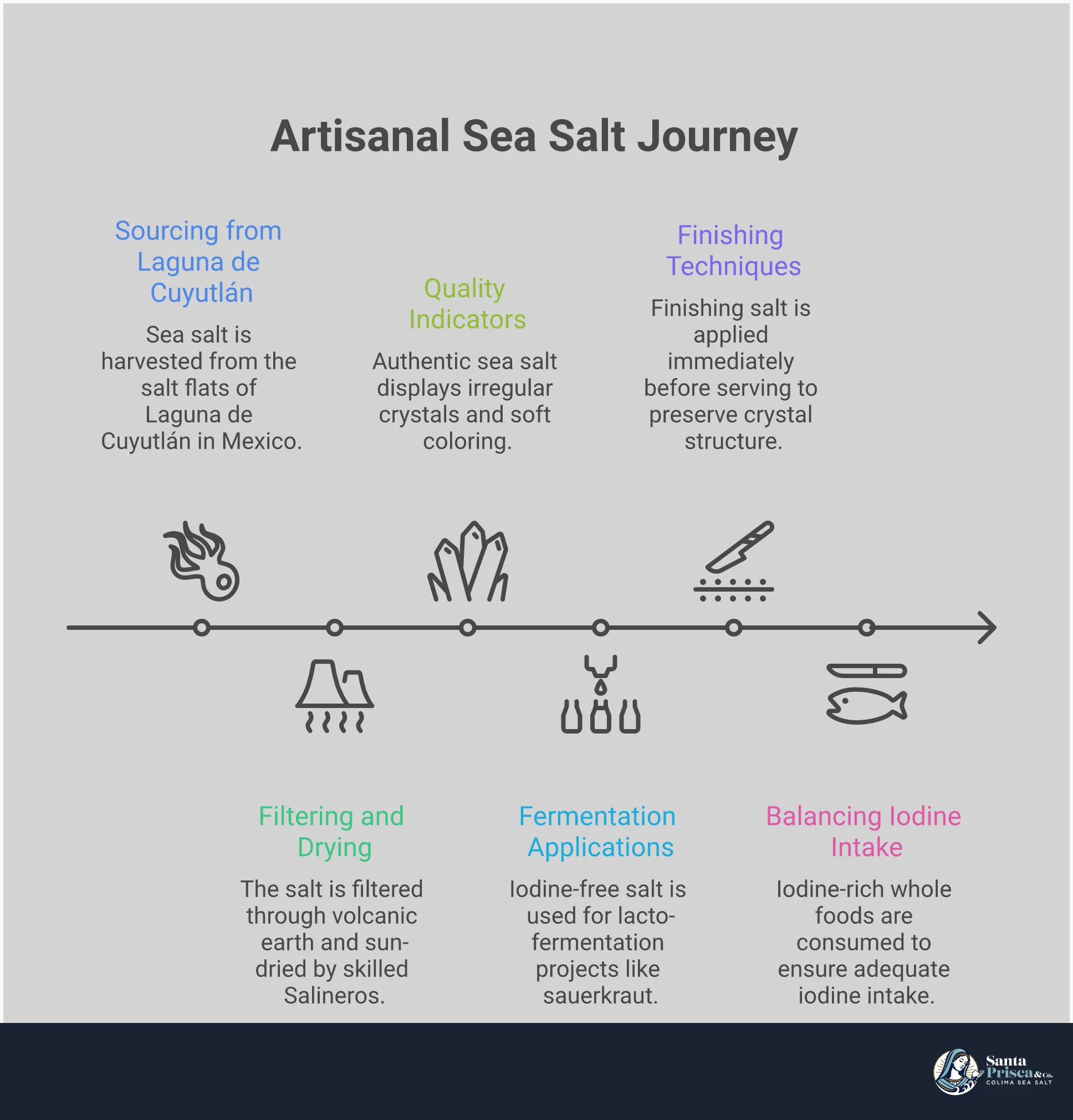
Imagine salt flats shimmering under the sun, where seawater rests in shallow pools. As the water slowly disappears, it reveals a delicate crust of salt crystals. This is where the magic happens. Artisanal producers, often using methods passed down through generations, carefully harvest these crystals by hand. This gentle approach ensures the salt retains its natural mineral complexity and pure flavor.
Our Colima Sea Salt follows this timeless journey. It’s a salt that contains only what is natural, carrying a whisper of its volcanic and oceanic origins. This is the kind of salt that doesn’t just season your food; it connects you to the place it came from.
Iodized vs. Non-Iodized Salt: What's the Difference?
The primary difference is simple: iodized salt is fortified with iodine, an essential mineral, while non-iodized salt is not. Most common table salts are iodized. On the other hand, salts like pure sea salt, kosher salt, or Himalayan pink salt are typically non-iodized. These are often chosen by chefs and home cooks for their unique textures and flavors, which can be muted by the slightly metallic taste of added iodine. Choosing a non-iodized salt is a culinary decision, one that prioritizes the pure, unadulterated taste of the salt itself.
A Brief History of Why Iodine Was Added to Salt
So, why was iodine added to salt in the first place? It was a brilliant public health initiative from the 1920s. At the time, iodine deficiency was a widespread problem, leading to serious health issues. Fortifying a staple like salt was an incredibly effective way to ensure entire populations received this crucial nutrient. And it worked. The introduction of iodized salt has greatly reduced iodine deficiency around the world. Today, with access to a wider variety of foods, many of us get enough iodine from other natural sources, which we’ll explore a bit later.
Why Chefs Prefer Iodine-Free Sea Salt
Walk into a professional kitchen, and you’ll likely find a container of pure, unrefined sea salt within arm’s reach. For chefs, salt is more than just a seasoning; it’s a fundamental ingredient that can transform a dish. They choose iodine-free sea salt not out of habit, but for its pure flavor, its unique texture, and the way it interacts with other ingredients. The absence of additives allows the salt’s natural character to shine, giving chefs precise control over the final taste and texture of their creations. This choice is about honoring the integrity of the food, from a simple garden tomato to a slow-simmered stew.
Experience a Cleaner, Purer Flavor
One of the most significant reasons chefs reach for iodine-free salt is its clean, unadulterated taste. Iodized table salt can sometimes carry a faint metallic or chemical bitterness that can subtly interfere with the delicate flavors of your food. Pure sea salt, on the other hand, offers a taste that is true to its origin. When you taste a crystal of Colima Sea Salt, you’re experiencing the essence of the ocean, filtered through volcanic earth and dried by the sun. This process preserves trace minerals that contribute to a more complex and nuanced flavor profile, one that enhances food without overpowering it. It allows the natural sweetness of a carrot or the richness of a steak to come forward, just as nature intended.
Perfect Your Pickles and Ferments
If you’ve ever ventured into the world of pickling or fermenting, you know that the type of salt you use is critical. This is where iodine-free sea salt truly proves its worth. Iodine and the anti-caking agents in table salt can disrupt the fermentation process. They can inhibit the growth of beneficial bacteria, leading to cloudy brine, mushy vegetables, and off-flavors. Using a pure, unrefined sea salt ensures your ferments are clear, crisp, and vibrant. It provides the salinity needed to preserve the food and ward off harmful microbes without interfering with the magic of lacto-fermentation. This simple switch is key to achieving consistently delicious results when you ferment vegetables at home.
The Professional's Secret to Balanced Seasoning
Beyond flavor, chefs value the texture and structure of artisanal sea salt. Unlike the uniform, fine grains of table salt, unrefined sea salt often has larger, more irregular crystals. This variation isn't just beautiful; it’s functional. The coarse, flaky texture gives chefs incredible control over seasoning. When you pinch the salt, you can feel the crystals and distribute them with intention. This is especially important for finishing dishes, where a final sprinkle adds a delightful crunch and a burst of mineral depth that lingers on the tongue. Learning about the different types of salt and their specific uses is a simple way to bring more intention and precision into your own kitchen.
A Gentle Approach to Piercing Aftercare
The practice of intentional living doesn’t stop at the kitchen's edge. When we choose to nourish our bodies with pure, unrefined ingredients, that same mindfulness naturally extends to how we care for ourselves in other ways. It’s a philosophy rooted in simplicity and respect for the body’s innate wisdom. So, it might be surprising to learn that one of the most trusted ingredients in a conscious kitchen, pure sea salt, also has a time-honored place in gentle wellness rituals, like aftercare for a new piercing.
This isn’t about a quick fix or a miracle solution. Instead, it’s about returning to a simple, clean ingredient that supports the body’s natural healing processes. Using a pure saline solution is a gentle way to keep a new piercing clean without introducing the harsh chemicals or unnecessary additives found in many commercial products. When you choose a salt with nothing to hide, one that is free from anti-caking agents and other additives, you can trust it in these quiet moments of care. It becomes a small ritual that honors your body with the same intention you bring to your food, connecting your wellness practices back to the purity of the earth.
Why Purity Matters for Healing
When your skin is healing, the last thing you want to introduce is anything that could cause irritation. This is why purity is so essential. Many common table salts contain iodine and anti-caking agents, which can be disruptive to the delicate process of healing a new piercing. A pure, unrefined sea salt, like our Colima Sea Salt, contains only the minerals left behind by evaporated sea water, with no additives to get in the way.
Dermatologists often recommend non-iodized sea salt dissolved in warm water for this very reason. Its clean, simple composition helps cleanse the area without causing a reaction or stripping the skin. Choosing a salt that is naturally harvested and free from modern processing ensures you are using a truly gentle ingredient for this sensitive task, allowing your body to heal peacefully.
How to Create a Simple Saline Soak
Creating a saline soak at home is a simple act of self-care. This gentle solution can be used to clean the area around your piercing, helping to soothe and support the healing process. All you need is pure, non-iodized sea salt and warm, distilled water. Using distilled water is an important step, as it’s free from the bacteria and minerals that can sometimes be found in tap water.
To prepare the soak, dissolve about one-quarter teaspoon of fine sea salt into one cup (eight ounces) of warm distilled water. Stir until the salt crystals have completely disappeared. You can apply the solution with a clean cloth or cotton pad, or simply soak the piercing directly in the cup if the location allows. This simple saline solution offers a gentle way to care for your body with an ingredient you can trust.
Important Safety Considerations
While non-iodized sea salt is wonderful for external use, it’s important to remember that it does not contain the iodine your body needs for proper thyroid function. The practice of iodizing salt began as a public health initiative to prevent iodine deficiency, which can cause significant health issues.
If you exclusively use non-iodized salt for both cooking and aftercare, it's essential to ensure you are getting enough iodine from other dietary sources. Foods like fish, seaweed, and dairy products are naturally rich in this vital nutrient. Taking a balanced approach ensures you can enjoy the pure flavor and gentle properties of unrefined sea salt while still meeting your body’s nutritional needs. You can learn more about why iodine is added to salt to make an informed choice for your pantry.
Do You Need Iodine in Your Salt?
The conversation around salt often brings up one key nutrient: iodine. For decades, iodized table salt has been a staple in many kitchens, created to address a widespread health concern. But as we return to more natural, unrefined ingredients, it’s worth asking if we still need iodine added to our salt. The answer isn’t a simple yes or no. It’s about understanding your own body and creating a diet rich in whole foods. Let’s explore this with a sense of gentle curiosity.
Understanding Iodine Deficiency
Iodine is an essential mineral, primarily for supporting a healthy thyroid. When we don't get enough, it can lead to issues like hypothyroidism or a swollen thyroid gland, known as a goiter. This is why the practice of adding iodine to table salt began in the first place, as a simple public health measure to ensure everyone had access to this vital nutrient. Recognizing the importance of iodine is the first step in making a conscious choice about the salt you use. It’s not about fear, but about awareness and honoring what your body needs to function at its best.
Finding Iodine in Your Diet, Naturally
Choosing an unrefined, iodine-free sea salt doesn’t mean you have to miss out on this mineral. Nature provides iodine in abundance if you know where to look. Foods from the sea, like fish (especially cod and tuna) and seaweed, are wonderful sources. You can also find it in dairy products and eggs. By building a colorful plate filled with a variety of whole foods, you can often get all the iodine you need. A well-rounded diet is a beautiful way to source essential nutrients naturally, allowing you to choose salt for its purity and flavor.
Debunking Common Myths About Sea Salt
It’s a common belief that sea salt is inherently "healthier" than table salt. While unrefined sea salt, like our Colima Sea Salt, contains a beautiful spectrum of trace minerals, the amounts are quite small. The real difference isn't about getting a significant mineral supplement from your salt. Instead, the choice is about purity, flavor, and texture. We choose unrefined sea salt because it’s free from anti-caking agents and additives, offering a clean, crisp taste that honors the food it seasons. It’s a culinary choice, not a magic health solution.
A Balanced Approach to Your Iodine Intake
So, should you use iodine-free sea salt? If your diet is rich in iodine from other sources, you can feel confident choosing a pure, unrefined salt for its incredible flavor and texture. It’s about creating a mindful balance that works for you. If you have any concerns about your thyroid health or mineral intake, the best path forward is always to consult a healthcare professional. They can offer personalized guidance. Making intentional choices in the kitchen is an act of self-care, and that includes choosing ingredients that not only taste good but also support your overall well-being.
How to Choose a High-Quality Sea Salt
Walking down the grocery aisle, you’ll find a dizzying array of salts. But not all are created equal. Choosing a high-quality sea salt is about more than just seasoning; it’s about connecting with an ingredient in its purest form. When you know what to look for, you can select a salt that brings a clean flavor, a satisfying texture, and a story of its origin right to your kitchen table. Here are a few simple things to keep in mind.
How to Read the Label
The label is your first clue to a salt’s quality. Look for the words “unrefined” and “non-iodized.” Non-iodized salt simply means no iodine has been added, allowing the salt’s natural character to shine through without the slightly metallic taste iodine can impart.
Also, check the ingredient list. It should be very short, ideally just one word: sea salt. If you see anti-caking agents or other additives, it’s a sign the salt has been heavily processed. Choosing an unrefined, additive-free salt ensures you’re getting nothing but pure flavor, straight from the source.
What to Look For: Color, Texture, and Crystal
Next, trust your eyes. A truly natural sea salt is rarely pure, brilliant white. That bright white color often comes from bleaching and stripping away minerals. Instead, look for a soft, off-white color or even a subtle grey hue, which indicates the presence of trace minerals.
The texture is just as important. Unlike the uniform, tiny cubes of table salt, artisanal sea salt has irregular, varied crystals. Our Colima Sea Salt, for example, has a delicate, flaky structure. This kind of texture doesn’t just dissolve instantly; it offers a gentle crunch and a burst of clean salinity, making it perfect for finishing a dish.
The Importance of Mineral Content
That beautiful, imperfect color points to one of sea salt’s greatest qualities: its mineral content. Unrefined sea salt naturally contains trace minerals like magnesium, calcium, and potassium, which are left behind during the evaporation process. While you’ll get more of these minerals from a balanced diet, their presence in salt is a sign of its purity and minimal processing.
These minerals do more than just signal quality; they contribute to a more complex and nuanced flavor. They round out the saltiness, giving it a depth that you just don’t find in processed salt. When you choose a mineral-rich salt, you’re choosing an ingredient that adds a layer of character to everything you cook. Explore our collection of salts to taste the difference for yourself.
How to Use Iodine-Free Sea Salt in Your Kitchen
Bringing a high-quality, unrefined sea salt into your kitchen is an invitation to cook with more intention. Its pure taste and rich mineral texture can transform simple ingredients and connect you more deeply to your food. From the final, delicate sprinkle on a finished dish to its foundational role in preserving and baking, iodine-free sea salt is a versatile and essential element for any thoughtful cook.
As a Finishing Salt to Add Texture and Flavor
A finishing salt is the final touch, the last layer of flavor and texture you add to a dish just before it reaches the table. This is where a pure, iodine-free sea salt truly shines. Its clean, bright flavor enhances the food without overpowering it or adding any chemical aftertaste. The varied crystal size, from a fine grain to a crisp flake, adds a delicate crunch that can transform a simple salad, a perfectly seared steak, or even a rich chocolate brownie. Sprinkle our Colima Sea Salt over ripe avocado or sliced tomatoes to experience how its subtle mineral depth makes fresh ingredients sing.
For Brining, Pickling, and Preserving
When you preserve food, you are capturing a moment in time. The last thing you want is an ingredient that interferes with that process. Iodized salt contains additives that can turn your pickles a cloudy, unappealing color and impart a bitter flavor. A pure, unrefined sea salt is the ideal choice for any brining or pickling recipe. It dissolves cleanly and allows the true taste of the vegetables and spices to come through. Using an iodine-free salt ensures your preserved foods are vibrant, crisp, and delicious, honoring the ancient tradition of extending the harvest.
To Support Natural Fermentation
Fermentation is a beautiful, living process, reliant on a healthy balance of beneficial microorganisms. Iodine has antimicrobial properties that can inhibit the growth of the very cultures you need to make sourdough, kimchi, sauerkraut, and other fermented foods. Choosing an iodine-free sea salt is essential for successful and flavorful results. A pure, mineral-rich salt not only supports the fermentation process but also contributes to a more complex and nuanced flavor profile in the final product. It’s a simple switch that respects the delicate science of natural fermentation and nourishes the body from the inside out.
For Baking Flavorful Breads
In baking, salt does more than just add flavor; it plays a crucial structural role by strengthening gluten and controlling yeast activity. The coarse, irregular crystals of a hand-harvested sea salt incorporate beautifully into doughs, creating pockets of flavor and a more satisfying texture. Its pure taste complements the sweetness of the grain, resulting in a more balanced and artisanal loaf. Try sprinkling a few flakes over focaccia or pretzels before baking for a delightful crunch and a burst of clean, saline flavor. When you choose your ingredients with care, even the simplest loaf of bread can become something truly special.
What to Look For in an Artisanal Sea Salt
Choosing a sea salt can feel like a simple grocery run, but when you pause and look closer, you’ll find a world of difference in each crystal. An artisanal sea salt isn’t just a seasoning; it’s a story of place, tradition, and intention. It’s about connecting with your food on a deeper level. When you know what to look for, you can choose a salt that truly nourishes your cooking and your body, turning a simple sprinkle into a meaningful ritual.
A Commitment to Tradition and Purity
True artisanal salt begins with a deep respect for nature’s pace. Look for salts that are hand-harvested and sun-dried, methods that have been passed down through generations. This slow, patient process of evaporating ocean water allows the salt to form naturally, preserving its delicate structure and trace minerals without any need for additives. The result is a salt with a clean, bright flavor that enhances food without overpowering it. You can taste the purity in every flake, a subtle mineral depth that processed salts simply cannot replicate. This commitment to tradition is what makes a product like our Colima Sea Salt so special.
Ethical and Sustainable Sourcing
The story behind your salt matters. When you choose an artisanal salt, you’re often supporting small communities and sustainable practices that protect the earth. Ask yourself: Where does this salt come from? Who harvested it? A brand that shares its sourcing story openly is one that values transparency and connection. Knowing that your salt was gathered with care by salineros, or salt farmers, who honor their local ecosystem creates a beautiful sense of gratitude. It transforms seasoning from a thoughtless habit into a conscious act of appreciation for the people and places that bring nourishment to our tables.
An Unrefined, Additive-Free Promise
An unrefined salt is salt in its most honest form. Look for labels that promise an additive-free product, meaning no anti-caking agents, bleaching chemicals, or synthetic iodine. The salt’s natural color, whether it’s a brilliant white or a soft grey, is a sign of its purity and mineral-rich origins. Its texture might be slightly moist or clump together, which is a beautiful indication that it hasn't been stripped of its natural elements. When you choose an unrefined salt, you’re choosing a product that only contains what is natural, allowing you to season your food with confidence and peace of mind.
Where to Find Quality Iodine-Free Sea Salt
Once you decide to bring pure, unrefined sea salt into your kitchen, the search becomes a beautiful part of the journey. Finding a salt that resonates with your values and palate is a deeply rewarding practice. Thankfully, high-quality, iodine-free sea salt is more accessible than you might think. From the curated shelves of a local gourmet shop to the digital storefronts of artisanal producers, the right salt is waiting to be discovered. Knowing where to look transforms a simple shopping trip into an act of conscious nourishment for yourself, your family, or your customers.
At Gourmet and Specialty Food Shops
Your local gourmet or specialty food shop can be a treasure trove, often curated by passionate owners who prioritize quality and story. When you visit, look for sea salt harvested simply by evaporating ocean water. This traditional method leaves behind natural sodium chloride and a spectrum of trace minerals, without any added iodine. This kind of salt is celebrated for its clean, pure taste, making it a favorite for cooking, baking, and fermenting. Don’t hesitate to ask about the salt’s origin and unique texture, whether it’s a delicate, crisp flake or a fine, crystalline grain.
Directly from Artisanal Producers Online
There is something special about buying directly from the people who harvest the salt. When you shop online from an artisanal producer, you connect with a tradition. Many brands share the story of their salt, highlighting that it is natural, unrefined, and hand-harvested. This is where you’ll find salts with true character, like our own Colima Sea Salt, which is naturally filtered through volcanic earth. Shopping this way allows you to explore different textures, from fine grains for everyday seasoning to coarse crystals for a finishing crunch.
For Your Restaurant or Business
For chefs and business owners, ingredient quality is everything. Sourcing a consistent, high-quality sea salt is fundamental to crafting dishes with balanced, memorable flavor. Using a natural, unrefined sea salt ensures you are seasoning food with pure, mineral-rich crystals, free from additives or anti-caking agents. Many artisanal producers understand the needs of a professional kitchen and offer wholesale inquiries for those committed to exceptional ingredients. Partnering with a producer directly provides your business with a reliable source of salt that honors the care you put into your food.
Related Articles
- Iodized vs. Non-Iodized Salt for Cooking: A Guide – Santa Prisca & Co
- The Top 5 Non-Iodized Salt Brands for 2025 – Santa Prisca & Co
- Sea Salt for Cooking: Types, Benefits, and How to Use It Like a Pro – Santa Prisca & Co
- All Natural Sea Salt: Know the Flavor and Health Benefits – Santa Prisca & Co
Frequently Asked Questions
If I switch to iodine-free sea salt, how do I make sure I'm getting enough iodine? Choosing an unrefined sea salt is a wonderful step for your kitchen, and it’s wise to think about your iodine intake. The key is to look at your diet as a whole. Many whole foods are naturally rich in this essential mineral, especially anything from the sea like fish and seaweed. Dairy products and eggs are also good sources. By focusing on a varied, colorful diet, you can easily meet your body’s needs while enjoying the pure flavor of an iodine-free salt.
Is unrefined sea salt actually healthier than regular table salt? While unrefined sea salt does contain trace minerals that are stripped from table salt, the amounts are quite small. The real difference is less about a health advantage and more about purity and culinary quality. We choose unrefined sea salt because it’s free from additives like anti-caking agents and offers a cleaner, more complex flavor and a better texture. It’s about honoring your food with a pure, unadulterated ingredient.
Why is iodine-free salt better for pickling and fermenting? This is such a great question because it gets to the heart of how ingredients interact. The additives in iodized table salt, including iodine itself, can interfere with the fermentation process. They can slow the growth of the beneficial bacteria you need for a successful ferment, which can result in cloudy brine and soft vegetables. Using a pure, unrefined sea salt ensures a crisp, clear, and flavorful result every time.
Can I use artisanal sea salt for all my cooking, or is it just for finishing dishes? Artisanal sea salt is fantastic as a finishing touch because its flaky texture adds a wonderful crunch. However, its versatility is one of its best qualities. The clean, pure flavor makes it perfect for all kinds of cooking, from seasoning soups and sauces to baking bread and brining meats. Think of it as your go-to salt for any application where you want true, unadulterated flavor to shine.
What should I look for on the label when buying sea salt? The label tells you so much about the salt’s journey. Look for simple, direct language like “unrefined,” “hand-harvested,” and “additive-free.” The ingredient list should be as short as possible, ideally just reading “sea salt.” A high-quality salt doesn’t need anything else. Also, don’t be afraid of a salt that isn’t perfectly white; a soft, off-white color is often a beautiful sign that its natural trace minerals are still present.