
The Home Cook's Guide to Artisanal Sea Salt
Written By Santa Prisca & Co Staff Last updated on
We often think of salt in terms of what to limit, not what to embrace. But what if the salt in your pantry could be a source of genuine nourishment? The conversation changes completely when we talk about unrefined, mineral-rich artisanal sea salt. Unlike processed table salt, which is stripped of its natural goodness, this salt retains a spectrum of essential minerals your body needs for hydration and balance. It’s a simple shift in perspective: from a simple seasoning to a vital ingredient for well-being. This is about choosing ingredients with intention and understanding how they can support a more vibrant, mindful way of living.
Key Takeaways
- Choose unrefined salt for better flavor and minerals: Unlike processed table salt, artisanal sea salt is hand-harvested, allowing it to retain natural minerals that create a more complex, nuanced taste for your food.
- Use timing and texture to your advantage: Sprinkle finishing salts on dishes just before serving for a bright, crunchy element, and build layers of flavor by salting at different points throughout the cooking process.
- Source your salt with intention: A quality producer will be transparent about their salt's origin and harvesting methods; look for labels that specify "unrefined" and "hand-harvested," and ensure the only ingredient is sea salt.
What Makes Sea Salt "Artisanal"?
When we think of salt, most of us picture the fine, uniform white grains in a standard shaker. But artisanal sea salt is something else entirely. It’s a world away from the processed salt found in most kitchens. The term "artisanal" speaks to a deep connection between people, place, and process. It signifies a salt that is harvested with intention, minimally handled, and deeply expressive of its origin.
Unlike industrial salts that are often stripped of their natural qualities, artisanal salts like our Colima Sea Salt are cared for from start to finish. This careful approach ensures they retain their unique flavors, textures, and a wealth of trace minerals. It’s the difference between a single, loud note and a rich, complex chord. Choosing an artisanal salt is about inviting a story into your kitchen—one of tradition, patience, and the pure essence of the sea.
The Tradition of Hand-Harvesting
The heart of artisanal salt lies in its human touch. For generations, salt farmers, or salineros, have practiced the art of hand-harvesting, a tradition passed down through families. This method is a slow, patient dance with nature. In places like the pristine coastal region of Colima, Mexico, salineros carefully rake the delicate salt crystals from the surface of the water, allowing them to dry naturally under the sun. This gentle process preserves the salt’s intricate crystal structure and locks in the subtle flavors of the local environment. It’s a practice that honors the rhythm of the seasons and the wisdom of those who came before.
Artisanal Salt vs. Table Salt: What's the Difference?
The distinction between artisanal salt and common table salt is stark. Table salt is heavily processed, heated to extreme temperatures, and stripped of the trace minerals that give sea salt its character. What’s left is almost pure sodium chloride, often with added anti-caking agents and iodine. Artisanal sea salt, on the other hand, is far less processed. It retains a beautiful spectrum of minerals that influence its flavor and texture. This means you can often use less salt to achieve a more profound and satisfying flavor in your cooking. When you cook with whole foods and an unrefined salt, you’re not just seasoning—you’re adding depth and dimension.
The Essential Minerals Behind the Flavor
What gives artisanal salt its remarkable taste? The secret is in the minerals. These salts are celebrated for their unique flavors and textures precisely because they are gathered by hand and processed very little. This minimal intervention allows them to retain natural minerals like magnesium, potassium, and calcium. These elements don’t just offer gentle wellness support; they are the building blocks of flavor. They soften the sharp edge of pure saltiness and introduce subtle, complex notes—some are earthy, some are bright, and some are almost sweet. This mineral richness is what makes each pinch a unique experience, transforming a simple ingredient into a true taste of place. Explore our full collection to experience this mineral depth for yourself.
A Guide to Artisanal Salts for Your Pantry
Once you begin exploring the world of artisanal salt, your pantry and your palate will open up to a beautiful spectrum of textures and flavors. Each salt carries the story of its origin, from the sun-drenched ponds where it formed to the hands that harvested it. Understanding the unique character of each type allows you to cook with more intention, choosing the perfect crystal to complement your dish.
Fleur de Sel: The Delicate Finishing Touch
Think of Fleur de Sel as the final, thoughtful touch to a beautiful meal. Often called “the caviar of salts,” this delicate, moist salt is carefully hand-harvested from the very surface of salt ponds, where the finest crystals bloom like flowers. Its light, airy structure dissolves slowly, offering a gentle burst of flavor. Sprinkle it over a fresh salad, ripe tomato slices, or a perfectly seared fish just before serving. It’s a simple gesture that adds a layer of texture and clean, bright salinity, honoring the fresh ingredients on the plate.
Sel Gris: For Earthy, Mineral-Rich Flavor
For a deeper, more resonant flavor, turn to Sel Gris. This coarse, grey-hued salt is gathered from the bottom of salt marshes, where it absorbs a rich array of minerals from the clay lining. This connection to the earth gives it a distinctive, briny flavor that is less sharp than other salts. Its robust character makes it an excellent choice for heartier dishes. Use it to season roasted meats, hearty root vegetables, or savory stews. The mineral-rich composition of Sel Gris brings a grounded, complex flavor to your cooking.
Flake Salt: Crisp Crystals That Melt on the Tongue
Flake salt is all about texture. Characterized by its thin, pyramid-shaped crystals, this salt provides a satisfying, delicate crunch that quickly melts on the tongue. It’s incredibly versatile and a joy to use as a finishing salt. The crisp crystals add a pop of brightness and a gentle crunch to salads, grilled meats, and even chocolatey desserts like brownies or cookies. A pinch of flake salt can transform a simple dish into something truly special, adding both flavor and a delightful textural contrast that awakens the senses.
Smoked Sea Salt: For a Hint of Depth and Warmth
When you want to add a layer of complexity and warmth, smoked sea salt is your answer. This salt is slowly cold-smoked over aromatic woods like hickory, applewood, or alder, infusing each crystal with a deep, savory essence. The process gives the salt a rich, smoky flavor that can evoke the feeling of an open-fire grill or a cozy hearth. It’s a wonderful way to enhance grilled vegetables, season a steak, or even add an unexpected twist to popcorn or roasted nuts. It brings a comforting depth to any dish it touches.
The Story of Our Colima Sea Salt
Every ingredient has a story, a journey from its source to your kitchen. For our salt, that story begins in a place of ancient tradition and natural wonder. It’s a story of sun, earth, and human hands working in harmony. This isn’t just any salt; it’s a piece of a pristine landscape, carrying with it the essence of its origin. Understanding this journey is the first step to cooking with more intention and appreciating the simple, profound flavor it brings to your food.
Naturally Filtered Through Volcanic Earth
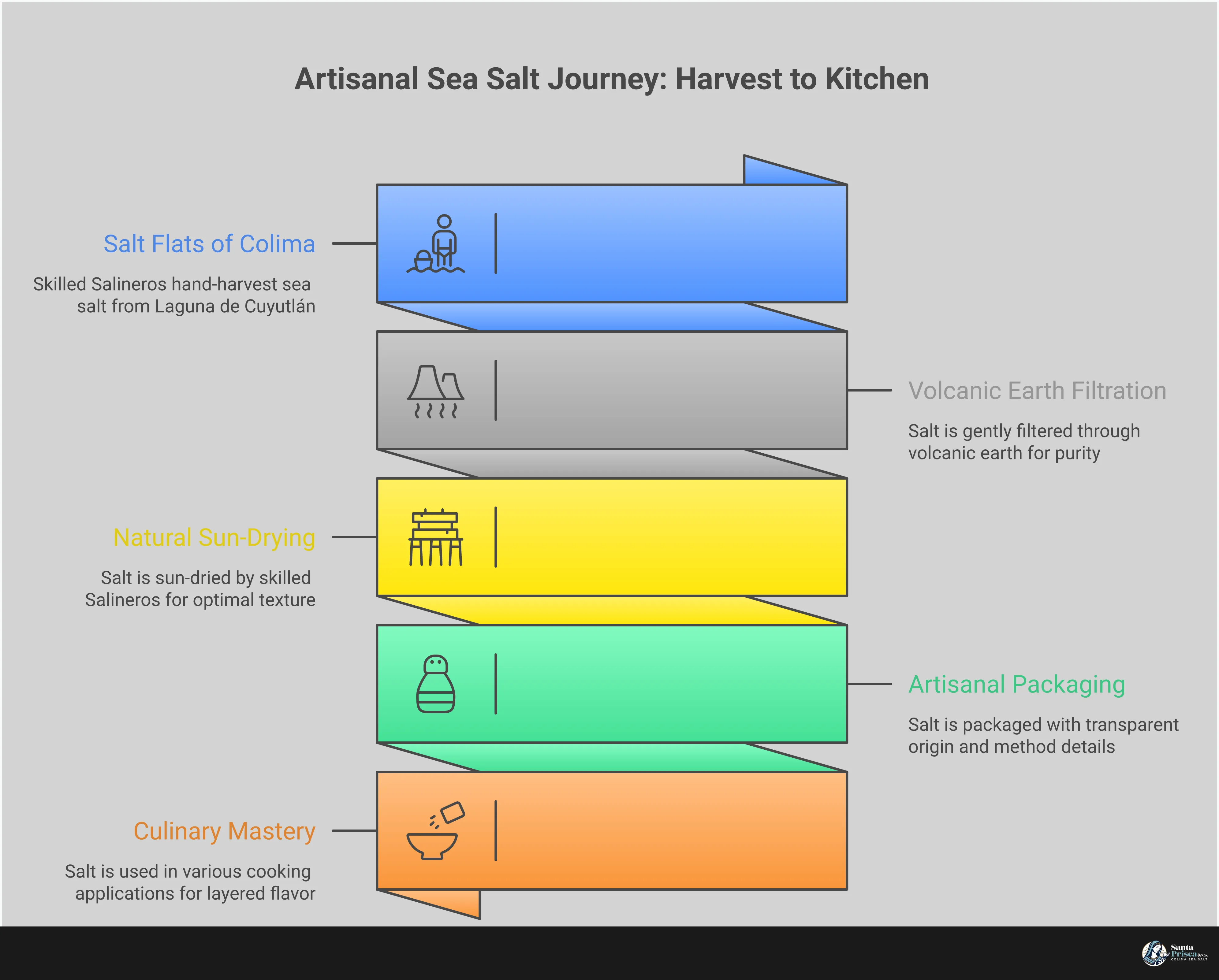
Our Colima Sea Salt begins its life in the Cuyutlán Lagoon, a protected estuary on the coast of Colima, Mexico. This region is unique, cradled by volcanic mountains that have enriched the soil for centuries. As the saltwater from the lagoon seeps into the earth, it passes through natural filters of volcanic soil and clay. This slow, patient process purifies the water and infuses it with a wealth of essential minerals. It’s a beautiful collaboration with nature, resulting in a salt that is exceptionally clean and free from the impurities often found in other sea salts.
Harvested by Hand from Pristine Salt Flats
For over 500 years, generations of local artisans, known as salineros, have been the guardians of this salt. They practice an ancestral harvesting method that honors the land and its natural cycles. Using traditional techniques passed down through their families, they carefully gather the salt crystals by hand from the shallow salt flats, or salinas. This gentle, unhurried process ensures that only the purest salt is collected, preserving its delicate structure and mineral integrity. It’s a craft of patience and deep respect, a world away from industrial harvesting.
A Rich Mineral Profile for Authentic Flavor
Once harvested, the moist salt crystals are left to dry naturally under the warm Colima sun. This simple, unrefined method allows the salt to retain its incredible mineral profile, which is the secret to its complex flavor and crisp texture. Unlike processed table salt, which is stripped of its nutrients, our Colima Sea Salt offers a subtle, balanced salinity with a clean finish. Each crystal delivers a burst of mineral depth that enhances food without overpowering it. This is what makes it a favorite in our kitchen and a staple in our collection of pantry goods.
How Artisanal Sea Salt Can Nourish Your Body
When we think of salt, we often think only of flavor. But what if the salt in your kitchen could do more than just season your food? What if it could be a source of genuine nourishment? Artisanal sea salt invites us to see this humble mineral in a new light, shifting our perspective from a simple commodity to a vital ingredient for well-being. In a world where so many foods are highly processed, choosing an unrefined salt is a small but meaningful way to reconnect with the earth and its natural rhythms. It’s about choosing ingredients with intention, appreciating the simple, powerful gifts from nature, and understanding that what we add to our meals can either deplete or replenish us. This salt is more than a seasoning; it’s a connection to a cleaner, more mindful way of eating and living.
Replenish with the Natural Minerals Your Body Needs
Your body is a beautiful, complex system that thrives on a delicate balance of minerals. Artisanal sea salts, gathered by hand with minimal processing, retain their natural qualities and are rich in trace minerals like magnesium, potassium, and calcium. These are the very elements often stripped away from common table salt. These minerals are essential for everything from muscle function to nerve signaling, and incorporating them through a pure, whole-food source is a simple act of self-care. This is why unrefined sea salt not only tastes better, offering a more nuanced flavor, but it also feels better in your body.
Why Unrefined Salt Retains Its Nutrients
The secret to artisanal salt’s mineral richness lies in how it’s treated, or rather, how it’s not. Refined table salt undergoes an intense industrial process of washing, bleaching, and heating, which removes nearly everything but sodium chloride. In contrast, our Colima Sea Salt is harvested naturally and left unrefined, preserving the full spectrum of minerals it gathers from the pristine lagoons. By honoring traditional, gentle methods, we ensure the salt that reaches your table is just as nature created it: pure, whole, and brimming with the nutrients that support your health and bring authentic flavor to your cooking.
Support Hydration and Mineral Balance Naturally
Proper hydration is about more than just drinking water; it’s about ensuring your body has the electrolytes it needs to absorb that water effectively. Sodium is a key electrolyte, but it works in harmony with other minerals. Because artisanal sea salt contains a natural blend of these elements, it can help your body maintain a healthy mineral balance. A small pinch of mineral-rich sea salt in your morning glass of water or post-workout drink can be a wonderful way to replenish what you’ve lost through sweat, supporting natural energy levels and overall vitality. It’s a simple kitchen ritual that nourishes from within.
How to Choose the Right Artisanal Sea Salt
Choosing an artisanal sea salt is an invitation to be more intentional in your kitchen. It’s about moving beyond a simple seasoning and connecting with an ingredient that carries the story of its origin. When you know what to look for, you can find a salt that not only enhances your food but also aligns with your values of wellness and quality. It’s less about finding one perfect salt and more about discovering which ones resonate with the way you love to cook and eat.
Pairing Salt with Your Cooking Style
Think of salt as a key ingredient, not just an afterthought. The right salt does more than just add salinity; its mineral content and texture can transform a dish. Natural sea salt is less processed, which means it retains trace minerals that influence its unique flavor. It’s all about how the salt behaves in your food and how its character complements your cooking.
Are you a baker who needs a fine-grain salt that dissolves evenly into doughs? Or do you love grilling and want a coarse, crunchy salt to form a perfect crust on vegetables and meats? For delicate sauces or fresh salads, a light, flaky finishing salt might be the perfect touch. Taking a moment to consider your cooking habits will guide you to a salt that feels like it was made for your kitchen.
Decoding Flavor Profiles and Textures
Every artisanal salt has its own personality. Some are intensely briny, while others offer a milder, more nuanced flavor. Our Colima Sea Salt, for example, is known for its clean, bright taste with a subtle mineral depth that doesn’t overpower food. As a whole, unrefined food, it’s completely natural and free from the chemical bitterness you might find in processed table salts.
Texture is just as important. Imagine the crisp, satisfying crunch of a large flake on a slice of ripe tomato, or the way a fine crystal melts instantly on your tongue. Exploring these sensory details is part of the joy of cooking with intention. Pay attention to how different salts feel and taste, and you’ll soon develop an intuition for which one to reach for.
What to Look For: Quality and Ethical Sourcing
A truly great sea salt tells a story of its home. When choosing a salt, look for producers who honor tradition and care for the environment. Our Colima Sea Salt is hand-harvested by salineros, or traditional salt farmers, who have been using the same sustainable methods for over 500 years. This dedication ensures the salt remains a pure, mineral-rich food.
Look for salts that are unrefined and free from anti-caking agents or other additives. The label should tell you where the salt comes from and how it was harvested. Choosing ethically sourced products means you’re not only getting a higher quality ingredient but also supporting the communities and ecosystems behind it. When you explore our collection, you can feel good knowing each crystal is a reflection of this commitment.
How to Identify a Quality Sea Salt Producer
When you begin to explore the world of artisanal salt, you quickly realize that the story behind the salt is just as important as the crystals themselves. Choosing a quality producer is about more than just flavor; it’s about connecting with a process rooted in tradition, place, and intention. A reputable producer doesn’t just sell a product; they share a piece of a region’s heritage. They are transparent about their methods and proud of the hands that harvest each crystal.
Finding a producer you trust means looking for signs of integrity and care. Do they tell you where the salt comes from? Do they explain how it’s harvested? This information helps you understand the journey from the sea to your kitchen. It transforms a simple ingredient into a meaningful part of your cooking ritual. When you know the story, every pinch of salt feels more intentional, adding a layer of gratitude to the meals you create. This connection is what separates a simple commodity from a true artisanal treasure.
Signs of a Reputable Producer
A trustworthy producer is an open book. They will proudly share the story of their salt, from the specific location of their salt flats to the traditional methods they use. Look for transparency on their website and packaging. They should be clear about their commitment to sustainable and ethical practices. A producer who values their craft will often highlight the community of artisans they work with, honoring the human element behind the harvest. If you have questions, a reputable company will be happy to answer them. Don’t hesitate to reach out to them and ask about their process. Their willingness to connect is a beautiful sign of their passion and integrity.
The Importance of Origin and Harvesting Methods
The origin of a sea salt shapes its entire character. Just as wine has terroir, salt has a "merroir," a taste of the sea and land it comes from. For example, our Colima Sea Salt is harvested from a pristine coastal region in Mexico, where the water is naturally filtered through volcanic earth, giving it a unique mineral profile. The harvesting method is equally important. Industrial production often involves heavy machinery and chemical processing. In contrast, traditional hand-harvesting is a gentle, patient art that preserves the salt’s delicate structure and natural mineral balance, resulting in a salt with more nuanced flavor and texture.
How to Read the Label for Purity and Minerals
The label is your window into the salt’s quality. Look for simple, clear language. Key phrases like “unrefined,” “hand-harvested,” and “additive-free” are excellent indicators of a pure product. High-quality sea salt is a whole food, free from the anti-caking agents like sodium ferrocyanide or calcium silicate found in common table salt. These additives are used to prevent clumping but have no place in a natural, artisanal salt. The label should reflect a short, clean ingredient list: just sea salt. When you explore our collection, you’ll see that simplicity is the ultimate sign of purity.
Cooking with Artisanal Sea Salt: Tips & Techniques
Working with artisanal sea salt is an invitation to cook with more intention. It’s about more than just adding flavor; it’s about understanding how this essential mineral interacts with your food to create texture, depth, and a true connection to the ingredients. When you learn the rhythm of salting, you begin to build flavor in a more thoughtful, intuitive way.
Moving beyond the shaker of refined table salt opens up a world of culinary possibility. By mastering a few simple techniques, you can transform the way you season your food, bringing out the very best in every dish. Let’s explore how to use finishing salts for that final flourish, understand the role of crystal size, and perfect the timing of when you salt.
Using Finishing Salts for a Burst of Flavor
Think of a finishing salt as the final, thoughtful touch to a beautiful dish. These are salts with a delicate, crisp texture, meant to be sprinkled over food just before serving. Unlike salts used during the cooking process, their purpose is to add a textural contrast and a bright burst of mineral flavor that lingers on the tongue. A pinch of our Colima Sea Salt over a simple tomato salad, a perfectly grilled steak, or even a dark chocolate brownie can completely awaken the flavors. This simple act encourages a moment of pause and appreciation, honoring the meal you’ve prepared with a final gesture of care.
How Crystal Size Affects Your Dish
The size and shape of a salt crystal dramatically change how it behaves in your cooking. Fine-grain salts dissolve quickly and disperse evenly, making them ideal for baking, soups, and sauces where you want uniform seasoning. Larger, irregular flakes, like those found in hand-harvested sea salts, dissolve more slowly. This means they deliver a more complex experience. Some crystals melt right away, while others provide a satisfying crunch and a concentrated pop of flavor. This is why natural sea salt is so prized; its unrefined structure retains trace minerals that contribute to both its unique texture and its nuanced taste.
When to Salt: Perfecting Your Timing
Knowing when to add salt is one of the secrets to deeply flavorful cooking. Salting at different stages builds layers of complexity. For heartier foods like meats and stews, salting early allows the mineral to penetrate deeply, tenderizing the protein and seasoning it from within. When you salt water for pasta or blanching vegetables, you season the food as it cooks. For more delicate ingredients, like a fresh green salad or sautéed mushrooms, it’s best to salt just before serving to preserve their texture. Using salt with intention often means you can create more vibrant flavor with less salt overall, allowing the true character of your whole-food ingredients to shine.
Where to Find High-Quality Artisanal Sea Salt
Once you begin to appreciate the subtle complexities of artisanal salt, you’ll start noticing it everywhere. The journey of finding the perfect salt for your kitchen is a rewarding one, connecting you to the earth and the hands that harvested it. It’s about more than just seasoning; it’s about sourcing with intention and bringing a story to your table.
In Specialty Stores and Gourmet Markets
Your local specialty food shops and gourmet markets are wonderful places to begin your exploration. Here, you can often find a curated selection of salts from around the world, each with its own unique character. You might discover smoked, infused, or beautifully colored salts that can add a new dimension to your cooking. These stores are a great place to find unique options and physically see the different textures and crystal structures, helping you choose a salt that truly speaks to you.
Directly from Producers and Online Retailers
For a deeper connection to your ingredients, consider sourcing your salt directly from the people who produce it. Many small-scale harvesters and family-run businesses now sell their products online, giving you access to pure, unrefined salts straight from the source. Buying this way not only ensures you receive a high-quality product, but it also supports the traditional practices and communities behind it. It’s a beautiful way to bring a piece of a place, like the pristine salt flats of Colima, Mexico, right into your home.
Starting Your Artisanal Salt Collection
Building a salt collection is a simple, intentional practice. Start with one or two varieties that intrigue you and notice how they transform your meals. A whole, unrefined food like our Colima Sea Salt is a beautiful place to begin, as it’s completely natural and free from additives. This makes it a healthy choice for seasoning that nourishes as it flavors. As you experiment, you’ll develop a palate for the subtle differences in minerality and texture, turning the simple act of seasoning into a mindful moment of connection with your food.
How to Store Your Sea Salt to Preserve Its Quality
You’ve brought home a beautiful, mineral-rich sea salt, its crystals holding the story of sun, sea, and earth. To honor its journey from a pristine salt flat to your kitchen, proper storage is essential. This isn’t just about keeping it from clumping; it’s about preserving the delicate texture and nuanced flavor that makes an artisanal salt so special.
Think of it as a simple ritual of care. By giving your salt a proper home, you ensure that every pinch delivers the full mineral depth and crisp flake it’s meant to have. A little intention goes a long way in protecting the integrity of this foundational ingredient, making sure it’s ready to transform your meals from simple to sublime. With just a few mindful practices, you can keep your salt as pure and vibrant as the day it was harvested.
Keep Your Salt Dry and Flavorful
The greatest threat to your sea salt’s beautiful texture is moisture. Because unrefined salt is naturally hygroscopic, it draws in water from the air, which can cause its delicate crystals to clump together. This not only changes the texture but can also dull its bright, clean flavor. The key is to create a barrier between your salt and the humidity in your kitchen.
An airtight container is your best friend here. A simple glass jar with a tight-fitting lid works wonderfully, allowing you to see the beautiful crystals while keeping them perfectly dry. You could also use a traditional salt cellar or box, which often helps regulate moisture. This simple step ensures your salt remains free-flowing and ready to deliver that perfect burst of flavor.
Preserving Its Unique Texture and Taste
Beyond keeping it dry, you’ll want to protect your salt from heat. Storing your salt cellar right next to the stove may be convenient, but the steam and temperature fluctuations can introduce moisture and compromise its quality. Find a home for it in a cool, dry pantry or cupboard away from direct heat and sunlight.
For daily use, consider keeping a small amount of your Colima Sea Salt in a pinch bowl or cellar on the counter. You can store the larger bag in a sealed container in the pantry. This practice minimizes its exposure to air and moisture while keeping a small amount ready for finishing a dish. By following these simple storage tips, you preserve the salt’s unique character, ensuring every meal gets the full benefit of its mineral-rich taste.
Related Articles
- A Chef's Guide to Hand-Harvested Sea Salt
- How to Find Real Ethically Sourced Sea Salt
- 7 Real Benefits of Hand-Harvested Sea Salt
- What Is Organic Sea Salt? A Complete Guide
- Best Sea Salt Online: Top 8 Artisan Shops for 2025
Frequently Asked Questions
What's the main difference between artisanal sea salt and the salt I already have? The biggest difference lies in the process and what’s left behind. Most table salt is heavily refined, stripping it of its natural trace minerals until it's almost pure sodium chloride. Artisanal salt, like our Colima Sea Salt, is harvested by hand and minimally handled. This gentle approach means it retains a beautiful spectrum of minerals from its origin, which gives it a more complex, nuanced flavor and a unique texture.
Is unrefined sea salt really better for my health? Choosing unrefined sea salt is about choosing a whole, natural ingredient over a processed one. Because it isn't stripped of its natural properties, it contains trace minerals like magnesium and potassium that your body uses to maintain balance. While all salt should be used with intention, incorporating a mineral-rich sea salt is a simple way to support your body’s hydration and overall wellness, rather than just adding pure sodium to your food.
With so many types, which artisanal salt is best for everyday cooking? If you're just starting to explore artisanal salts, a versatile, clean-finishing salt is the perfect place to begin. Our Colima Sea Salt is a wonderful all-purpose choice because its bright, balanced flavor enhances food without overpowering it. Its delicate, flaky crystals work beautifully as a finishing touch on salads and grilled vegetables, but they also dissolve well in soups and sauces, making it a true kitchen staple.
Why does artisanal salt cost more than regular table salt? The price reflects the incredible amount of care and human effort involved. Artisanal salt is harvested by hand in small batches, often using traditional methods passed down through generations. This patient, manual process is a world away from the large-scale, industrial machinery used for common table salt. When you invest in artisanal salt, you are supporting sustainable practices, fair wages for artisans, and the preservation of a time-honored craft.
Can I use a finishing salt, like your Colima Sea Salt, during the cooking process too? Absolutely. While its crisp texture truly shines when sprinkled on a dish just before serving, its pure flavor is wonderful for seasoning from the start. Using it to salt pasta water or season vegetables before roasting will build a beautiful foundation of flavor. Think of it as a versatile ingredient; its role simply changes depending on when you add it to the dish.