
Rock Salt vs. Sea Salt for Cooking: What to Know
Written By Santa Prisca & Co Staff Last updated on
Think about the last time you seasoned a dish. Did you notice the texture of the salt between your fingers? The heavy, coarse grain of rock salt feels entirely different from the light, delicate flake of a hand-harvested sea salt. This tactile difference is the first clue to a much deeper story about how each salt is formed, harvested, and how it behaves in your food. The conversation around rock salt vs sea salt for cooking truly begins with this simple, physical distinction. It’s a sensory experience that directly translates to the final dish, affecting everything from the way a steak is seasoned to the perfect crunch on a chocolate chip cookie. Let’s connect the dots between texture, flavor, and origin.
Key Takeaways
- Origin Defines the Experience: Rock salt is mined from ancient, underground deposits and is often heavily refined. Unrefined sea salt, however, is a product of the living ocean, gently harvested to preserve natural trace minerals that create a more complex and nuanced flavor.
- Use Each Salt for Its Strengths: Reserve coarse rock salt for specific applications like brining or creating salt crusts. Use versatile, unrefined sea salt for everyday seasoning and especially as a finishing touch, where its delicate texture and clean flavor can truly shine.
- Prioritize Purity for Better Flavor: An unrefined sea salt is free from the additives and anti-caking agents found in many processed salts. This purity delivers a cleaner, more authentic taste that enhances your ingredients without overpowering them.
Rock Salt vs. Sea Salt: What's the Real Difference?
Have you ever stood in the grocery aisle, staring at the wall of salt, and wondered what really separates one from the other? It’s easy to assume that salt is just salt. But the truth is, the journey from source to shaker creates a world of difference in flavor, texture, and even how it nourishes your body. The two most common types you’ll find are rock salt and sea salt, and while they share a chemical makeup, they couldn’t be more different in spirit.
Choosing your salt is one of the simplest yet most profound decisions you can make in the kitchen. It’s a foundational ingredient, the one that brings all other flavors into focus. Understanding their origins and how they are handled helps you choose a salt that not only enhances your food but also aligns with a more intentional way of cooking and living. One comes from deep within the earth, a relic of ancient oceans, while the other is born from the sun and living seawater. This distinction is the key to everything, from the way it feels between your fingers to the subtle mineral notes it lends to a finished dish. Let's explore what truly sets them apart so you can feel confident in the salt you bring to your table.
Where They Come From: Earth vs. Ocean
The story of any salt begins with its source. Rock salt is mined from vast, underground deposits left behind by ancient seas that dried up millions of years ago. It’s a piece of the planet’s history, extracted from the earth like a mineral treasure. Think of it as a fossil of the ocean, locked away deep beneath the surface.
Sea salt, on the other hand, is a gift from our living oceans. It is harvested directly from evaporated seawater, capturing the essence of a specific coastal environment. Our own Colima Sea Salt, for example, comes from the sun-drenched salt flats of Mexico, where saltwater lagoons naturally evaporate. This process creates a salt that is deeply connected to its place of origin, reflecting the unique mineral composition of the water it came from.
How They're Made: Refined vs. Unrefined
The journey from source to your kitchen has a huge impact on the final product. Rock salt is often heavily processed. After being mined, it’s typically treated at high temperatures and refined to strip away other minerals and "impurities," leaving behind pure sodium chloride. This process is also why many common table salts contain anti-caking agents to prevent clumping.
In contrast, unrefined sea salt is produced with minimal intervention. The traditional method of solar evaporation is a gentle, natural process where the sun and wind do most of the work. This slow harvest preserves the salt’s rich array of trace minerals. Furthermore, the environmental impact of salt production varies greatly; solar evaporation is a far more sustainable practice than the industrial mining required for most rock salt.
A Difference in Texture You Can See and Feel
You can often tell the two salts apart just by looking at them. Rock salt typically has a large, chunky, and irregular crystal structure. Its robust texture makes it useful for specific applications, like creating a salt crust on meats or for use in an ice cream maker.
Sea salt offers a beautiful variety of textures, from fine grains perfect for baking to delicate, crisp flakes that provide a satisfying crunch as a finishing touch. The texture of our Colima Sea Salt is a perfect example: its sun-dried crystals are light and flaky, dissolving cleanly on the palate and adding a burst of mineral depth without overwhelming a dish. This tactile difference is a reminder of the salt’s gentle, artisanal journey.
Unlocking Flavor: How Do They Compare in the Kitchen?
When we bring an ingredient into our kitchen, we invite its story to become part of our own. Salt is no exception. The journey from its source to your shaker shapes everything about it, from the way it feels between your fingers to the way it awakens the flavors in a dish. While both rock salt and sea salt have a place in the culinary world, their distinct characteristics offer different experiences. Rock salt, pulled from ancient underground deposits, carries the essence of the earth. Sea salt, harvested from evaporated ocean water, holds the bright, clean memory of the sea.
Understanding these nuances is the key to cooking with intention. It allows you to choose the perfect salt for every meal, not based on which is "better," but on which is right for the moment, the dish, and the feeling you want to create. The way a salt is formed and harvested directly impacts its mineral content, texture, and ultimately, how it interacts with food. A coarse, earthy rock salt might be perfect for a brine where its potent flavor can dissolve and permeate, while a delicate, flaky sea salt is what you want to finish a perfectly ripe tomato or a piece of grilled fish. Let's explore how their unique origins translate to different tastes, textures, and roles in your kitchen, helping you make a more conscious choice every time you reach for the salt. This isn't just about seasoning; it's about connecting with your food on a deeper level.
The Minerals Behind the Taste
At their core, all salts are sodium chloride. But the real story is in the details. Unrefined sea salt, gathered from evaporated seawater, retains a beautiful complexity because of the trace minerals it holds onto from the ocean. Think of elements like magnesium, calcium, and potassium. These aren't just names on a chart; they are the building blocks of flavor, contributing to a rounder, more nuanced taste that goes beyond simple saltiness. Our own Colima Sea Salt, for example, gets its unique character from the rich minerals it gathers on its journey. Rock salt also contains minerals, but they are often different, lending a more earthy, sometimes harsher profile.
From Sharp to Subtle: Exploring Flavor Profiles
The difference in mineral content directly translates to taste. Rock salt often has a very direct, robust flavor. It’s strong and assertive on the palate. In contrast, sea salt tends to have a more delicate, clean, and briny taste that whispers of its oceanic origins. This subtlety doesn't mean it's less flavorful. Instead, its flavor is more layered, enhancing the food it seasons without overpowering it. This distinction in flavor profiles is why many chefs prefer a high-quality sea salt as a finishing touch, where its gentle crunch and clean taste can truly shine.
What to Know About Iodine
It’s worth touching on iodine, an essential nutrient for thyroid health. Many years ago, iodine was added to refined table salt to combat widespread deficiency. Most unrefined salts, including both sea salt and rock salt, are not significant natural sources of iodine. This isn't a flaw; it's simply a characteristic of their natural state. For those of us who choose unrefined salts for their purity and flavor, it’s just a gentle reminder to be mindful of including iodine-rich foods in our diet, such as fish, seaweed, and dairy. It’s all part of a balanced and intentional approach to wellness.
How to Cook with Rock Salt and Sea Salt
Understanding the story of your salt is the first step. Knowing how to use it is how you bring that story to life in your kitchen. The texture, mineral content, and flavor of each salt guide its purpose, and choosing the right one can be the difference between a good meal and a truly memorable one. It’s less about rules and more about intuition, about feeling which salt will honor the ingredients you’ve so carefully chosen.
When to Reach for Rock Salt
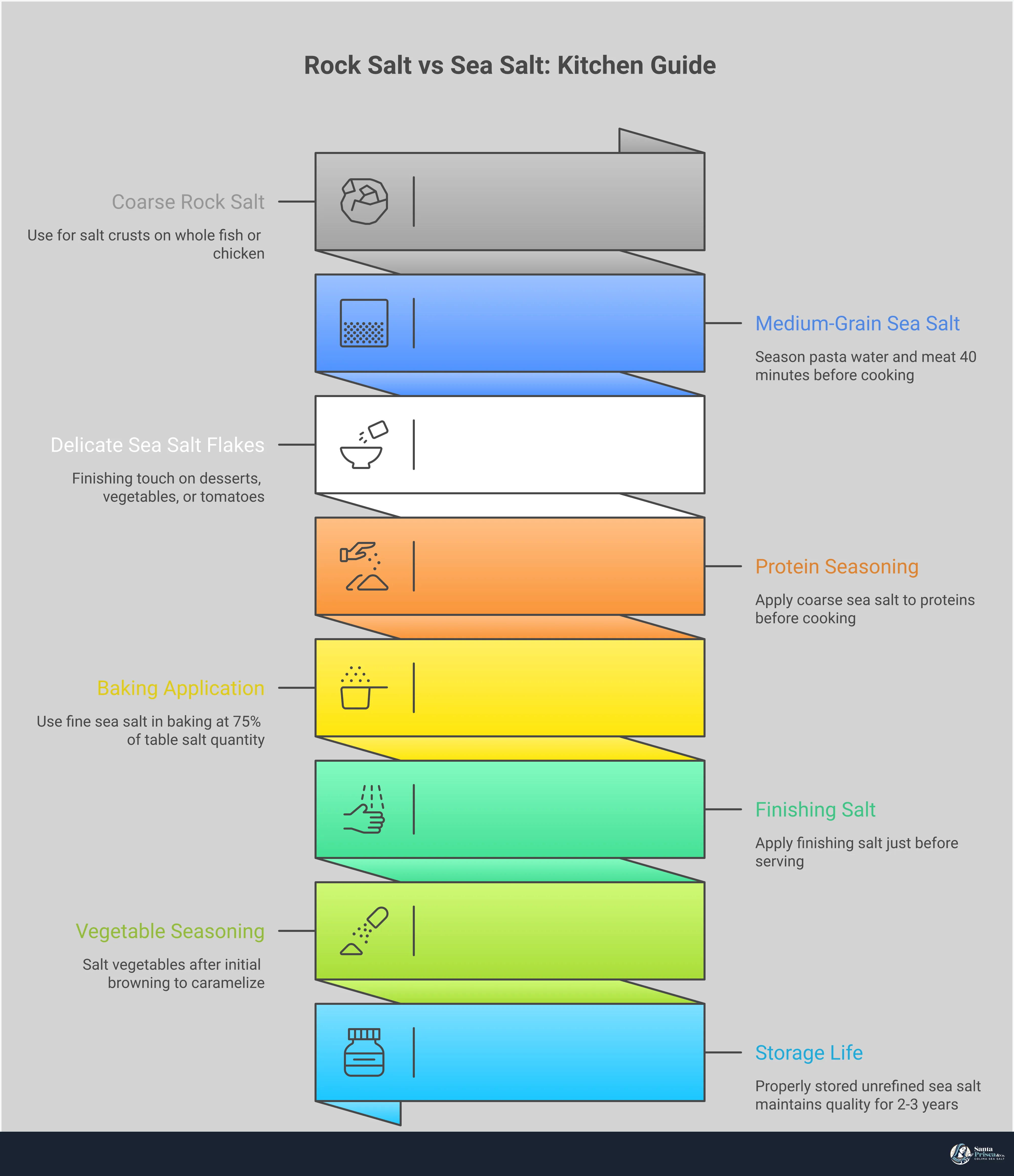
Think of rock salt as a tool for specific tasks rather than an everyday seasoning. Its large, chunky crystals don’t dissolve easily, which means it’s not what you want to sprinkle over a finished dish. Instead, its power lies in altering environments. It’s the salt you use to surround a whole fish or chicken for a perfect salt-baked crust, creating a steamy, flavorful oven. It’s also what you’d use when making ice cream the old-fashioned way, as it lowers the freezing point of the ice surrounding the canister. Its flavor is potent and direct, best suited for jobs where it won’t be eaten directly.
The Everyday Versatility of Sea Salt
Sea salt is the true workhorse of the kitchen, a companion for nearly every dish. Its versatility comes from its varied forms. A fine-grain sea salt dissolves like a whisper into sauces, soups, and baking batters, seasoning from within. A coarser grain is perfect for seasoning meats before cooking or adding to a pot of boiling water for pasta. And then there is the magic of a finishing salt, like our hand-harvested Colima Sea Salt. Its delicate, crisp flake is meant to be sprinkled on just before serving, adding a burst of clean flavor and a satisfying textural crunch to everything from salads to chocolate chip cookies.
How Each Salt Performs in a Dish
The way a salt behaves in a dish comes down to its mineral composition and crystal structure. Rock salt delivers a sharp, intense salinity that can easily overpower more delicate ingredients. It’s a straightforward flavor without much complexity. A high-quality, unrefined sea salt, on the other hand, offers a more nuanced and gentle flavor profile. Because it retains trace minerals from the ocean, it adds a subtle depth that enhances the food’s inherent taste instead of masking it. This makes it the ideal choice for nearly all types of cooking, from the simplest roasted vegetables to the most intricate sauces.
Is One Salt a Better Choice for Your Well-being?
When we choose our ingredients, we're making a choice for our bodies. We seek out fresh, whole foods because we know they nourish us from the inside out. Salt should be no different. Moving beyond flavor and texture, let’s explore how these two salts fit into a life of intentional eating. While neither is a magic bullet for health, the way they are sourced and processed creates meaningful differences that are worth considering as you stock your pantry and prepare your meals.
A Quick Note on Sodium
It’s helpful to remember that at a chemical level, all salt is primarily sodium chloride. This compound is essential for many bodily functions, like fluid balance and nerve function, but it’s best enjoyed in moderation. The biggest health consideration with salt is its sodium content, which can affect blood pressure in some individuals. While unrefined sea salt offers a beautiful array of trace minerals, it doesn’t significantly change the sodium profile. The invitation here is one of mindfulness. By choosing a flavorful, high-quality salt, you may find you need less to make your food sing, allowing you to savor the taste while honoring your body’s needs.
The Role of Iodine in a Balanced Diet
You’ve likely seen “iodized salt” at the grocery store. Iodine is a mineral that was added to table salt decades ago to combat widespread deficiency, as it’s crucial for healthy thyroid function. Natural salts, including both sea salt and rock salt, are not significant sources of iodine. If you choose to cook exclusively with unrefined salt, it’s easy to get this essential nutrient from other whole foods. You can find abundant dietary sources of iodine in seaweed, fish, and dairy products, allowing you to enjoy the pure flavor of natural salt while keeping your body in balance.
Why Purity Matters: What to Look for on the Label
The journey an ingredient takes to your kitchen matters. Much of the rock salt mined from the earth is designated for industrial uses, like de-icing roads, and may not be food-grade. Pure, unrefined sea salt, on the other hand, is simply evaporated seawater, free from the anti-caking agents and other additives found in processed table salt. When you choose a hand-harvested sea salt, you’re choosing a product with nothing to hide. Our Colima Sea Salt, for example, is simply sun-dried and packaged, retaining its full mineral depth and clean, crisp flavor. This commitment to purity is something you can taste and feel good about.
Using and Storing Salt with Intention
Bringing a beautiful, mineral-rich salt into your kitchen is an invitation to cook with more awareness. When we choose ingredients harvested with care, it feels right to use and store them with the same intention. Treating your salt not just as a staple, but as a cherished element, can transform your cooking, turning a simple sprinkle into a moment of gratitude. This mindfulness helps preserve the unique texture and flavor that artisans worked so hard to create.
How to Keep Your Salt Fresh
High-quality sea salt is a living ingredient, connected to the ocean and the sun. Its greatest enemy is moisture. Because salt naturally draws water from the air, it’s best to store it in an airtight container. A simple glass jar with a good seal or a traditional salt cellar with a lid works beautifully to protect it from humidity. Keep it away from the steamy area above your stove. This simple practice ensures you’re always met with distinct, dry crystals, not a stubborn clump, preserving the salt’s integrity for that perfect, finishing crunch.
Tips for Cooking and Finishing
Think of salt as a tool for layering flavor. A coarse, dense rock salt can be added early to season stocks or pasta water, where its strong flavor has time to dissolve and meld. A delicate, hand-harvested sea salt, however, is best saved for the end. A final pinch of Colima Sea Salt over a finished dish adds a burst of clean salinity and a subtle crunch that lingers on the tongue. This finishing touch adds a layer of texture and complex flavor that would be lost if cooked too long.
Choosing a Salt You Can Feel Good About
The story of your salt matters. How it’s sourced impacts both the environment and the communities that produce it. Rock salt is often extracted through mining, a process that can be tough on the earth. In contrast, many sea salts are produced through solar evaporation, a timeless method that works in harmony with nature. The sun and wind do the work, leaving pure salt crystals. When you choose a salt that is hand-harvested, you’re not just getting a purer product; you’re supporting sustainable practices and honoring generations of artisanal tradition.
Related Articles
- What's the Difference Between Sea Salt & Rock Salt?
- Buy Natural Sun Dried Sea Salt: A 2026 Guide
- Sea Salt for Cooking: Types, Benefits, and How to Use It Like a Pro
Frequently Asked Questions
Is sea salt really better for you than rock salt? It’s less about one being "better" and more about which one is less processed. Unrefined sea salt retains trace minerals from the ocean, like magnesium and potassium, which are stripped from heavily refined rock salt. While the sodium content is similar, choosing an unrefined sea salt means you're getting a pure, whole ingredient without the anti-caking agents or other additives often found in its mined counterpart.
Can I substitute sea salt for rock salt in a recipe? It depends on the recipe's purpose for the salt. For seasoning a dish, you can absolutely use sea salt. However, if a recipe calls for rock salt to create a salt crust for baking or to make ice cream, its large, slow-dissolving crystals are specifically needed for that task. A delicate sea salt would dissolve too quickly and wouldn't work the same way.
What does 'unrefined' actually mean when it comes to salt? Unrefined simply means the salt is left in its natural state, just as it was after the seawater evaporated. The process is minimal: the salt is harvested and dried by the sun and wind, and that's it. This gentle approach preserves the salt's natural mineral content and unique flavor, which is a direct reflection of the water it came from.
If I switch to unrefined sea salt, do I need to worry about iodine? Most unrefined salts are not a significant source of iodine, which is an important nutrient for thyroid health. This isn't a cause for concern, but rather an invitation for awareness. You can easily get the iodine you need from whole foods like fish, dairy, and seaweed, allowing you to enjoy the pure flavor of natural salt while maintaining a balanced diet.
Why is hand-harvested sea salt often more expensive? The price reflects the incredible amount of care and labor that goes into producing it. Instead of industrial mining, hand-harvesting is a traditional, sustainable practice done on a small scale. You are paying for a pure product that supports artisan communities and honors a connection to nature, resulting in a salt with superior texture and a cleaner, more complex flavor.