
Redmond Real Salt Microplastics: Is Ancient Salt Purer?
Written By Santa Prisca & Co Staff Last updated on
Trying to choose clean ingredients can feel like navigating a maze. One label promises purity from an ancient sea, while another boasts of sun-dried crystals from the ocean. It’s hard to know what to trust, especially when conflicting reports surface. This uncertainty is why so many of us have become our own food detectives, spending hours researching and typing queries like ‘Redmond Real Salt microplastics’ into a search bar, hoping for a clear answer. But perhaps the truest measure of purity isn’t found in a lab report alone, but in the story of the salt itself: its unique environment, its natural filtration, and the intentional hands that gather it.
Key Takeaways
- Look beyond the source: Microplastics can be found in both sea salt and mined salt. Contamination often happens during industrial processing, so the harvesting method is just as important as the origin.
- Purity is a two-part story: The cleanest salt comes from a protected source, like a naturally filtered lagoon, and is harvested by hand. This combination avoids both modern ocean pollutants and industrial contaminants.
- Choose your salt with intention: Read labels for clues about a salt's origin and processing. Opting for an unrefined, hand-harvested salt ensures you are getting a pure, mineral-rich product without unwanted additives.
What Are Microplastics, and Why Do They Matter in Your Kitchen?
When we reach for salt, we’re thinking of flavor, of bringing a dish to life, of a finishing touch that makes a meal complete. It’s one of the most fundamental ingredients we use, a simple crystal that connects us to the earth and sea. But what if that simple crystal carries something unwanted? Lately, there’s been a growing conversation around microplastics, and it’s leading many of us to look more closely at the ingredients we trust, starting with the salt in our shakers.
Understanding what’s in our food is the first step toward a more intentional kitchen. These invisible contaminants have become a part of our modern environment, and knowing how they end up on our plates empowers us to make purer, more mindful choices for ourselves and the people we cook for. It’s not about fear; it’s about awareness and returning to the clean, nourishing ingredients we deserve.
How Microplastics Find Their Way Into Our Food
So, what exactly are microplastics? Imagine a particle smaller than a single sesame seed. These are tiny pieces of plastic that break away from larger items like water bottles, packaging, and synthetic fabrics. Over time, they find their way into our oceans, rivers, and soil. Because so much of the world's salt is harvested from the sea, it’s become a primary source of microplastic contamination in our diet.
As seawater evaporates during the salt-making process, these minuscule plastic fragments are left behind, becoming concentrated in the final product. While sea salt is often the focus, studies have found microplastics in nearly all types of salt, including lake and rock salt. It’s a quiet reminder that the health of our planet is directly linked to the health of our kitchens.
The Health Concerns of Cooking with Contaminated Salt
The presence of microplastics in our salt is concerning because these particles aren't just inert plastic. They can act like tiny sponges, absorbing and carrying harmful chemicals like pesticides and heavy metals. When we ingest contaminated salt, these toxins can be released into our bodies, potentially contributing to inflammation and other long-term health issues that researchers are still working to fully understand.
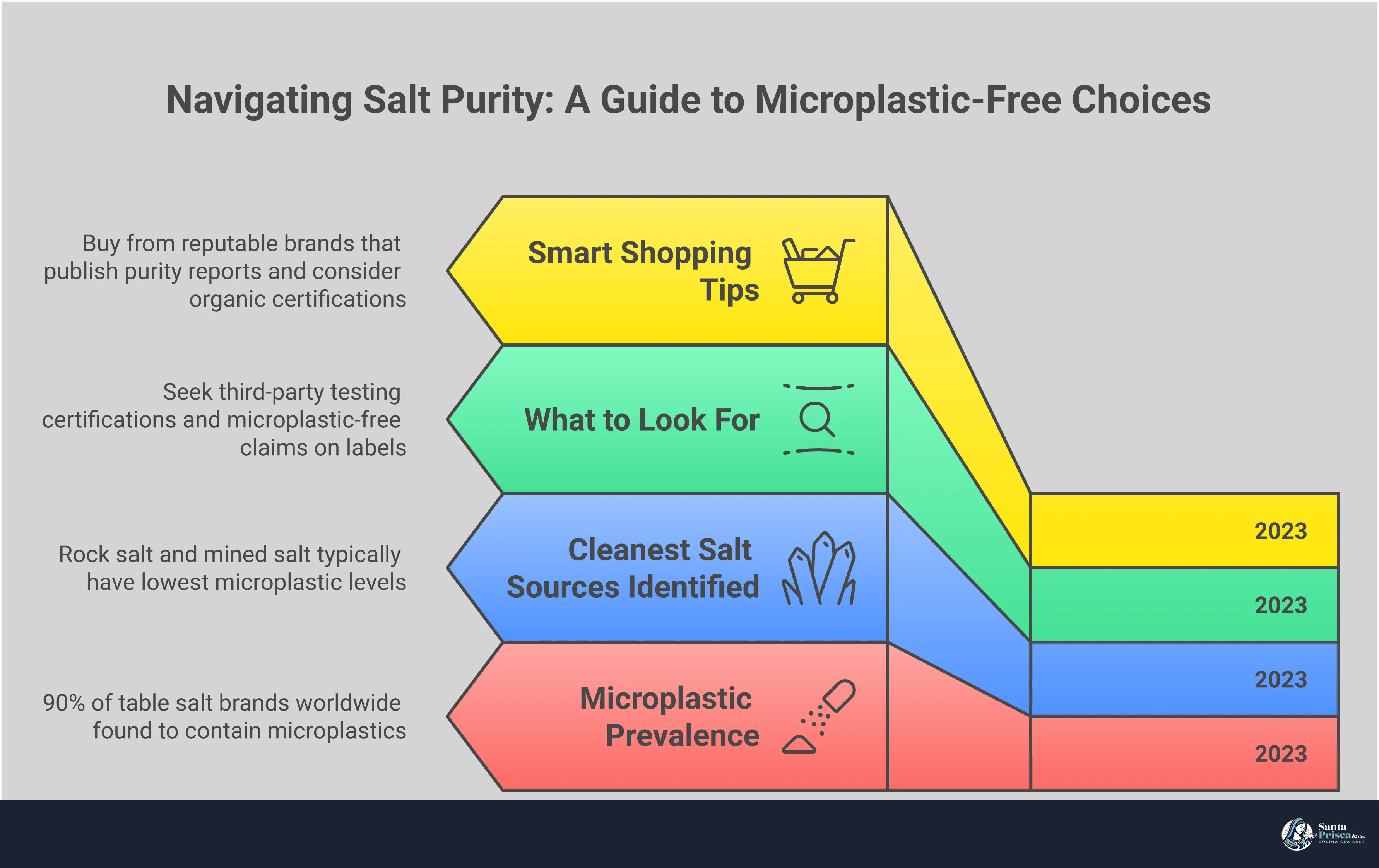
Because of their microscopic size, these particles can be absorbed by our cells, and scientists are studying the cumulative effect they might have over a lifetime. It’s a widespread issue; one report found that over 90% of salt brands tested globally contained microplastics. This knowledge encourages us to pause and ask a crucial question: where does our salt really come from, and how pure is it?
Are Ancient Salt Deposits a Purer Choice?
When we reach for salt in the kitchen, we’re looking for pure, clean flavor to honor our ingredients. But with growing concerns about microplastics in our oceans, many of us are starting to ask where our salt truly comes from. This has led to a renewed appreciation for ancient salt deposits, which are mined from deep within the earth. These salts come from seas that vanished millions of years ago, long before the age of industrial pollution. They offer a connection to a pristine, untouched version of our planet.
The idea is simple yet powerful: salt that has been sealed away from the modern world might be a cleaner choice for our kitchens and our bodies. Unlike some sea salt harvested from today’s oceans, these ancient mineral deposits have been naturally protected from contaminants for eons. Their journey from an ancient sea to a crystalline treasure buried deep underground is a testament to nature's ability to preserve. Their purity is a story written by the earth itself, a tale of how they were formed and preserved over millennia. Understanding this process helps us appreciate the unique qualities of these subterranean gems and make more intentional choices in our cooking.
How Ancient Salt Was Formed and Preserved
Imagine a vast, primordial sea, long before humans walked the earth. Over millions of years, this ancient body of water slowly evaporated under the sun, leaving behind a bed of crystalline salt rich with trace minerals. This isn't just a story; it's the geological origin of many mined salts available today. For example, some well-known salts are harvested from an ancient seabed in what is now Utah.
After these salt beds formed, geological shifts and volcanic activity covered them with protective layers of earth and clay. This natural seal, sometimes including volcanic ash, locked the salt deep underground. It essentially created a time capsule, preserving the salt in its original, pristine state. This is why mined salt is often called "fossil salt," as it’s a remnant of a world that no longer exists.
Why Ancient Salt Is Naturally Protected from Modern Pollutants
The layers of volcanic ash and clay that covered these ancient salt deposits did more than just bury them; they created a natural barrier. This shield has protected the salt for millions of years from everything that has happened on the surface, including the environmental impact of the modern world. Because these deposits were sealed long before the industrial revolution, they remain untouched by many contemporary contaminants.
This is especially important when we consider the issue of microplastics in our oceans. These tiny plastic particles are now found in many marine environments and, consequently, in some sea salts harvested from them. Ancient salt, having been isolated from this cycle of pollution, offers a source that is naturally free from these specific modern-day concerns. Its purity isn't the result of processing, but of being perfectly preserved by the earth itself.
The Risk of Microplastics in Mined Salt
When we reach for salt, we’re seeking pure, elemental flavor. But in our modern world, even salt sourced from deep within the earth can face contamination. It’s worth asking: what does 'purity' truly mean, and how can we be sure the salt in our kitchens is as clean as we hope? The conversation around microplastics has moved from our oceans to our pantries, and understanding the source of your salt is the first step toward mindful cooking.
What to Look for in Purity Claims and Testing
Many salt brands make claims of purity, but it’s wise to look past the label and ask what that really means. Some companies explain why their salt should be clean without providing direct confirmation that it has been tested for contaminants. The truth is, contamination can occur at many points. One study found that of 21 table salt brands, each contained microplastics, which may have been introduced during manufacturing, transport, or even from the packaging itself. As a conscious consumer, look for brands that value transparency and are willing to share how they verify the purity of their salt, from the source all the way to your kitchen.
How an Ancient Source Can Minimize Contamination
There is a beautiful logic to sourcing salt from ancient, untouched deposits. The idea is that salt harvested from a prehistoric sea bed, long protected by layers of volcanic ash and clay, has been shielded from modern pollution. Brands that mine this type of salt often state that it is naturally free of microplastics because the deposits are millions of years old, predating the invention of plastics entirely. This salt is essentially a time capsule of a purer earth. While a pristine source is an incredible starting point, it’s just one piece of the puzzle in ensuring the salt that reaches your table is truly clean.
How Processing Can Introduce Contaminants into Salt
The journey your salt takes from its source to your kitchen is just as important as where it comes from. Even salt from a pristine, ancient deposit can pick up unwanted passengers along the way. The machinery, transportation, and refining methods used to produce commercial salt can introduce contaminants, turning a pure, natural mineral into something less than ideal for our bodies and our cooking. Understanding this journey helps us choose a salt that truly nourishes. When we choose our ingredients with intention, we honor both the food and ourselves.
Mined Salt vs. Sea Salt: A Purity Comparison
You might think salt mined from a protected underground deposit is automatically purer. While these ancient seabeds are shielded from modern ocean pollutants, the mining process itself can be a source of contamination. Heavy machinery, conveyor belts, and crushing equipment can shed microscopic particles. In fact, some studies have found that rock salts can contain higher concentrations of microplastics from the mining process, introduced during their extraction. This is where the method matters more than the source. A salt harvested by hand, with minimal mechanical interference, offers a cleaner path from the earth to your table.
The Problem with Over-Refining Salt
Have you ever wondered how standard table salt gets so uniformly white and never clumps? The answer is heavy industrial refining. This process strips the salt of its natural trace minerals, like magnesium and potassium, which are essential for our bodies and create a complex flavor. What’s left is almost pure sodium chloride. To prevent caking, manufacturers often add chemicals like sodium aluminosilicate or calcium silicate. This aggressive processing means you lose the mineral depth and can gain unwanted additives. Choosing an unrefined sea salt means you’re getting salt as nature intended: pure, mineral-rich, and free from extra chemicals.
Choosing Your Salt: A Look at Different Sources
When you reach for salt in the kitchen, what are you connecting with? Every crystal holds a story of its origin, whether from a vast modern ocean or an ancient, hidden sea. Understanding where your salt comes from is the first step in choosing an ingredient that not only flavors your food but also aligns with your intention for clean, mindful eating. Not all salt is created equal, and its source can make all the difference.
The Reality of Today's Ocean-Sourced Salt
We often picture sea salt coming from pristine, churning waves under a brilliant sun. It’s a beautiful image, but the reality of our modern oceans is far more complex. Our waterways now carry the weight of industrial pollution, including tiny particles known as microplastics.
These particles are so pervasive that they’ve found their way into our food chain. As seawater is evaporated to harvest salt, any contaminants present, including microplastics, become concentrated in the finished crystals. Studies have confirmed this on a global scale, showing that the majority of commercial sea salt brands now contain these unwanted additions. This knowledge invites us to look more closely at the journey our salt takes from water to our table.
The Purity of Protected, Underground Salt
In contrast, some salt comes from a place seemingly untouched by time. Imagine an ancient sea, teeming with minerals millions of years ago, long before the age of plastics. When these seas receded, they left behind crystalline beds of pure salt.
Over millennia, layers of volcanic ash and earth covered these deposits, sealing them deep underground. This protective barrier has kept the salt shielded from the surface pollutants of the modern world. Salt harvested from these ancient beds is drawn from an environment preserved in its original, clean state, offering a connection to the earth’s past and a foundation of purity for your kitchen.
What Makes Santa Prisca Colima Sea Salt a Pure Alternative?
While the thought of contaminants in our salt can feel disheartening, it also invites us to look closer at where our food comes from. Not all sea salts carry the same story or the same level of purity. The source of the water and the hands that gather it make all the difference. It’s in this careful attention to place and process that we find a truly clean, mineral-rich alternative.
Our Secret: Naturally Filtered by Volcanic Earth
Our Colima Sea Salt begins its journey in the pristine coastal lagoons of Colima, Mexico. Here, the ocean water is naturally drawn inland and filtered through ancient volcanic earth. This unique geology acts as a protective barrier, ensuring the salt water is shielded from modern pollutants, including microplastics, long before it even begins to crystallize under the sun.
This slow, natural filtration does more than just purify. It infuses the salt with a rich profile of essential minerals from the volcanic soil, contributing to its complex flavor and nourishing properties. The result is a clean, sun-dried crystal with a burst of mineral depth that you can truly feel good about bringing into your kitchen.
The Artisanal Touch: How Hand-Harvesting Protects Purity
Purity isn't just about what’s absent; it’s also about the intention put into the process. Our salt is hand-harvested by skilled artisans, or salineros, who use traditional methods passed down through generations. This gentle, manual approach honors the salt's natural integrity.
By avoiding heavy machinery and industrial processing, we prevent contamination that can occur in large-scale operations. Each delicate, moist crystal is gathered with care, preserving its structure and purity from the lagoon to your table. This artisanal touch ensures that the salt you use is not only clean but also carries the story of a community dedicated to their craft. You can explore our full collection of mindfully sourced products in our shop.
How to Choose a Pure, Uncontaminated Salt
Choosing a salt is about more than just flavor. It’s an invitation to connect with the earth and nourish your body with intention. When you understand where your salt comes from, you can make a choice that feels good in your kitchen and for your well-being. The options can feel overwhelming, but a few simple guideposts can help you find a truly pure, uncontaminated salt that will make every meal a little more meaningful. It starts with learning to read the story your salt is trying to tell you, right on its packaging.
Read the Label: What to Look For
Your salt’s label is the first chapter of its story. Look for clues that speak to its origin and purity. Phrases like “ancient underground sea bed” or “single source deposit” are powerful indicators. They suggest the salt comes from a place protected from modern pollutants, preserved just as nature intended. A salt that can trace its lineage to one specific, pristine location offers a level of quality and consistency that generic salts often lack. Our own Colima Sea Salt is a perfect example, harvested from a single, protected source where it is naturally filtered by volcanic earth, ensuring its rich mineral profile remains untouched.
Signs of Quality and How to Store Your Salt
Once you bring your salt home, its journey continues in your care. To protect its purity, consider the packaging. If your salt arrives in plastic, you can create a simple, beautiful ritual by transferring it to a glass, ceramic, or stainless steel container. This small act minimizes any potential contact with plastics and honors the precious mineral inside. True quality is also found in the salt’s texture and color. An unrefined salt will have a unique crystal structure and a subtle, natural hue, reflecting the rich minerals within. When you explore pure ingredients, you’re not just cooking; you’re curating a cleaner, more intentional kitchen.
A Closer Look at Salt Purity Testing
When you see the word “pure” on a package of salt, what does that truly mean to you? We often trust these labels to guide us toward cleaner, healthier choices in our kitchens. But the world of food testing is surprisingly complex, and purity isn't always a simple, clear-cut guarantee. Understanding how salt is tested, and what those tests can and can’t tell us, is key to making a truly informed decision for your kitchen and your wellbeing. It’s about looking beyond the label and getting closer to the source.
How Labs Test for Contaminants
Figuring out what’s in our salt isn’t as straightforward as it sounds, especially when it comes to microplastics. The science is still evolving, and believe it or not, experts have not yet agreed on a single, best extraction method for finding these tiny particles in salt. This means results can vary from one lab to another, making it difficult to compare different products accurately. While we often imagine ancient salt deposits as perfectly shielded from modern life, some studies have found that even mined rock salts can contain microplastic contamination. This is a gentle reminder that the source is just one piece of the purity puzzle.
What Do Salt Certifications Really Mean?
Third-party lab reports and certifications can feel like a comforting stamp of approval, but they sometimes raise more questions than they answer. The results can even seem contradictory. For instance, one popular brand of ancient salt has been the subject of conflicting reports. One round of independent third-party laboratory testing found concerning levels of lead and arsenic. However, a separate lab report on the same brand showed no detectable microplastics. This shows that one test doesn't tell the whole story. Purity is a spectrum that includes everything from heavy metals to plastics, and different labs focus on different contaminants. It encourages us to look at the bigger picture: the source, the harvest, and the hands that bring it to our table.
Simple Ways to Create a Cleaner Kitchen
Creating a truly clean kitchen goes beyond sparkling countertops. It extends to the very ingredients we choose to cook with, inviting a sense of purity and intention into every meal. By making small, mindful shifts in what we stock in our pantry, we can honor our bodies and connect more deeply with our food. It’s about cultivating a space that feels as good as it looks, starting with the simplest and most foundational elements.
This practice isn’t about perfection. It’s a gentle return to quality, a quiet commitment to sourcing ingredients that are as close to their natural state as possible. When we choose well, we bring the integrity of the earth right to our table, transforming the act of cooking into a ritual of wellness and gratitude.
Mindful Swaps for Purer Ingredients
One of the most impactful swaps you can make begins in your salt cellar. So much of the salt available today is heavily processed and can be a source of unwanted contaminants. In fact, some reports have found that over 90% of salt brands tested worldwide contained microplastics. Choosing an unrefined, high-quality salt is a simple way to reduce your exposure to microplastics and nourish your body with essential minerals.
Think of the fine, uniform grains of common table salt, stripped of their character. Now, picture the unique, crystalline structure of a hand-harvested sea salt. This small change is an invitation to experience flavor in its purest form. When you season your food with an unrefined salt, you’re not just adding salinity; you’re adding a story, a sense of place, and a burst of mineral depth that processed salts simply cannot offer.
Ask Where Your Food Comes From
Developing a curiosity about where your food originates is a beautiful act of mindfulness. When we ask questions, we empower ourselves to make choices that align with our values. For instance, some salts are marketed as pure because they come from an ancient underground sea bed, protected from modern pollutants by layers of earth. This story of ancient purity is compelling, and it highlights the importance of a salt’s source.
Our Colima Sea Salt has its own unique story of purity. Instead of being mined from deep underground, it is hand-harvested from salt flats where the water is naturally filtered through volcanic earth. This ancient, mineral-rich soil imparts a delicate flavor and ensures the salt remains free from additives. Knowing the journey of your salt, from the hands of the salineros who harvest it to your kitchen, transforms it from a simple commodity into a cherished ingredient.
Related Articles
- What Is the Purest Salt to Eat? A 2026 Guide
- 8 Trusted Microplastic-Free Salt Brands
- The Safest Sea Salt to Buy: 6 Purity-Tested Brands
- 6 Healthiest Salts Without Additives for Pure Flavor
Frequently Asked Questions
Is all sea salt contaminated with microplastics? While many commercial sea salts do contain microplastics due to widespread ocean pollution, not all are the same. The purity of a sea salt depends entirely on its water source. Salt harvested from protected coastal waters that are naturally filtered, like our Colima salt, is shielded from the contaminants found in the open ocean. It’s a reminder that the specific environment where salt is born matters most.
So, is mined salt from ancient seabeds always the purest option? It’s a beautiful thought, but not always the case. While ancient salt deposits were formed long before plastics existed, the industrial mining process can introduce contaminants from heavy machinery and processing equipment. Purity is about the entire journey, not just the origin. A salt that is gently hand-harvested often has a cleaner path to your kitchen, whether it comes from a mine or the sea.
What makes Santa Prisca Colima Sea Salt a purer choice? Our salt’s purity comes from its unique source and process. The journey begins in protected lagoons where ocean water is naturally filtered through mineral-rich volcanic earth, which cleanses it before the salt even begins to crystallize. Then, it is harvested by hand using traditional methods. This avoids contamination from industrial machinery and preserves the salt’s delicate mineral structure.
How can I tell if a salt is truly pure if lab tests can be confusing? Since lab reports can be complex, a great way to gauge purity is to look at the salt’s whole story. Seek out brands that are transparent about where their salt comes from and how it’s harvested. A single-origin salt from a specific, protected location often offers more quality and trust than a generic salt with vague claims. The story behind the salt is a powerful clue to its quality.
Besides changing my salt, what’s another simple step for a cleaner kitchen? A wonderful and simple practice is to be mindful of your food storage. You can create a small ritual by transferring pantry staples like salt, grains, and spices from their original plastic packaging into glass or ceramic jars. This small act reduces your food's contact with plastics and honors the integrity of your ingredients.