
Maldon Sea Salt Flakes at Costco: Is It Worth It?
Written By Santa Prisca & Co Staff Last updated on
For many of us, Maldon was our first love in the world of artisan salt. It’s the salt that taught us about the satisfying crunch of a pyramid flake and the art of finishing a dish with intention. Seeing the bulk container of Maldon sea salt flakes at Costco felt like a commitment, a sign that we were serious about seasoning. But like any first love, it opens the door to a wider world. It sparks a curiosity that leads us to ask what else is out there, encouraging us to explore salts with different stories, textures, and a deeper connection to their origin.
Key Takeaways
- Finish with Flakes: Reserve artisan flake salt for the final step of cooking. Sprinkle it over dishes just before serving to add a delicate crunch and a clean burst of flavor that enhances, rather than hides, your ingredients.
- Season with Intention: The tactile nature and potent flavor of flake salt encourage a more mindful approach to seasoning. A small pinch provides significant taste and texture, allowing you to use less salt while adding more character to your food.
- Discover Salts with a Story: While a popular salt might be your go-to, an empty shelf is an invitation to explore. Look for traditionally harvested salts, like mineral-rich Colima Sea Salt, to connect with unique flavors, textures, and the heritage behind them.
What Are Maldon Sea Salt Flakes?
You’ve likely seen the iconic white and green box in a friend’s kitchen or on the counter of your favorite restaurant. Maldon sea salt is a familiar name for a reason. It’s a finishing salt with a story, produced in Maldon, England, by the same family for generations. They use traditional harvesting methods passed down since 1882, resulting in a salt that feels both timeless and special. Unlike fine-grained table salt, Maldon is all about texture and a clean finish. It’s the salt you reach for in the final moments of cooking to add a thoughtful touch.
Its Signature Pyramid Shape
The first thing you notice about Maldon salt is its structure. The flakes are delicate, hollow pyramids that look almost like tiny, translucent crystals. This unique shape isn’t just for show; it’s the key to its signature texture. When you sprinkle it over a dish, the flakes don’t dissolve instantly. Instead, they rest on the surface, offering a gentle, satisfying crunch with every bite. This textural pop adds another layer of sensation to food, whether it’s a warm chocolate chip cookie, a seared steak, or a simple slice of avocado toast.
What Does It Taste Like?
Beyond its delightful crunch, Maldon is known for its exceptionally clean and pure salt taste. It doesn't have the harsh, chemical bitterness that some processed salts can carry. Instead, it offers a bright, straightforward salinity that enhances the natural flavors of your food without overpowering them. Chefs and home cooks love it because it allows the true character of the ingredients to shine through. It’s a salt that complements rather than commands, adding a final burst of flavor that makes everything taste more like itself.
How It Compares to Other Salts
When considering artisan salts, price is often part of the conversation. Maldon is widely seen as an accessible entry into the world of finishing salts. For those who buy in bulk, it can feel like a great value, with shoppers finding large containers at warehouse stores for a fraction of the specialty grocer price. However, the price of a 3.1 lb tub can fluctuate online, reminding us that availability isn't always consistent. This variability often encourages cooks to explore other artisan salts to find what works best for their pantry.
Why Chefs and Home Cooks Love Maldon Salt
There’s a reason you see that distinctive box of Maldon salt in so many kitchens, from Michelin-starred restaurants to your neighbor’s countertop. For many, it was the first salt that felt like more than just a basic commodity. It introduced the idea of salt as an ingredient with its own character, texture, and purpose.
Maldon is beloved because it invites you to be an active participant in the final moments of cooking. It’s not just something you shake from a container; it’s a finishing touch that adds a final layer of flavor and texture. This simple act of finishing a dish with a flourish of flake salt can transform a meal from good to memorable, making it a staple for anyone who cooks with intention.
The Art of the "Pinch and Crumble"
There’s something deeply satisfying about reaching for a pinch of flake salt, feeling the delicate crystals between your fingertips, and crumbling them over a finished dish. This is the beauty of a finishing salt. It’s not meant to get lost in a simmering pot; instead, it’s sprinkled on just before serving to add a final, bright burst of salinity and a delicate crunch.
This simple technique is what makes Maldon so versatile. A pinch can bring a steak to life, add a surprising counterpoint to a rich chocolate brownie, or brighten a simple plate of sliced tomatoes. This adaptability is a key reason it has become a favorite among chefs and home cooks who appreciate how one ingredient can serve so many creative purposes.
How It Improves Texture and Presentation
Maldon’s claim to fame is its delicate, hollow pyramid-shaped flakes. These are not the dense, hard crystals you find in common table salt. When you bite into one, it collapses with a gentle, satisfying crunch that provides a beautiful textural contrast without being overpowering. The flakes dissolve cleanly on the tongue, delivering a pure, mild saltiness.
This unique structure also makes food look incredible. A few flakes scattered over a dish catch the light, adding a subtle glisten and a professional touch. That visual appeal is the first step in a deeper sensory experience, signaling that the meal was prepared with care. It’s a simple way to make everyday food feel a little more special.
A Mindful Approach to Seasoning
Using a salt with such a distinct character encourages a more thoughtful way of seasoning. Because the flakes are so large and flavorful, you can see exactly how much you’re adding. This tactile connection helps you season with greater intention, tasting as you go and adding just enough to enhance the food’s natural flavors.
A small pinch delivers a significant burst of taste, which often means you can use less salt overall. For anyone looking to be more conscious of their sodium intake without sacrificing flavor, this is a wonderful benefit. It shifts the act of seasoning from an automatic habit to a mindful moment of connection with your food.
How to Use Sea Salt Flakes in Your Cooking
Once you bring flake salt into your kitchen, you’ll start to see seasoning in a new light. It’s less about measuring and mixing in, and more about adding a final, thoughtful touch. Flake salt is what chefs call a “finishing salt,” meaning it’s meant to be sprinkled over your food right before it’s served. This isn’t the salt you dissolve into soup stock or boiling water for pasta; its purpose is to be seen, felt, and tasted in its pure form.
The magic is in the texture. Unlike fine-grained table salt that disappears into a dish, these delicate, pyramid-shaped flakes hold their structure. When you sprinkle them over a finished plate, they add a bright, clean salinity and a delicate crunch that transforms the entire experience of eating. It’s a simple gesture that shows care and adds a beautifully rustic look to almost any meal. Think of it as the final step in your cooking ritual, a moment to add a little sparkle and a burst of pure flavor.
For Finishing Meats and Vegetables
This is where flake salt truly shines. Imagine a perfectly cooked steak resting on a cutting board, or a tray of roasted asparagus fresh from the oven. A final scattering of sea salt flakes just before serving adds a satisfying textural contrast and a pop of clean, bright flavor. Because the flakes are so delicate, they provide a gentle crunch without being overpowering. This technique enhances the natural flavors of both meats and vegetables, making every bite more interesting.
To use it, simply pinch the flakes between your fingers and crumble them over your dish from a few inches above. This allows them to scatter evenly. The flakes will gently adhere to the surface of the food, creating little pockets of salinity that awaken the palate. It’s a simple way to bring a restaurant-quality touch to your home cooking, turning a simple meal into something special.
For Baking and Desserts
Adding salt to your sweets might sound unusual, but it’s a secret that bakers have known for years. A sprinkle of flake salt is the perfect counterpoint to rich, sweet flavors. It doesn’t just make desserts salty; it actually deepens and intensifies flavors like chocolate, caramel, and browned butter. The contrast between sweet and salty creates a more complex and satisfying taste that keeps you coming back for another bite.
Try crumbling a few flakes over warm chocolate chip cookies right as they come out of the oven. The salt will gently melt into the gooey chocolate, creating an irresistible combination. It’s also wonderful on dark chocolate brownies, salted caramel sauces, and even on a simple bowl of ice cream. The delicate crunch provides a wonderful texture that complements the softness of most desserts, making each mouthful a delightful experience.
For Seasoning Everyday Meals
You don’t need to save flake salt for special occasions. Incorporating it into your daily meals is a wonderful way to practice mindful seasoning and connect with your food. The simple act of pinching and crumbling the flakes over your plate encourages you to slow down and be present. It’s a small ritual that can bring a lot of intention to your cooking.
Sprinkle it over your morning avocado toast or scrambled eggs for a bit of texture. A gentle crumble over a fresh garden salad with a simple vinaigrette adds a bright, mineral finish. Whether you're using Maldon or a hand-harvested, unrefined salt like our Colima Sea Salt, the principle is the same. It’s about adding that final layer of flavor and texture that makes even the simplest food feel thoughtfully prepared.
Can You Buy Maldon Sea Salt at Costco?
It’s a familiar story for any Costco shopper: you discover a favorite gourmet ingredient, enjoy the bulk-price bliss, and then one day, it’s gone. This is often the case with Maldon Sea Salt. While many of us have spotted that iconic box in the aisles, its presence is far from guaranteed.
The short answer is, maybe. Finding Maldon at Costco depends entirely on your location and, frankly, a bit of luck. The inconsistency can be frustrating, especially when you rely on those delicate flakes for finishing your meals. Understanding why it appears and disappears can help you decide if the hunt is worth it, or if it’s time to find a more reliable source for your finishing salt.
Why Availability Varies by Store
If you’ve ever felt like your Costco has a completely different inventory from one in another state, you’re right. The availability of specialty items like Maldon Sea Salt is highly regional. This is a core part of Costco’s business model, where local buyers make decisions based on what sells best in their area.
For years, shoppers have reported that Maldon has vanished from shelves in the Northeast and D.C. metro area, while it remains a regular find for cooks in Southern California. Sometimes an item disappears for years only to suddenly reappear. This patchwork availability means you can’t count on it being there when you need to restock, turning a simple shopping trip into a treasure hunt.
What Affects Its Stock Levels
So, what causes this fluctuation? It comes down to local demand and supply chain logistics. Costco employees in some regions have confirmed they have no new orders for Maldon on the horizon and are unsure if it will ever return. If a product doesn't move quickly enough in a specific warehouse, it’s often discontinued in that location to make room for something else.
This unpredictability is why many home cooks and chefs choose to source their artisan salts from dedicated producers. When you build a relationship with a brand that is passionate about its craft, you get more than just a beautiful ingredient. You get consistency, quality, and the peace of mind that your favorite salt will be there for you, meal after meal.
How Does the Costco Price Compare?
When you find an ingredient you love, it naturally becomes a staple in your kitchen. But stocking a pantry with high-quality products also means being mindful of your budget. For many, the decision to buy Maldon salt often comes down to a simple question: is the price right? Let’s look at how the cost at a bulk retailer like Costco stacks up against other stores.
Is the Bulk Price a Good Deal?
For cooks who use finishing salt generously, the large container of Maldon found at Costco often feels like a welcome discovery. Typically priced around $6.99, the bulk size offers significant savings. Many home cooks have shared that the Maldon salt at Costco is a fantastic deal, especially for those who appreciate its delicate crunch on everything from roasted vegetables to chocolate chip cookies. Having a larger supply on hand encourages a more intuitive and free-flowing approach to seasoning, allowing you to add that perfect finishing touch without hesitation.
How It's Priced Elsewhere
The value of the Costco offering becomes even clearer when you look at other retailers. A small, standard box of Maldon salt can cost nearly double the price of the bulk tub at specialty grocery stores. This stark difference means a single Costco purchase can last you months for the price of a few smaller boxes. Furthermore, online prices can fluctuate quite a bit. Shoppers have noticed the price of Maldon salt on sites like Amazon has risen considerably, making the consistency of Costco’s pricing even more appealing for those looking to stock up.
What to Do When Costco Is Out of Stock
It’s a familiar feeling: you reach for a trusted kitchen staple on the store shelf, only to find an empty space where it used to be. When a finishing salt like Maldon becomes hard to find at your local Costco, it can feel disruptive to your cooking rhythm. But this moment can also be an invitation to pause and explore.
An empty shelf doesn't have to mean disappointment. Instead, it can be an opportunity to connect more deeply with the ingredients you use every day. It pushes us to look beyond the familiar and discover new flavors, textures, and stories that can bring a fresh perspective to our kitchens and our tables. This is a chance to find a new favorite that aligns even more with your intention to cook with beautiful, mindfully sourced ingredients.
Where Else to Find Maldon Salt
If your heart is set on Maldon, you can often find it at specialty food markets, local grocers with well-stocked international aisles, and kitchen supply stores. Availability can change from one neighborhood to the next, so it may take a little searching.
Think of it as a small culinary adventure. Visiting a local gourmet shop allows you to see, touch, and compare different ingredients firsthand. You might find Maldon salt right next to another artisan salt that catches your eye, one with a different story or a unique crystal structure. This is the joy of shopping with intention, allowing curiosity to guide you toward new discoveries for your pantry.
Finding Bulk Options Online
For those who appreciate the economy of buying in bulk, online retailers are your best friend. You can often find larger containers of finishing salts online, but it’s wise to be a mindful shopper, as prices can vary quite a bit from one day to the next.
While you search, you open the door to a world of incredible, traditionally harvested salts. You might find that what you’re truly seeking is a pure, unrefined sea salt with a story. For example, our hand-harvested Colima Sea Salt is born from a 500-year-old tradition, offering a crisp flake and a burst of mineral depth from the volcanic earth of Mexico. Exploring our shop can connect you with salts that not only season your food but also carry the spirit of their origin.
Are There Health Benefits to Using Flake Salt?
When we talk about salt and wellness, the conversation often centers on using less. But what if we shifted the focus from quantity to quality? Choosing a pure, unrefined flake salt is an act of intention, a way to connect more deeply with our food and the nourishment it provides. Unlike heavily processed table salt, artisan sea salts are a direct link to the earth, carrying the essence of the waters and minerals from which they were born. This simple switch in your pantry can be a meaningful step toward more mindful cooking and eating.
Fewer Additives, More Minerals
So much of what makes artisan flake salt special is what it lacks. Your average table salt often contains anti-caking agents to keep it flowing freely and may even be bleached. Pure sea salt, on the other hand, is beautifully simple. When salt is hand-harvested and allowed to dry naturally in the sun, it retains a wealth of trace minerals from its environment. This is why our Colima Sea Salt has such a complex, nuanced flavor. You’re not just tasting salt; you’re tasting the rich volcanic earth it was filtered through. Choosing an unrefined salt means you’re seasoning your food with a pure, clean mineral source, just as nature intended.
Use Less Salt, Get More Flavor
One of the most beautiful paradoxes of using a high-quality flake salt is that its potent flavor allows you to use less. The delicate, crystalline structure of a salt flake has a large surface area, which means it dissolves quickly on the tongue and delivers a bright burst of salinity. A small pinch is all you need to finish a dish, creating a textural pop and a clean, lingering flavor. This encourages a more mindful approach to seasoning. Instead of shaking salt absently into a pot, you are invited to feel the flakes between your fingers and sprinkle them with intention. It’s a small ritual that honors the ingredient and brings a moment of presence to your cooking.
How to Store Sea Salt Flakes Properly
You’ve brought home a beautiful, high-quality sea salt. Its delicate, crystalline flakes are a testament to the sun, wind, and water that created them. To honor that natural process and preserve the salt’s unique character, how you store it matters. Proper storage isn’t just about keeping it from clumping; it’s a small act of intention that ensures every pinch delivers the crisp texture and mineral-rich flavor you expect.
Think of it as creating a safe home for your salt, protecting it from the elements in your kitchen that can diminish its quality. Heat, light, and moisture are the enemies of a perfect salt flake. When exposed, those beautiful crystals can become damp and heavy, losing the very qualities that make them so special. By giving your salt a little care, you ensure it remains a vibrant finishing touch for your meals, ready to transform a simple dish into something special. The right container and the right spot in your kitchen are all it takes to protect your investment and keep your salt perfect down to the last flake. It's a simple ritual that connects you back to the ingredient itself, appreciating its journey from the sea to your table.
Choose the Right Container
The humidity in a kitchen can be the biggest foe to delicate salt flakes, causing them to absorb moisture from the air and stick together. To prevent this, an airtight container is your best friend. While you might be tempted to keep your salt in an open cellar on the counter for easy access, it’s better to store the bulk of it in a sealed container.
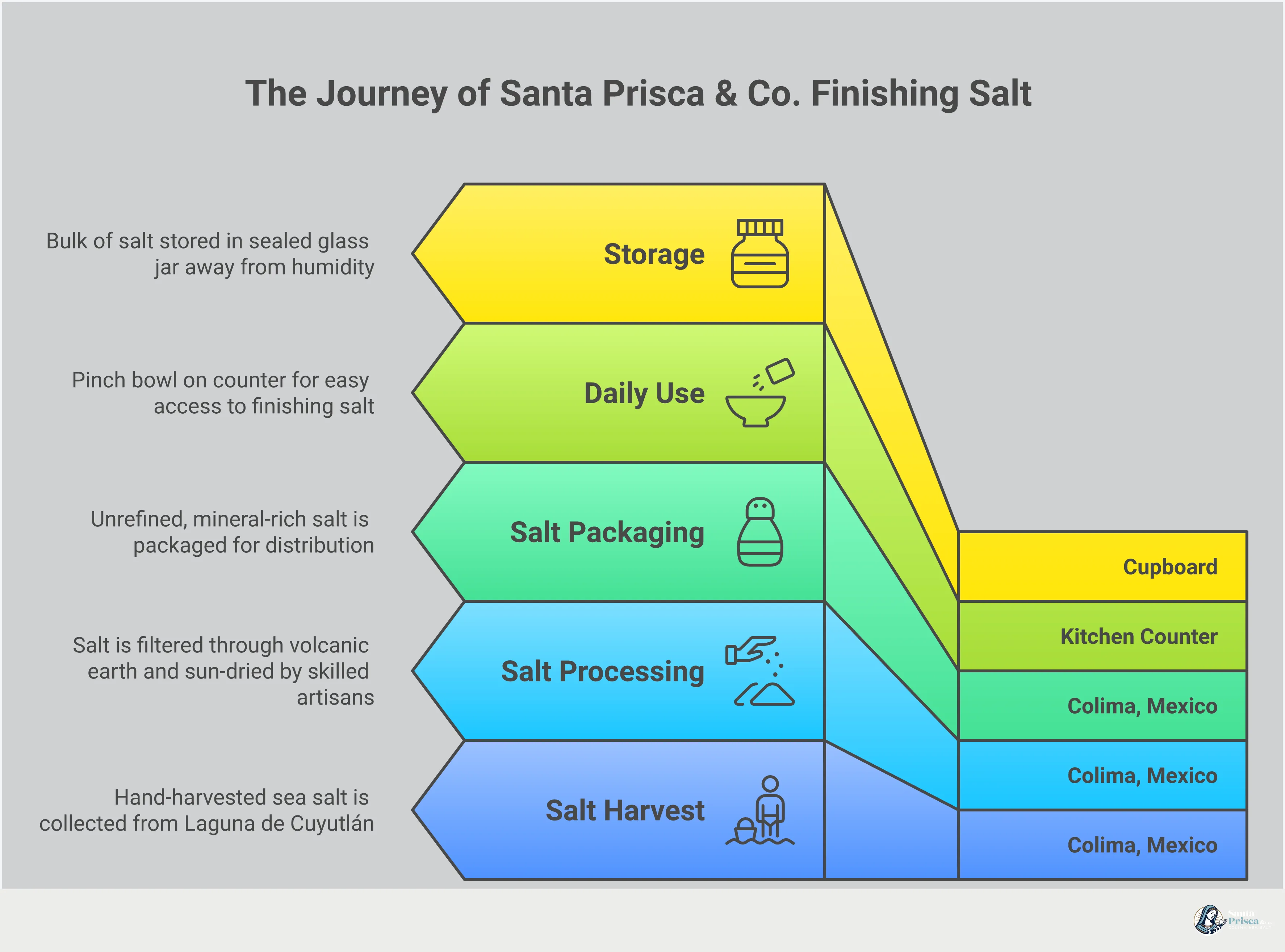
A simple glass jar with a tight-fitting lid is an ideal choice. It creates a reliable barrier against moisture and helps preserve the salt's unique texture. This way, the flakes stay separate, light, and ready to crumble perfectly between your fingertips. You can keep a small amount in a pinch bowl for daily use and refill it from your larger, sealed container as needed.
Find the Best Spot in Your Kitchen
Where you store your salt is just as important as what you store it in. The goal is to find a location that is cool, dark, and dry. Direct sunlight and heat from your stove or other appliances can degrade the quality of your salt over time. A kitchen cupboard or a pantry shelf is the perfect place for it to live.
Many of us have a habit of keeping salt right next to the stove for convenience, but the steam and fluctuating temperatures in that area can introduce moisture and cause clumping. By tucking your salt away from heat and light, you are maintaining its flavor and texture for the long term. This simple step ensures that every time you reach for it, your salt is as pristine as the day it was harvested.
Is Maldon the Only Flake Salt Worth Knowing?
Maldon has earned its place in many kitchens, and for good reason. For many of us, its delicate, pyramid-shaped flakes were our first introduction to the world beyond the standard salt shaker. It taught us that salt could be more than just salty; it could have texture, a clean crunch that finishes a dish with a flourish. But to stop at Maldon is to read only the first chapter of a fascinating story. The world of artisan salt is vast and varied, with each crystal telling a story of its origin, the hands that harvested it, and the unique minerals it carries from the earth and sea. Exploring these salts is an invitation to deepen our connection to our food and the planet.
What Makes an Artisan Sea Salt Special?
Artisan sea salts are a testament to the beauty of tradition. Unlike mass-produced table salt, which is often heavily processed and stripped of its natural character, artisan salts are produced in small batches. This allows for a level of care and intention that you can truly taste. The process often involves time-honored techniques, like allowing the sun and wind to slowly evaporate seawater, leaving behind delicate, uniquely shaped crystals. This craftsmanship results in a salt with a more complex flavor profile and a texture that can range from a fine, powdery flake to a satisfyingly crisp crystal. It’s a difference you can feel between your fingertips and taste on your tongue.
Discover Colima Sea Salt: A Mineral-Rich Alternative
If you appreciate the delicate crunch of a flake salt, allow us to introduce you to a beautiful, mineral-rich alternative from the coast of Mexico. Our Colima Sea Salt is hand-harvested from the Cuyutlán Lagoon, where ancient traditions meet pristine nature. The salt water is naturally filtered through volcanic earth, which infuses it with a wealth of minerals like magnesium and calcium. This gives the salt a clean, bright flavor with a subtle mineral depth that enhances food without overpowering it. Each crisp, sun-dried flake dissolves with a gentle burst, adding a layer of texture and a whisper of the Pacific Ocean to everything it touches. It’s a pure, unrefined taste of place.
Related Articles
- Sea Salt for Cooking: Types, Benefits, and How to Use It Like a Pro
- Top 7 Health Benefits of Colima Sea Salt
- Healthy Salts Compared: Top Types Ranked
Frequently Asked Questions
What makes flake salt different from the fine sea salt I already have? The biggest difference is texture. While fine sea salt is wonderful for dissolving into sauces or batters, flake salt is all about the finish. Its delicate, crystalline structure provides a gentle crunch and a bright pop of flavor right before you eat. Think of it as the final, thoughtful touch that adds another layer of sensation to your meal, rather than an ingredient that disappears into the dish.
Can I use flake salt for all my cooking, like seasoning soup? You certainly could, but you would be missing out on what makes it so special. The beauty of a flake salt is its crisp texture, which is lost the moment it dissolves in a liquid. It’s best saved for the final step, sprinkled over food just before serving. For seasoning soups, stocks, or pasta water, a more economical fine-grained sea salt is a better choice. Using a finishing salt with intention is all about honoring its unique purpose.
Is using a flake salt a healthier choice than table salt? Choosing a pure, unrefined flake salt is more about quality and mindfulness than anything else. Many common table salts contain anti-caking agents, whereas artisan salts are often just pure salt and retained trace minerals. Because the flakes have such a clean, potent flavor, you may find you need less to make an impact. This encourages you to season with more intention, tasting as you go instead of shaking salt mindlessly.
My salt flakes are starting to stick together. What should I do? That clumping is almost always caused by humidity, which is a constant presence in most kitchens. To protect your salt, store the majority of it in a glass jar with a tight-fitting lid and keep it in a cool, dark cupboard away from the stove. You can keep a small amount in a pinch bowl or salt cellar for daily use, refilling it as needed. This simple step preserves that wonderful, delicate texture.
I enjoy Maldon's texture. What other artisan salt should I try next? It's wonderful that you appreciate the unique character of a finishing salt. If you enjoy that delicate crunch, you might love exploring a salt with a bit more mineral complexity. Our Colima Sea Salt is hand-harvested in Mexico and naturally filtered through volcanic earth, which gives it a crisp flake and a beautiful, nuanced flavor. It’s a perfect next step for anyone looking to connect more deeply with the story and origin of their ingredients.