
The Best Salt for Brining Turkey (And Why It Matters)
Written By Santa Prisca & Co Staff Last updated on
Every ingredient tells a story. The salt you use in your brine can be a simple commodity, or it can be an element with a sense of place and tradition. When you’re preparing a meal with care, choosing ingredients that reflect that intention feels right. The best salt for brining turkey is one that is pure, unrefined, and harvested with respect for the earth. It dissolves cleanly, seasons gently, and carries a subtle mineral complexity that honors the food you’re preparing. Let’s explore how this foundational choice can bring a deeper sense of connection and flavor to your table.
Key Takeaways
- Select a Pure, Unrefined Salt: The foundation of a great brine is a coarse sea salt free from additives. This choice ensures a clean, mineral-rich flavor and prevents the harshness or metallic notes often found in processed table salts.
- Honor the Process with Proper Timing: A successful brine depends on balance. Aim for a ratio of about one cup of coarse salt to one gallon of water, and let the turkey rest in the solution for 12 to 24 hours to achieve perfect seasoning and moisture.
- Layer Flavors and Prepare for a Perfect Finish: A brine is a canvas for aromatics like herbs and citrus, which infuse the meat with subtle depth. After brining, the most crucial step for crisp, golden skin is to pat the turkey completely dry and let it air-chill before roasting.
What to Look for in a Brining Salt
When you’re preparing a brine, the salt you choose is more than just an ingredient—it’s the foundation of your final dish. The right salt transforms a simple turkey into something incredibly juicy and flavorful, while the wrong one can leave it tasting flat or even bitter.
First, look for purity. You want a clean, unrefined salt without any additives. Many common table salts contain iodine and anti-caking agents, which can create a metallic taste in your brine. Choosing a pure, food-grade salt ensures the flavor is clean and true, letting the natural taste of your ingredients shine.
The texture of the salt matters, too. A coarse grain is ideal for brining. Unlike fine table salt, which can dissolve too quickly and make your brine overly salty, coarse crystals release their salinity more slowly and evenly. This gentle process gives the meat time to absorb the perfect amount of moisture and flavor. Our Colima Sea Salt has a beautiful, crisp flake that is perfect for this.
Finally, consider how well the salt dissolves. The best salts for brining have crystals that dissolve completely in water, creating a clear solution that can fully penetrate the meat. This ensures every bite is seasoned perfectly, carrying not just saltiness but a subtle mineral depth that enhances the natural flavor of the turkey.
Why We Choose Colima Sea Salt for Brining
When preparing a meal meant for gathering, every ingredient choice feels significant. For something as central as a holiday turkey, the salt we use for brining is more than just a seasoning; it’s the foundation of flavor and moisture. Not all salt is created equal, and the one you choose can make all the difference.
This is why we always reach for Colima Sea Salt. Harvested from pure, sun-dried salt flats, its journey through volcanic earth gives it a remarkable mineral depth. This unique profile creates a brine that doesn't just make the turkey salty—it genuinely enhances its natural flavors, resulting in a richer, more savory bird.
The texture of the salt plays a crucial role, too. The coarse, beautiful crystals of Colima Sea Salt are perfect for brining because they dissolve slowly and evenly in water. This steady process ensures the entire brine is perfectly balanced, allowing every part of the turkey to absorb the solution without becoming overwhelmingly salty.
Beyond its function, this salt is completely unrefined and free from the additives you might find in other salts. It’s pure, clean, and full of the trace minerals that support our bodies. Using it in a brine is a small way to infuse your meal with elements that contribute to hydration and electrolyte balance, which is the very science behind a successful brine.
Finally, choosing this salt connects us to a story of tradition and place. Knowing it was harvested by hand using sustainable methods brings a sense of intention to the kitchen. It’s a simple choice that honors both the earth and the artisans behind the ingredient.
A Simple Breakdown of Brining Salts
Choosing a salt for your brine is about more than just adding salinity. The type you use influences the texture of your turkey, the depth of its flavor, and the purity of the ingredients. The size and shape of the salt crystals affect how they dissolve, while their origin can introduce a subtle complexity that refined salts simply can’t offer. When you create a brine, you’re crafting a foundation of flavor. Let’s look at the three most common options to see which one truly serves your cooking best.
Kosher Salt: The Go-To Option
Many brining recipes call for kosher salt, and for good reason. Its coarse, flaky crystals are easy to handle, and they dissolve beautifully in water without clumping. Because the flakes are larger than granulated table salt, it’s much harder to accidentally make your brine too salty. It’s a reliable, straightforward choice that consistently delivers good results. For many home cooks, this is the dependable workhorse for brining, offering a clean flavor profile that gets the job done.
Sea Salt: For Flavor and Minerals
For those of us who cook with intention, sea salt offers something more. While all salt is chemically sodium chloride, unrefined sea salt carries the essence of its origin. The beautiful trace minerals found in natural sea salt lend a subtle, nuanced flavor that processed alternatives lack. A coarse-grain variety like our Colima Sea Salt is perfect for brining, as the crystals dissolve evenly and infuse the meat with a gentle mineral depth. It’s a simple switch that honors the ingredient and adds complexity to your dish.
Table Salt: Why It's Best to Skip It
It’s best to leave the table salt in the shaker for this task. Its fine, dense grains are incredibly concentrated, making it very easy to create an overwhelmingly salty brine. A cup of table salt is significantly saltier than a cup of coarse kosher or sea salt. Beyond that, most table salts contain additives like anti-caking agents. When you’re preparing a thoughtful meal, you want the purest ingredients possible. Sticking to a coarser, unrefined salt ensures a cleaner flavor and better control.
How to Create the Perfect Salt-to-Water Ratio
Finding the right balance of salt and water is the heart of a good brine. It’s less about strict math and more about creating a mineral-rich bath that will gently season and tenderize your turkey from the inside out. This simple step transforms the entire meal, turning a standard roast into something truly memorable.
Before you measure your salt, let’s figure out exactly how much water you’ll need. Place your turkey in its brining container, then pour in enough cold water to completely submerge it. Carefully lift the turkey out, and the water that remains is the perfect amount for your brine. This little ritual ensures you never make too much or too little.
A great starting point is to use about one cup of coarse sea salt for every gallon of water. This creates a balanced brine solution that seasons the meat perfectly without making it overly salty. If you plan on a longer, overnight brine (more than 12 hours), you can reduce this to about a half-cup per gallon to keep the flavor just right.
The quality of your salt makes all the difference. When you use a pure, unrefined salt like our Colima Sea Salt, you’re not just adding salinity; you’re infusing the turkey with a subtle, complex minerality. Its crisp, irregular crystals dissolve beautifully, creating a brine that tastes clean and deeply flavorful, a world away from the harshness of processed salts. Trust the process, and let these beautiful ingredients work their magic.
How Long to Brine Your Turkey for the Best Flavor
Timing is everything in the kitchen, isn't it? It’s the quiet rhythm that turns simple ingredients into something memorable. When it comes to brining your turkey, finding that perfect window of time is the key to unlocking incredible flavor and moisture.
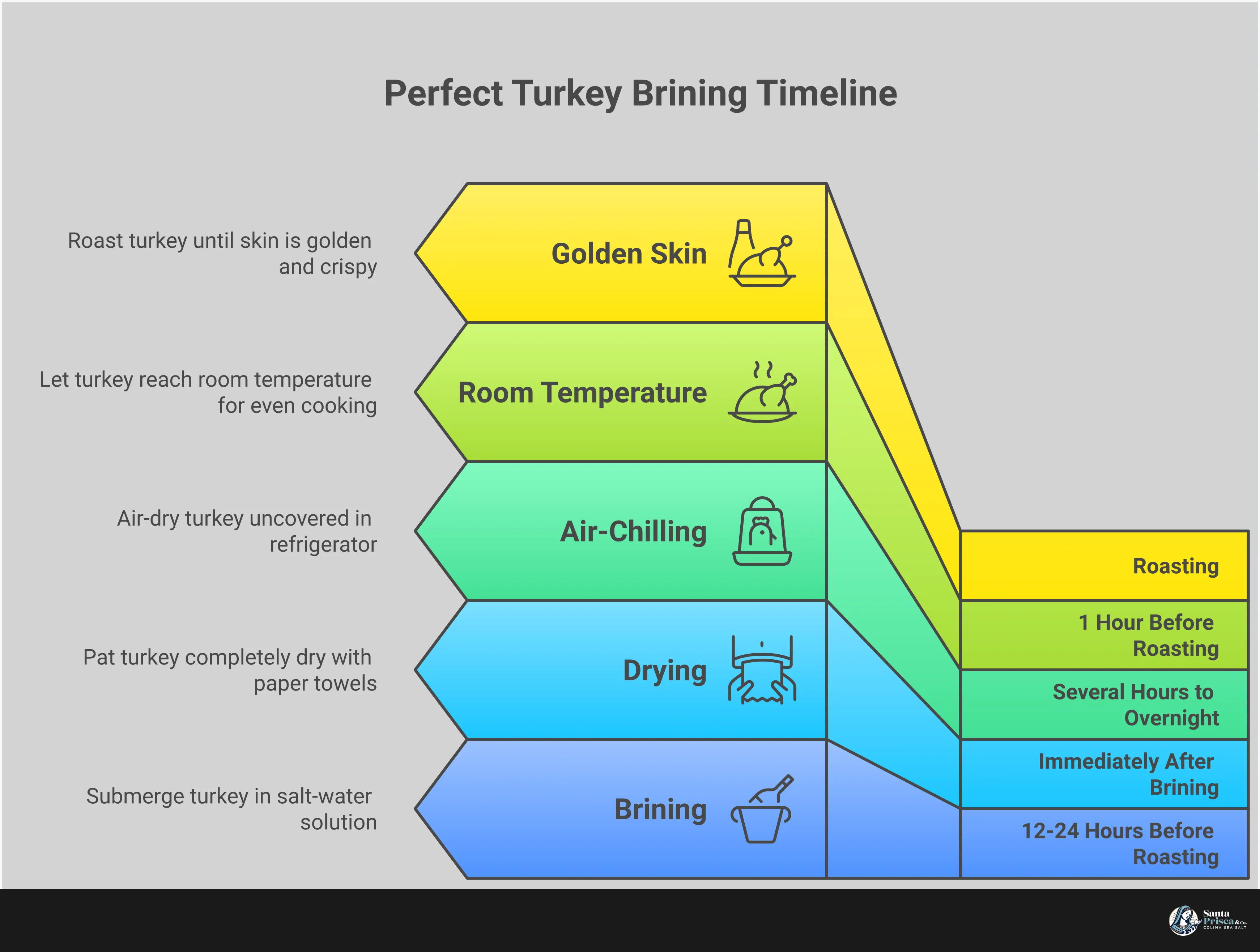
So, what’s the magic number? For the most succulent and beautifully seasoned bird, you’ll want to let it rest in its mineral-rich bath for 12 to 24 hours. This is the timeframe many chefs recommend to achieve the best flavor and juiciness, giving the salt enough time to work its way deep into the meat.
This window is the sweet spot where flavor and texture meet. It allows the turkey to absorb the perfect amount of moisture and seasoning, ensuring every bite is juicy. Any less, and you might not notice a difference; any more, and you risk overwhelming the delicate flavor of the meat.
If you prefer a more tailored approach, a good guideline is to brine your turkey for about one hour per pound. For most birds, this will land you squarely within that ideal 12 to 24-hour window. Think of it as a gentle process, not a race.
Patience is a virtue, but it’s possible to have too much of a good thing. Leaving your turkey in the brine for too long can make the meat overly salty and can even create a rubbery or soft texture. We’re aiming for tender and juicy, not spongy.
If you happen to lose track of time and brine it a bit too long, don’t worry. Simply give the turkey a thorough rinse under cool water. You can even let it soak in a fresh bowl of water for up to an hour to help draw out some of the excess salt. It’s a simple fix that can save your centerpiece.
The Wellness Side of Brining with Natural Salt
Choosing to brine your turkey is an act of intention. It’s a commitment to creating a meal that is deeply flavorful and incredibly moist. But the wellness aspect of this ritual goes beyond the final result on the plate. The type of salt you select for your brine is a foundational choice that can either add to or detract from the nourishment of your meal. When you reach for a pure, unrefined sea salt, you’re choosing more than just sodium chloride; you’re inviting a spectrum of minerals and a clean, authentic flavor into your kitchen.
This simple decision connects your cooking to a more mindful practice. Instead of using processed salts with additives, you are honoring the natural integrity of your ingredients. This approach isn't about restriction; it's about abundance. It’s about understanding that the earth provides elements that not only make our food taste better but also support our bodies. Brining with a natural salt is a small but meaningful way to infuse your holiday meal with care, from the very first step to the last savory bite. It’s a quiet nod to tradition and a celebration of ingredients in their purest form, ensuring that what you serve is as wholesome as it is delicious.
More Than Just Salt: The Mineral Difference
It’s a common thought that all salt is essentially the same. At a chemical level, salt is sodium chloride, but the real story is in the details. The main difference lies in the trace minerals that natural, unrefined salts carry with them. Our Colima Sea Salt is a perfect example. Harvested by hand from the salt flats of Colima, Mexico, it is naturally filtered through volcanic earth. This ancient process infuses each sun-dried crystal with a rich profile of minerals like magnesium, calcium, and potassium. This gives it a subtle complexity and a gentle, balanced flavor that you just don't find in processed salt.
Support Hydration and Balance
The primary purpose of a brine is to help the turkey retain moisture, and the minerals in natural sea salt play a key role in this process. These essential minerals are electrolytes, which are crucial for maintaining proper hydration in our own bodies. When used in a brine, they help the turkey’s cells absorb and hold onto water, ensuring every slice is juicy and tender. The medium-coarse grain of a good sea salt also dissolves evenly, creating a perfectly balanced solution that seasons the meat thoroughly without making it overwhelmingly salty. It’s a beautiful, simple science that results in a more succulent bird.
Skip the Additives and Anti-Caking Agents
Take a look at the ingredient list on a container of standard table salt, and you might be surprised. You’ll often find anti-caking agents, dextrose (a type of sugar), and sometimes even bleaching agents. These additives can impart a subtle chemical or metallic taste to your food. Using natural salts for brining means you are working with pure, unadulterated salt. This allows the true flavors of your turkey, herbs, and aromatics to shine through without any interference. It’s a simple switch that honors the clean, wholesome meal you’re preparing for the people you love.
How to Perfectly Dissolve Salt for Your Brine
Creating a brine is a simple act of alchemy, transforming salt and water into a solution that promises a juicy, flavorful turkey. But the magic is in the details. Ensuring your salt dissolves completely is the foundation of a successful brine, creating a perfectly balanced liquid that seasons the meat from the inside out. It’s a small step that makes all the difference, turning a good meal into a memorable one.
Why Water Temperature Matters
Think of warm water as a gentle invitation for the salt crystals to release their full potential. When the water is warm, its molecules are more active, helping to break down and dissolve the salt more quickly and evenly. This is the secret to a consistent brine. A well-dissolved solution is essential for making your turkey more flavorful and juicy. When every crystal has melted away, you’re left with a clear, potent liquid ready to infuse your turkey with moisture and a delicate, balanced salinity. It’s a moment of quiet chemistry in your kitchen.
A Quick Stirring Guide
Once your salt meets the water, give it a dedicated stir. This isn't just a quick swirl; it's an intentional act to ensure every last granule dissolves into the liquid. As you stir, watch the water transform from cloudy to clear. This visual cue is your sign that the brine is ready. A fully integrated solution means the salt is evenly distributed, which is crucial for the brining process. When you submerge your turkey, you can be confident that every part of it is soaking in that perfectly seasoned liquid, promising an even flavor throughout.
Tips for Coarse vs. Fine Crystals
The texture of your salt truly matters. Coarse, unrefined crystals like our Colima Sea Salt are ideal for brining because they dissolve cleanly and evenly. According to culinary experts, the best types of salt for brining are coarse because they spread easily and resist clumping. Fine-grained table salt, on the other hand, can sometimes clump in water and often contains anti-caking agents you don’t need. The crisp, irregular flakes of a hand-harvested sea salt melt away beautifully, creating a pure brine that lets the natural mineral notes shine through.
Common Brining Mistakes (And How to Avoid Them)
Brining is a beautiful act of preparation, a quiet ritual that sets the stage for a memorable meal. But a few common missteps can stand between you and a perfectly juicy, flavorful turkey. Taking a moment to understand the process helps ensure your efforts are rewarded. Let’s walk through a few things to watch for, so you can brine with confidence and intention. When you honor the process, the results always speak for themselves.
Starting with a Pre-Brined Turkey
Many turkeys you find at the grocery store have already been treated with a salt solution. You might see words like “basted,” “self-basted,” or “enhanced” on the packaging. Brining one of these birds a second time will result in an overly salty, disappointing flavor. The key is to start with a natural, untreated turkey, which gives you a clean canvas to build flavor. Always check the label before you buy, and choose a bird that allows you to control the seasoning from the very beginning.
Brining for Too Long
Patience is a virtue in the kitchen, but there is such a thing as too much of a good thing. If left in the brine for too long, the turkey’s texture can become spongy or rubbery as the muscle fibers break down too much. A good rule of thumb is to brine for about one hour per pound, typically landing somewhere between 12 and 24 hours. This is the sweet spot where the meat becomes seasoned and tender without losing its integrity. If you accidentally over-brine, you can soak the turkey in fresh, cold water for an hour to draw out some of the excess salt.
Choosing the Wrong Container
The vessel you choose for brining is just as important as the ingredients. Using a container made from a reactive metal, like aluminum, can cause a chemical reaction with the salt. This can leach a metallic taste into your turkey, masking the pure, clean flavors you’ve worked to create. Instead, opt for a non-reactive container. Large food-grade plastic buckets, stainless steel stockpots, or even brining bags are all excellent choices that will respect the integrity of your ingredients and the final dish.
Infusing Your Brine with Aromatic Flavors
A brine is so much more than just salt and water. Think of it as a liquid foundation, a blank canvas waiting for you to layer on depth, aroma, and character. This is where you can move beyond the basic recipe and begin to create a turkey that is uniquely yours, one that tells a story through its flavor. Infusing your brine is a simple, intentional act that transforms the entire dish from good to truly memorable.
By adding just a few thoughtful ingredients, you can introduce subtle notes that perfume the meat from the inside out. It’s a gentle process that doesn’t overpower the natural flavor of the turkey but instead complements it, creating a more complex and satisfying experience. This is your opportunity to get creative in the kitchen, trusting your senses to guide you toward a combination that feels just right for your table.
Add Fresh Herbs and Aromatics
Fresh herbs are one of the simplest ways to introduce aromatic qualities to your brine. A few sprigs of rosemary can lend a beautiful, piney fragrance, while thyme offers an earthy, grounding note. We also love adding whole sage leaves, which release a savory aroma that feels essential to any holiday meal.
To get the most from your herbs, gently bruise the leaves between your fingers before adding them to the pot. This helps release their fragrant essential oils into the water. Don’t stop at herbs, either. A handful of smashed garlic cloves, whole black peppercorns, or a few bay leaves can add another layer of classic, savory depth. This is the first step in building a truly flavorful foundation for your bird.
Balance with Natural Sweeteners and Citrus
While salt is the key to a successful brine, creating balance is what makes it exceptional. A touch of sweetness helps round out the saltiness, creating a more harmonious flavor profile. Instead of refined sugar, consider natural sweeteners like a spoonful of raw honey, a drizzle of maple syrup, or a bit of unrefined brown sugar. These options add a subtle warmth and complexity that white sugar simply can’t match.
To complement the sweetness, add the brightness of fresh citrus. Slicing a whole orange or lemon and adding it to the brine introduces a clean, zesty note that cuts through the richness of the turkey. The natural acids in citrus also contribute to a more tender texture in the final result, making the meat even more succulent.
A Nod to Mexican Tradition
In our kitchen, we often look to heritage for inspiration, and traditional Mexican cooking offers beautiful lessons in flavor. Many classic Mexican marinades and adobos use citrus to both tenderize and brighten meat. This cultural approach to brining is a perfect match for a holiday turkey.
Incorporating the juice of oranges and limes into your brine is a nod to this tradition. It imparts a subtle, sun-kissed warmth that feels both familiar and special. This small touch connects your meal to a rich culinary history, honoring the simple, powerful ingredients that have been used to create incredible food for generations. It’s a beautiful way to bring a piece of Mexico’s vibrant food culture to your own table.
After the Brine: Your Final Steps to a Flawless Turkey
The patient work of brining is done. Now, a few final, thoughtful steps will transform your turkey from simply moist to truly memorable. This is where you prepare the bird for the heat of the oven, ensuring all that absorbed flavor and moisture results in a perfect roast.
Pat and Air-Dry for Crispy Skin
Once you lift your turkey from the brine, the first step is to dry it thoroughly. Use paper towels to pat every surface, inside and out, until it’s as dry as you can get it.
For that coveted golden, shatteringly crisp skin, here’s a little secret: let it air-dry. Place the turkey on a rack set over a baking sheet and let it rest, uncovered, in the refrigerator for several hours, or even up to a full day. This simple step is one of the most common turkey brining mistakes people skip, but it makes all the difference.
To Rinse or Not to Rinse?
You might wonder if you should rinse the turkey after its salt bath. If you’ve brined it for the correct amount of time (about one hour per pound), there’s no need to rinse. The salt has done its work perfectly.
However, if you accidentally left it in the brine for too long, a quick rinse under cool water can help remove some of the excess surface salt. Just be sure to pat it completely dry afterward.
Prepare for Roasting
Before it heads to the oven, let the turkey sit at room temperature for about an hour to ensure it cooks evenly. A cold bird going into a hot oven can cook unevenly.
If your turkey came with a pop-up timer, it's best to leave it in place. Removing it can create a hole where precious juices might escape. This is your moment to add a final layer of flavor. You can rub the skin with softened butter or olive oil and perhaps a sprinkle of fresh herbs before roasting it to perfection.
Related Articles
- Sea Salt for Cooking: Types, Benefits, and How to Use It Like a Pro
- Coarse Sea Salt for Steak: A Complete Guide
- The Perfect Chicken Confit Recipe (Step-by-Step)
- The Ultimate Boneless Fried Chicken Recipe
Frequently Asked Questions
What makes Colima Sea Salt a better choice for brining than standard kosher salt? While kosher salt is a dependable option, our Colima Sea Salt brings a unique mineral depth to your brine. Its journey through volcanic earth gives it a complex, nuanced flavor that enhances the turkey’s natural taste rather than just making it salty. Using this unrefined salt is an intentional choice that adds a layer of clean, pure flavor without any of the additives found in more processed salts.
Do I still need to salt my turkey before roasting if I've already brined it? There’s no need to add more salt. The brine has already done the beautiful work of seasoning the meat thoroughly from the inside out. Adding more salt to the skin before roasting would likely make the final dish too salty. Instead, you can focus on other flavors by rubbing the skin with softened butter or olive oil and a sprinkle of fresh herbs.
Can I use fine sea salt if I don't have a coarse variety? You can, but it requires careful measurement. Fine salt is much denser than coarse salt, so a cup-for-cup substitution will create an intensely salty brine. If you must use fine salt, it's best to measure by weight. If you don't have a scale, a general guideline is to use about half the amount called for in the recipe. We recommend coarse salt because its crystals dissolve more slowly and evenly, ensuring a perfectly balanced brine.
Is it okay to brine for less than 12 hours if I'm short on time? Absolutely. While a 12 to 24-hour brine gives the most profound results, even a shorter soak of 6 to 8 hours will make a noticeable difference in the moisture and tenderness of your turkey. Any amount of time you can give it is beneficial. Think of it as a worthwhile step, even when your schedule is tight.
My brine included herbs and citrus. Should I rinse them off the turkey? A full rinse isn't necessary unless you accidentally brined the turkey for too long. However, you should pat the bird completely dry with paper towels before roasting. As you do this, you can gently wipe away any aromatics like herb leaves, peppercorns, or citrus pulp that are clinging to the skin. This creates a clean surface, which is the key to achieving that beautiful, golden-brown, and crispy skin in the oven.