
7 Best Gourmet Salts for Cooking & When to Use Them
Written By Santa Prisca & Co Staff Last updated on
We put so much thought into the origin of our coffee beans, the terroir of our wine, and the cacao percentage of our chocolate. So why does salt, one of the most fundamental ingredients in our kitchen, so often get overlooked? The truth is, salt has a story, too. It carries the essence of the waters from which it was harvested, whether it’s a sun-drenched lagoon in Mexico or a clay-lined pond in France. This sense of place is what gives gourmet salt its unique mineral profile and complex flavor. Choosing the best gourmet salt for cooking is about more than seasoning; it’s about connecting with an ingredient in its purest form and appreciating the journey it took to your table.
Key Takeaways
- Understand Salt's Dual Role: Use fine-grained salts during the cooking process to build a flavor foundation from within, and save coarse, flaky salts for a final sprinkle to add texture and a pop of mineral flavor.
- Prioritize Unrefined for Better Flavor: Choose natural, unrefined salts to experience a fuller, more complex taste. Unlike processed table salt, they retain their trace minerals and unique crystal structure, which adds character to your meals.
- Season with Intention: A small amount of a high-quality finishing salt provides more textural and flavorful impact than a larger amount of processed salt, allowing you to create more memorable dishes while using less.
What's the Difference Between Cooking and Finishing Salt?
Have you ever followed a recipe perfectly, only to find the final dish tastes a little flat? The secret might not be in the ingredients you used, but in how and when you used your salt. Not all salt is created equal, and understanding the distinction between cooking salt and finishing salt is a simple shift that can make a profound difference in your kitchen. It’s about moving from simply seasoning to intentionally building layers of flavor.
For Building Flavor from the Start
Think of cooking salt as the foundation of your dish. This is the salt you add during the cooking process, whether you’re sweating onions, boiling pasta water, or simmering a sauce. Its primary job is to dissolve and season the food from within, creating a cohesive and balanced flavor profile. Because its purpose is to meld into the background, cooking salts usually have a finer grain that disappears easily. Using salt correctly at this stage helps to enhance the natural flavors of your ingredients, laying the groundwork for a truly delicious meal.
For That Final, Perfect Touch
Finishing salt, on the other hand, is all about the grand finale. This is the salt you sprinkle over a dish just before it reaches the table. Think of it as a garnish that delivers a final burst of flavor and a delightful textural surprise. These are often beautiful, unrefined salts with a complex mineral taste that you want to experience directly. Their delicate character would be lost in the heat of a pan, so they are saved for that last, perfect moment. A pinch over a sliced avocado, a sprinkle on a chocolate chip cookie, or a dash on a perfectly seared steak makes the entire dish feel more complete.
Why Size and Texture Are Everything
The real magic lies in the crystal structure. A fine-grained cooking salt dissolves quickly and evenly, which is exactly what you want for building a base. A finishing salt, however, offers a completely different sensory experience. Its larger, flakier, or crunchier crystals don’t dissolve right away. Instead, they sit on the surface of the food, providing a satisfying crunch and a concentrated pop of salinity that awakens the palate. This textural contrast is just as important as the flavor, adding a layer of complexity that turns a simple meal into something special.
Beyond the Shaker: What Sets Gourmet Salt Apart?
If you’ve ever wondered what makes a simple tomato salad at a restaurant taste so memorable, the secret might be in the salt. We often think of salt as a basic, one-dimensional ingredient, but a world of flavor exists beyond the standard shaker. Gourmet salts are not just about adding saltiness; they are about adding character, texture, and a story to your food. They invite us to slow down and appreciate how a single, pure ingredient can completely change a meal. It’s a small shift in the kitchen that makes a world of difference on the palate.
When you move beyond processed table salt, you begin to see salt as an ingredient in its own right, one with terroir, history, and purpose. Just like wine grapes absorb the characteristics of their soil and climate, salt crystals carry the essence of the waters from which they were harvested. This is why a salt from a volcanic lagoon in Mexico tastes so different from one raked from the clay-lined ponds of France. Choosing a gourmet salt is an act of intention. It’s a way to connect more deeply with your ingredients and honor the process of cooking, turning a simple meal into a moment of sensory delight and quiet gratitude.
It's All About Minerals and Flavor
When we talk about gourmet salt, we’re really talking about its connection to the earth. Unlike processed table salt, which is stripped of its natural components, unrefined sea salts hold onto a wealth of trace minerals from the waters they came from. Our Colima Sea Salt, for example, is hand-harvested from a lagoon fed by volcanic springs, giving it a unique mineral profile. This is what creates its clean, balanced flavor—a gentle salinity with subtle complexities, not the harsh bite of iodized salt. It’s the difference between a single note and a beautiful, resonant chord that enhances everything it touches.
Decoding "Unrefined": What It Really Means
The word "unrefined" simply means pure and untouched. It’s salt in its most natural form, free from the anti-caking agents, bleaching, and processing that define table salt. When you see an unrefined salt, you’ll notice its unique crystal structure. It might be a delicate, flaky crystal that dissolves on your tongue or a satisfyingly crunchy grain. This texture is part of its magic, adding a final flourish to a dish. It’s a crisp flake that lingers, offering a burst of mineral depth that complements food instead of overpowering it. This is why we cherish the artisanal craftsmanship behind our salts; it preserves this natural integrity.
Clearing Up Common Salt Myths
One of the biggest myths is that all salt is the same. This couldn't be further from the truth. Just as you wouldn't use any random olive oil for every purpose, different salts have different flavors and uses. A coarse, robust salt is perfect for seasoning a roast while it cooks, while a delicate finishing salt is meant to be sprinkled on just before serving to add texture and a final pop of flavor. Thinking about salt this way changes it from a simple seasoning to a powerful tool in your kitchen. It’s about choosing the right salt with intention to make your food truly shine.
7 Gourmet Salts to Know and Love
Getting to know different salts is like learning a new language of flavor. Each one has its own story, texture, and purpose in the kitchen. Here are seven of our favorites to begin your exploration, from the sun-dried crystals of Mexico to the smoky flakes of the Pacific Northwest.
1. Colima Sea Salt (Santa Prisca & Co.)
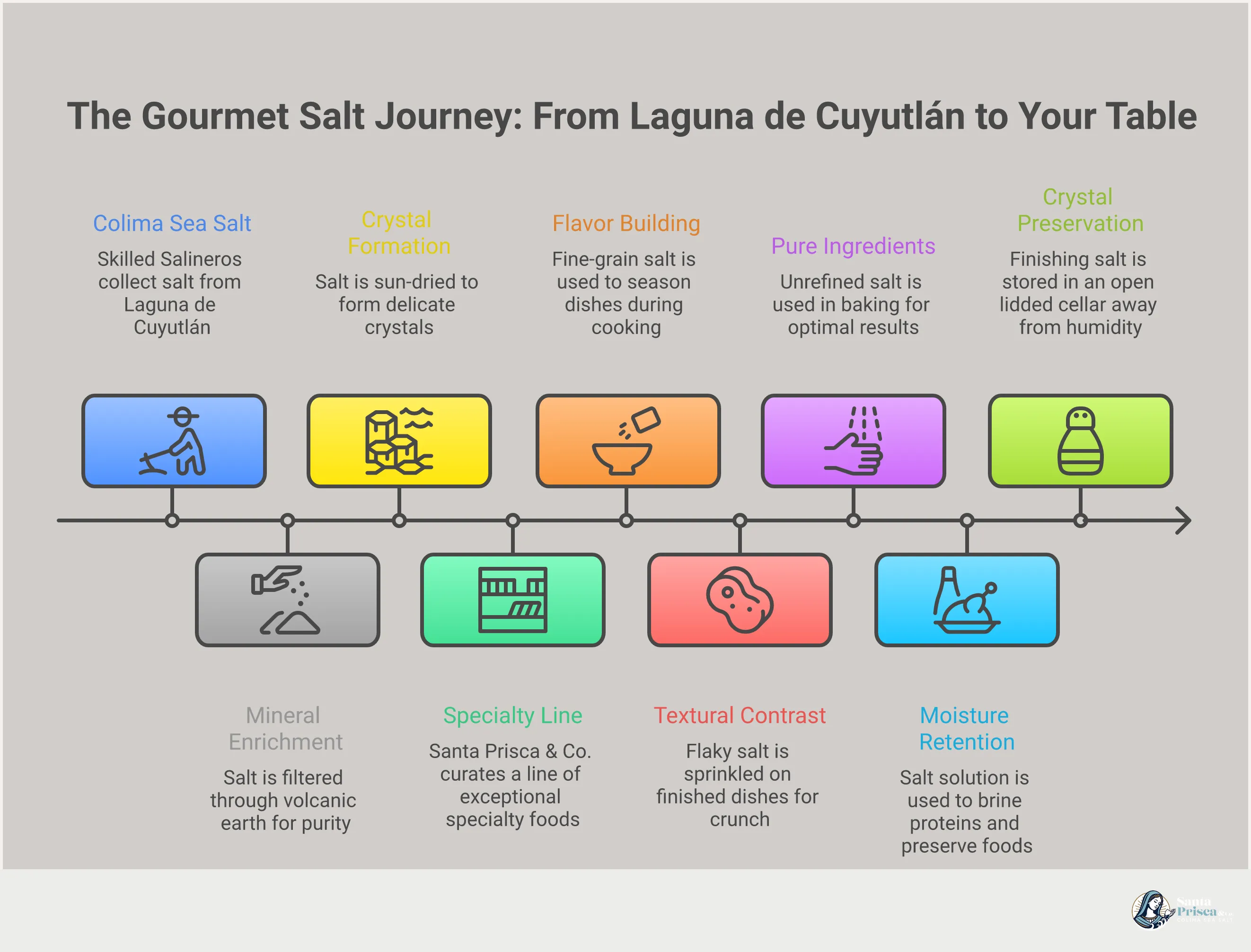
There’s a reason this is our signature salt. Hand-harvested from a centuries-old lagoon in Colima, Mexico, our salt is a true taste of place. The process is slow and intentional, allowing the sun and volcanic earth to work their magic. The result is a delicate, unrefined crystal with a clean flavor and a burst of mineral depth that doesn't overpower your food. Its fine, crisp texture dissolves beautifully, making it an incredible finishing salt. We love sprinkling Colima Sea Salt over fresh tomatoes, grilled fish, or even a simple slice of avocado toast to let its pure character shine.
2. Fleur de Sel
Often called the "caviar of salts," Fleur de Sel is a testament to delicate craftsmanship. Its name, which means "flower of salt" in French, hints at how it’s harvested. Artisans gently rake only the top layer of crystals that bloom on the surface of salt pans in coastal France. These light, flaky crystals are moist and have a subtle brine flavor that melts on the tongue. Because it’s so delicate, it’s best used as a finishing touch. A pinch on a fresh summer salad, seared scallops, or even a rich chocolate dessert adds a whisper of salinity and a beautiful, gentle crunch.
3. Sel Gris (Grey Salt)
Harvested from the same salt ponds as fleur de sel, sel gris is its more robust cousin. While fleur de sel is skimmed from the surface, sel gris is allowed to fall to the bottom of the clay-lined ponds. This contact with the clay gives the salt its signature grey color and a dense mineral profile. It’s coarser, moister, and has a bolder, more assertive flavor. This is the salt you reach for when you want to build deep, savory notes in heartier dishes. Use this French Grey Sea Salt in stews, braises, and for seasoning roasted root vegetables or a thick-cut steak before grilling.
4. Maldon Sea Salt Flakes
Instantly recognizable for their large, pyramid-shaped flakes, Maldon salt is all about texture. Harvested from the coastal town of Maldon in Essex, England, these flakes have a remarkably clean flavor and a satisfying, delicate crunch that is unlike any other salt. It’s not meant for dissolving into a pot of soup; its beauty lies in its structure. Maldon Sea Salt Flakes are the perfect finishing touch for adding a textural pop. Sprinkle them over a finished steak, a soft-boiled egg, a leafy green salad, or even the top of a chocolate chip cookie right out of the oven.
5. Himalayan Pink Salt
Mined from ancient salt deposits deep within the Himalayan mountains, this salt’s beautiful pink hue comes from its rich mineral content, particularly iron. Its flavor is clean and straightforward, making it a versatile salt for many applications. You can find Himalayan Pink Salt in various textures, from fine grains perfect for everyday cooking and baking to coarse crystals that add a decorative finish. The large, solid blocks have also become popular as beautiful serving platters for fruits, cheeses, or thinly sliced fish, gently seasoning the food they hold.
6. Black Lava Salt
This salt is as dramatic as it sounds. Typically sourced from volcanic regions, Black Lava Salt is a sea salt that has been blended with activated charcoal, giving it a striking, jet-black color. While the charcoal adds a subtle earthiness and a hint of smokiness, this salt is primarily used for its stunning visual appeal. It creates a beautiful contrast when sprinkled over light-colored foods. Try it as a finishing salt on grilled halibut, creamy potato soup, deviled eggs, or fresh pineapple to add a touch of unexpected elegance to your plate.
7. Smoked Sea Salt
If you love a smoky flavor but don’t have a smoker, this salt is for you. Smoked Sea Salt is made by slowly smoking sea salt over wood chips (like alder, hickory, or applewood) for up to two weeks. This process infuses the crystals with a deep, rich, and smoky aroma that can transform a dish. It adds an instant layer of complexity and savory depth. It’s incredibly versatile and works well on grilled meats, roasted chicken, chili, and even on snacks like popcorn or toasted almonds. It’s a simple way to add that "cooked over a fire" flavor to your food.
How to Use Gourmet Salt with Intention
Using salt is more than just a reflex; it’s a quiet ritual. When we choose our salt with care, we’re not just seasoning food. We are adding texture, deepening flavor, and connecting with the ingredients in a more meaningful way. Thinking about salt’s role before you even begin cooking can transform the entire process from a task into an act of intention. It’s about understanding how a simple mineral can create a completely different experience, whether it’s dissolving seamlessly into a sauce or providing a final, satisfying crunch.
To Build Flavor While Cooking
Seasoning as you cook is about creating a foundation of flavor from within. When you add salt to vegetables as they sauté or to water for boiling pasta, you are doing more than just making them salty. The salt draws out moisture and helps flavors meld and deepen, creating a complexity that you can’t achieve by just sprinkling it on at the end. For this purpose, a fine-grain sea salt is perfect. It dissolves evenly, ensuring every part of the dish is seasoned consistently. This practice of building layers of flavor is a gentle way to honor each ingredient.
To Finish, Garnish, and Add Texture
A finishing salt is the final flourish, the last word in your culinary story. These are the beautiful, flaky salts you sprinkle over a dish just before serving. Think of the delicate crunch on a perfectly ripe tomato, the burst of salinity on a dark chocolate brownie, or the crystalline sparkle on a grilled steak. This final touch adds a delightful texture and a concentrated pop of mineral flavor that awakens the palate. Our hand-harvested Colima Sea Salt has a crisp, clean flake that lingers just long enough, making it an ideal finishing salt for almost any dish.
For Baking, Brining, and Preserving
Beyond everyday cooking, salt is a fundamental element in baking, brining, and preserving. In baking, salt does more than balance sweetness; it controls yeast fermentation and strengthens gluten for a better crumb structure. When brining meats, a pure salt solution helps proteins retain moisture, resulting in incredibly juicy and tender results. For preserving, salt has been used for centuries to safely cure foods by drawing out water and inhibiting spoilage. For these applications, it’s important to use a pure, unrefined salt without any anti-caking agents, as additives can interfere with these delicate chemical processes.
How to Pair Salts with Food
Just as you might pair wine with a meal, you can learn the art of pairing specific salts with food. The size, texture, and mineral profile of a salt can dramatically change the experience of a dish. A delicate, flaky salt like Fleur de Sel is wonderful on leafy greens, eggs, or delicate fish, where it adds a subtle crunch without overpowering. A heartier, coarser salt stands up well to grilled meats and roasted root vegetables. The rich mineral notes and moist, crunchy texture of Colima Sea Salt, for example, beautifully complement the smoky char of a steak or the earthy sweetness of roasted squash.
Is Gourmet Salt Actually Better for You?
When we talk about food and wellness, salt often gets a complicated reputation. We’re frequently told to consume less of it, but what if the conversation isn't about quantity, but quality? What if we shift our focus from less salt to better salt? The truth is, not all salt is created equal. The journey from a pristine salt flat to your kitchen table can either strip away or preserve the very essence of what makes salt a life-sustaining mineral.
Choosing a gourmet, unrefined salt is less about a health trend and more about returning to a more natural, flavorful, and intentional way of seasoning our food. It’s about understanding the story behind each crystal and appreciating the depth it brings to every meal. When you choose salt that has been harvested with care, you’re not just adding flavor; you’re adding a piece of a place, a tradition, and a connection to the earth. This simple shift can change your relationship with seasoning, turning it from an afterthought into a mindful moment of gratitude.
The Importance of Trace Minerals
Think of common table salt as a heavily processed food. During refining, it’s stripped of its natural mineral companions, bleached, and often treated with anti-caking agents. What’s left is almost pure sodium chloride. Unrefined sea salt, on the other hand, is a whole food. When salt is harvested by hand and gently dried by the sun, it retains a beautiful spectrum of trace minerals like magnesium, potassium, and calcium. Our Colima Sea Salt, for example, is naturally filtered through volcanic earth, which enriches it with a unique mineral profile. These minerals don’t just offer subtle wellness benefits; they create a rounder, more complex flavor that you simply can’t find in a standard shaker.
Finding Balance with Unrefined Salt
One of the most beautiful things about using a high-quality finishing salt is that a little goes a long way. The vibrant, clean flavor and satisfying crunch mean you can use less salt overall while achieving a much greater impact. A delicate sprinkle over a finished dish awakens all the other flavors, adding a final layer of texture and a burst of mineral depth. This practice encourages a more mindful approach to seasoning. Instead of automatically salting your food, you learn to taste and season with intention, appreciating how a few perfect crystals can transform a simple slice of tomato or a perfectly cooked steak. When you explore different salts, you begin to build a palate for the subtle notes each one offers.
How to Properly Store Your Salt
To protect the delicate structure and flavor of your gourmet salt, proper storage is essential. Humidity is the enemy of a good finishing salt, as it can cause the crystals to clump and dissolve. Forget the shaker and instead keep your salt in a small, lidded container like a salt cellar or a simple ceramic bowl. Keeping it on the counter near your cooking space makes it easy to grab a pinch with your fingers, which is the best way to control the amount you use and connect with your ingredients. This simple ritual honors the journey of the salt and preserves its unique character, ensuring every pinch is as perfect as the last. If you have questions about storing larger quantities, please feel free to contact us.
Is Gourmet Salt Worth It?
When you see a beautiful bag of artisan salt next to a simple canister of table salt, it’s natural to wonder if the price difference is really justified. The short answer is yes, but for reasons that go far beyond flavor alone. Choosing a gourmet salt is an invitation to cook with more intention. It’s about honoring the ingredients, the process, and the final dish you share. It’s a small shift that can completely change your relationship with your kitchen.
Think of it like using fresh herbs instead of dried, or extra virgin olive oil instead of a generic blend. The quality of each component contributes to the whole. When you invest in a pure, unrefined salt, you’re not just buying a seasoning. You’re bringing home a piece of the earth, complete with its unique mineral profile and story. This simple choice connects you more deeply to your food and the traditions behind it, making every meal a more meaningful experience.
Why Quality Is Worth the Investment
The true value of a gourmet salt lies in its texture and complexity. Unlike processed table salt, which is stripped of its minerals and often treated with anti-caking agents, unrefined salts offer a delicate crunch and a nuanced flavor that melts into your food. These are finishing salts, meant to be sprinkled on a dish right before serving. That final flourish adds a crisp, satisfying texture and a gentle burst of mineral depth that you just can’t get from a standard shaker. Investing in a high-quality Colima Sea Salt is an investment in the final, memorable moments of a meal.
What to Look for on the Label
Navigating the world of salt can feel overwhelming, but a few key words on the label can guide you to a quality product. Look for terms like “unrefined” and “natural.” This tells you that the salt has been minimally processed, retaining the full spectrum of trace minerals from its source. An unrefined salt is pure, just as nature made it. It hasn’t been bleached, processed, or stripped of its character. When you choose unrefined, you’re choosing a salt that offers complex flavor and a connection to its origin. You can explore our entire collection of pure, unrefined salts to see and taste the difference for yourself.
Where to Find Authentic Gourmet Salt
The origin of a salt tells its story. Many people are familiar with the delicate, flaky salts from France, but other regions offer their own unique treasures. The key is to look for brands that are transparent about their sourcing and harvesting methods. Authentic gourmet salt is often hand-harvested from pristine environments, a tradition passed down through generations. For example, the ancient volcanic salt flats of Colima, Mexico, produce a stunningly pure salt that is carefully gathered by hand. By choosing salts with a clear heritage, you support these time-honored practices and bring a truly special ingredient into your home.
Related Articles
- The Best Salt to Finish a Steak: 8 Top Choices
- Sea Salt for Cooking: Types, Benefits, and How to Use It Like a Pro
- The 7 Best Finishing Salts for Cooking in 2025
- What Is Finishing Salt Used For? A Chef's Guide
Frequently Asked Questions
Can I just use one type of gourmet salt for all my cooking? You certainly can, but you might be missing out on the best part. Think of it this way: a fine-grained salt is perfect for dissolving into soups and sauces to build flavor from the start. A beautiful finishing salt, however, has a larger, flakier crystal designed to add a final pop of flavor and texture. Using a delicate finishing salt during cooking would cause its unique character to get lost in the heat. For the best results, I recommend having one for cooking and one for finishing.
What makes Colima Sea Salt different from other popular salts like Himalayan pink salt? It really comes down to their origin, which gives them a unique taste and texture. Himalayan salt is mined from ancient, underground salt deposits in the mountains. Our Colima Sea Salt is hand-harvested from a coastal lagoon in Mexico that is fed by volcanic springs. This connection to the volcanic earth and sun gives it a distinct mineral profile, resulting in a clean, crisp flavor that is less about sharp saltiness and more about enhancing the food it touches.
Is unrefined salt really better for me than regular table salt? It helps to think of unrefined salt as a whole food. Unlike processed table salt, which is stripped of its natural elements, unrefined sea salt retains a spectrum of trace minerals from the water it came from, like magnesium and potassium. These minerals contribute to a more complex, rounded flavor. So, it’s less about one being "healthier" and more about choosing a pure, unprocessed ingredient that offers more character and a deeper connection to its natural source.
I'm new to gourmet salts. Which one should I start with? That's a wonderful question. I always suggest starting with a versatile finishing salt. Look for one with a clean flavor and a satisfying, flaky texture that won’t completely overpower your food. A salt like our Colima Sea Salt is a perfect first step because its delicate, crunchy flakes work beautifully on almost everything, from sliced avocado and grilled fish to even a simple chocolate brownie. It’s a great way to experience the difference a quality salt can make.
Why is there such a big price difference between gourmet salt and table salt? The price reflects the process and the purity of the final product. Table salt is typically mass-produced and heavily refined by machines. Gourmet salts, on the other hand, are often harvested by hand in small batches using traditional, labor-intensive methods that have been passed down for generations. You are investing in the artisanal craftsmanship, the pristine environment it comes from, and the incredible impact its texture and flavor will have on your food.