
The Art of Choosing a Stoneware Salt Cellar
Written By Santa Prisca & Co Staff Last updated on
The simple act of seasoning food is a ritual we perform every day. It’s often the final touch that brings a dish together, a small gesture of care. So why do we so often keep our most-used ingredient in a flimsy box or a clunky grinder? A stoneware salt cellar invites you to slow down and connect with this essential step. Instead of shaking or grinding, you reach for a pinch, feeling the texture of the crystals between your fingers. This small shift transforms a mundane task into a mindful moment, especially when the vessel holds a pure, mineral-rich salt that deserves to be celebrated.
Key Takeaways
- Stoneware protects your salt's integrity: This material is the ideal home for salt because it naturally shields against moisture and light, preventing clumping while preserving the pure flavor and delicate texture of each crystal.
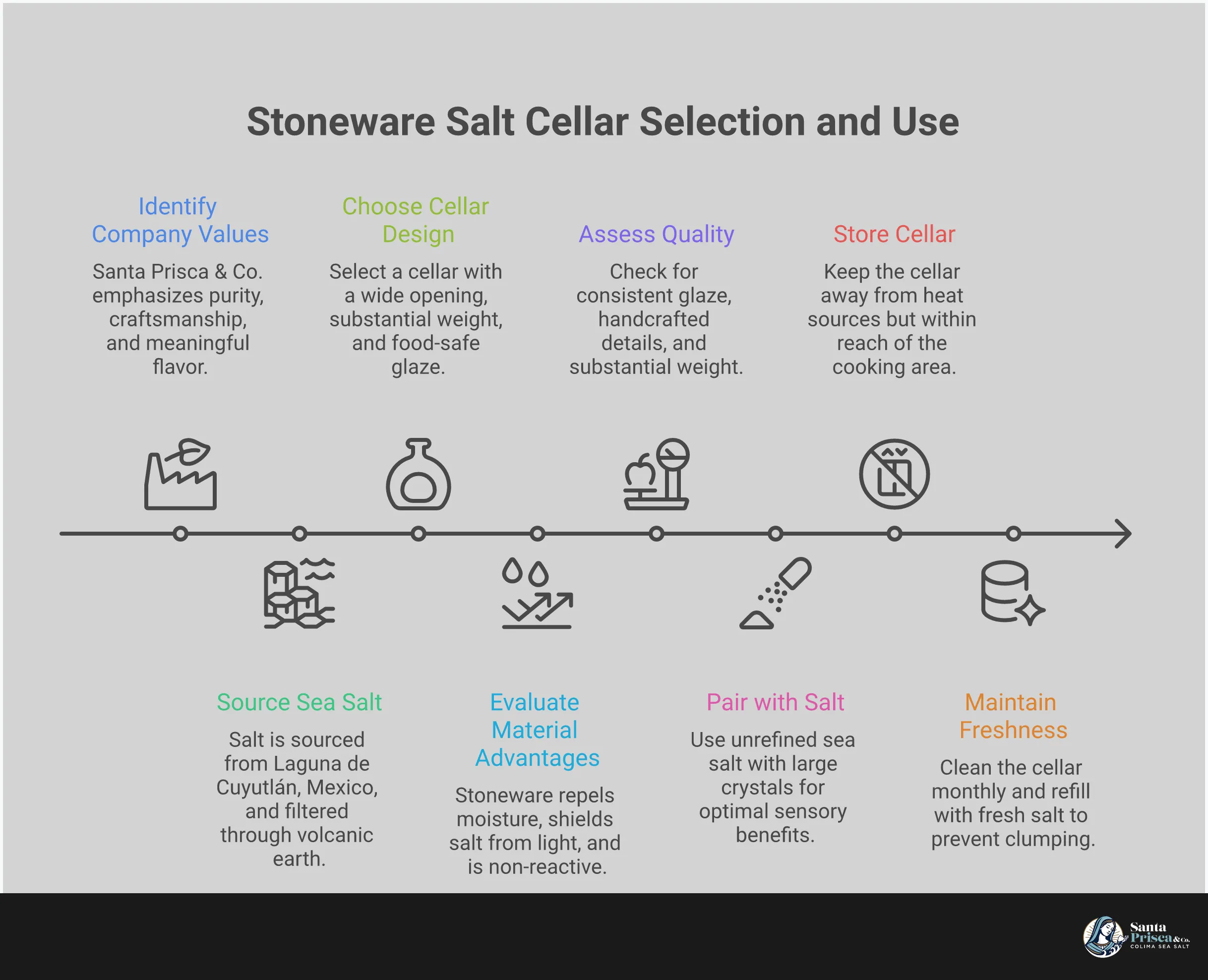
- Look for functional, food-safe details: When choosing a cellar, prioritize a wide opening that allows for easy pinching and confirm it has a food-safe glaze, which ensures it is free from lead and cadmium to keep your salt pure.
- Complete the ritual with unrefined sea salt: An artisan cellar is best paired with a high-quality, unrefined sea salt. This combination honors both the ingredient and the vessel, turning the simple act of seasoning into a more intentional cooking practice.
What Is a Stoneware Salt Cellar?
In a kitchen filled with tools, some objects feel more like companions. A stoneware salt cellar is one of them. It’s a small, open-mouthed container designed to hold your cooking salt, keeping it within arm’s reach for that perfect finishing pinch. More than just storage, a salt cellar is part of a beautiful kitchen ritual, turning a simple act of seasoning into a moment of intention.
Think of it as a dedicated home for one of your most essential ingredients. Instead of fumbling with a grinder or a shaker, you can simply reach for a pinch, feeling the texture of the crystals between your fingers. This tactile connection to your food is what intentional cooking is all about. A stoneware cellar, with its earthy feel and protective nature, is particularly suited for honoring the purity of an unrefined sea salt, like our Colima Sea Salt. It keeps the salt clean, dry, and ready for the moment you need it.
Why Stoneware Is the Perfect Home for Your Salt
Stoneware is a dense, durable type of high-fired ceramic that is almost completely non-porous. This quality makes it the ideal guardian for your salt. It naturally resists moisture from the air, preventing the salt from clumping and preserving the delicate, crisp texture of each flake. The material is also non-reactive, so it will never impart any unwanted flavors, ensuring your salt’s mineral-rich taste remains pure and unaltered.
Beyond its practical benefits, stoneware brings a grounded, earthy presence to your countertop. It’s often handcrafted, with a weight and smoothness that feels good to hold. A quality piece is glazed to be food-safe, meaning it contains no lead or cadmium, which aligns with a clean, wellness-minded kitchen. It’s a vessel that protects the integrity of the salt inside.
How It Compares to Glass, Wood, and Metal
While salt cellars come in many materials, stoneware offers a unique balance of protection and beauty. Glass cellars can be lovely, showcasing the salt’s crystalline structure, but they don’t shield it from light and can trap condensation. Wood has a warm, rustic charm, but it can absorb moisture and odors over time, potentially compromising the salt’s purity.
Metal cellars offer a modern look, but certain metals can react with salt, subtly changing its flavor profile. As many chefs will tell you, a good salt cellar should protect its contents from cooking splatters and humidity. Stoneware excels here. Its opacity, density, and often-included lid or curved opening provide the best defense, ensuring every pinch of salt is as perfect as the last.
Finding Your Perfect Stoneware Salt Cellar
Choosing a salt cellar is a personal ritual. It’s more than just finding a container; it’s about selecting a piece that will live on your countertop, a small vessel you’ll reach for daily. The right one feels good in your hand and makes the simple act of seasoning your food feel more intentional. It’s a home for your salt, a guardian of its texture and flavor. When you have a beautiful, mineral-rich salt like our Colima Sea Salt, it deserves a home that’s just as special. A well-chosen cellar doesn't just hold salt; it holds a story and becomes part of your kitchen's rhythm.
Finding the perfect match involves a thoughtful balance of form and function. You’ll want to consider how it fits into your space, how it feels to use, and how it reflects your kitchen’s personality. Think of it as a permanent guest on your counter, one that should bring you a little moment of joy every time you use it. It’s an invitation to slow down, to connect with your ingredients, and to appreciate the small details that make a meal memorable. Let’s walk through a few key considerations to help you find a stoneware salt cellar you’ll love for years to come.
Choosing the Right Size for Your Countertop
Before you fall in love with a design, take a moment to consider your space. Is your kitchen counter an expansive workspace or a cozy corner? Measure the spot where you imagine your salt cellar will live. Some cellars are petite and unassuming, while others make a statement. Checking the dimensions before you buy ensures it will fit perfectly without cluttering your prep area.
The right size also depends on how you cook. If you’re constantly reaching for a pinch of salt, a larger cellar that holds a generous amount will mean fewer refills. If you cook less often or prefer a more minimal look, a smaller, more delicate vessel might be the perfect fit.
Essential Design Features to Look For
Beyond its beauty, a salt cellar must be functional. The opening is one of the most important features. It should be wide enough to allow you to reach in for a generous pinch or easily fit a measuring spoon. A cellar with a wide mouth is also much easier to fill without spilling those precious crystals.
Think about capacity, too. A larger cellar is a practical choice for an active kitchen, as it holds more salt and keeps it readily available. According to culinary experts, the best salt cellars combine a generous capacity with an easy-to-access opening, making your cooking flow seamless and effortless.
To Lid or Not to Lid: Which Style Is for You?
This is a classic debate in the world of salt cellars. A lidded design is excellent for protecting your salt from moisture, dust, and the inevitable cooking splatter. If your cellar will sit right next to the stove, a lid can keep the contents pure and dry. Many come with a simple, unattached lid or a clever swivel top for easy access.
On the other hand, many passionate cooks prefer an open cellar, often called a "salt pig," for its sheer convenience. When you’re in the middle of cooking, you can simply reach in without fussing with a lid. The choice comes down to your personal cooking style. Do you prioritize protection or immediate, effortless access?
Matching a Salt Cellar to Your Kitchen's Style
A salt cellar is more than just a container; it’s a small piece of your kitchen’s story. It sits on your counter day after day, a silent partner in every meal you create. Choosing one that resonates with your space is a simple act of intention, a way to bring beauty to the functional corners of your home. The right cellar feels like it belongs, effortlessly blending with the textures and colors you’ve already chosen. It becomes part of your daily ritual, a familiar touchpoint as you reach for a pinch of salt to finish a dish.
Think of it as finding a worthy home for your salt, a vessel that honors the journey of each mineral-rich crystal from the earth to your table. When you use a pure, unrefined sea salt, the vessel you keep it in should feel just as special. Whether your kitchen is a bustling, rustic hub, a serene minimalist retreat, or a vibrant canvas of color, there is a stoneware cellar that will feel just right. It’s about selecting a piece that not only holds your salt but also holds a bit of your personality, making the simple act of seasoning a moment of quiet connection and gratitude.
For the Rustic, Farmhouse Kitchen
In a kitchen filled with the warmth of wood, worn linens, and the scent of baking bread, a salt cellar should feel just as grounded and inviting. Look for earthy textures and organic shapes that echo the handmade quality of a farmhouse space. A beautiful rustic stoneware salt cellar can add a touch of pastoral charm, especially one with unique details like a small animal finial on the lid. This style feels both timeless and personal, a perfect vessel for holding not just your essential sea salt, but also honey, mustard, or other condiments for a shared meal. It’s a piece that feels like it has a story to tell.
For the Modern, Minimalist Space
For the modern kitchen, where clean lines and uncluttered surfaces create a sense of calm, a salt cellar should be both functional and elegantly simple. The beauty here is in the restraint. A piece like the Marin Stoneware Salt Cellar embodies this spirit with its sleek design and durable finish. It’s sturdy enough for daily use and simple to clean, yet its understated form adds a touch of quiet sophistication to your countertop. In a minimalist space, every object earns its place through purpose and design, and a well-chosen cellar proves that even the most practical items can be beautiful.
For a Pop of Artisan Color
If your kitchen is a creative space that celebrates color and unique finds, a salt cellar can be a small piece of functional art. This is an opportunity to introduce a splash of personality and support an artisan’s craft. A handmade stoneware salt cellar in a vibrant glaze can brighten your cooking area and become a conversation piece. These one-of-a-kind crocks are designed for easy access, letting you grab a pinch of salt effortlessly while you cook. Their unique character also makes them a thoughtful gift for a friend who appreciates the beauty in everyday objects.
How to Spot a High-Quality Stoneware Salt Cellar
Once you’ve found a style that speaks to you, the next step is to look closer at the quality of the piece. A well-made salt cellar is more than just a beautiful object; it’s a daily companion in your kitchen rituals. It should feel good to use, be safe for your food, and last for years. Learning to recognize the signs of quality craftsmanship ensures you’re choosing a vessel worthy of holding your precious Colima Sea Salt. Think of it as an investment in your daily practice of cooking with intention.
The Mark of an Artisan: Handcrafted Details
There’s a certain warmth to a piece that has been shaped by human hands. True artisan stoneware tells a story. Look for the subtle imperfections that signal its unique origin. Unlike mass-produced items, a handmade piece might have slight variations in its shape or the application of its glaze. These aren’t flaws; they are the marks of the maker. This uniqueness is what gives the cellar its soul, turning a simple kitchen tool into a small work of art that brings a personal, grounded energy to your countertop.
The Importance of a Food-Safe Glaze
The glaze on a salt cellar does more than add color; it creates a protective, non-porous barrier. It’s essential to choose a cellar with a glaze that is certified food-safe. This means it is completely free of harmful substances like lead and cadmium, ensuring that nothing leaches into your salt. A quality glaze feels smooth to the touch and has a consistent, even finish. This attention to safety reflects a deeper respect for the pure, natural ingredients you store inside it, keeping your salt clean and your meals wholesome.
Durability for Everyday Use
Your salt cellar will sit beside your stove, ready for a pinch of seasoning at a moment’s notice. It needs to be resilient. High-quality stoneware is fired at very high temperatures, making it strong and resistant to chips and cracks. A well-crafted cellar should feel substantial in your hands, a sign of its density and strength. Many are even dishwasher-safe, making them practical for a busy kitchen. Choosing a piece that is durable for everyday use means you’re bringing home a tool you can rely on for countless meals to come.
A Design That Feels Good in Your Hand
Beyond its looks, a great salt cellar is designed for function. Consider the ergonomics of the piece. Is the opening wide enough for you to reach in for a generous pinch? Does it have a satisfying weight and balance? The best designs offer easy access to salt while cooking, making the simple act of seasoning feel fluid and intuitive. This thoughtful design enhances your cooking experience, turning a mundane task into a small moment of connection with your food.
Your Checklist for Choosing the Right Salt Cellar
Choosing a salt cellar is a personal and thoughtful process. It’s more than just a container; it’s a daily companion in your kitchen, a vessel that holds an essential ingredient. This simple checklist will guide you toward finding a piece that not only fits your space but also resonates with your cooking rituals. Think of it as finding a home for your salt, one that is as beautiful as it is functional, and one that honors the care that went into harvesting the salt itself. A well-chosen cellar makes the simple act of seasoning feel intentional and connected.
Consider Your Space and How Much Salt You Use
Before you begin your search, take a moment to observe your kitchen. Where will your salt cellar live? If it’s destined for a spot right next to the stove, you’ll want a piece that can hold a generous amount of salt for easy pinching and sprinkling while you cook. If it’s for the dining table, a smaller, more elegant design might be a better fit. Consider how often you reach for salt. A passionate home cook will appreciate a larger cellar that doesn’t need constant refilling, ensuring your Colima Sea Salt is always within arm’s reach. The right size feels both generous and practical, a seamless part of your culinary landscape.
Prioritize Practical, Functional Features
A beautiful salt cellar is a joy, but a functional one is a true kitchen ally. Look for a design with an opening wide enough to fit your fingers or a small spoon comfortably. There’s nothing more frustrating than struggling to get a pinch of salt from a narrow opening in the middle of a busy recipe. We also recommend choosing a cellar with a lid. A simple wooden or stoneware lid offers crucial protection from moisture and cooking splatters, keeping your salt’s delicate, crystalline texture perfectly dry and clean. The best designs are intuitive, allowing you to lift the lid with one hand while you stir a pot with the other.
Ensure It's Lead and Cadmium-Free
Just as you choose unrefined salt for its purity, the vessel holding it should meet the same high standard. When selecting a stoneware cellar, always confirm that it is finished with a food-safe glaze. This means it is free from harmful substances like lead and cadmium, which can sometimes be found in ceramic glazes, particularly in older or decorative-only pieces. Reputable artisans and brands will clearly state this in their product descriptions. Verifying that your cellar is made with non-toxic materials ensures that every pinch of salt you use is as clean and wholesome as nature intended. This is a non-negotiable detail for a truly health-conscious kitchen, aligning with the FDA's guide on the safety of ceramic ware.
Where to Find Your Stoneware Salt Cellar
Once you decide to bring a stoneware salt cellar into your kitchen, the search becomes a quiet, personal journey. This isn’t just another container; it’s a vessel that will hold an essential element of your cooking, a piece you’ll reach for daily. It’s a small ritual, a moment of intention before you season a meal.
Finding the right one is about connecting with an object that feels right in your hands and looks beautiful on your counter. Whether you discover it at a local artisan market or through a thoughtful online search, the goal is to find a piece that resonates with your kitchen’s spirit. It’s a functional piece of art that makes seasoning feel special.
Shopping Online vs. In-Person
The beauty of shopping for a salt cellar is that there are many paths to finding the perfect one. Online, you have access to a world of options. You can browse handcrafted salt cellars from small pottery studios, discovering unique designs you might not find locally.
On the other hand, there’s something deeply satisfying about shopping in person. Visiting a local artisan fair or kitchen boutique allows you to hold the cellar in your hands. You can feel its weight and appreciate the texture of the glaze, connecting you to the maker and the object in a way that clicking a button simply can’t.
What to Expect at Different Price Points
As you browse, you’ll notice that stoneware salt cellars come in a range of prices, often reflecting the artistry and quality of the piece. A higher price point usually points to a handcrafted cellar from an artisan who has spent years perfecting their craft. These pieces often feature unique glazes and a durability that will last a lifetime, making them an investment in functional art.
More accessible options can also be wonderful. Many well-designed stoneware cellars are both beautiful and practical, serving their purpose perfectly. The key is to find the balance of quality and style that feels right for you.
Using Reviews to Judge Quality
When shopping online, customer reviews offer honest insight into how a salt cellar performs in a real kitchen. Look for comments on durability and ease of use. Do people mention that it’s easy to clean? Does the lid fit snugly but still open with one hand? These are the practical details that make a difference in your daily cooking rhythm.
Articles from trusted culinary sources can also review and test salt cellars, giving you an overview of what makes a design successful. Reading about others’ experiences helps you choose a cellar that is both beautiful and a joy to use.
How to Care for Your Stoneware Salt Cellar
Your salt cellar is more than just a container; it’s a small, beautiful vessel that holds one of the kitchen’s most essential ingredients. It sits on your counter as a quiet invitation to cook with intention, to add a pinch of flavor with your own hands. Giving it the proper care ensures it remains a cherished part of your kitchen ritual for years to come.
Just like the unrefined, mineral-rich Colima Sea Salt it holds, your stoneware cellar deserves thoughtful attention. Thankfully, maintaining its beauty is a simple, grounding practice. A few gentle steps will protect its finish and integrity, making sure it’s always ready for your next culinary creation.
Simple Cleaning and Maintenance
Keeping your salt cellar clean is an easy, mindful task. Before washing, simply empty any remaining salt into a small bowl. Use a soft cloth and warm water to gently wipe the inside and outside. If you notice any stubborn residue, a drop of mild dish soap will do the trick, but be sure to rinse it thoroughly so no scent lingers to affect your salt. The most important step is to let your cellar air-dry completely before refilling it. Any lingering moisture can cause the delicate salt crystals to clump together. This small moment of patience ensures your salt stays loose, flaky, and ready to grab.
Hand Washing vs. Dishwasher: What's Best?
While many modern stoneware pieces are built for convenience, hand washing is always the kindest choice for your salt cellar. Think of it as an act of care for an artisan object. A dishwasher’s high heat and harsh detergents can be abrasive over time, potentially dulling the finish or causing micro-cracks. Washing by hand helps preserve the glaze and prevents accidental chips from other dishes. Even very durable stoneware designed for everyday use will maintain its original luster for much longer with this gentle approach. It’s a simple switch that honors the craftsmanship of the piece.
Keeping It Beautiful for Years to Come
A well-made salt cellar is crafted to be a lasting fixture in your kitchen. The beauty of high-quality pottery often comes from a special blend of stoneware designed for both aesthetic appeal and resilience. To protect this unique character, avoid using abrasive sponges or steel wool, which can scratch the surface and damage the glaze. Treat your cellar with the same care you would any of your favorite ceramic dishes. By handling it gently and keeping it clean, you’re not just maintaining an object. You’re tending to a tool that connects you to your food and the simple, profound act of seasoning it well.
The Best Salt for Your New Stoneware Cellar
Your beautiful new stoneware cellar deserves to hold something equally special. Choosing the right salt is more than just a practical decision; it’s an act of intention that honors your ingredients and your cooking ritual. The salt you keep within arm's reach becomes a daily touchstone, a pinch of connection to the earth and to the meals you create. It’s the final, thoughtful touch that brings a dish to life.
When you fill your cellar, you’re not just storing a seasoning. You’re creating a small sanctuary for an ingredient that carries the story of its origin, from sun-drenched salt flats to your kitchen counter. The right salt offers a complex flavor, a satisfying texture, and a wealth of trace minerals that processed table salts simply cannot match. It’s about choosing a salt that reflects the care you put into your cooking, one that complements the earthy, handcrafted nature of your stoneware vessel. This pairing of form and substance turns a simple act of seasoning into a moment of quiet gratitude.
Why Unrefined Sea Salt Is the Perfect Match
Unrefined sea salt is the soulmate for your stoneware cellar. Unlike processed table salt, which is stripped of its natural minerals, unrefined salt retains a beautiful complexity. Each crystal carries a whisper of the ocean and the earth it came from. This mineral depth adds a subtle, nuanced flavor to your food that you just can't get from anything else.
Having a trusty salt cellar by your side filled with a quality salt helps you season with confidence and intuition. The pinchable, crystalline texture of a hand-harvested salt like our Colima Sea Salt allows you to feel the seasoning between your fingertips, connecting you more deeply to the cooking process. It’s the difference between cooking as a task and cooking as a practice.
How Stoneware Protects Your Salt's Texture
The texture of a good sea salt is part of its magic. Those delicate, flaky crystals are what provide that satisfying crunch and gentle burst of flavor. Stoneware is the ideal guardian for this texture. Its dense, opaque nature shields the salt from sunlight and humidity, which can cause clumping and dissolve those precious flakes.
Many cellars also come with a lid, which offers another layer of protection from moisture and the inevitable cooking splatters of a busy kitchen. By keeping your salt in a stoneware cellar, you ensure that every pinch is as fresh, dry, and perfectly crystalline as the day it was harvested. It’s a simple way to preserve the integrity of a truly special ingredient.
A Perfect Pairing: Premium Salt and Artisan Stoneware
There is a quiet joy in pairing beautiful, functional objects with high-quality ingredients. An artisan stoneware cellar filled with premium sea salt is more than just a kitchen tool; it’s a statement of intention. It signifies a commitment to mindful cooking and an appreciation for the craft behind both the vessel and its contents.
This combination enhances the daily rhythm of your kitchen. The smooth, cool feel of the stoneware in your hand, the gentle scrape as you gather a pinch of salt, the sight of those sparkling crystals, it all becomes part of a sensory ritual. A well-made stoneware salt cellar is durable enough for everyday use and beautiful enough to become a cherished piece on your counter, turning the simple act of seasoning into a moment of beauty.
Related Articles
- Salt Cellar Guide: Uses, Types, and the Tradition Behind It – Santa Prisca & Co
- Salt Cellar 101: Your Guide to This Kitchen Gem – Santa Prisca & Co
Frequently Asked Questions
Why is stoneware recommended for a salt cellar over other materials like wood or glass? Stoneware is a fantastic choice because it's dense and non-porous, which means it naturally keeps moisture out and prevents your salt from clumping. Unlike wood, it won’t absorb odors or oils from your kitchen, and unlike glass, it protects the salt from light. It’s also non-reactive, so it keeps the pure, mineral-rich flavor of your sea salt perfectly intact.
Do I really need a lid for my salt cellar? This really comes down to your personal cooking style and where you plan to keep it. A lid is excellent for protecting your salt from kitchen splatters and humidity, which is especially helpful if your cellar lives right next to the stove. However, many cooks love the convenience of an open cellar, often called a salt pig, for quick and easy access. It’s a choice between prioritizing protection or immediate convenience.
What’s the best way to clean my stoneware salt cellar? Caring for your cellar is simple. First, empty any remaining salt. Then, hand wash it with a soft cloth and warm water. If needed, you can use a tiny drop of mild soap, but be sure to rinse it very well. The most important step is to let it air-dry completely before you refill it, as any leftover moisture will make your salt clump.
Can I put any kind of salt in my cellar? You can, but a stoneware cellar is truly the perfect home for an unrefined, flaky sea salt. Its protective qualities are designed to preserve the delicate texture and complex flavor of a high-quality salt. Using a coarse, mineral-rich salt allows you to get that tactile connection when you reach for a pinch, which is what makes cooking with a cellar such a beautiful ritual.
How can I be sure a stoneware cellar is safe for my food? This is a great question. When you're choosing a cellar, look for pieces that are explicitly described as having a "food-safe" glaze. This certification means the glaze is free from harmful substances like lead and cadmium. Reputable artisans and kitchenware brands will always be clear about this, so you can feel confident that the vessel is just as pure as the salt you put inside it.