
Why Sea Salt Rich in Trace Minerals Matters
Written By Santa Prisca & Co Staff Last updated on
When we think of salt, it’s easy to picture a single, sharp note of flavor. For most refined table salt, that’s exactly what it is: a solo instrument of pure sodium chloride, stripped of all its natural companions. But unrefined sea salt is a completely different story. It’s like a full orchestra, with sodium playing the lead melody while a symphony of other elements creates depth, harmony, and a more complex experience. This beautiful complexity comes from its natural composition. A sea salt rich in trace minerals carries the signature of the ocean it came from, offering a more nuanced flavor and supporting your body’s balance in ways refined salt cannot. This guide explores the essential minerals found in pure sea salt and why they are so important for both your palate and your well-being.
Key Takeaways
- Prioritize unrefined salt as a whole food: Unlike refined table salt, which is stripped of its natural character, unrefined sea salt retains its complete mineral profile. This means you get a pure, complex flavor without unnecessary additives like anti-caking agents.
- Embrace minerals for flavor and wellness: The trace elements in unrefined sea salt, like magnesium and potassium, do double duty. They create a more nuanced, satisfying taste while also supporting your body’s essential functions, including hydration and electrolyte balance.
- Choose and use your salt with intention: Select a high-quality salt by looking for a transparent source, natural color, and a clean ingredient list. A mindful pinch can serve as a finishing touch for texture and flavor or as a simple addition to your morning water to support your system.
Sea Salt vs. Table Salt: What's the Real Difference?
Have you ever paused to consider the journey of the salt in your shaker? We often treat it as a simple commodity, a basic kitchen staple. But not all salt is created equal. The difference between the bright, complex crystals of a true sea salt and the uniform grains of common table salt is as vast as the ocean itself. It’s a story of process, purity, and the minerals left behind.
Most table salt is heavily refined. It’s stripped of its natural mineral content, bleached, and often treated with anti-caking agents to ensure it flows freely. What’s left is almost pure sodium chloride, a one-dimensional flavor without the nuance nature intended. Unrefined sea salt, on the other hand, is a whole food. It’s simply evaporated seawater, carrying with it a beautiful spectrum of trace minerals from its source. This is where the magic lies. True sea salt offers a complex mineral profile with elements like magnesium and potassium, which create a more nuanced flavor and support your body’s natural balance in ways refined table salt cannot. It’s less about what’s added and more about what isn’t taken away.
From Ocean to Table: How Sea Salt is Harvested
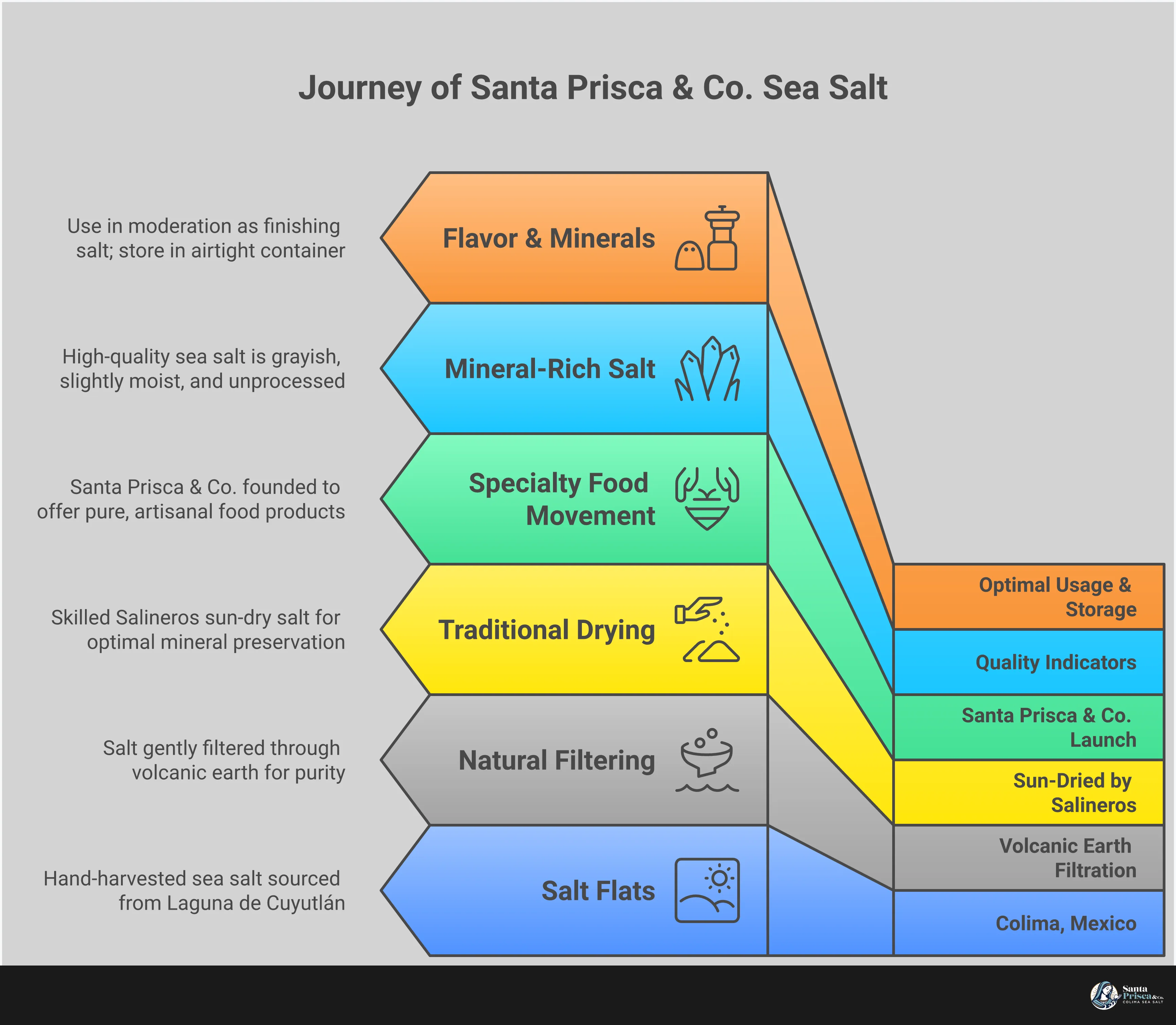
The story of our salt begins in the sun-drenched lagoons of Colima, Mexico. Here, the process is one of patience and tradition, guided by the rhythms of nature. Our Colima Sea Salt is hand-harvested from the pure waters of the Pacific, allowing the sun and wind to slowly evaporate the water and leave behind delicate, mineral-rich crystals. This ancient, gentle method ensures the salt remains untouched by harsh chemical processing.
The result is a salt with a crisp, clean flavor and a beautiful mineral depth that enhances every dish it touches. Each crystal tells the story of its origin, from the volcanic earth that filters the water to the skilled hands of the salineros who gather it. This mindful harvest preserves the salt’s integrity, bringing a piece of its pure coastal source directly to your table.
Why Unrefined Salt Retains Its Minerals
The term "unrefined" is key to understanding why sea salt is so special. It means the salt is kept in its natural state, just as the ocean created it. During the heavy processing that creates table salt, essential trace minerals are stripped away and discarded. An unrefined sea salt, however, holds onto this whole spectrum of minerals, including magnesium, potassium, and calcium.
These are the elements that give sea salt its unique flavor, texture, and character. Preserving these minerals offers subtle yet valuable support for daily wellness, contributing to everything from hydration to muscle function. By choosing unrefined, you’re choosing a salt that is complete. You get to experience the full, balanced taste and the gentle wellness benefits that come from a food left exactly as nature made it.
What Are Trace Minerals and Why Do They Matter?
When we talk about salt, it’s easy to think of it as just one thing: a simple flavor enhancer. But what if the salt you choose could offer more? The conversation changes when we shift our focus from highly processed table salt to unrefined sea salt, which carries the mineral signature of the ocean it came from. These trace minerals are tiny, naturally occurring elements that are often stripped away during industrial refining.
Think of it this way: refined table salt is like a solo instrument, playing a single, sharp note of sodium chloride. Unrefined sea salt, on the other hand, is like a full orchestra. It has the main note of sodium, but it’s supported by a symphony of other minerals that create depth, complexity, and a more harmonious experience for both your palate and your body. These minerals aren’t just for flavor; they’re essential nutrients our bodies recognize and use to maintain a healthy, natural balance.
The Minerals Your Body Needs
Our bodies are incredibly wise, constantly seeking the elements they need to function well. True sea salt offers a complex mineral profile with elements like magnesium and potassium, which create a more nuanced flavor and support your body’s natural balance in ways refined table salt cannot. When we choose a salt that retains these essential nutrients, we’re doing more than just seasoning our food; we’re replenishing our bodies on a cellular level.
Choosing a pure, unrefined salt like our Colima Sea Salt is a simple way to bring this mineral wealth to your table. It’s an act of intention, honoring the profound connection between the earth’s elements and our own health with every pinch.
How Your Body Puts Minerals to Work
So, what do these minerals actually do? They are fundamental to our well-being. Sea salt plays a pivotal role in hydration and electrolyte balance, thanks to its rich profile of trace minerals like magnesium, potassium, and calcium. Unlike refined salt, these elements help your cells absorb and use the water you drink, keeping you properly hydrated throughout the day.
Beyond hydration, these minerals also support the digestive processes needed to absorb key nutrients from your meals. A sprinkle of mineral-rich salt can help your body unlock the full goodness of the food you so carefully prepare. It’s a beautiful example of how one small, intentional choice in the kitchen can support your entire system.
A Look Inside Unrefined Sea Salt's Mineral Content
When we talk about salt, it’s easy to think of it as a single ingredient. But true, unrefined sea salt is so much more than just sodium chloride. It’s a beautiful mosaic of elements drawn from the ocean and the earth, a reflection of the environment where it was born. Unlike heavily processed table salt, which is stripped of its companion minerals, unrefined salt carries a full spectrum of trace elements that our bodies recognize and use.
Choosing a pure, unrefined salt like our Colima Sea Salt is a simple way to bring this mineral wealth to your table and into your body. It’s an act of honoring the deep connection between the earth’s elements and our own health. Each crystal contains a story of its origin, offering not just flavor but a subtle, supportive gift of nature. Let’s explore some of the key minerals that make unrefined sea salt a truly special ingredient in a conscious kitchen.
Magnesium: For Calm Muscles and a Healthy Heart
Magnesium is a quiet hero in our bodies, responsible for hundreds of biochemical reactions. It helps our muscles relax, supports a steady heartbeat, and contributes to a calm nervous system. It’s the mineral of tranquility. While many of us don’t get enough of it, unrefined sea salt offers a natural source. The health benefits of sea salt extend beyond the kitchen; its trace minerals, including magnesium, can even help soothe the skin. Sprinkling a bit into your food is a small ritual that supports your body’s need for this essential, calming element.
Potassium: To Support Natural Hydration
Proper hydration is about more than just drinking water; it’s about maintaining a healthy balance of electrolytes. Potassium is a key player in this delicate dance, working with sodium to help your cells regulate fluid levels. True sea salt offers a complex mineral profile with elements like magnesium and potassium, which create a more nuanced flavor and support your body’s natural balance in ways refined table salt cannot. This synergy is a perfect example of how whole foods, in their natural state, provide a more complete form of nourishment.
Calcium: For Strong Bones and More
We often associate calcium with strong bones and teeth, and for good reason. But this vital mineral also plays a role in nerve signaling and muscle function. While sea salt isn’t a primary source of calcium, the amount it contains is part of a larger, synergistic mineral profile. Unlike processed table salt, unrefined sea salt keeps its full spectrum of trace minerals. This provides a more complex flavor and supports your body's needs in a holistic way. It’s a reminder that every small element contributes to the whole.
Iron, Zinc, and Iodine: For Immunity and Energy
Beyond the major minerals, unrefined sea salt contains trace amounts of other essential elements like iron, zinc, and iodine. Iron is crucial for carrying oxygen in our blood, supporting our energy levels. Zinc is a cornerstone of a healthy immune system, and natural iodine supports thyroid function. The presence of these elements in our Colima Sea Salt speaks to its pure, untouched origins. Each pinch is a small offering of the earth’s richness, helping to complete our nutritional picture in a gentle, natural way.
How Mineral-Rich Sea Salt Can Support Your Wellness
When we reach for salt in the kitchen, we’re usually thinking about flavor. A pinch to brighten a sauce, a sprinkle to finish a dish. But what if that simple gesture could also be an act of nourishment? Choosing an unrefined, mineral-rich sea salt connects us to a more holistic way of eating. Unlike processed table salt, which is stripped of its natural companions, true sea salt carries the mineral signature of the ocean it came from. These trace minerals work in harmony with your body’s natural systems, offering gentle support for some of its most important functions. It’s a small shift in the kitchen that can create a meaningful ripple effect for your overall wellness.
Improve Hydration and Balance Electrolytes
True hydration is more than just the water you drink; it’s about what your body can absorb. Unrefined sea salt contains a beautiful spectrum of essential trace minerals that refined table salt loses during processing. These minerals act as electrolytes, helping your cells take in water and maintain a healthy fluid balance. Premium varieties like our Colima Sea Salt contain over 80 trace minerals, offering a complex profile that supports your body’s natural rhythm and helps you feel truly replenished.
Aid Your Natural Digestion
A well-functioning digestive system is at the core of our well-being, and salt plays a quiet but important role. The chloride in salt is a building block for stomach acid, which is essential for breaking down food. The balanced minerals in natural sea salt also help your body properly use the water you drink, supporting the digestive processes needed to absorb key nutrients from your meals. It’s a simple way to honor your body’s intricate work with every bite.
Support Your Metabolism and Energy Levels
Feeling vibrant and energized starts on a cellular level. True sea salt offers a complex mineral profile with elements like magnesium and potassium, which are vital for converting food into energy and supporting a healthy metabolism. This is one of the key health benefits of sea salt that refined table salt simply cannot offer. By choosing an unrefined salt, you’re not just adding flavor; you’re adding a source of minerals that supports your body’s natural balance and vitality.
How Do Popular Sea Salts Compare?
Walking down the grocery aisle, you’ll find a beautiful spectrum of salts. From the soft gray of Celtic salt to the rosy hue of Himalayan pink, each one tells a story of its origin. These natural, unrefined salts are a world away from the uniform white crystals of processed table salt. Their unique colors, textures, and flavors come from the rich blend of minerals they carry from the earth, a testament to their journey from ancient sea beds or pristine coastlines to your kitchen.
Choosing a salt is about more than just seasoning; it’s about connecting with the elements and nourishing your body. While many natural salts offer benefits over their refined counterparts, their mineral profiles can vary significantly based on where and how they are harvested. This is where the real beauty lies. The subtle differences in mineral content not only affect the taste, creating a complex flavor that can enhance any dish, but also contribute to your overall well-being. Understanding these distinctions can help you choose a salt that truly aligns with your wellness goals and culinary intentions. Let’s explore three of the most well-known sea salts to see what makes each one unique.
The Unique Profile of Colima Sea Salt
Our Colima Sea Salt is a gift from the earth, hand-harvested from the Cuyutlán Lagoon in Mexico. Filtered naturally through ancient volcanic soil, this salt gathers dozens of essential minerals and trace elements on its journey. Unlike processed table salt, which is stripped down to just sodium chloride, our unrefined salt retains its full mineral wealth. This gives it a clean, crisp flavor with a subtle mineral depth that enhances food without overpowering it. Each crystal is a reminder of the connection between the earth’s elements and our own health, bringing a piece of this sacred land to your table.
What to Know About Celtic Sea Salt
Often called "sel gris" or "gray salt," Celtic sea salt is known for its distinct color and moist texture. Harvested from tidal ponds off the coast of France, its signature grayish hue comes from the clay lining the salt beds. This clay imparts a rich mineral content, including magnesium, calcium, and potassium. According to health experts, these minerals contribute to its unique briny flavor. Because it retains moisture from the ocean, Celtic salt often feels damp to the touch and can be a wonderful finishing salt for adding a soft, crunchy texture to dishes.
The Story Behind Himalayan Pink Salt
Himalayan pink salt is perhaps one of the most recognizable natural salts, celebrated for its beautiful rosy color. Mined from ancient sea beds in the Punjab region of Pakistan, its color comes from trace minerals like iron, potassium, and magnesium. Many people choose it as a more natural alternative to table salt. Some research suggests that the diverse minerals found in natural salts may offer a more balanced approach to sodium intake compared to highly refined salt. Its coarse, dry crystals make it a popular choice for salt grinders and for creating visually stunning presentations on the plate.
Common Myths About Sea Salt, Debunked
The world of wellness is filled with advice, and it can be hard to know what to believe. When it comes to an ingredient as essential as salt, the stories are especially varied. You may have heard that all sea salt is the same, or that its mineral content is just a marketing gimmick. Let’s clear the air and explore the truth behind some of the most common myths, so you can season your food with confidence and intention.
Myth #1: All Sea Salt Is Created Equal
It’s easy to assume that if it comes from the sea, it’s all the same. But the journey from ocean to table makes all the difference. Many commercial sea salts are heavily processed, stripped of their natural character through washing and high-heat drying. This process removes the very minerals that give unrefined salt its unique flavor and texture. Unlike processed table salt, unrefined sea salt keeps its full spectrum of trace minerals, which provides a more complex flavor and supports your body's needs. Think of it as the difference between a whole food and a refined one; one is complete, the other is missing its essence.
Myth #2: Trace Minerals Don't Make a Difference
This myth suggests that the minerals in sea salt are too small to matter. But in both flavor and function, they are incredibly significant. True sea salt offers a complex mineral profile with elements like magnesium and potassium, which create a more nuanced flavor and support your body’s natural balance in ways refined table salt cannot. These minerals are what give authentic sea salt its subtle, lingering taste and crisp flake. They also play a vital role in hydration and muscle function. The difference isn't just something you can taste; it's something your body can feel. You can learn more about the specific minerals in sea salt and how they work.
Myth #3: Any Sea Salt is a "Healthy" Choice
Choosing unrefined sea salt is a wonderful step toward more intentional eating, but it’s important to approach it with balance. While premium sea salt like Colima sea salt provides trace minerals for wellness, it carries the same sodium risks as table salt, making moderation essential. The true benefit lies in what you gain: a rich spectrum of minerals and a pure, unadulterated flavor that allows you to use less. It’s about enhancing your food and supporting your body, not about consuming salt without limits. A mindful pinch is all you need to bring a dish to life. The health benefits of sea salt are best enjoyed with this thoughtful approach.
What to Look for in a High-Quality Sea Salt
Walking down the grocery aisle, you’re met with a wall of options: iodized, kosher, pink, grey, black. It’s easy to grab the first one you see, but choosing a sea salt is an opportunity to bring more intention and nourishment to your kitchen. When you know what to look for, you can find a salt that not only seasons your food but also supports your well-being.
The Importance of a Pure Source
The story of a salt begins with its source. High-quality sea salt comes from clean, protected waters, far from industrial runoff. Imagine pristine lagoons where the sun and wind work in harmony, leaving behind delicate salt crystals. This is why hand-harvesting is so important. It’s a gentle practice that preserves the salt’s natural mineral content. Our Colima Sea Salt, for example, is sourced from the ancient salt flats of Mexico. It’s unrefined and rich in essential minerals like magnesium, calcium, and potassium, which are often stripped away in heavily processed table salt.
A Mindful Approach to Sodium
Let’s talk about sodium. It’s true that even premium sea salts are still salt. But the goal isn’t to eliminate it; it’s to use it with intention. When your salt is full of flavor and complexity from its mineral makeup, you’ll find you don’t need as much to make your food sing. This is about shifting from mindless shaking to mindful seasoning. A pinch of a truly good salt can bring a dish to life in a way that a spoonful of refined salt never could. It’s an invitation to slow down and appreciate the depth of flavor a pure ingredient provides.
How to Spot Unrefined Salt
So, how do you find the real deal? First, use your senses. True unrefined salt often has a subtle, off-white or greyish hue, a sign that its minerals are intact. It might feel slightly damp to the touch, as it retains its natural moisture. Next, read the label. Look for words like “unrefined” and “hand-harvested,” and check the ingredient list for anti-caking agents or other additives. A pure sea salt needs nothing else. The complex mineral profile offers a nuanced flavor that refined table salt simply can’t match. You can explore our collection of pure, unrefined salts to see the difference for yourself.
How to Choose the Best Mineral-Rich Sea Salt
Choosing a truly nourishing sea salt becomes simple when you know what to look for. It’s less about the brand name and more about the story, the feel, and the purity of the salt itself. When you approach the choice with intention, you invite a deeper connection to your food and your wellness. Think of it as a small ritual, a way to honor your body with every pinch. These simple guideposts will help you select a salt that’s not just flavorful, but full of the earth’s goodness.
Look for a Transparent Source and Harvest
Where does your salt come from? A quality salt has a story and a sense of place. Look for brands that are open about their origins and harvesting methods. Our Colima Sea Salt, for example, is hand-harvested from the sun-drenched salt flats of Colima, Mexico. Unlike heavily processed table salt, our salt is completely unrefined, which means it retains essential minerals like magnesium, calcium, and potassium. When you know the journey your salt has taken from a pristine environment to your kitchen, you can feel good about the energy it brings to your meals.
Let Color and Texture Be Your Guide
Your senses are your best guide. Pure, unrefined sea salt is rarely bright white. Its color might be slightly off-white, grey, or even pink, reflecting the rich mineral content it holds. Our Colima Sea Salt is naturally filtered through volcanic earth, a process that enriches it with a unique profile of trace minerals. Notice the texture, too. The crystals should be varied in size and shape, with a delicate, crisp flake that dissolves beautifully. This imperfect, natural appearance is a sign that the salt is untouched by industrial refining, retaining all of its character and complexity.
Read the Label for Additives
The simplest ingredients list is always the best. A high-quality sea salt should have just one ingredient: sea salt. Take a moment to read the label and check for anti-caking agents, dextrose, or other additives. These are often found in refined table salts to prevent clumping but have no place in a natural, health-supporting salt. Choosing a pure, unrefined salt is a simple way to bring mineral wealth to your table and into your body, honoring the connection between the earth’s elements and our own health. It’s a small choice that makes a meaningful difference.
Simple Ways to Use Mineral-Rich Sea Salt Every Day
Bringing mineral-rich sea salt into your daily rhythm is simpler than you might think. It’s not about overhauling your kitchen, but about small, mindful choices that connect you more deeply to your food and your body. Choosing a pure, unrefined salt is a beautiful way to honor the connection between the earth’s elements and our own health. These simple rituals invite a moment of presence into your day, turning ordinary actions into acts of nourishment.
Season Your Meals with Intention
Every time you reach for salt, you have an opportunity to connect with your food. Instead of a quick, thoughtless shake, consider the journey of the salt you’re using. True sea salt offers a complex mineral profile with elements like magnesium and potassium, which create a more nuanced flavor and support your body’s natural balance. When you season a dish with Colima Sea Salt, you’re not just adding salinity; you’re adding a story of sun, sea, and tradition. Let the act of seasoning be a quiet moment of gratitude for the ingredients that nourish you.
Create a Hydrating Mineral Elixir
One of the most profound ways to start your day is with a glass of water. You can make it even more supportive by adding a tiny pinch of unrefined sea salt. Sea salt plays a pivotal role in hydration and electrolyte balance, thanks to its rich profile of trace minerals that refined table salt lacks. This simple morning elixir helps your body properly use the water you drink, supporting everything from natural energy to gentle digestion. It’s a small gesture that prepares your body for the day ahead, replenishing the essential minerals it needs to function well.
Add a Finishing Touch for Flavor and Texture
A beautiful finishing salt does more than just flavor a dish; it adds a final layer of texture and artistry. The crisp, clean flake of a hand-harvested sea salt can transform a simple meal into something special. Sprinkle a few crystals over a fresh salad, roasted vegetables, or even a perfectly ripe avocado. The subtle crunch and burst of mineral depth enhance every bite. Unlike processed table salt, unrefined sea salt keeps its full spectrum of trace minerals, which provides a more complex flavor. Explore our full collection to find the perfect texture for your culinary creations.
Related Articles
- Colima Sea Salt vs Table Salt: Health, Flavor & Benefits
- Colima Sea Salt Benefits: Flavor, Minerals & Wellness
Frequently Asked Questions
Why should I switch from regular table salt to an unrefined sea salt? Think of it as choosing a whole food over a processed one. Regular table salt is stripped of its natural minerals, leaving behind almost pure sodium chloride. Unrefined sea salt, on the other hand, remains in its complete, natural state. This means it retains a full spectrum of trace minerals that contribute to a more complex, nuanced flavor and work in harmony with your body.
Does this mean I can use as much sea salt as I want? That’s a great question. Salt is still salt, so it’s always best to be mindful of your sodium intake. The real beauty of a mineral-rich sea salt is that its flavor is so much more dynamic and satisfying than that of table salt. You’ll likely find that you need just a small pinch to bring your food to life, so you can use less while getting more flavor and mineral benefits.
Is Colima Sea Salt just for sprinkling on food at the end? While it makes a beautiful finishing salt, it’s incredibly versatile and can be used in all of your cooking. Its clean, crisp flavor enhances ingredients without overpowering them, and the delicate crystals dissolve easily. You can use it to season soups, sauces, marinades, and even in baking. It’s a wonderful all-purpose salt for every step of the cooking process.
What makes Colima Sea Salt different from Himalayan or Celtic salts? All three are wonderful natural alternatives to refined salt. The main difference lies in their origin, which gives each one a unique mineral profile, texture, and taste. Himalayan salt is mined from ancient salt beds in Pakistan, giving it a distinct pink color from iron. Celtic salt is harvested from clay-lined tidal ponds in France, which makes it moist and grey. Our Colima Sea Salt comes from a pristine lagoon where the water is naturally filtered by volcanic earth, resulting in a bright, clean flavor and a unique mineral signature.
I know table salt has added iodine. Do I need to worry about that if I switch to sea salt? Unrefined sea salt does contain trace amounts of naturally occurring iodine from the ocean, but not at the same fortified levels as most table salts. If you switch exclusively to sea salt, it’s a good idea to be mindful of including other iodine-rich foods in your diet, such as fish, dairy, and seaweed. Embracing an unrefined salt is part of a holistic approach to wellness, which includes getting nutrients from a wide variety of whole foods.