
A Guide to Gourmet Salt Flakes for Finishing
Written By Santa Prisca & Co Staff Last updated on
Flavor is only half the story of a beautiful meal. The other half is texture—the satisfying crunch of a fresh salad, the crisp skin on a piece of roasted chicken, the delicate snap of a cookie. It’s this textural contrast that creates a truly dynamic and memorable eating experience. While often overlooked, a high-quality finishing salt is one of the most effective tools for adding that final layer of sensory delight. The unique structure of gourmet salt flakes for finishing provides a light, crisp crunch that dissolves slowly, delivering a bright burst of salinity that enhances every other element on the plate.
Key Takeaways
- Finishing salt is an experience, not just a seasoning: Unlike processed table salt, a quality finishing salt is unrefined, carrying the unique mineral profile and delicate texture of its origin, which adds complexity and a final crunch to your dishes.
- Use it as a final touch, not a foundation: The magic of a finishing salt is in its texture. Sprinkle the flakes over your dish just before serving to preserve their delicate crunch and deliver a burst of clean, mineral flavor.
- Honor your salt with intentional sourcing and storage: Seek out hand-harvested salts from producers who value tradition and sustainability, and protect their unique character by keeping them in a proper salt cellar or airtight container away from moisture.
What Makes Gourmet Salt Flakes Different from Table Salt?
Walk down any grocery aisle, and you’ll find salt. But not all salt is created equal. The familiar blue canister of iodized table salt is a world away from the delicate, crystalline flakes of a gourmet finishing salt. The difference isn't just about taste; it’s a story of origin, intention, and the art of preservation. While table salt is a heavily processed commodity, stripped of its natural minerals and often treated with anti-caking agents, a true gourmet salt is a reflection of its environment—a pure, unrefined treasure that carries the essence of the sea and sun.
Choosing a gourmet salt is about more than just seasoning; it's about connecting with your food on a deeper level. It’s an invitation to slow down, to appreciate the subtle complexities of flavor and texture, and to honor the journey of an ingredient from its natural source to your kitchen table. It’s a small act of intention that can transform a simple meal into a moment of quiet celebration.
The Art of the Harvest
The story of a salt begins with how it’s gathered. Table salt is often mined from underground deposits or produced through industrial evaporation, a process that prioritizes quantity over quality. In contrast, gourmet salt flakes are typically hand-harvested from pristine salt pans or flats, where seawater is left to evaporate naturally under the sun and wind. This patient, traditional method is a craft passed down through generations. At Santa Prisca & Co., we honor this heritage by working directly with local salt farmers, ensuring their ancient techniques are preserved and their communities are supported. This mindful approach yields a salt that is not just a product, but a piece of a place and its people.
Texture, Minerals, and Flavor
The most immediate difference you’ll notice is the texture. Table salt is fine and uniform, designed to dissolve instantly. Gourmet salt flakes, however, have a unique crystal structure—light, crisp, and delicate. This satisfying crunch adds a final layer of texture to a dish. But the real quality of a gourmet salt lies in what it retains. Our Colima Sea Salt is unrefined, meaning it keeps its rich profile of trace minerals like magnesium, potassium, and calcium. These minerals, which are removed from table salt during processing, impart a nuanced, complex flavor that is less harsh and more balanced, offering a gentle burst of mineral depth that enhances food without overpowering it.
The Role of a Finishing Salt
While table salt is a workhorse for seasoning during the cooking process, gourmet flakes shine as a finishing salt. Think of it as the final brushstroke on a painting. A finishing salt is meant to be sprinkled over a dish just before serving, allowing its distinct flavor and texture to stand out. This simple act can add interest and depth to almost any dish. A pinch of flake salt can brighten roasted vegetables, add a savory counterpoint to a chocolate dessert, or provide the perfect textural contrast on a perfectly cooked steak. It’s a versatile tool for any home cook looking to add a thoughtful, final touch to their creations.
How to Choose a Quality Finishing Salt
Walking down the grocery aisle, you’ll find a wall of salt options. It’s easy to feel like they’re all the same, but the difference between a generic table salt and a true finishing salt is as vast as the ocean itself. Choosing a quality finishing salt is about more than just seasoning; it’s an intentional act that honors your ingredients and brings a final touch of texture and flavor to your cooking.
A great finishing salt isn’t just salty. It carries the story of its origin—the sun, the sea, and the hands that gathered it. It has a structure that provides a delicate crunch, a mineral profile that adds complexity, and a purity that lets your food’s true character shine. When you learn what to look for, you’re not just buying an ingredient; you’re selecting a tool that can transform a simple meal into something memorable. Let’s explore the four key elements that separate an ordinary salt from an extraordinary one.
Hand-Harvested vs. Machine-Processed
The journey of a salt flake begins with its harvest, and the method used makes all the difference. Most commercial salts are produced on an industrial scale, stripped of their character by heavy machinery. In contrast, a hand-harvested salt is gathered with intention by skilled artisans, or salineros.
This gentle, traditional process preserves the salt’s delicate crystal structure and natural environment. Think of it as the difference between a factory-farmed tomato and one grown with care in a local garden. The human touch ensures that only the finest crystals are selected, resulting in a salt that is not just an ingredient, but a reflection of heritage and craft.
Purity and Mineral Content
A quality finishing salt is beautifully simple: just salt and its naturally occurring minerals. Unlike refined table salt, which is often processed with anti-caking agents and stripped of its trace elements, unrefined sea salt is pure. It retains minerals like magnesium, potassium, and calcium from the seawater it came from.
These trace minerals do more than just contribute to a more complex, nuanced flavor. They work with sodium to help our bodies maintain proper hydration and electrolyte balance. When you choose an unrefined salt, you’re choosing a whole, complete ingredient that works in harmony with your body and your food.
The Perfect Flake Structure
Texture is what truly sets a finishing salt apart. The goal is a light, crisp flake that dissolves slowly on the tongue, delivering a bright burst of salinity without overwhelming the palate. The quality of a gourmet salt lies in what it retains—not just its minerals, but its unique crystal structure.
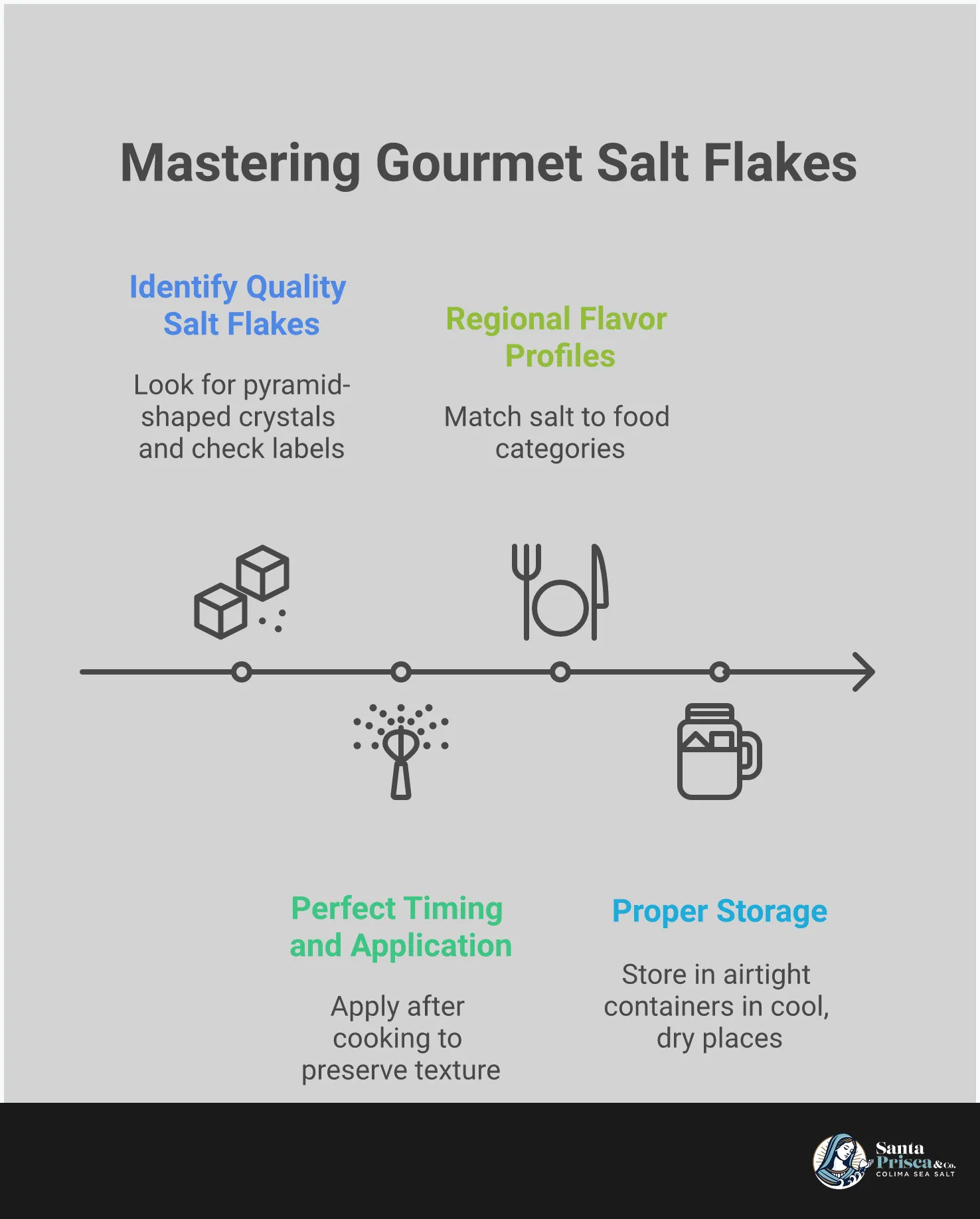
Look for salts with a delicate, pyramid-like, or flaky shape. This structure provides a satisfying crunch that adds a final layer of sensory delight to everything from a perfectly seared steak to a simple sliced avocado. This textural contrast is a signature of a well-crafted dish, and it’s something a fine-grained, dense salt simply cannot replicate.
Sustainable and Ethical Sourcing
Knowing where your food comes from connects you more deeply to what you eat. When choosing a finishing salt, consider the story behind it. Is it sourced from a pristine environment? Are the people who harvest it treated with respect and paid fairly?
Choosing consciously means supporting producers who are transparent about their practices. At Santa Prisca & Co., we prioritize sustainability by working directly with local salt farmers, ensuring their traditional methods can continue for generations to come. When you select a salt from an ethical producer, you’re not only getting a superior product—you’re becoming part of a story that values people and the planet.
A Few Finishing Salts We Love
The world of salt is as vast and varied as the world of wine. Each region, each harvesting method, and each crystal structure tells a story of place and tradition. Exploring different finishing salts is a beautiful way to connect with the earth and add a final, intentional touch to your meals. Here are a few that we hold in high regard, each with its own unique character.
Santa Prisca & Co. Colima Sea Salt
Our own Colima Sea Salt is deeply special to us, a taste of the Mexican sun and soil. It is ethically crafted and hand-harvested by dedicated salineros who honor generations of tradition. Filtered naturally through volcanic earth, its flavor is clean with a subtle mineral depth that enhances a food’s true taste. The delicate, crystalline flakes offer a satisfying crunch, melting slowly on the tongue. We love it sprinkled over ripe avocado, grilled fish, or even a simple slice of tomato, connecting us back to the pure, vibrant land it comes from.
Maldon Sea Salt
A true classic in the culinary world, Maldon sea salt is beloved for its distinctive pyramid-shaped flakes. Harvested from the coastal town of Maldon in Essex, England, its texture is its signature—a crisp, clean crunch that provides a wonderful contrast to softer foods. Because of its delicate structure, it’s best used right before serving. As one guide on how to use them while cooking notes, sprinkling it over dishes after cooking preserves its unique taste and form. It’s a perfect final touch for a seared steak or roasted potatoes.
Jacobsen Salt Co.
Hailing from the cold, pristine waters of the Oregon coast, Jacobsen Salt Co. produces a beautiful flake sea salt with a bright, clean flavor. We admire their commitment to quality and craftsmanship, which shines through in their product. Their pure flake sea salt is incredibly versatile, with a delicate texture that dissolves evenly, making it a wonderful choice for almost any dish. Its clean profile is perfect for finishing everything from savory salads and roasted vegetables to sweet caramels and cookies, adding a touch of salinity without altering the dish’s core flavors.
Fleur de Sel de Guérande
Often called the "caviar of salts," Fleur de Sel is a testament to the art of salt harvesting. This delicate, flaky sea salt is carefully hand-harvested from the very top layer of the salt marshes in Guérande, France. Its name, meaning "flower of salt," hints at its precious and ephemeral nature. It has a light, almost moist texture and a nuanced flavor that speaks of the ocean breeze. As a guide to gourmet salts explains, it is a prized finishing salt that brings a final flourish to any dish. Use it on delicate seafood or fresh summer fruit.
How Region Shapes a Salt's Flavor
Just like a fine wine or a single-origin coffee, salt has a distinct sense of place. The body of water it comes from, the minerals in the soil, the angle of the sun, and the hands that harvest it all contribute to its final character. This concept, known as terroir, is the secret behind the incredible diversity of gourmet salts available today.
The journey from saltwater to crystal is a story written by the environment. A salt harvested from a sun-drenched Mediterranean coast will taste and feel entirely different from one gathered from the cool, misty shores of the Pacific Northwest. Understanding these regional nuances allows you to choose a salt that doesn't just season your food, but tells a story of its origin.
Mediterranean Sea Salts
Imagine the warm, dry air and brilliant sunshine of the Mediterranean coast. This climate is perfect for traditional salt harvesting, where seawater is guided into shallow pools and left to evaporate naturally. This slow, gentle process creates delicate, flaky crystals. The salts from this region are often known for their mineral complexity, which can lend a subtle sweetness to their flavor. They are a beautiful example of how ancient techniques and a unique climate create a truly special gourmet salt.
Pacific Coast Salts
Salts harvested from the vast, deep waters of the Pacific Ocean carry a different kind of energy. They often have a bright, clean, and briny flavor that speaks to the pristine coastal environment. The specific marine life and cold-water currents contribute to a salt with a satisfying, delicate crunch. The pure flake sea salt from the Oregon coast, for example, is celebrated for its pure taste, making it a versatile choice for finishing everything from seared scallops to chocolate chip cookies.
Atlantic and European Salts
The Atlantic coast of Europe, particularly France and Portugal, is home to some of the world's most revered finishing salts. Here, the unique climate and mineral-rich waters create salts with distinct textures and flavors. These celebrated gourmet salts are often hand-harvested using centuries-old methods, resulting in crystals that can be moist and gray with minerals or light and feathery. Their robust character beautifully enhances the natural flavors of roasted meats and fresh vegetables.
Why Terroir Matters for Salt
Ultimately, the quality of a finishing salt is defined by what it retains from its environment. Terroir is the sum of all the natural elements that influence a salt’s unique crystal structure, mineral content, and flavor profile. The idea that the environment shapes the final product is just as true for salt as it is for cheese or olive oil. This is why the best gourmet salts are always unrefined—they carry the pure, unadulterated essence of the place they were born.
How to Use Finishing Salt in Your Kitchen
Bringing a finishing salt into your kitchen is like learning a new language of flavor. It’s not just about making food salty; it’s about adding texture, depth, and a final, intentional touch that transforms a simple meal into something memorable. The key is to use it at the very end of the cooking process. A delicate, flaky salt like our Colima Sea Salt is meant to be tasted in its pure form, providing a crisp burst of mineral-rich flavor that would otherwise dissolve and disappear if added too early. Think of it as the last brushstroke on a painting—the detail that brings everything together.
Using your fingers to pinch and crumble the flakes over a dish is the best way to control the application and connect with your food. This simple ritual encourages you to slow down and appreciate the ingredients. Whether you’re preparing a weeknight dinner or a special occasion feast, a thoughtful sprinkle of finishing salt shows care and enhances the entire dining experience. It’s a small gesture that makes a significant impact on both flavor and presentation.
Sprinkle on Meats and Proteins
A high-quality finishing salt can truly honor a beautiful cut of meat or fish. After searing a steak, roasting a chicken, or grilling a piece of salmon, let it rest and then sprinkle it with salt flakes just before serving. This final touch adds a delicate crunch and a clean, bright salinity that cuts through the richness of the protein without overpowering its natural flavor. The salt flakes cling to the surface, creating a delightful textural contrast with the tender meat. This simple step is one of the easiest ways to recreate a steakhouse-quality meal right in your own kitchen.
Brighten Vegetables and Salads
Finishing salt works wonders on vegetables, bringing their earthy, vibrant flavors to the forefront. Scatter a few flakes over a simple salad of ripe tomatoes and olive oil, or sprinkle them on roasted asparagus or steamed green beans. The salt’s crisp texture provides a welcome contrast to the softness of cooked vegetables. It can also add a satisfying crunch to creamy dishes like avocado toast or a baked sweet potato. This is where the mineral complexity of an unrefined sea salt truly shines, enhancing the natural sweetness of produce and making every bite more interesting and delicious.
Add Contrast to Desserts
One of the most delightful ways to use finishing salt is with sweets. A sprinkle of flaky salt creates a beautiful sweet-and-salty harmony that deepens and balances flavor. Try adding a pinch to the top of warm chocolate chip cookies right out of the oven, a rich brownie, or a spoonful of homemade caramel sauce. The salt cuts through the sweetness, preventing it from becoming one-dimensional and adding a sophisticated, savory note. It’s a simple trick that makes desserts feel more complex and thoughtfully crafted.
Master Your Timing and Technique
The most important rule for using a finishing salt is timing. Always add it at the very end, just before the dish is served. Adding it during cooking will cause the delicate flakes to dissolve, and you’ll lose their signature texture and concentrated burst of flavor. Use your fingers to gently pinch and crumble the salt from a few inches above the plate for an even, light distribution. This technique gives you complete control and turns the act of seasoning into a mindful moment. Mastering this final step is what separates a good dish from a great one.
The Wellness Benefits of Unrefined Sea Salt
Beyond the incredible flavor and texture, choosing an unrefined finishing salt is a small act of intention. It’s about connecting with your food on a deeper level and selecting ingredients that are as close to their natural state as possible. When we choose whole, unprocessed foods, we’re not just eating—we’re nourishing our bodies in a more complete way. This simple shift in mindset can bring a greater sense of wellness and gratitude to your kitchen.
A Source of Essential Minerals
Table salt is stripped down to pure sodium chloride, but unrefined sea salts tell a different story. Our Colima Sea Salt, for example, is harvested from volcanic earth, retaining a beautiful spectrum of trace minerals like magnesium, potassium, and calcium. While some experts note there isn't definitive science on the higher mineral content of gourmet salts, the appeal lies in their wholeness. These minerals contribute to the salt’s complex flavor and unique character, offering a taste of the place it came from. It’s less about a supplement and more about honoring the ingredient in its complete, natural form.
Supporting Hydration and Balance
We all know that salt is essential for life, playing a critical role in keeping our bodies hydrated and our electrolytes in balance. Sodium helps our cells absorb water and nutrients, which is fundamental to our energy and overall function. Unrefined sea salts naturally contain trace minerals that work alongside sodium to help regulate hydration and support our body’s intricate systems. When you sprinkle a few flakes on your meal, you’re not just adding flavor; you’re giving your body essential elements it recognizes and knows how to use.
A Note on Mindful Consumption
It’s a common misconception that all salts can be used interchangeably. A beautiful finishing salt is meant to be used with intention, not with a heavy hand. The goal isn’t to make food salty, but to make it taste more like itself. A few delicate flakes are all you need to add that final touch of texture and a burst of mineral depth. Think of it as a mindful ritual—a moment to pause and appreciate the final step that brings a dish to life. This thoughtful approach encourages us to use less salt overall while enjoying a much richer flavor experience.
Common Mistakes to Avoid with Finishing Salt
Working with a beautiful, hand-harvested finishing salt is an act of intention. It’s the final, thoughtful touch that brings a dish to life. But like any craft, there’s a gentle learning curve. A few common missteps can prevent you from experiencing the full magic of these mineral-rich crystals.
The good news is that these habits are easy to adjust. By understanding when, how, and why to use finishing salt, you honor the ingredient and the food you prepare. It’s less about rigid rules and more about a mindful approach that allows the salt’s unique texture and flavor to truly shine. Let’s walk through a few simple adjustments that will make all the difference.
Adding It at the Wrong Time
The most important thing to remember is that finishing salt is for finishing. Its delicate, flaky structure is its greatest asset, providing a satisfying crunch and a concentrated burst of flavor. If you add it too early in the cooking process—into a simmering sauce or a pot of boiling water—those beautiful flakes will simply dissolve. You’ll lose the texture entirely.
Instead, think of it as the final flourish. Sprinkle the crystals over your dish just before it reaches the table. This preserves that crisp flake that lingers on the tongue. A pinch of Colima Sea Salt scattered over roasted vegetables or a perfectly cooked steak right before serving is the perfect way to brighten flavors without altering the dish itself.
Overlooking Flavor Balance
A high-quality finishing salt does more than just make food salty; it adds complexity and depth. Each flake carries the unique mineral profile of its origin, offering a subtle taste of place. Because of this, a little goes a long way. It’s easy to be heavy-handed, but the goal is to enhance the ingredients, not overpower them.
Before you sprinkle, take a moment to taste your dish. Ask yourself what it needs. Does the sweetness of a ripe tomato need a pop of contrast? Does a rich, dark chocolate dessert call for a savory counterpoint? Using finishing salt with intention allows you to add interest and depth to your cooking. Start with a small pinch, and remember you can always add more.
Storing It Improperly
Moisture is the enemy of a delicate flake salt. Exposure to humidity or steam can cause the crystals to clump together and dissolve, destroying their signature texture. Storing your salt in a shaker over the stove is one of the most common ways this happens.
To protect your investment, keep your salt in a small, airtight container away from heat and moisture. A traditional salt cellar with a lid or a small glass jar works perfectly. Store it in a cool, dry pantry rather than right next to your cooking surface. Proper storage is a simple act of care that preserves the integrity of the salt, ensuring every pinch is as crisp and flavorful as the first.
How to Keep Your Salt Flakes Fresh
When you bring a hand-harvested finishing salt into your kitchen, you’re holding more than just a seasoning. You’re holding the story of a place, the work of artisans, and a concentration of pure, earthen minerals. Protecting its integrity is a simple act of gratitude that ensures every pinch delivers the bright, clean flavor and delicate crunch you expect.
Unlike other pantry staples, pure salt doesn’t spoil, but its precious texture can be compromised by its greatest foe: moisture. Proper storage is the key to preserving the unique character of your salt flakes, keeping them as crisp and vibrant as the day they were harvested. With just a little intention, you can maintain the quality of your salt for years to come, honoring the beautiful ingredient it is.
The Best Containers and Locations
To keep your salt flakes dry and free-flowing, an airtight container is your best friend for long-term storage. Simple glass jars with secure lids work beautifully, as they don’t impart any unwanted flavors and allow you to see the beautiful crystals inside. Store your main supply in a cool, dark, and dry place, like a pantry or cupboard away from the stove, sink, or dishwasher. These spots generate heat and humidity, which can cause your salt to clump together.
For daily use, a dedicated salt cellar is both a functional and beautiful choice. Many home cooks love keeping a small amount of salt on the counter for easy access while cooking. A well-designed container made of ceramic or wood not only looks lovely but also helps protect the salt from light and moisture between uses.
Protecting Texture and Flavor
The magic of a finishing salt lies in its texture—that satisfying, delicate crunch that bursts on the tongue. The right container helps preserve this essential quality. While airtight glass is perfect for the pantry, materials like wood and ceramic are excellent for countertop salt cellars because they can help absorb trace amounts of moisture, keeping the flakes perfectly crisp and ready to sprinkle.
Choosing a container made from natural materials feels like a fitting way to house an ingredient so connected to the earth. By protecting your Colima Sea Salt from humidity, you’re ensuring its mineral-rich flavor remains pure and its structure stays intact. This small step makes a world of difference, allowing the salt to perform its role of enhancing your dishes with a final flourish of texture and taste.
Shelf Life and Freshness
One of the most beautiful things about pure, unrefined sea salt is its timelessness. As a stable mineral, it has an indefinite shelf life and will never truly expire. The focus of proper storage isn't about preventing spoilage but about preserving the salt’s exquisite texture and flavor profile for as long as you have it. When shielded from moisture and contaminants, your salt flakes will remain pristine.
Think of your salt as a lasting investment in your kitchen and your wellness. By keeping it in a sealed container in a dry environment, you ensure that every pinch you take—whether it’s today or years from now—will provide that same burst of clean, mineral depth. It’s a simple practice that honors the journey of the salt from the earth to your table.
Where to Find Premium Finishing Salt
Once you begin to appreciate the subtle power of a good finishing salt, you’ll naturally want to find the best. The journey to sourcing high-quality salt is a rewarding one, connecting you more deeply to your ingredients and the people who produce them. Knowing where to look ensures you’re bringing home a product that is pure, mineral-rich, and full of character. Whether you’re browsing a local shop or connecting directly with a producer, each path offers a unique way to explore the world of artisanal salt.
Specialty Food Shops
Your local gourmet market or a thoughtfully curated online food shop can be a wonderful place to begin. These stores are often run by people who are passionate about food and have already done the work of finding exceptional products. Here, you can often find a variety of finishing salts, allowing you to compare textures and origins side-by-side. It’s a beautiful opportunity for discovery, where you might stumble upon a new favorite. Exploring these collections can introduce you to the artisans behind the salt and help you find a product that truly resonates with your cooking style.
Directly from Artisan Producers
There is something special about buying directly from the people who harvest the salt. This path creates a direct connection to the source, the land, and the tradition behind the product. When you purchase from an artisan producer, you’re not just getting salt; you’re receiving a piece of a story. Companies like ours work directly with local salineros (salt farmers), ensuring that their time-honored techniques are preserved and that they are paid fairly for their craft. This direct relationship guarantees a pure, unrefined Colima Sea Salt that is hand-harvested with intention and care, bringing unparalleled quality from the salt flats to your table.
Wholesale for Culinary Professionals
For chefs, bakers, and restaurateurs, consistency and quality are everything. Sourcing finishing salt through a wholesale program ensures you have a reliable supply of a key ingredient that defines your dishes. Working directly with a producer allows you to bring an authentic, artisanal element to your menu, sharing the story of a hand-harvested ingredient with your guests. It’s a way to build a meaningful partnership while celebrating ingredients that are pure and ethically sourced. If you are a culinary professional interested in bringing our salt into your kitchen, we invite you to explore our wholesale inquiries to learn more.
Related Articles
- Sea Salt for Cooking: Types, Benefits, and How to Use It Like a Pro
- 7 Best Gourmet Salts to Elevate Your Cooking
- The 8 Best Gourmet Salt Brands for Home Cooks
Frequently Asked Questions
Can I use finishing salt for cooking, or only at the end? Think of a finishing salt as the final, thoughtful touch for your dish. Its beautiful, delicate flakes are designed to provide a satisfying crunch and a bright burst of flavor. If you add it to a simmering sauce or boiling water, that unique texture will dissolve and disappear. For seasoning during the cooking process, a standard fine sea salt works well. Reserve these special flakes for sprinkling over your food just before serving.
Is unrefined sea salt actually better for you than table salt? The main difference lies in what is left behind. Table salt is heavily processed and stripped down to just sodium chloride. An unrefined sea salt, like our Colima salt, retains its natural trace minerals from the environment it came from. While it’s still salt and should be enjoyed mindfully, choosing an unrefined option means you’re using a whole, complete ingredient that is as close to its natural state as possible.
Why is hand-harvested salt more expensive? The price reflects the incredible amount of care and intention that goes into the harvest. Unlike industrial salt produced by machines, artisanal salt is gathered by hand using traditional methods passed down through generations. This gentle process preserves the salt’s delicate crystal structure and purity. You are supporting a sustainable craft and the skilled people who practice it.
What's the best way to store my finishing salt to keep it from clumping? Moisture is the main thing to avoid, as it can cause the delicate flakes to stick together. The best way to protect your salt is to keep it in a lidded container away from the heat and steam of your stove. A small ceramic or wooden salt cellar is perfect for keeping a small amount on your counter for daily use, while the rest can be stored in an airtight glass jar in a cool, dry pantry.
If I'm new to finishing salts, what's the first thing I should try it on? To truly appreciate the difference, start with something simple where the salt can really shine. Sprinkle a few flakes over a slice of ripe avocado or a fresh tomato drizzled with good olive oil. You’ll immediately notice the textural contrast and the clean, mineral flavor. It’s also wonderful on a perfectly cooked egg or even the top of a warm chocolate chip cookie.