
A Guide to Coarse Salt for Pretzels and Finishing
Written By Santa Prisca & Co Staff Last updated on
Every ingredient has a story, a connection to the place and people who brought it to life. This is especially true for salt. When you choose a salt that has been hand-harvested and sun-dried, you’re bringing a piece of that history into your kitchen. The texture and mineral profile of such a salt are a direct reflection of its origin. This is why we believe the perfect coarse salt for pretzels and finishing is one that is pure and unrefined. Its irregular, crunchy crystals not only provide a beautiful texture but also carry a subtle, complex flavor that enhances everything it touches, from a warm pretzel to a simple slice of avocado.
Key Takeaways
- Select Salt for Its Structure, Not Just Salinity: The perfect pretzel topping comes from the salt's physical form. A coarse, resilient crystal provides that signature crunch and visual appeal because it holds its shape in the oven, unlike finer salts that can dissolve into the dough.
- Match the Coarse Salt to Your Culinary Moment: Different salts offer unique textures and flavors. Classic pretzel salt gives a uniform snap, kosher salt provides a flaky, gentle seasoning, and an unrefined sea salt adds a complex mineral depth and delicate crispness ideal for finishing any dish.
- Master the Application for a Flawless Finish: Timing is everything. To ensure salt adheres perfectly, sprinkle it onto a tacky surface—like after an alkaline bath or an egg wash—right before baking. This technique adds a beautiful, crunchy crust to pretzels, breads, and even roasted vegetables.
Why is Coarse Salt Perfect for Pretzels?
There’s a certain kind of magic in a warm, soft pretzel, and much of it comes from the salt. The right salt doesn't just add flavor; it creates an entire experience. For that signature crunch and balanced salinity, a coarse salt is essential. It’s the difference between a good pretzel and a truly memorable one.
But what makes these larger crystals so special? It comes down to their unique structure, how they interact with the dough, and the way they hold their own through the baking process, delivering that perfect, crunchy finish every time.
The Magic of a Coarse Crystal
Think of the perfect pretzel salt as a tiny, brilliant crystal. Unlike finely ground table salt, which often contains anti-caking agents, a quality coarse salt is beautifully unrefined. Its large, irregular shape is key. This structure creates a brittle, airy crystal that shatters when you bite into it, offering a satisfying crunch without overwhelming your palate.
This is why a pure, hand-harvested salt like our Colima Sea Salt works so beautifully as a finishing touch. The clean, mineral-rich flavor is allowed to shine, and because the crystals are larger, you often need less to achieve that perfect salty note. It’s a more intentional way to season.
Why Texture is Key for Toppings
When you pull a tray of pretzels from the oven, you want to see those distinct, glistening salt crystals. Texture is everything. If you use a finer grain, like granulated or even some kosher salts, it can simply dissolve into the moisture on the pretzel's surface, disappearing completely into the dough.
A true coarse salt, however, is designed to stand out. It holds its shape and integrity, providing a delightful textural contrast to the soft, chewy bread beneath. This visual and textural appeal is part of what makes a pretzel so satisfying. The salt becomes a distinct ingredient, not just a background flavor, honoring the care you put into your bake.
How Coarse Salt Sticks to Your Bake
The generous size of coarse salt crystals helps them adhere beautifully to the surface of your dough. While finer salts might melt away, these hearty grains cling to the pretzel, ensuring a flavorful, crunchy bite from start to finish. This quality is what makes it the ideal choice for bakers who want a reliable, beautiful finish.
This visibility also helps you season more mindfully. You can see exactly how much salt you’re adding, which prevents the common mistake of over-salting. A gentle scattering is all you need. The result is a perfectly balanced pretzel where the warm, malty dough and the bright pop of salt exist in perfect harmony.
Is Pretzel Salt Different From Other Coarse Salts?
Have you ever wondered if that bright white, crunchy salt on a soft pretzel is just any coarse salt? The answer is both yes and no. While it falls under the umbrella of coarse salt, true pretzel salt is crafted with a very specific purpose in mind, giving it a few key characteristics that set it apart from the sea salt or kosher salt you might have in your pantry.
The differences aren't about complex chemical formulas, but rather about shape, texture, and how the salt behaves when it meets a warm, soft pretzel. Think of it less as a different ingredient and more as a specialized tool. Just as a baker chooses a specific flour for a desired crumb, they choose a specific salt for a desired finish. Understanding these subtle distinctions can help you appreciate the intention behind each crystal and choose the perfect salt for whatever you’re creating in the kitchen.
It's All in the Shape and Size
The most immediate difference you’ll notice is the shape. True pretzel salt is typically processed to have a squarish, flat, or uniform cube-like shape. These opaque, bright white crystals are intentionally consistent in size. This uniformity isn't just for looks; it ensures an even distribution and a predictable crunch in every bite. Unlike the beautifully imperfect, translucent crystals of a hand-harvested sea salt, which vary in size and form, pretzel salt is all about consistency. It’s designed to stand out visually against the dark, glossy crust of a freshly baked pretzel.
A Difference You Can Taste
While the chemical makeup is still simple sodium chloride, the shape of the crystal dramatically changes how we experience its flavor. That distinct, satisfying crunch of pretzel salt comes from its dense, compressed form. It dissolves more slowly on the tongue, delivering a sharp, lingering burst of saltiness. This unique texture is a big part of what shapes our perception of flavor. In contrast, a delicate, flaky sea salt offers a milder, more nuanced flavor that melts quickly, blending seamlessly into the food it finishes.
Why Pretzel Salt Doesn't Melt Away
Herein lies the true purpose of pretzel salt. It’s specifically designed to be resilient. When you’re baking, especially with a moist dough like a pretzel, finer salts like kosher or granulated salt can easily dissolve into the surface and disappear, leaving you without that signature look and texture. Pretzel salt’s large, compressed shape helps it resist absorbing moisture from the dough. This allows it to hold its form and bright white color through the baking process, ensuring it remains a distinct, crunchy topping rather than melting away.
Explore Your Coarse Salt Options
Walking down the spice aisle can feel like a journey in itself. When it comes to salt, the options seem endless, each with its own story and purpose. While they all share a common foundation, not all coarse salts are created equal. The size, shape, and mineral content of each crystal can dramatically change the texture and flavor of your food. Understanding these subtle differences is the key to choosing the right salt for the right moment, whether you’re baking a batch of pillowy soft pretzels or adding a final flourish to a delicate dish.
Think of your salt collection like a painter’s palette. Each type offers a unique brushstroke. Some are bold and crunchy, designed to stand up to the heat of the oven. Others are delicate and ethereal, meant to dissolve on the tongue and provide a gentle burst of salinity. Let’s explore some of the most common coarse salt options you’ll encounter and discover how each one can bring a new dimension to your cooking and baking.
Classic Pretzel Salt
There’s a reason that chunky, opaque white salt on a warm pretzel is so satisfying. Classic pretzel salt is specifically designed for baking. Its large, uniform crystals are hard and dense, which means they won’t melt away in the oven’s heat. This ensures you get that signature look and iconic, crunchy texture in every bite. Many bakers feel that this specialized salt provides a unique mouthfeel that other salts can’t quite replicate. It’s less about complex flavor and more about delivering a pure, salty crunch that perfectly complements the chewy dough.
The Versatility of Coarse Sea Salt
Coarse sea salt is a beautiful, all-purpose option that shines in both baking and finishing. Harvested from evaporated seawater, its crystals are often irregular in shape, offering a varied and satisfying texture. Unlike some processed salts, a high-quality, unrefined sea salt is free from additives, allowing its clean, bright flavor to come through. Its hearty structure holds up well on pretzels and bagels, while its natural mineral complexity adds a subtle depth that enhances everything it touches. It’s a true kitchen staple that connects your cooking to the natural world.
When to Use Kosher Salt
Kosher salt is a favorite in professional and home kitchens for its incredible versatility in the cooking process. Its crystals are often lighter and more flaky than pretzel or coarse sea salt. This unique structure helps it dissolve quickly and adhere well to food, making it ideal for seasoning meats and vegetables before cooking. While you can certainly use it on pretzels in a pinch, its flakier grain creates a different effect. It tends to melt more readily, offering a more subtle texture rather than the distinct, separate crunch of a true pretzel salt.
The Delicate Crunch of Flaked Salt
If coarse sea salt is the workhorse, flaked salt is the jewel. These delicate, pyramid-shaped crystals are known as finishing salts for a reason. They are too fragile to withstand high heat and are best used to add a final touch of texture and flavor just before serving. A gentle sprinkle over a finished dish, from roasted fish to a chocolate tart, provides a delicate crispness that lingers on the tongue. As culinary experts suggest, using a finishing salt is an intentional act that adds both visual beauty and a final layer of flavor.
How to Choose the Right Coarse Salt
Walking down the grocery aisle, you’ll see a dozen different kinds of coarse salt. It can feel overwhelming, but I invite you to see it as an opportunity—a chance to be more intentional with one of the most fundamental ingredients in your kitchen. Choosing the right salt isn’t just about adding salinity; it’s about adding texture, beauty, and a specific mineral depth that can completely transform a dish.
When you’re baking a batch of soft pretzels or putting the final touch on a perfectly seared steak, the salt you choose matters. It’s the last ingredient to grace the dish, the first thing to meet the palate. Is it a delicate, flaky crystal that dissolves instantly, or a hearty, crunchy grain that holds its form? Does it offer a clean, bright salinity or a more complex, earthy flavor? Thinking through these qualities helps you connect more deeply with your cooking. Let’s explore what to look for, so you can select a coarse salt that truly honors your food.
Consider Crystal Size and Uniformity
The first thing you’ll notice about a coarse salt is its physical form. The size and shape of the crystals have a huge impact on the final texture of your food. For pretzels, you want a salt with a distinct, satisfying crunch that doesn’t immediately dissolve in the oven. Many pretzel salts have a somewhat uniform, squarish shape that provides that classic feel. For finishing a salad or a piece of fish, you might prefer a more irregular, flaky salt that offers a delicate crispness. Pay attention to how the salt feels between your fingers—that tactile quality is a preview of the texture it will bring to your dish.
Look for Purity and Minerals
Beyond texture, what’s inside your salt is what truly counts. Many commercial salts are heavily processed and stripped of their natural minerals, with anti-caking agents added. I always look for an unrefined sea salt, one that is simply salt and nothing else. When salt is harvested by hand and allowed to dry in the sun, it retains a beautiful spectrum of trace minerals. This not only contributes to a more complex flavor but also aligns with a more mindful, whole-foods approach to eating. Our Colima Sea Salt is a perfect example—pure, unrefined, and full of the natural minerals from its source.
Don't Forget Visual Appeal
We eat with our eyes first, and a thoughtful sprinkle of salt can be a beautiful final flourish. The right coarse salt can make a dish look as incredible as it tastes. Imagine bright, white crystals scattered across a dark chocolate tart or glistening on the crust of a freshly baked loaf of bread. The way the crystals catch the light adds a rustic, artisanal quality that signals care and intention. A clean, brilliant salt makes food look vibrant and fresh, adding a satisfying visual crunch before you even take a bite. It’s a simple detail that shows you’ve considered every element of the meal.
Match the Flavor to Your Dish
Finally, take a moment to taste the salt on its own. You’ll be surprised by the nuances you discover. Some coarse salts have a sharp, intense salinity, while others offer a milder, more earthy flavor that lingers on the palate. A salt with a rich mineral taste can add wonderful depth to roasted vegetables and meats, while a cleaner, brighter salt might be better for delicate baked goods or fresh seafood. Think of salt as a spice. Just as you’d choose between cinnamon and cardamom, choose a salt whose flavor profile complements and enhances the other ingredients in your dish.
Why We Love Colima Sea Salt for Finishing
A finishing salt is the final touch, the last thoughtful gesture you offer a dish before it reaches the table. It’s more than just seasoning; it’s an invitation to experience texture and a burst of clean, bright flavor. While many coarse salts work for pretzels and baking, we have a special place in our hearts for Colima Sea Salt as a finishing touch. It carries a story in every crystal, transforming a simple meal into a moment of connection.
From Volcanic Earth to Your Kitchen
Our salt is rooted in the rich heritage of Colima, Mexico, hand-harvested from one of the purest salt flats in the world. For generations, local salineros (salt farmers) have used traditional methods to gather these delicate crystals. The salt is naturally filtered through ancient volcanic earth, a slow and intentional process that honors the land and its history. When you sprinkle this salt onto your food, you’re connecting with a tradition that has been passed down through time, bringing a piece of this sacred landscape into your own kitchen.
A Rich, Natural Mineral Profile
What truly sets Colima Sea Salt apart is its composition. It is completely unrefined, meaning nothing is added or removed. The result is a pure, mineral-rich salt with a complex flavor that is both subtle and profound. The volcanic earth it passes through imparts a unique profile of trace minerals that support hydration and overall wellness. This isn't the harsh, one-note saltiness of processed table salt; it’s a gentle, full-bodied flavor that enhances food without overpowering it. Each crystal is a testament to the purity of its origin.
The Perfect Finish for Any Dish
The texture of Colima Sea Salt is where the magic happens. Its coarse, irregular crystals provide a delicate, satisfying crunch that lingers just long enough. This is the crisp, sensory finish that can transform a dish from good to memorable. Sprinkle it over warm, soft pretzels right out of the oven, or try it on a simple slice of avocado toast. It adds a beautiful sparkle to roasted vegetables and a surprising counterpoint to dark chocolate desserts. We invite you to explore our collection and see it not just as an ingredient, but as a final flourish of care.
Other Salts We Admire for Baking
While our hearts belong to the mineral-rich crystals from Colima, we believe every salt has a story and a purpose in the kitchen. The world of salt is vast and beautiful, and different bakes sometimes call for different textures and flavors. When exploring options for finishing your baked goods, it’s helpful to know the landscape. From classic pretzel toppings to versatile chef favorites, understanding these salts can help you bake with more intention and find the perfect crystal for every creation. Here are a few that have earned a respected place in the pantries of bakers and chefs alike, each offering a unique contribution to the craft.
For a Classic Pretzel: Morton
For that iconic, nostalgic pretzel crunch, many bakers turn to Morton. Their White Pretzel Coarse Salt offers a clean, bright white crystal that stands out beautifully against a golden-brown crust. It delivers that satisfying snap and burst of pure saltiness that defines a classic soft pretzel. It’s a straightforward, reliable choice for achieving a traditional look and texture. Because the crystals are opaque and uniform, they provide a visually striking finish on pretzels, bagels, and breadsticks, making them a go-to for that classic bakery appearance.
A Baker's Favorite: Hoosier Hill Farm
Another beloved choice in the baking community is Hoosier Hill Farm's Pretzel Salt. What we appreciate here is its purity—a coarse, food-grade salt with no additives. This allows the flavor of your bake to shine through, complemented by a clean, salty finish. It’s specifically crafted for topping, ensuring each crystal holds its shape and provides that essential texture without overwhelming the palate. For bakers who prioritize clean ingredients and a simple, direct saltiness, this is a wonderful and dependable option that honors the craft of baking.
The Chef's Go-To: Diamond Crystal
Many chefs keep a box of Diamond Crystal Kosher Salt within arm's reach, and for good reason. While not a traditional pretzel salt, its unique hollow crystals offer a less intense salinity and dissolve cleanly on the tongue. For baking, this means you get a gentle crunch without an aggressive salty bite. Some bakers find its texture a bit flakier than classic pretzel salt, but its versatility makes it a fantastic all-around coarse salt for finishing everything from focaccia to cookies when you want a more delicate texture and controlled seasoning.
Discovering Other Artisan Salts
Beyond the well-known brands, a world of artisan salts awaits. Exploring different coarse sea salts opens up new dimensions of flavor and texture. Think of using a robust, mineral-rich salt to build foundational flavor in a rustic loaf, or a delicate flake salt to add a crisp, shimmering finish to a chocolate tart. Each salt carries the story of its origin, from its mineral composition to its crystal structure. Our own guide to sea salt explores how these nuances can transform a dish from simple to extraordinary, inviting you to connect more deeply with your ingredients.
Tips for Applying Coarse Salt Perfectly
Achieving that perfect, salt-studded crust on a pretzel or a loaf of bread is a beautiful moment in the kitchen. It’s about more than just flavor; it’s about texture, visual appeal, and that satisfying crunch. The secret lies not just in the salt you choose, but in how and when you apply it. With a little intention, you can turn a simple bake into something truly special. These tips will guide you toward creating that perfect finish every time, ensuring each crystal of salt plays its part.
When to Add Your Salt
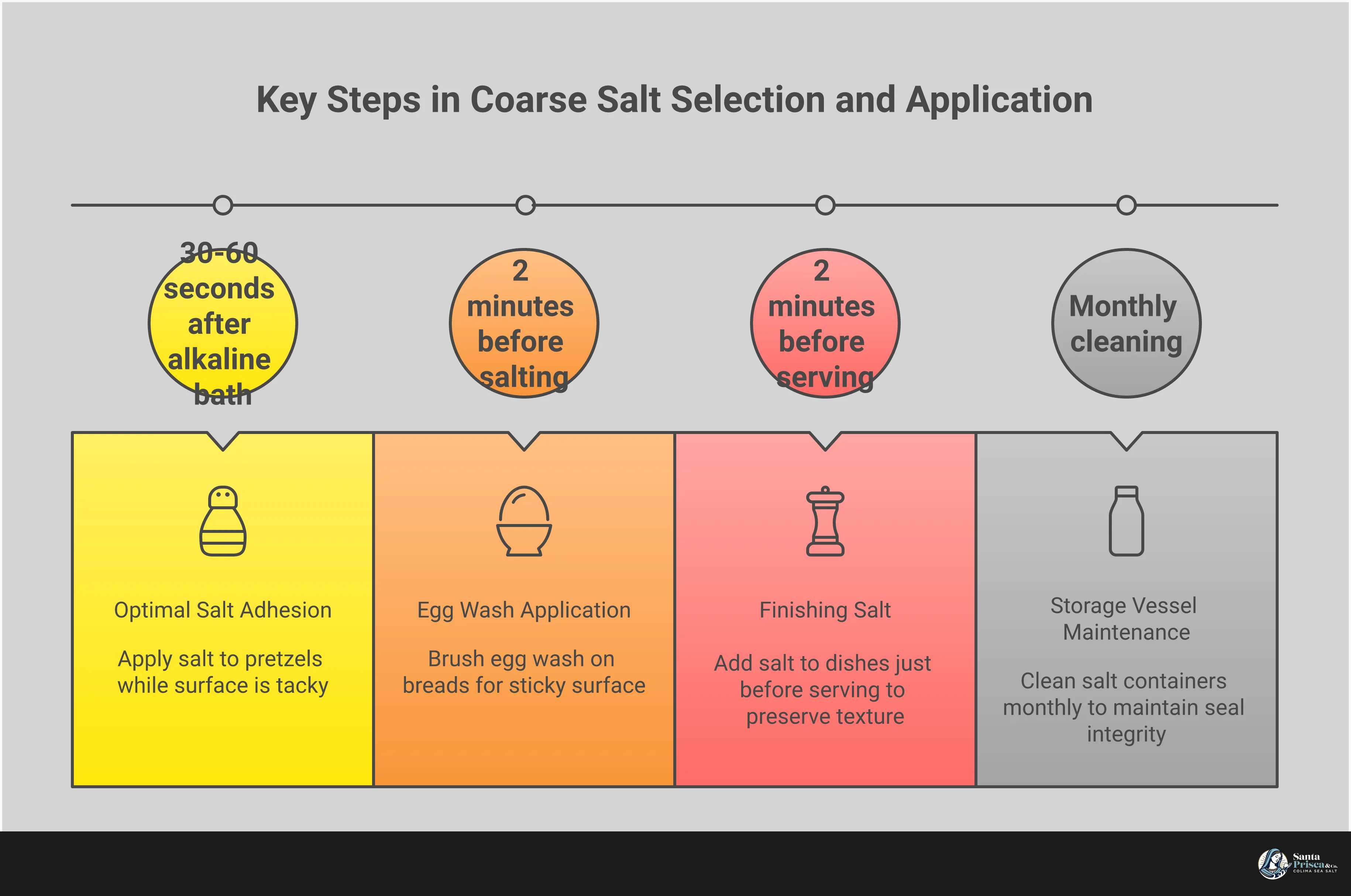
Timing is everything. For pretzels, the ideal moment to add your coarse salt is right after their alkaline bath and just before they go into the oven. The dough's surface will be damp and tacky, creating the perfect canvas for the salt to adhere to. One of the simple joys of using a quality coarse salt is that you can see exactly how much you’re adding, which helps prevent an overly salty bite. This visual guide allows you to sprinkle with confidence, creating an even, glistening crust that looks as good as it tastes and honors the care you've put into your bake.
Find the Right Salt-to-Dough Balance
The goal is a harmonious balance where the salt enhances the dough, not overpowers it. A fine-grained salt will simply dissolve into the moist surface, leaving you with a salty flavor but none of that signature texture. This is why a coarse, robust crystal is essential. We love using our Colima Sea Salt for its uniform, crunchy crystals that hold their shape beautifully in the oven. Start with a lighter sprinkle than you think you need; you can always add more. Let your eyes be the judge, aiming for a generous but not completely covered surface that promises a perfect bite.
How to Make It Stick
For salt to stick, it needs a slightly wet surface. On pretzels, the alkaline bath does the work for you. For other baked goods like focaccia or dinner rolls, a simple egg wash brushed lightly over the dough before baking creates the perfect adhesive. Once your surface is prepared, sprinkle the salt from about 12 inches above. This height helps the crystals disperse evenly instead of clumping in one spot. The coarse grains will cling to the dough, promising a delightful crunch and a beautiful, rustic look in the final product.
Common Mistakes and How to Fix Them
One of the most frequent missteps in pretzel making is working with dough that is too wet or over-hydrated. If the dough is sticky and slack, the salt crystals will begin to dissolve on contact, creating a puddled mess instead of a distinct crust. The fix is to ensure your dough is properly developed and hydrated from the start. Another common error is salting too soon. Always wait until the last possible moment before baking to apply your finishing salt. This ensures the crystals stay intact, giving you that crisp texture and beautiful, artisan finish.
Beyond Pretzels: More Ways to Use Coarse Salt
That satisfying, crunchy salt on a warm pretzel is iconic for a reason. But keeping coarse salt just for baking day is like saving your favorite dress for a party you might never attend. The beauty of a high-quality, unrefined coarse salt lies in its versatility. Its large, irregular crystals are designed to stand out, offering a distinct textural pop and a clean burst of flavor that finer salts simply can’t replicate.
Think of it as a finishing touch, the final flourish that signals a dish is complete and ready to be savored. The simple act of sprinkling these crystals over a meal is a moment of intention. It’s a way to connect with your food, adding not just seasoning, but texture, visual appeal, and a story of origin. Our Colima Sea Salt, with its sun-dried, mineral-rich crystals, is the perfect partner for exploring all the ways coarse salt can bring your cooking to life. Let’s move beyond the pretzel and see where these beautiful crystals can take us.
Sprinkle on Roasted Vegetables and Meats
One of the most beautiful ways to use coarse salt is as a finishing salt. After you’ve pulled a tray of caramelized carrots from the oven or let a steak rest to perfection, a final sprinkle adds a delicate crunch that contrasts with the tenderness of the food. The crystals dissolve slowly on the tongue, delivering a bright, clean salinity without overpowering the dish’s inherent flavors. This final touch not only enhances taste but also adds a rustic, visual appeal, turning a simple meal into a more thoughtful experience.
Add a Savory Touch to Sweets
Salt and sweetness are a classic pairing for a reason. A few flakes of coarse sea salt on top of a dark chocolate brownie or a gooey caramel sauce creates a stunning flavor contrast. The salt cuts through the richness and actually deepens the perception of sweetness, making each bite more complex and satisfying. It’s a simple technique used by pastry chefs to balance and enhance desserts, and it’s just as easy to do in your own kitchen. Try a pinch over a scoop of vanilla ice cream or even on a slice of fresh watermelon.
Create a Stunning Cocktail Rim
A salt-rimmed glass is more than just a garnish; it’s an integral part of the drink. While essential for a classic margarita, a coarse salt rim can bring life to so many other cocktails. The salt prepares your palate, heightening the citrus and botanical notes in a Paloma or a Salty Dog. The key is to use a quality salt with a clean, mineral flavor that complements, rather than overpowers, your drink. The visual of the glistening crystals on the edge of the glass also adds a touch of ceremony to your cocktail ritual.
Top Your Favorite Breads
Before you slide that loaf of focaccia or those pillowy dinner rolls into the oven, give them a generous scattering of coarse sea salt. As the bread bakes, the salt crystals will gently embed into the crust, creating a beautiful, rustic finish. Each bite delivers a delightful crunch and a savory, mineral depth that perfectly complements the soft, warm bread. It’s a simple step that transforms homemade bread into something that looks and tastes like it came from an artisan bakery. Explore our full collection to find the perfect salt for your next bake.
Where to Find Quality Coarse Salt
Finding a salt that truly speaks to you and your cooking is a rewarding part of an intentional kitchen practice. The right coarse salt can transform a simple dish into something memorable. Whether you’re searching for the perfect crunchy topping for a pretzel or a delicate finishing flake for a salad, knowing where to look is the first step. From the dedicated artisans who harvest salt by hand to your neighborhood specialty store, exceptional options are within reach.
Shop Directly from Artisans Online
There’s a special connection that comes from buying directly from the people who produce our food. When you shop for salt from artisans, you’re not just getting an ingredient; you’re getting a story. Our own hand-harvested Colima Sea Salt is a perfect example. It’s an unrefined, mineral-rich salt that carries the essence of the volcanic earth where it’s born. Each crystal offers a crisp flake and a burst of mineral depth that brightens flavors without overpowering them. Using it as a finishing touch is a simple ritual that honors both the food and the hands that gathered the salt.
Explore Your Local Gourmet Shop
Local gourmet and specialty food shops are true treasure troves for any curious cook. Stepping inside one is an invitation to discover something new. These stores often curate their selections with great care, featuring a variety of salts you might not find elsewhere. It’s a wonderful opportunity to see the crystals up close, compare textures, and chat with knowledgeable staff about how to use them. Look for finishing salts with unique shapes and origins. A light sprinkle just before serving is all you need to preserve the salt’s distinct character and add a final layer of texture to your dish.
Buying in Bulk for Your Bakery
For bakers and small food businesses, consistency and quality are everything. Buying coarse salt in bulk is often the most practical and economical approach. For classic applications like pretzels, a product like Morton® White Pretzel Coarse Salt is a reliable choice, known for its clean appearance and satisfying crunch. If your brand is built on premium, natural ingredients, consider reaching out to an artisan supplier. Many, including us, offer wholesale options for businesses looking to incorporate high-quality, unrefined sea salt into their creations, ensuring every bite reflects a commitment to exceptional flavor.
How to Keep Your Coarse Salt Fresh
When you bring a beautiful, hand-harvested salt into your kitchen, you’re holding more than just an ingredient. You’re holding the essence of a place, the work of artisans, and a wealth of natural minerals. Honoring that journey means giving your salt the care it deserves. Proper storage is a quiet ritual that preserves the integrity of each crystal, ensuring its flavor and texture remain perfect from the first pinch to the last. With just a few simple practices, you can protect your salt from its one true enemy—moisture—and keep it ready for any dish you create.
The Best Way to Store Your Salt
The secret to keeping your salt pristine is simple: protect it from the air. An airtight container is the most important tool for maintaining the texture of your salt. Glass jars with clamp lids or ceramic salt cellars with snug tops are both beautiful and functional choices. This simple barrier prevents humidity from clumping the delicate crystals together.
If you purchase salt in larger quantities, consider decanting it into a smaller, everyday container for your countertop. This practice keeps your main supply sealed and fresh while making daily use effortless. By caring for your pure, mineral-rich Colima Sea Salt in this way, you ensure every meal benefits from its crisp, clean flavor.
What to Do About Humidity
Humidity can turn coarse, distinct crystals into a solid, stubborn block. To prevent this, always store your salt in a cool, dry place away from the steam of your stove or the heat of a sunny window. Your pantry or a kitchen cabinet is the ideal location.
For an extra layer of protection, especially in more humid climates, you can turn to a timeless kitchen trick. Tuck a small sachet of uncooked rice into your salt container. The rice acts as a natural desiccant, gently absorbing any ambient moisture without affecting the salt itself. It’s a simple, effective way to act as a gentle guardian for our collection of artisan salts and preserve their unique character.
Related Articles
- Sea Salt for Cooking: Types, Benefits, and How to Use It Like a Pro
- What is Gourmet Sea Salt & How to Use It?
- Choosing the Best Sea Salt: A Chef's Guide
Frequently Asked Questions
Can I just use kosher salt on my pretzels instead of a special pretzel salt? You certainly can, but you'll get a different result. Kosher salt has a lighter, flakier crystal that tends to melt more easily into the dough's surface. You'll get a lovely salty flavor, but you might miss that distinct, separate crunch and the bright white look that a true pretzel salt or a hearty coarse sea salt provides. Think of it as choosing a more subtle texture over a bold one.
What’s the real difference between a coarse sea salt and a classic pretzel salt? The main difference comes down to intention and form. Classic pretzel salt is processed to have a very uniform, dense, and opaque shape that’s designed to resist melting in the oven, giving you that iconic look and crunch. A hand-harvested coarse sea salt, like our Colima salt, has a more irregular, crystalline structure. It offers a more nuanced, mineral-rich flavor and a delicate crispness, making it a beautiful finishing salt for pretzels and so much more.
Is there a wellness reason to choose an unrefined sea salt over other types? When you choose an unrefined sea salt, you're choosing a salt that is pure and complete. It hasn't been stripped of the trace minerals that are naturally present at its source, like magnesium and potassium. While it's still salt, using a product that is whole and free from anti-caking agents and other additives aligns with a more mindful and natural approach to cooking and eating.
My coarse salt got clumpy. What can I do to prevent that? That clumping is almost always caused by one thing: humidity. Salt is a natural preservative because it draws in moisture, so it’s important to protect it from the air. The best way to keep your salt crystals separate and dry is to store them in an airtight container, like a glass jar with a clamp lid or a ceramic salt cellar, and keep it in a cool, dry place like your pantry—not right next to the steam from your stove.
Is coarse salt only good for finishing baked goods like pretzels? Not at all! That’s just where it gets its start for many of us. Think of a quality coarse salt as a finishing touch for almost any dish. A sprinkle over roasted vegetables, a perfectly cooked steak, or even a simple slice of avocado toast adds a wonderful textural contrast and a clean burst of flavor. It can even balance the sweetness in chocolate desserts.