
Maldon Salt Price: Is a Premium Salt Worth It?
Written By Santa Prisca & Co Staff Last updated on
My own love for finishing salt began with a single, satisfying crunch. It was on a simple slice of ripe tomato, and that tiny, crisp crystal completely changed how I thought about seasoning. In my journey to recreate that moment, I found myself looking up the ‘Maldon salt price’ and exploring what set it apart. That search opened up a whole world of artisanal salts, each with its own unique character and story. This isn't just about one brand; it's about discovering the difference between industrial salt and a hand-harvested treasure, and learning how a simple pinch can bring a new layer of texture and life to your cooking.
Key Takeaways
- Focus on Texture and Purity: A true finishing salt is unrefined and hand-harvested, which preserves its delicate flake structure and natural mineral content. This results in a complex flavor and satisfying crunch that processed table salt simply cannot offer.
- Apply It as a Final Touch: To protect its signature texture, sprinkle finishing salt onto your food right before serving. This simple action adds a burst of clean flavor and a delicate crunch to everything from savory dishes to sweet desserts.
- Invest in Flavor, Not Just Saltiness: The price of a premium salt reflects its artisanal quality and purity. Since you only need a pinch to make an impact, view it as a long-lasting investment in adding depth and texture to your meals.
What Makes a Finishing Salt Special?
Have you ever noticed how a simple sprinkle of the right salt can completely transform a dish? It’s not just about adding saltiness. A true finishing salt is an ingredient of intention, one that brings its own story, texture, and mineral depth to the table. Unlike the uniform salt you find in most shakers, a finishing salt is celebrated for its unique character, a direct reflection of the place it comes from and the hands that gathered it.
These salts are meant to be seen and felt, used as the final touch on everything from a ripe tomato slice to a rich chocolate brownie. They are a quiet invitation to slow down and appreciate the final, beautiful detail of a meal.
The Art of Hand-Harvesting
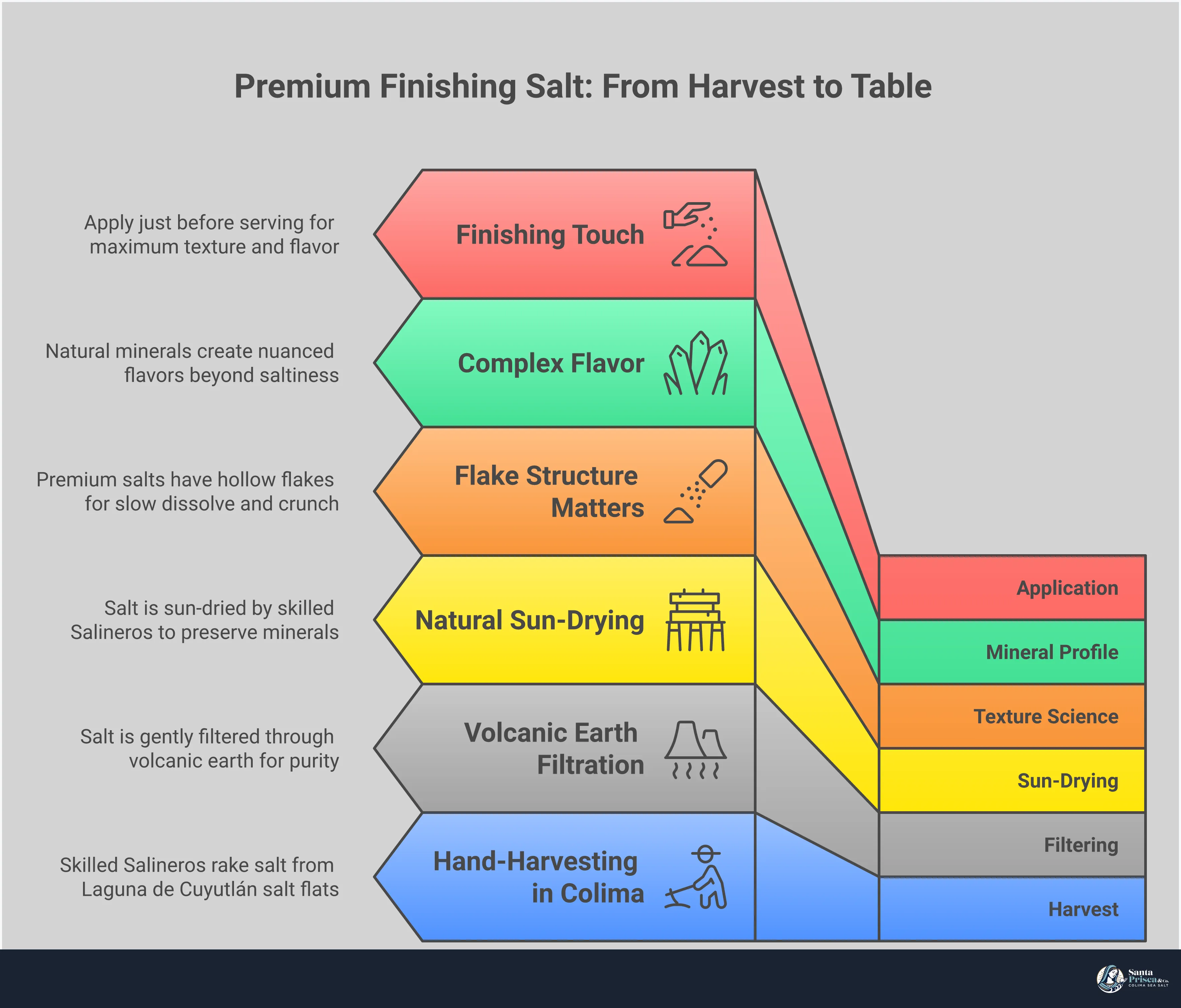
The story of a great finishing salt begins with the elements: sun, wind, and water. In places like the salt flats of Colima, Mexico, artisans have been using traditional methods for generations. This isn't a large-scale industrial process; it's a patient, manual craft. The salt is gently coaxed from the earth, often raked by hand in a practice that honors the natural cycles of evaporation.
This gentle approach ensures the salt’s delicate crystal structure remains intact. When you use a hand-harvested salt, you’re connecting with a tradition and a place. This careful process preserves the salt’s inherent qualities, resulting in a pure, unrefined product like our Colima Sea Salt, which carries the essence of the volcanic earth it was filtered through.
A Signature Flake and Its Texture
The most immediate difference you’ll notice with a finishing salt is its texture. Many premium salts are known for their large, hollow flakes. These crystals aren’t dense cubes; they are light, delicate structures that crumble between your fingers. When they hit your tongue, they don’t dissolve instantly. Instead, they offer a satisfying, gentle crunch that gives way to a burst of clean flavor.
This signature texture adds another dimension to your food. It creates little pockets of bright salinity that contrast beautifully with softer foods. Imagine that crisp flake on a creamy avocado or a perfectly seared scallop. It’s a sensory experience that fine-grained table salt simply cannot replicate. This unique structure is a hallmark of a slow, natural evaporation process.
More Than Just Salty: A Complex Mineral Flavor
Because finishing salts are minimally processed, they retain a wealth of trace minerals from their source water, like magnesium, potassium, and calcium. These minerals do more than just support our well-being; they contribute to a more complex and nuanced flavor. Instead of a harsh, one-dimensional saltiness, you get a taste that is clean, bright, and free of any chemical bitterness.
This mineral depth is what allows a finishing salt to complement and enhance the food it’s paired with, rather than overpowering it. It’s the difference between simply making food salty and drawing out its true flavors. When you explore the world of unrefined salts, you begin to notice these subtle differences and appreciate how a pure, additive-free salt can elevate your cooking.
A Look at Premium Salt Pricing
When you begin to explore the world of finishing salts, one of the first things you’ll notice is the price. It’s true, a box of hand-harvested salt costs more than your standard canister of table salt, and it’s fair to ask why. The price of a premium salt isn’t just about seasoning; it’s a reflection of the place it comes from, the people who harvest it, and the meticulous process that preserves its unique texture and mineral complexity. Understanding this helps shift the perspective from cost to value, allowing you to appreciate what you’re truly bringing into your kitchen.
The Cost in Online Marketplaces
As you start shopping, you’ll find that prices for premium salts like Maldon can vary. A quick search on large retail sites shows that a standard box of its sea salt flakes often hovers around a certain price point, which can feel like a jump if you’re used to buying table salt. You might also notice that availability can be inconsistent. For example, some shoppers have found that larger club stores no longer carry their favorite brands, leaving them to search for a new, reliable source. This variability is common for specialty food items and is part of the journey of finding the ingredients that work for you.
Finding Value in Bulk Buys
For home cooks and chefs who use a finishing salt daily, buying in larger quantities can be a more mindful and economical approach. Once you’ve found a salt you love, investing in a larger tub ensures your pantry is always stocked for sprinkling over a fresh salad or finishing a perfectly seared steak. Many brands offer catering-sized containers that reduce the cost per ounce. For those who use it often, purchasing in larger quantities is a practical way to honor a staple ingredient in your kitchen, ensuring you never run out mid-recipe.
What to Expect at Specialty Food Shops
When you purchase a gourmet salt, you are investing in its story and craftsmanship. The price reflects the story behind the salt: the hands that harvested it and the traditional methods that protect its unique character. For example, Maldon’s signature pyramid-shaped flakes are a result of careful, traditional harvesting techniques that simply cannot be replicated by a machine. This human touch and connection to heritage are what set a premium salt apart. You aren’t just buying a seasoning; you’re supporting a tradition and bringing a piece of that artistry to your own table.
Find the Right Size for Your Kitchen
Choosing the right amount of finishing salt is a personal decision, one that reflects your unique rhythm in the kitchen. It’s not just about storage space; it’s about ensuring you always have this essential element on hand to transform a simple meal into something memorable. Whether you’re just beginning to appreciate the difference a quality salt makes or you’re a seasoned chef who relies on it daily, there’s a size that fits your practice.
Think of it as an invitation to cook with more intention. When your favorite salt is within reach, you’re more likely to add that final, thoughtful touch. Having the right quantity means you can be generous when a dish calls for it and mindful with every pinch. Let’s find the perfect fit for your countertop, so you never miss a moment to add that perfect, flaky finish.
For the Everyday Gourmet
If you are new to the world of finishing salts or simply love adding a special touch to your daily meals, a smaller, accessible size is the perfect place to start. This is for the cook who finds joy in elevating a weeknight avocado toast or a simple garden salad. An 8-ounce jar is just enough to feel abundant, encouraging you to reach for it without hesitation. It sits beautifully on the counter, a gentle reminder of the simple ingredients that bring food to life. Consider our signature 8 oz jar of Colima Sea Salt, filled with sun-dried crystals that deliver a crisp, mineral-rich burst of flavor with every pinch.
For the Dedicated Home Chef
For those who cook with passion and frequency, a mid-size container is both practical and inspiring. If you find yourself reaching for your finishing salt several times a week, baking your own bread, or hosting dinners for friends and family, this is your ideal size. It ensures you won’t run out mid-recipe and offers better value, honoring your commitment to your craft. Having a larger supply allows for more experimentation, from seasoning hearty roasts to creating salted caramel desserts. It’s a small step that supports a consistent, quality-driven cooking practice. We invite you to explore our full collection to find a size that supports your culinary ambitions.
For Professional Kitchens and Restaurants
In a professional kitchen, a finishing salt isn’t a luxury; it’s a signature ingredient. Chefs understand that the final touch is what sets a dish apart, and consistency is key. Bulk sizing is essential for meeting the demands of a busy service while maintaining the highest standards of quality. A large tub ensures that every plate leaving the kitchen has that same perfect texture and balanced salinity. For chefs and restaurant owners who value artisanal quality and pure flavor, buying in bulk is the most economical and efficient choice. If you’re interested in bringing our salt into your professional kitchen, we welcome wholesale inquiries to discuss how we can best serve your needs.
How to Shop Smart for Premium Salts
A thoughtful approach to stocking your pantry ensures you always have beautiful, high-quality ingredients on hand. When it comes to investing in a premium finishing salt, a little awareness can help you find the best value without compromising on quality. It’s about shopping with the same intention you bring to your cooking, honoring both the ingredient and your budget. These simple strategies can guide you toward making mindful choices that feel good.
Watch for Seasonal Offers
Patience is a virtue in the kitchen, and it can be in your shopping, too. Gourmet food retailers often feature promotions around holidays or seasonal changes, creating wonderful opportunities to stock up. Keeping an eye out during these times can be rewarding. You might find that specialty grocers, for example, offer Maldon Sea Salt Flakes at a more accessible price during a spring refresh or a holiday entertaining event. Signing up for newsletters from your favorite local or online food shops is a simple way to stay informed about these moments.
Consider Buying in Bulk
Once you find a salt you truly love and reach for daily, buying a larger quantity is often the most economical choice. This practice lowers the cost per ounce and means you’re never without your favorite finishing touch. Some markets may provide discounts on bulk purchases, making it a practical option for dedicated home cooks. For restaurant owners or serious food enthusiasts, it’s also worth exploring wholesale inquiries directly with producers to receive the best value for professional use and to build a relationship with the people behind the product.
Compare Online Shops vs. Local Stores
Finding the right place to purchase your salt often comes down to a balance of convenience, cost, and connection. Large online retailers may list premium salts at competitive prices, but it’s wise to factor in shipping costs and the impersonal nature of the transaction. On the other hand, buying directly from an artisan producer’s online shop connects you to the story behind the salt. This choice ensures you receive an authentic, carefully handled product while supporting the traditions and communities that make these salts so special.
Finishing Salt vs. Table Salt: What's the Difference in Cost?
When you place a box of finishing salt next to a cylinder of common table salt, the price difference can feel significant. It’s natural to wonder what justifies the higher cost. The answer isn’t just about saltiness; it’s about the story, the process, and the integrity of the ingredient itself. You’re not just paying for salt, but for a culinary tool crafted with intention.
Hand-Harvested vs. Mass-Produced
Most table salt is produced on an industrial scale. It’s often mined, then processed at high heat, which strips it of the trace minerals that give sea salt its character. Finishing salts, on the other hand, are frequently harvested by hand in small batches. This gentle, traditional approach is a craft passed down through generations. The price reflects the human labor, the careful stewardship of the salt flats, and the artistry required to produce a delicate, structured flake that a machine simply cannot replicate.
The Importance of Place and Small Batches
Like wine or olive oil, the world’s best salts have a sense of place. Premium finishing salts often come from specific regions where the unique mineral composition of the water creates a signature flavor and texture. For example, Maldon salt has been made by a single family in Essex, England, since 1882. This connection to a specific location and its history is part of what you’re investing in. Working in small batches allows artisans to ensure every crystal meets a high standard of quality, a level of detail that is lost in mass production.
A Commitment to Tradition and Quality
Ultimately, the cost of a finishing salt is a reflection of its quality. You’re paying for a clean, bright flavor that enhances food without overpowering it. You’re paying for a satisfying, delicate crunch that adds a final layer of texture to a dish. Our own Colima Sea Salt is a perfect example; its rich mineral depth comes from being naturally filtered through volcanic earth. This commitment to tradition results in a pure, unrefined salt free from the anti-caking agents and additives often found in table salt, offering a more authentic and flavorful experience.
Explore the World of Finishing Salts
While a familiar box of flaky salt is a beautiful starting point, the world of finishing salts is rich with texture, story, and flavor. Thinking beyond one single brand opens up a new layer of intention in your cooking. When you start to explore salts from different regions, you connect with unique traditions, climates, and mineral profiles that can transform a simple dish into something truly memorable. It’s an invitation to experiment and find the perfect crystal crunch for every meal.
A Quick Look at Cost Per Ounce
When you invest in a premium salt, you’re paying for the hands that harvested it and the tradition behind it. Many of us have grown accustomed to certain brands, but their availability can sometimes be unpredictable, as shoppers who used to find Maldon at Costco have discovered. This invites a wonderful opportunity to look at other artisanal salts that offer incredible quality. Considering cost per ounce is smart, but true value also lies in the flavor, the mineral content, and the story behind the salt you choose to bring into your kitchen.
Discover Colima Sea Salt: A Richer Value
Just as some finishing salts are harvested by hand in England, others are gathered with intention from ancient salt flats in Mexico. Our Colima Sea Salt is one of these treasures. It’s hand-harvested by skilled salineros who use methods passed down through generations. These unrefined, sun-dried crystals are naturally filtered through volcanic earth, which gives them a rich mineral profile you won’t find in more processed salts. This process results in a salt that offers a profound depth of flavor, connecting your cooking to a place of purity and heritage. It’s a different kind of value, one measured in both taste and tradition.
How Texture and Flavor Compare
Every finishing salt brings its own personality to the plate. Maldon is known for its large, delicate pyramid flakes that provide a quick, satisfying crunch and a clean, bright salinity. It dissolves beautifully, making it a classic choice. Colima Sea Salt, on the other hand, offers a different experience. Its crystals are crisp, fine, and irregular, creating a gentle crunch that lingers. The flavor is where it truly stands apart; instead of just a sharp saltiness, it delivers a subtle, complex mineral depth that enhances food without overpowering it. Think of it as the difference between a bright accent and a foundational flavor.
The Wellness Connection: Why Mineral-Rich Salt Matters
When we choose our ingredients, we’re making a choice about how we want to nourish ourselves. Salt, the most fundamental of seasonings, is no exception. The conversation around salt often gets simplified to just "using less," but what if we shifted the focus to using better salt? The journey from a salt flat to your kitchen table matters, and the difference between an industrial, processed salt and a hand-harvested sea salt is one you can not only taste, but feel.
Choosing a mineral-rich salt is an act of intention. It’s about appreciating an ingredient in its most natural state, straight from the earth and sea. Unlike heavily refined table salt, which is stripped down to a single compound, unrefined sea salts carry a trace mineral footprint of their origin. This isn't just about flavor, though the complex, nuanced taste is undeniable. It’s about connecting with our food on a deeper level and embracing ingredients that are as pure and unprocessed as possible. This simple switch invites a moment of mindfulness into the kitchen, turning the simple act of seasoning into a gesture of wellness.
Unrefined Minerals vs. Stripped Table Salt
Think of the difference between a whole food and a processed one. The same principle applies to salt. Common table salt is often mined and then subjected to intense processing that strips away its natural companion minerals. What’s left is pure sodium chloride, which can have a sharp, almost metallic taste. Anti-caking agents are also frequently added to prevent clumping.
In contrast, unrefined sea salt is a testament to its origin. As seawater evaporates, it leaves behind a beautiful crystal that retains trace minerals like magnesium, potassium, and calcium. These elements contribute to a gentler, more complex flavor profile that enhances food without overpowering it. This distinction between sea salt and table salt is key to understanding why a premium salt offers so much more than just salinity.
How Flake Size Affects Your Sodium Intake
Here’s a beautiful paradox: using a more flavorful salt can help you be more mindful of your sodium consumption. The large, delicate flakes of a finishing salt have more surface area and less density than the tiny, compact grains of table salt. This means that a pinch of flaky sea salt delivers a bright burst of flavor and a satisfying crunch, but may contain less sodium by volume than an equivalent pinch of fine salt.
This allows you to season with your eyes and your fingers, getting a better sense of how much you’re using. You get all the sensory reward and a brilliant flavor impact, making it easier to season your food perfectly without overdoing it. It’s a simple way to bring more awareness to your cooking.
The Purity of Additive-Free Salt
A truly great salt is defined as much by what it contains as by what it doesn’t. The best finishing salts are harvested and dried using traditional methods, with nothing added and nothing taken away. This commitment to purity means you won’t find any of the additives, bleaching agents, or anti-caking chemicals that are common in mass-produced table salts.
When you choose a pure, unrefined salt, you are choosing an ingredient that is clean, natural, and authentic. The flavor is true to its source, whether it’s a sun-drenched coastline or a pristine underground spring. This purity not only honors the ingredient itself but also respects the food you prepare, allowing the natural flavors of your dish to shine through, perfectly seasoned and completely unadulterated.
How to Use Finishing Salt for Maximum Impact
A premium finishing salt isn’t meant to be hidden in a simmering pot or dissolved into a brine. Its true purpose is to shine as the final, thoughtful touch that transforms a dish from good to unforgettable. Using it correctly is less about measurement and more about intention. It’s the last step, the grand finale that adds a layer of texture, a burst of clean flavor, and a visual cue that something special has been prepared. Think of it as jewelry for your food, a simple act that shows care and enhances the entire eating experience. By learning when and how to apply it, you honor both the ingredient and the meal you’ve created.
The Magic of a Final Sprinkle
The most important rule for a finishing salt is to apply it right before serving. Its delicate, crystalline structure is its superpower, providing a satisfying crunch that contrasts beautifully with the food it adorns. If you add it too early, heat and moisture will simply dissolve the flakes, and its unique texture will be lost. Imagine a perfectly grilled steak, a ripe avocado toast, or a simple plate of sliced garden tomatoes. A final scattering of a quality finishing salt like our Colima Sea Salt just before it reaches the table introduces a subtle crispness and a bright, mineral flavor that awakens the palate. This final gesture is a small ritual that makes a world of difference.
Beyond Savory: A Secret for Sweets
While it’s a natural partner for savory dishes, one of the most delightful ways to use a finishing salt is with sweets. A small pinch sprinkled over chocolate desserts, like a rich brownie or a scoop of dark chocolate ice cream, creates an incredible depth of flavor. The salt doesn't make the dessert salty; instead, it balances the sweetness and intensifies the complex notes of the cacao. The same principle applies to caramel sauces, baked fruit, and even a simple bowl of oatmeal drizzled with honey. That tiny contrast of a crisp, salty flake against something sweet and creamy is a simple technique that professional pastry chefs have used for years to make their creations more dynamic and memorable.
Why Chefs Rely on a Quality Finishing Salt
In professional kitchens, control is everything. Chefs love a good finishing salt because its large, visible flakes make it easy to see exactly how much you’re adding, helping you season with precision and avoid an overly salted dish. Unlike fine-grained salts that can disappear into food, these crystals stand out, offering a clean, bright taste that enhances the natural flavors of the ingredients without overpowering them. This is why it’s called a “finishing” salt; it completes the dish. For chefs and restaurants dedicated to sourcing the best ingredients, having a high-quality, unrefined salt on hand is non-negotiable, which is why many work with us directly to supply their kitchens.
Is a Premium Finishing Salt Right for You?
Choosing a premium salt can feel like a big step, especially when you see the price tag. It’s easy to wonder if it’s truly worth it. But I invite you to shift your perspective from the cost of the container to the value it brings to your table. A finishing salt is more than just an ingredient; it’s an invitation to slow down, to add a final, thoughtful touch to the food you’ve prepared with care. It’s a small ritual that can transform a simple meal into a memorable experience.
Think in "Cost Per Dish," Not "Cost Per Box"
When you hold a bag of hand-harvested salt, you’re holding the result of immense care and tradition. It’s natural to compare its price to a standard container of table salt, but they serve entirely different purposes. A premium finishing salt is meant to be used by the pinch, not by the spoonful. A single bag of our Colima Sea Salt will last you a surprisingly long time, gracing hundreds of meals.
Think of it this way: you might spend a few dollars on a fresh herb to brighten a dish. A pinch of finishing salt offers a similar, if not greater, impact. It’s about the value it adds to each plate. That final sprinkle introduces a delicate crunch and a burst of clean, mineral flavor that honors the ingredients you’ve so carefully chosen.
Know When It Makes a Real Difference
The magic of a finishing salt lies in its texture and how it interacts with food in the final moments before serving. Its beautiful, flaky crystals don't just dissolve and disappear. Instead, they linger on the palate, offering a satisfying crunch and a pure, bright saltiness that makes flavors pop. This is why you wouldn’t use it to salt your pasta water; its true purpose is to be the final flourish.
Sprinkle it over a sliced heirloom tomato, a perfectly grilled steak, or even a warm chocolate brownie. You’ll notice how it enhances the food’s inherent character without overpowering it. This is the salt you use when you want to taste the difference. Exploring different ways to use it is part of the joy of having quality ingredients in your kitchen, which you can find in our shop.
How to Care for Your Salt
One of the most beautiful things about pure, unrefined sea salt is its simplicity. It doesn’t require any special treatment, and because salt is a natural preservative, it won’t expire as long as you keep it dry. Moisture is the only thing to watch out for, as it can cause the delicate flakes to clump together.
To make it a joyful part of your daily cooking ritual, I suggest keeping your salt in a small, open dish or a salt cellar right by your stove or on your dining table. This makes it easy to grab a pinch whenever you need it, encouraging you to season with your fingers. This tactile connection to your food is a grounding practice that helps you season more intuitively and mindfully. If you have any questions about our salt's unique properties, please feel free to contact us.
Related Articles
- Sea Salt for Cooking: Types, Benefits, and How to Use It Like a Pro
- What Is Finishing Salt Used For? A Chef's Guide
- 5 Best 5 lb Bags of Finishing Salt Reviewed
- High Quality Finishing Salt for Sale: A Buyer's Guide
Frequently Asked Questions
What is the real difference between a finishing salt and the salt in my shaker? The main differences come down to process, texture, and flavor. Regular table salt is industrially processed, which strips it of natural minerals and leaves a harsh, one-dimensional taste. A finishing salt, like our Colima Sea Salt, is hand-harvested and unrefined. This gentle process preserves its delicate flake structure, which gives a satisfying crunch, and retains trace minerals that create a clean, complex flavor without any chemical bitterness.
Can I cook with finishing salt, or is it only for the end? A finishing salt truly shines when used as the final touch on a dish. Its beautiful, flaky texture is its greatest asset, but it dissolves quickly in heat. If you add it during cooking, you lose that wonderful, delicate crunch. I recommend sprinkling it over your food just before serving, whether it's a salad, a grilled steak, or even a chocolate brownie, to add that last layer of flavor and texture.
Why is a premium finishing salt more expensive? The price reflects the incredible amount of care and craftsmanship that goes into producing it. Unlike mass-produced salt, a premium salt is often harvested by hand in small batches, a tradition that requires skill and time. You are investing in a pure, unrefined product free of additives, the story of the place it comes from, and the people who gathered it. When you consider that a single container lasts a long time, the cost per dish is quite small for the impact it delivers.
Does using a mineral-rich salt actually make a difference? Yes, in a few important ways. First, the flavor is noticeably better. The trace minerals found in unrefined sea salt give it a nuanced, clean taste that enhances food instead of just making it salty. Second, because the flakes are larger and more flavorful, you may find you use less. A small pinch provides a satisfying burst of flavor and texture, which encourages more mindful seasoning. It’s a simple switch that brings more intention and purity to your cooking.
How should I store my finishing salt, and will it go bad? Pure sea salt is a natural preservative, so it will never expire. The only thing you need to protect it from is moisture, which can cause the delicate flakes to clump together. I suggest keeping your salt in a small, lidded container or a salt cellar near your stove or on your table. This keeps it dry and makes it easy to grab a pinch with your fingers, which is a wonderful, tactile way to connect with your cooking.